Blessed Mary of the Divine Heart and the Consecration to the Sacred Heart

Blessed Mary of the Divine Heart (Maria Droste zu Vischering, 1863–1899) was a German countess who served as a Good Shepherd superior in Porto, Portugal. From her sickbed she asked Pope Leo XIII to consecrate the human race to the Sacred Heart. He did so on June 11, 1899, three days after her death. Her feast is June 8.
Who was Blessed Mary of the Divine Heart?
Blessed Mary of the Divine Heart was a German noblewoman, Countess Maria Droste zu Vischering, who gave up a life of privilege to serve abandoned and troubled girls as a Sister of the Good Shepherd. Sent to Portugal, she became superior of the order's house in Porto and turned a failing convent into a home for more than a hundred children. Then, sick and confined to bed, she wrote to Pope Leo XIII asking him to consecrate the whole human race to the Sacred Heart of Jesus. He did it on June 11, 1899. She had died three days earlier. We keep her feast on June 8.
The life of Blessed Mary of the Divine Heart
A countess of Münster
Maria was born in Münster, in Westphalia, on September 8, 1863, into the Droste zu Vischering family, one of the old noble houses of the region. She grew up on the family estates and knew early that she wanted to belong to God, but she waited seven long years before she could enter religious life.
On November 21, 1888, she entered the convent of the Sisters of Our Lady of Charity of the Good Shepherd in Münster, the congregation founded by St. Mary Euphrasia Pelletier to care for girls and women in trouble. On January 10, 1889, she received the habit and heard herself named Sister Mary of the Divine Heart, an unusual name in Germany at the time. On that same day, in Lisieux, St. Thérèse received the Carmelite habit.
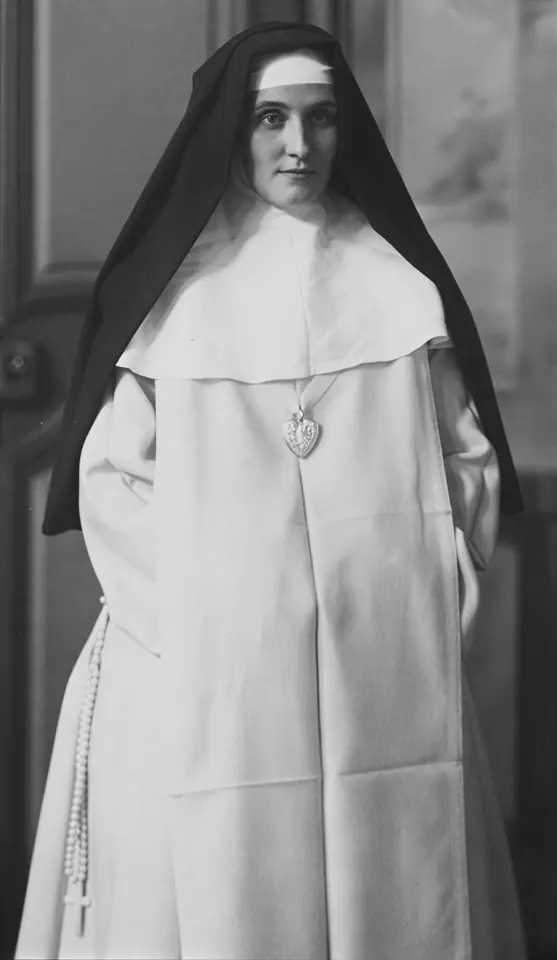
"When you work, I work through you"
As a novice she worked at the door and with the girls, and threw herself into it. But she worried that the busy life was smothering her prayer. In Holy Week 1890, the Good Shepherd sisters' biography records, she heard the Lord answer her: "When you work I work through you. When you rest I rest in you." She made her final profession on January 29, 1891, and was soon put in charge of almost a hundred girls. "The unhappy, most abandoned and poorest I love the most," she said. "They are my treasures."
Porto
In 1894 she was sent to Portugal, first to Lisbon as assistant superior, and on May 12 of that year she was named superior of the house in Porto. It was near collapse, with debts, a long-sick superior and a community that had lost its discipline. She restored the finances and the house, brought the sisters back to a common life of prayer, and gave them conferences on the love of the Sacred Heart. The number of children in their care rose to about 130. When there was no more room she gave up the community room to five more girls.

She wanted this to be her testament: "My principle never to refuse a child as long as there is one little free corner in the house and to prefer the poorest, the most abandoned, the worst." She also set up a kind of aftercare, sending a sister to visit former pupils and to find them work.
The letter to the pope
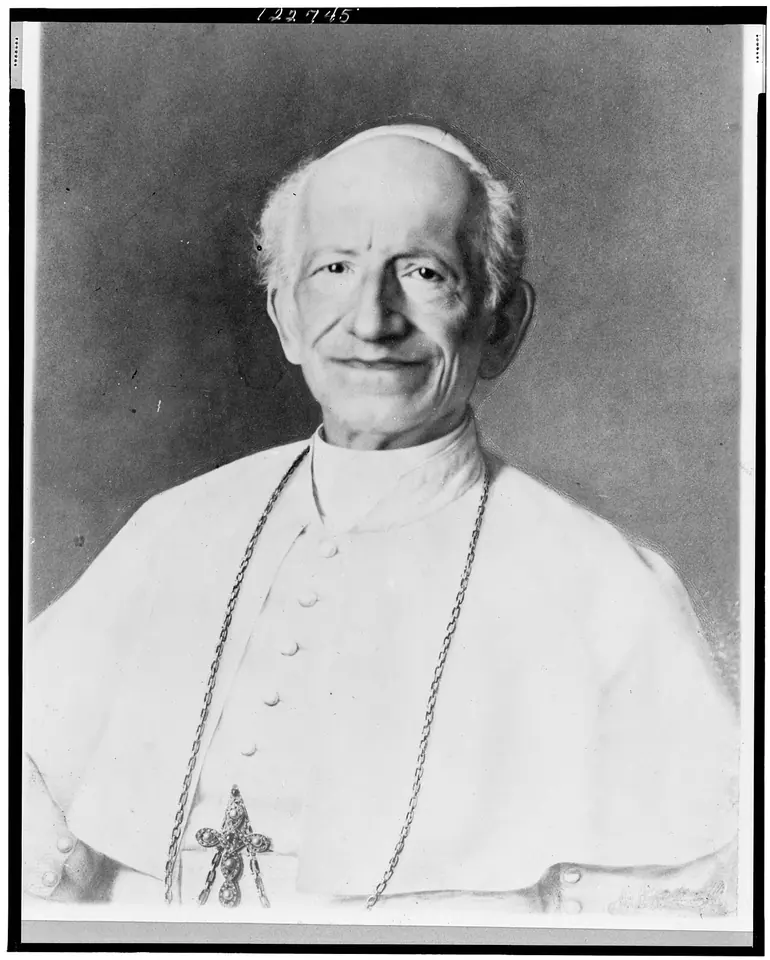
Her health broke under the strain. A disease of the spine, which the Dicastery for the Causes of Saints calls Pott's disease, wore her down over several years, and much of her last illness was spent in bed. From there, following what she understood as an inner prompting from Christ, she wrote to Pope Leo XIII asking him to consecrate the whole human race to the Sacred Heart of Jesus.

On May 25, 1899, the pope issued the encyclical Annum Sacrum, announcing the consecration and asking that everyone make it on the same day. Sister Mary of the Divine Heart died in Porto on June 8, 1899, at thirty-five. On June 11 the consecration was made. The Catholic Encyclopedia notes that Leo XIII called it "the great act" of his pontificate, and that the idea had come to him from a Good Shepherd religious of Porto who said she had received it from Christ himself.
Pope Paul VI beatified her on November 1, 1975. Her remains are venerated in the Church of the Sacred Heart of Jesus at Ermesinde, near Porto.
The miracles of Blessed Mary of the Divine Heart
- Reported: the inner words of Christ she described, including those of Holy Week 1890 and the prompting behind her letter to the pope. The Church does not require belief in private revelations.
- Approved: a miracle recognized by the Church for her beatification in 1975.
Symbols of Blessed Mary of the Divine Heart in art
Photographs of her survive, and devotional images follow them:
- The Good Shepherd habit, white with a black veil and a silver heart on the breast;
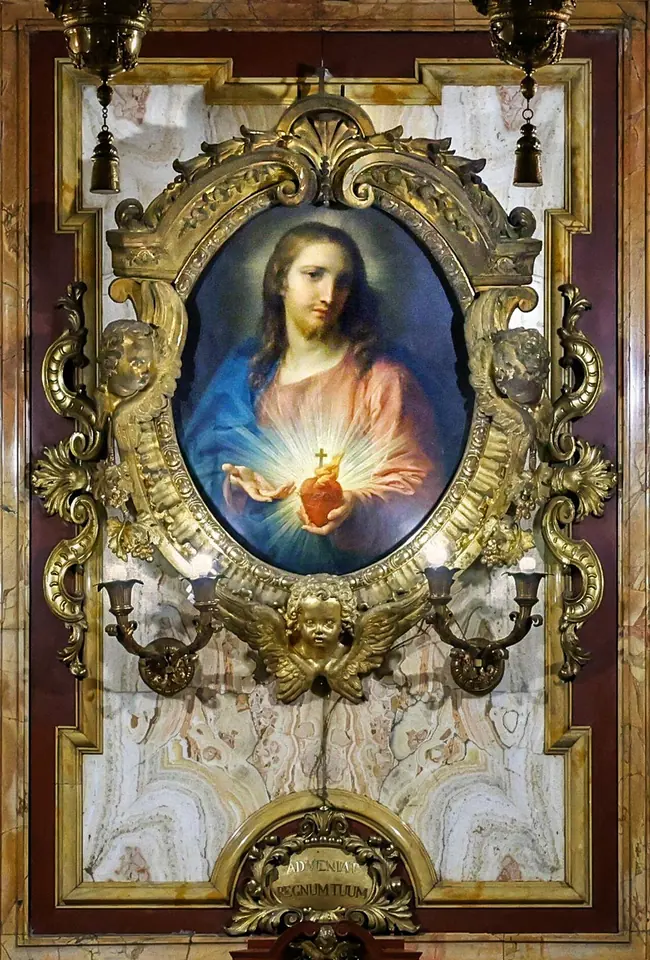
- The Sacred Heart of Jesus, often shown above or beside her, for the consecration she asked for;
- A letter, for her message to Leo XIII;
- Children around her, for the girls of Porto.
Feast day and prayer
We keep the feast of Blessed Mary of the Divine Heart on June 8, near the Solemnity of the Sacred Heart, which often falls in June. See the feast day calendar.
We know of no traditional prayer to her that we can quote. The best way to honor her is the act she asked for: to consecrate ourselves, our families and the world to the Heart of Jesus, using the prayers to the Sacred Heart or the Litany of the Sacred Heart. Let us ask her to pray for children without a home, for those who care for them, and for all who are sick and bedridden. Blessed Mary of the Divine Heart, pray for us.
Frequently asked questions
Who was Blessed Mary of the Divine Heart?
Maria Droste zu Vischering, born to a noble Westphalian family in Münster on September 8, 1863. She entered the Sisters of Our Lady of Charity of the Good Shepherd in 1888, took the name Mary of the Divine Heart, and from 1894 led the order's struggling house in Porto, Portugal, where she died on June 8, 1899.
What did Mary of the Divine Heart ask Pope Leo XIII?
She wrote to him, saying she was moved by an inner prompting from Christ, asking him to consecrate the whole human race to the Sacred Heart of Jesus. Leo XIII announced the consecration in the encyclical Annum Sacrum of May 25, 1899, and carried it out on June 11, 1899. The Catholic Encyclopedia says he called it "the great act" of his pontificate.
Where is Blessed Mary of the Divine Heart buried?
Her remains are venerated in the Church of the Sacred Heart of Jesus at Ermesinde, near Porto, Portugal.
When is her feast day?
June 8, the day she died in 1899. Pope Paul VI beatified her on November 1, 1975.
Keep exploring
Sources
- Dicastery for the Causes of Saints: Maria del Divin Cuore Droste zu Vischering. Her letter to Leo XIII, her illness and death three days before the consecration, the 1975 beatification and her tomb in Ermesinde
- Paul VI, Homily for the beatification of five Servants of God, November 1, 1975
- Leo XIII, Annum Sacrum: On Consecration to the Sacred Heart (May 25, 1899)
- Catholic Encyclopedia: Devotion to the Sacred Heart of Jesus. The consecration of June 11, 1899, "the great act" of Leo XIII's pontificate, proposed by a Good Shepherd religious of Porto
- Sisters of the Good Shepherd: Maria Droste, The Religious Woman (archived biography). Her entry, clothing and profession dates, the words she heard in Holy Week 1890, her years in Lisbon and Porto, and her quoted sayings