St. Bernard of Menthon (Bernard of Aosta), Patron of the Alps
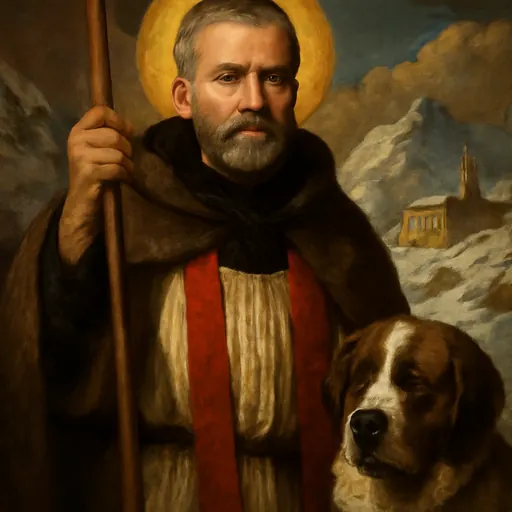
St. Bernard of Menthon, also called Bernard of Aosta (about 1020 to 1081), was the archdeacon of Aosta who built a hospice on the Mont-Joux pass, now the Great St. Bernard Pass, to shelter travelers crossing the Alps. In 1923 Pope Pius XI named him patron of the Alps and of mountaineers. His feast day is June 15.
Who was St. Bernard of Menthon?
St. Bernard of Menthon, also known as Bernard of Aosta or Bernard of Mont-Joux, was an 11th-century priest of the Alps who built a hospice at the top of one of the most dangerous roads in Europe, the pass between the Aosta Valley in Italy and the Valais in Switzerland. The pass, and the hospice that still stands there, bear his name: the Great St. Bernard. For nearly a thousand years the community he founded has taken in travelers, rescued the lost and buried the dead, and from that hospice the famous St. Bernard dogs got their name.
He is not St. Bernard of Clairvaux, the Cistercian abbot of the next century. The two are confused all the time, even by painters.

History and legend
The story most people know comes from a life written in the 15th century under the name of "Richard of Valdisère," who claimed to be Bernard's successor as archdeacon. The canons of the Great St. Bernard Hospice, whose archivist has studied the question closely, consider it the work of a forger. In that version Bernard was born in 923 to the lords of Menthon, near Lake Annecy, fled the family castle on the eve of an arranged marriage with the help of St. Nicholas, founded the hospice in 962 after defeating a demon, and died in 1008. These dates are the ones the Catholic Encyclopedia gave in 1907, and they are still widely repeated. All of this is traditional.
The more sober account the hospice gives today runs like this. Bernard was born about 1020 into a noble family, probably related to the royal house of Burgundy, and became archdeacon of Aosta, the bishop's chief assistant, with charge over the clergy, the parishes and the works of charity. Among those works was care for the exhausted travelers who came down into Aosta after crossing the Mont-Joux pass, where snow, avalanches and bandits took lives every year.
The hospice on the pass
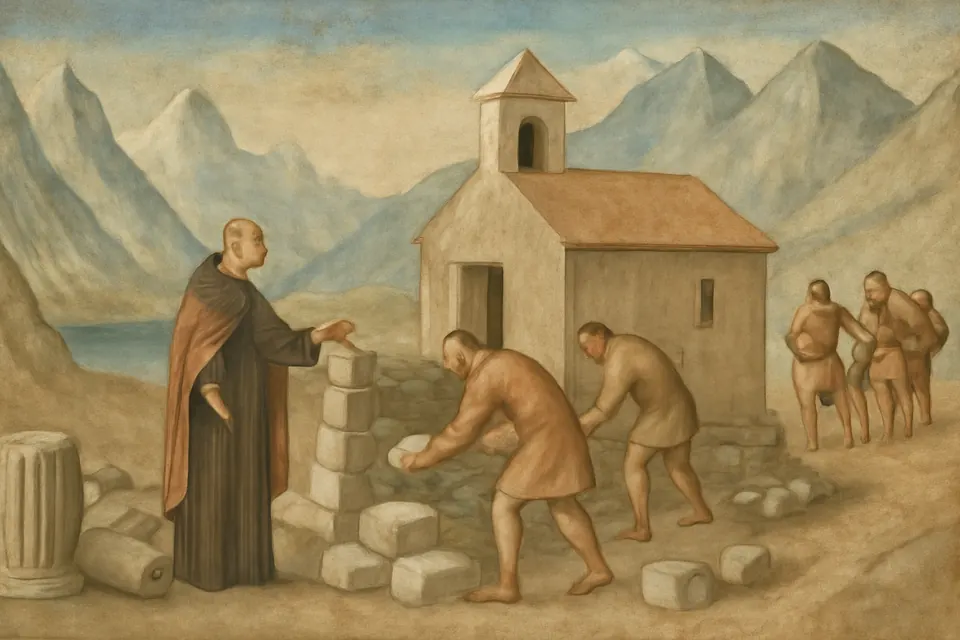
Around 1045 to 1050 Bernard decided to build a refuge at the very top of the road, about 8,100 feet up, where the danger was greatest. With a few companions from the clergy of Aosta, he raised its walls using stones taken from the ruins of a Roman temple of Jupiter that stood on the pass. He placed the house under the protection of St. Nicholas of Myra and gave it a motto that the hospice still keeps: Hic Christus adoratur et pascitur, "Here Christ is adored and fed." He then rebuilt a second hospice on the Colonne-Joux pass toward the Isère, now called the Little St. Bernard.
His last journey
Bernard was a tireless preacher, and miracles were attributed to him in his lifetime, which the hospice records without detail. Near the end of his life he went to Pavia to plead with the emperor Henry IV not to make war on Pope Gregory VII. He failed. Falling ill on the way home, he stopped at the monastery of San Lorenzo outside Novara and died there on June 12, 1081 (or 1086). He was buried on June 15.
Miracles and canonization
- Cures at his tomb: reported. Because of the miracles reported at his grave, Bishop Richard of Novara declared him a saint in 1123, as bishops could then do for their own dioceses.
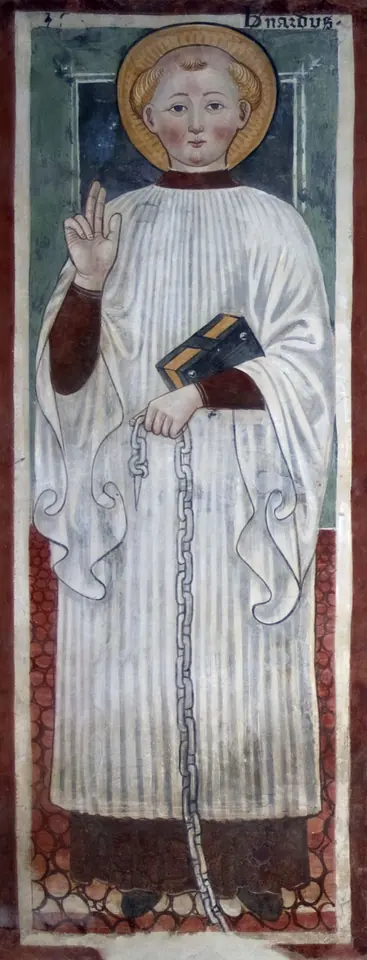
- The demon in chains: traditional. The 15th-century legend says Bernard bound the demon that haunted the pass with his priest's stole, which turned into a chain. This is why he is so often painted with a devil on a chain.
Pope Innocent XI, who had been bishop of Novara, entered him in the calendar of the universal Church in 1681. In 1923 Pope Pius XI declared him patron of mountaineers and of the people who live in and travel through the Alps.

Why St. Bernard is the patron saint of the Alps and skiers
The reason is simple: he gave his life to making the mountains safer for the people who had to cross them. That is the patronage Pius XI confirmed in 1923, for mountaineers, Alpine dwellers and travelers in the Alps. Modern skiers, hikers and climbers have adopted him in the same spirit, though no papal document names them.
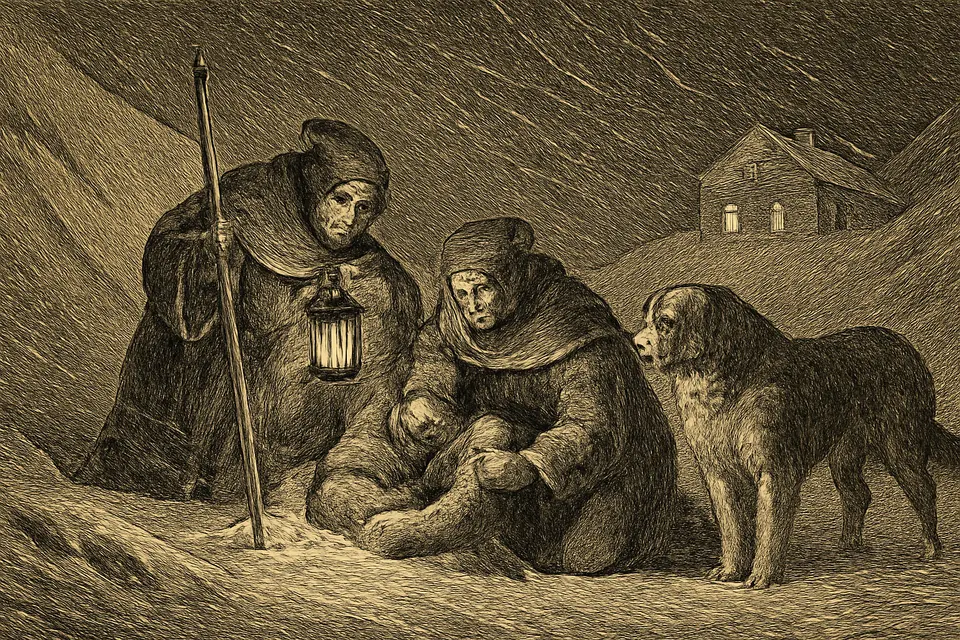
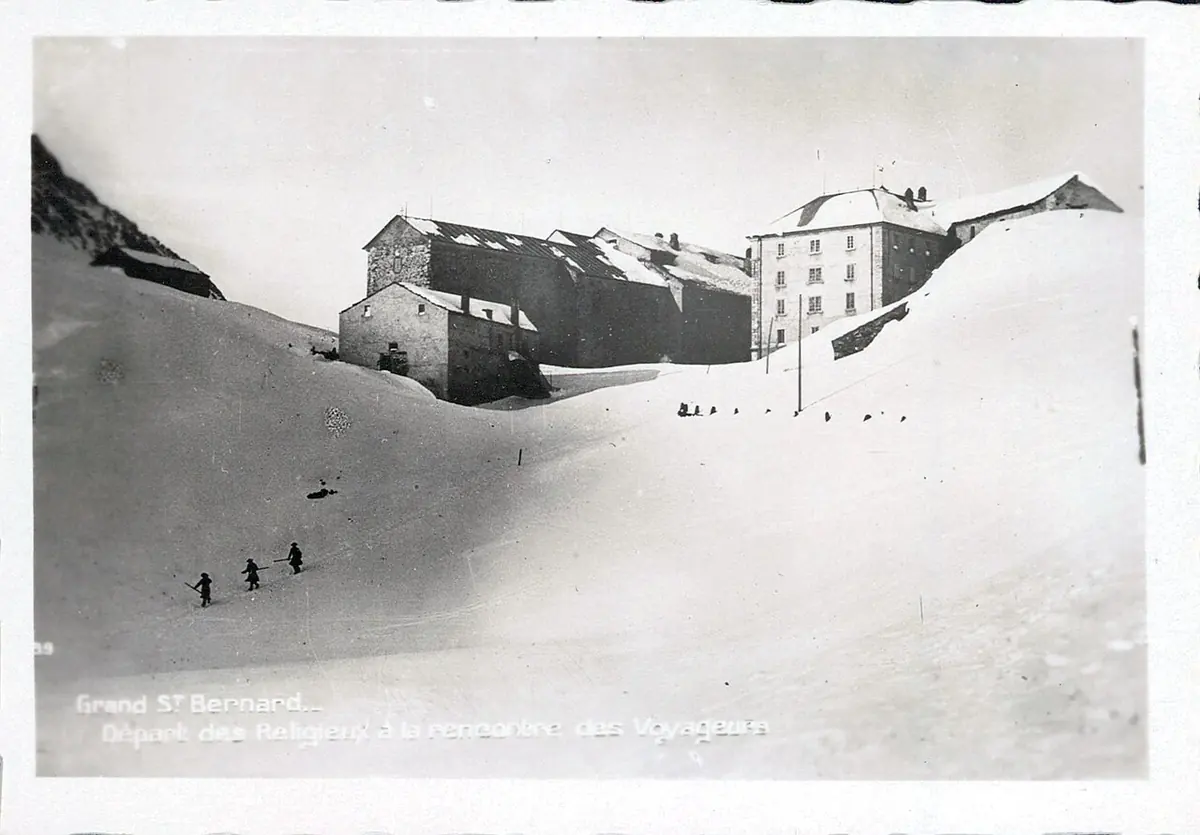
The canons of the hospice have kept his work alive. The Catholic Encyclopedia described them in 1907 going out "accompanied by their well-trained dogs" in heavy snow to search for travelers, giving food, clothing and shelter and burying the dead. The big dogs bred at the hospice became known everywhere as St. Bernards. The canons still keep the hospice open to everyone who climbs the pass.
Symbols of St. Bernard of Menthon in art
- A devil on a chain: the most common sign, from the legend of the demon of the pass. The chain is his stole.
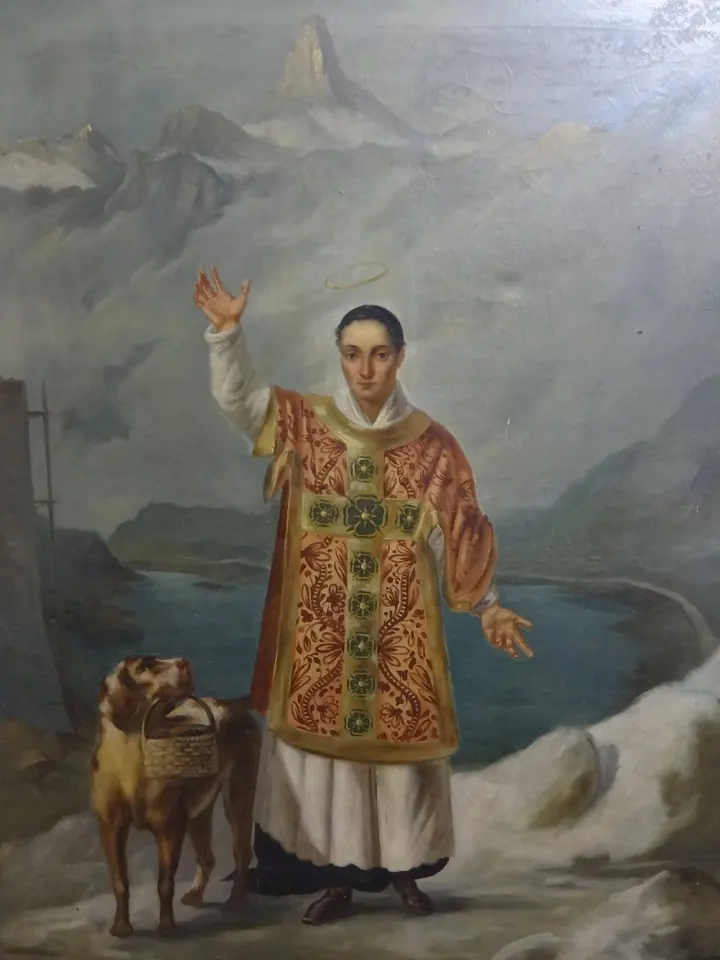
- Archdeacon's vestments: a dalmatic or a surplice with a stole, since he was an archdeacon, not a bishop. Some older works, like Lippi's painting, show him in a miter.
- A St. Bernard dog: in later images, often with a little barrel around its neck.
- Mountains and a hospice: the setting of his life's work.
- A staff: the traveler in the mountains.
To tell him from Bernard of Clairvaux, look for these: Clairvaux's Bernard wears the white Cistercian habit and is shown with a beehive, a book or the Virgin Mary, never with a mountain dog.
Feast day, relics and shrines
We keep his feast on June 15, the day of his burial. You can find the saints around him on our feast days page. His relics were moved to the cathedral of Novara in 1552, where his skull is kept in a head reliquary with other bones in two caskets. The hospice keeps a ring, a bowl and a fragment of an 11th-century manuscript of the life of St. Nicholas, all linked to him.
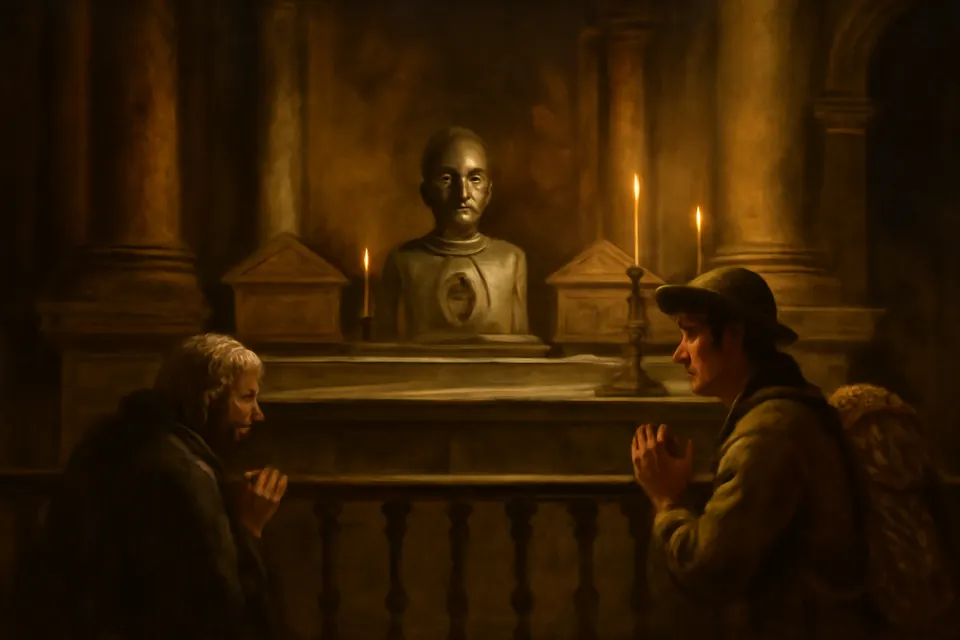
Where the relics of St. Bernard of Menthon are kept: see them on the relics map →
Prayer to St. Bernard of Menthon
We have not found a traditional prayer to St. Bernard of Menthon with a source we can verify, so we won't print one under his name. We can pray simply in the words of the hospice motto, asking that Christ be adored and fed in every guest and traveler: St. Bernard of Menthon, pray for us.
Let us ask him to watch over all who travel in the mountains, skiers, hikers and climbers, the rescuers who go out after them, and everyone who opens a door to a stranger in need.
Frequently asked questions
Is St. Bernard of Menthon the same as St. Bernard of Clairvaux?
No. Bernard of Menthon (or of Aosta) was an 11th-century priest of the Alps who founded the Great St. Bernard Hospice. St. Bernard of Clairvaux was a 12th-century Cistercian abbot and Doctor of the Church whose feast is August 20. The two are often mixed up, even in art.
What is St. Bernard of Menthon the patron saint of?
In 1923 Pope Pius XI declared him patron of mountaineers and of the people who live in and travel through the Alps. Hikers and skiers have taken him as their patron too.
Are St. Bernard dogs named after him?
Yes, indirectly. The breed takes its name from the Great St. Bernard Hospice, which takes its name from him. The canons of the hospice and their dogs searched the pass for travelers lost in the snow for centuries. The dogs came long after Bernard's lifetime.
When is the feast of St. Bernard of Menthon?
June 15, the day he was buried at Novara in 1081. Some older books give May 28.
Keep exploring
- Patron saint pages
- AthletesTravelers
- Appears in
- Confirmation saints
- Feast-day calendar
- Saints remembered in JuneSaint of the dayWhat saint is my birthday?
- Relics
- Where the relics are kept (map)
- More
- Saints A to ZPatron saints A to ZExplore every section
Sources
- Great St. Bernard Hospice: Découvrir (from Jean-Pierre Voutaz and Pierre Rouyer, Le Grand-Saint-Bernard). Born about 1020; hospice built about 1045 to 1050 under St. Nicholas's patronage; death at Novara June 12, 1081, burial June 15; canonized 1123; relics to Novara cathedral 1552; Innocent XI in 1681; Pius XI in 1923; the 15th-century forged life and the May 28 confusion
- Barnabas Dieringer, St. Bernard of Menthon (Catholic Encyclopedia, 1907). The older account and dates (923 to 1008) based on the legend; the hospice canons and their dogs in 1907
- Roman Martyrology, June (old English translation): June 15. In Switzerland, on Mount Jou, St. Bernard of Menthon, confessor