Blessed Patrick O'Loughran
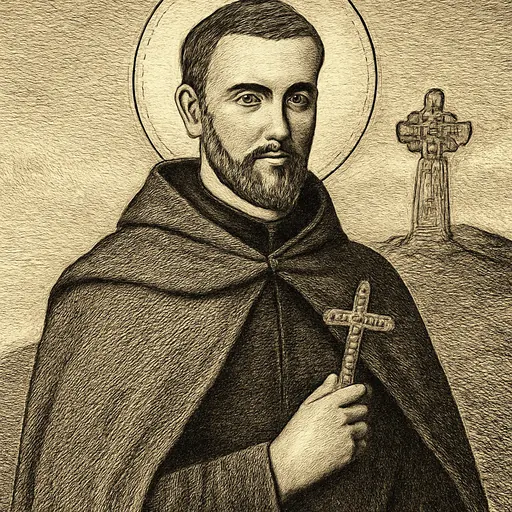
Blessed Patrick O'Loughran (about 1577–1612) was a priest from County Tyrone and chaplain to the exiled Earl of Tyrone, Hugh O'Neill. He refused to give up the faith and was hanged, drawn and quartered with Bishop Conor O'Devany on February 1, 1612. He was beatified in 1992 with sixteen other Irish martyrs, whose feast is June 20.
Who was Blessed Patrick O'Loughran?
Blessed Patrick O'Loughran was a young priest from County Tyrone who was hanged, drawn and quartered in Dublin on February 1, 1612, alongside the aged Bishop Conor O'Devany. He had been chaplain to the exiled Earl of Tyrone, Hugh O'Neill, and he was arrested the moment he set foot back in Ireland. The government called his crime treason. He was offered his life and a good living if he would give up the Catholic faith, and he refused.
Pope John Paul II beatified him in Rome on September 27, 1992, among seventeen Irish martyrs. We keep their feast together on June 20.
The life of Patrick O'Loughran
An erenagh family of Donaghmore
Patrick was born about 1577 in the parish of Donaghmore, near Dungannon in County Tyrone, the heartland of the O'Neills. His family were erenaghs, hereditary keepers of church land, who looked after the parish church, welcomed visiting bishops and helped educate the clergy. It was natural that a son of such a house should become a priest.
He grew up in hard years. After the Gunpowder Plot of 1605, new penal laws ordered priests to leave the realm on pain of imprisonment.
Chaplain to the earls
Patrick went to Flanders to study, at a time when Irish priests had to be trained abroad. In September 1607 Hugh O'Neill, Earl of Tyrone, and Rory O'Donnell, Earl of Tyrconnell, sailed from Lough Swilly into exile, the Flight of the Earls. Patrick met O'Neill in the Low Countries and became chaplain to him and his household. He went with them to Rome, where O'Neill attended the canonization of St. Frances of Rome by Pope Paul V in 1608.
Arrest and trial
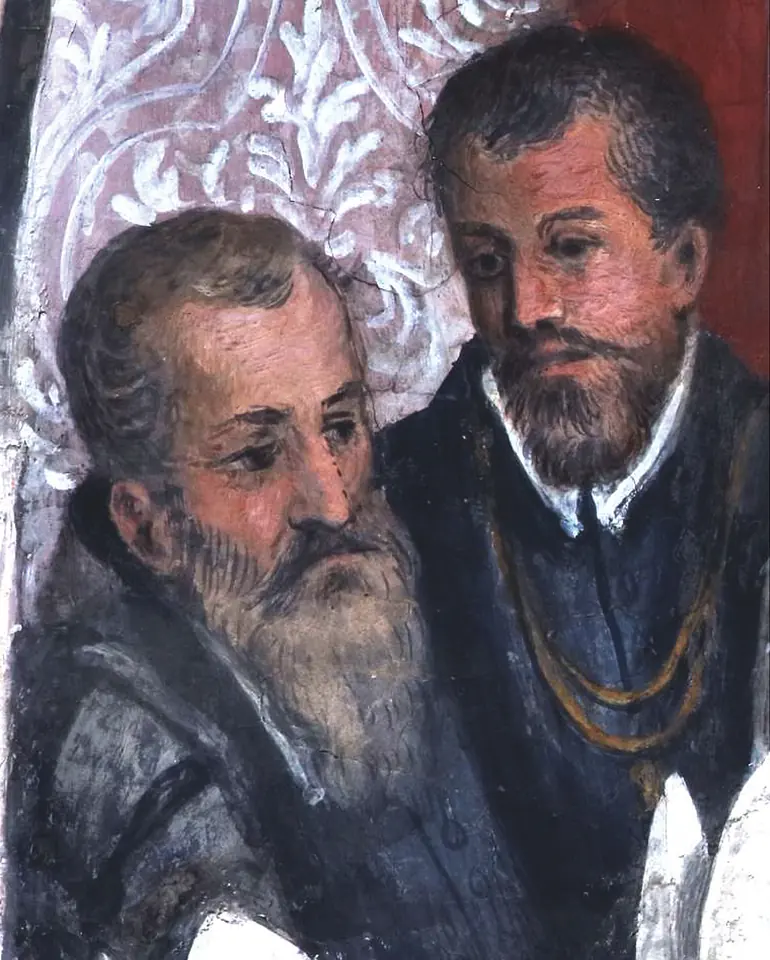
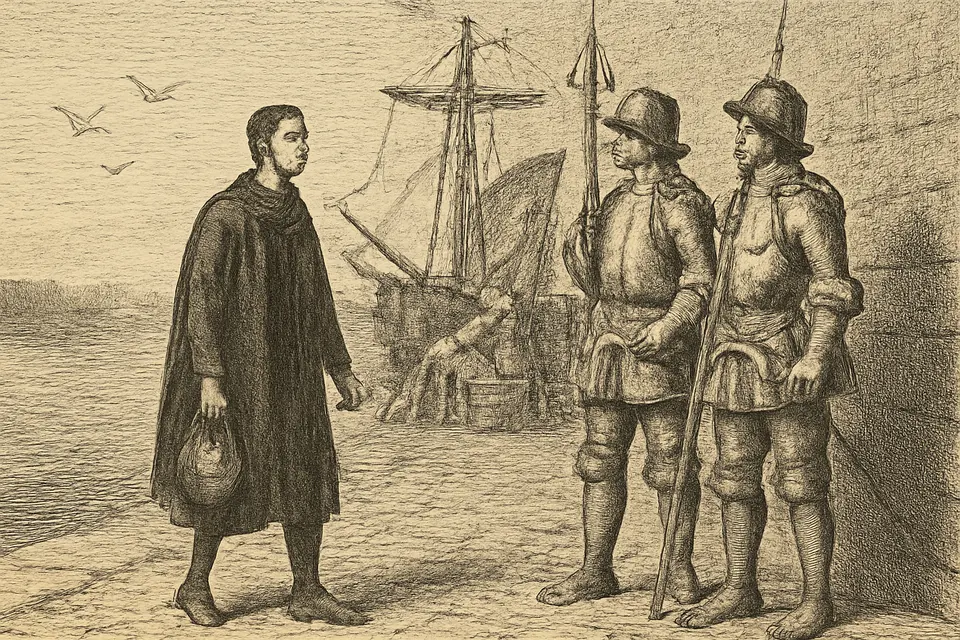
In June 1611 he sailed home. He was arrested on landing at Cork. Questioned by the provincial council, he admitted, in the words of the old account, that he had been a companion in the earls' travels and "had administered the rites of the church to those lords" in exile. He was taken to Dublin and thrown into "the vilest dungeon," while Bishop Conor O'Devany, a Franciscan of about eighty who had been arrested in Ulster the same month, was held in Dublin Castle.
Both were condemned to death in January 1612. Philip O'Sullivan Beare, writing a few years later, records that the viceroy sent councillors to offer the bishop his bishopric and the priest a good living if they would renounce the Catholic Church and accept the king's supremacy. The bishop answered that it was folly to ask an old man to buy a short spell of comfort with eternal punishment. "So also spoke the priest."
February 1, 1612
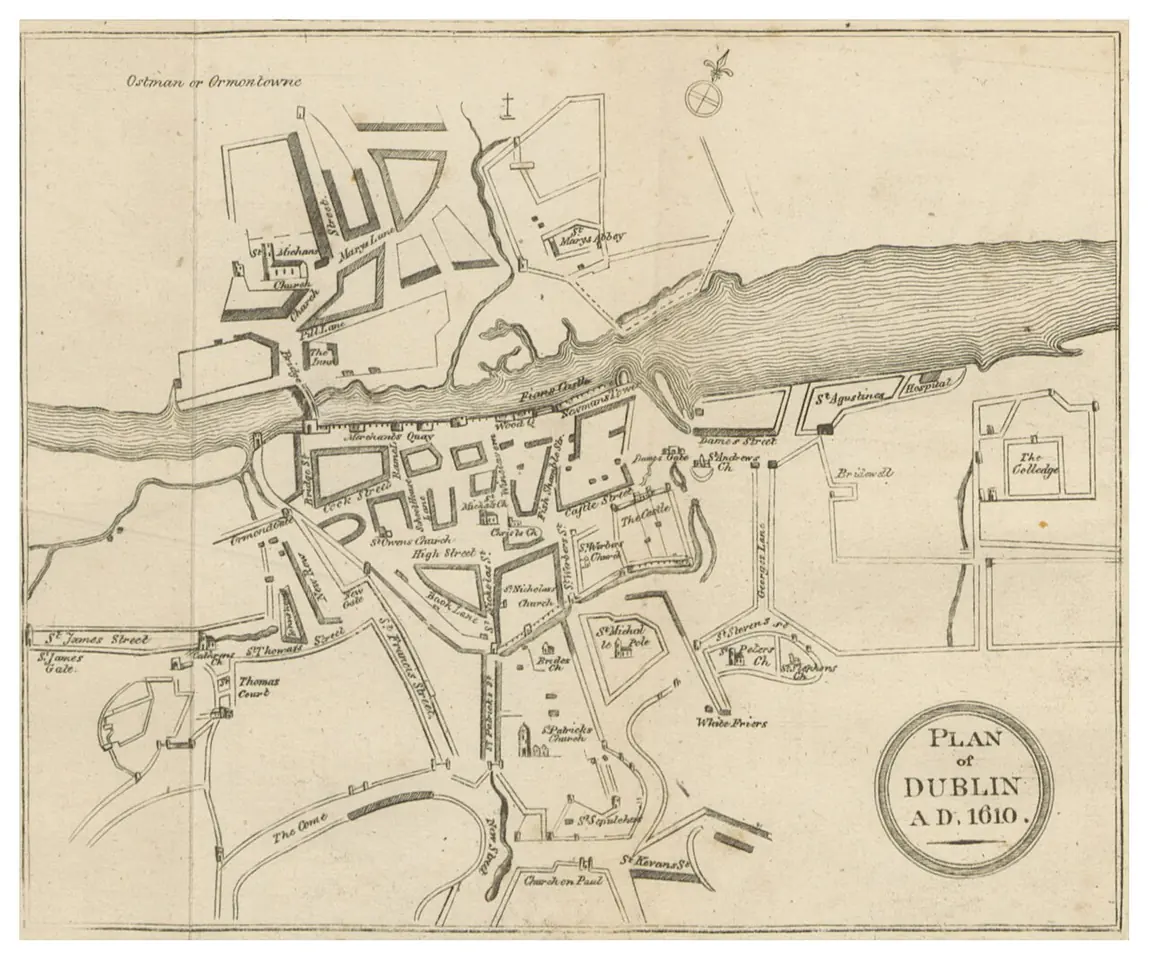
At four o'clock in the afternoon the two men were put in separate carts and drawn through the streets, across the river, to a gallows on George's Hill outside the city. A contemporary account sent to the Irish Franciscans in Louvain says the bishop called out on the way, "Hasten, my friend, to receive your crown," and that the priest answered, "Behold me; I will not hesitate or delay." Townspeople pushed through the soldiers to kneel for the bishop's blessing, and the same account puts the crowd at the hill at five or six thousand.
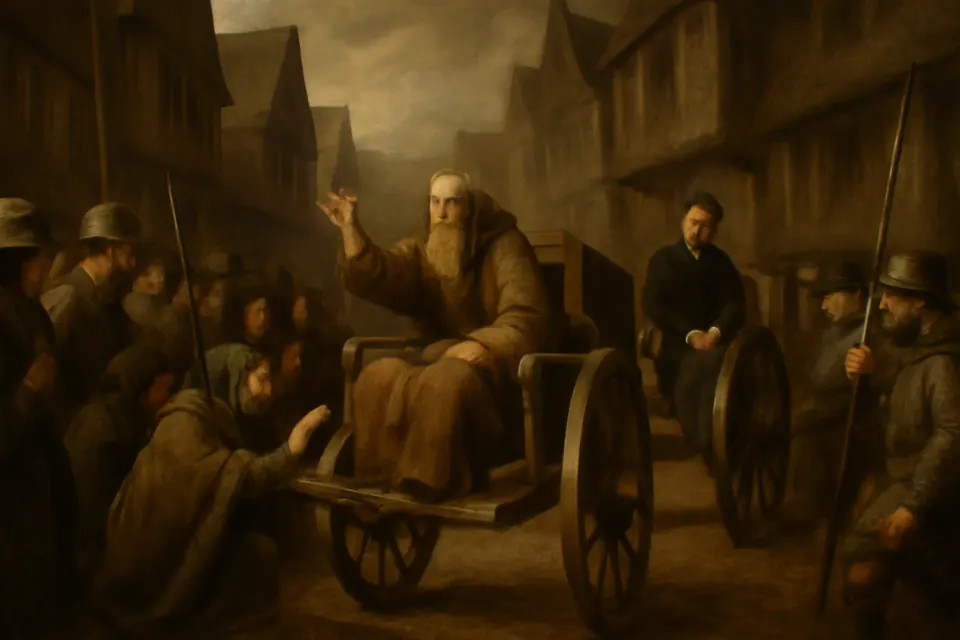
Both men knelt to pray, then climbed the hill and kissed the beams of the gallows. The bishop asked that the priest go first, so that he could support him to the end. The request was refused. "Go, then, before me, reverend father," Patrick said, "and truly without delay will I follow you." Both forgave their executioners. After the bishop's death the officials showed Patrick his bishop's body to frighten him into giving way. David Rothe, the Irish bishop who wrote down their story a few years later, says that "he looked unmoved on the blood of his beloved bishop, and drew strength for his own passion from the sight." He was then put to death in the same way.
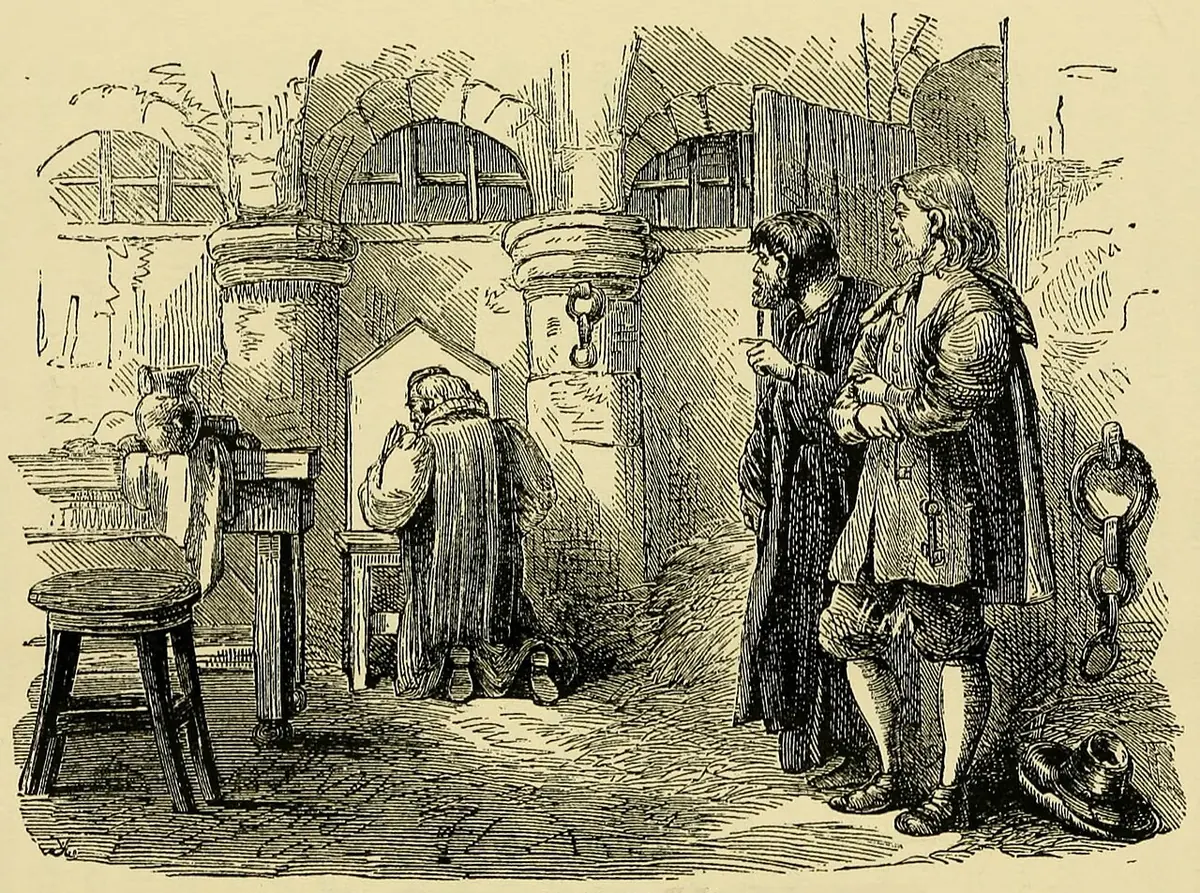
Their remains were buried on the hill and taken up by Catholics the next night for a more honorable burial elsewhere. The place is not known today, so no relics or tomb of Blessed Patrick are known.
His beatification
The seventeen Irish Martyrs, who died between 1579 and 1654, were beatified by John Paul II on September 27, 1992. "Their victory lay precisely in going to death with no hatred in their hearts," the Pope said. As martyrs they did not need miracles for beatification, and we know of no miracle approved through Blessed Patrick's intercession.
Symbols of Blessed Patrick O'Loughran in art
No portrait of him from his lifetime is known, so any image of him is imagined. The signs that belong to him come from his story. The palm is the old mark of every martyr. A stole marks him as a priest, worn over the plain clothes that priests of the penal years used to travel unnoticed. The rope and the ladder recall the gallows on George's Hill, which he climbed after his bishop. When the Irish Martyrs are painted together, look for him beside the white-bearded Franciscan bishop, Conor O'Devany, with whom he shared his trial, his last journey and his death.
Where Blessed Patrick O'Loughran is honored
He is remembered on June 20 with the Irish Martyrs throughout Ireland. In his home country of Tyrone, the Blessed Patrick O'Loughran Primary School in Castlecaulfield, in the parish of Donaghmore, bears his name, and in 2012 the Archdiocese of Armagh marked the 400th anniversary of his death there with a Mass on February 1.
Praying with Blessed Patrick O'Loughran
We have not found a traditional prayer to him with a citable origin, so we do not print one. Ask his help in your own words, especially for priests, for exiles and emigrants, and for the people of Tyrone and Ulster. Let us ask Blessed Patrick O'Loughran to pray for us, that like him we may follow Christ without hesitation or delay.
Frequently asked questions
Who was Blessed Patrick O'Loughran?
An Ulster priest from the parish of Donaghmore in County Tyrone, born about 1577 into an erenagh family that cared for the local church. He studied in Flanders, served as chaplain to Hugh O'Neill, Earl of Tyrone, in exile, and was martyred in Dublin in 1612 for his priesthood.
Why was Patrick O'Loughran executed?
He was charged with helping the Earl of Tyrone and giving the sacraments to the exiled Irish lords. The authorities called it treason, but they offered him a good living if he would give up the Catholic faith and accept the king's supremacy over the Church. He refused, and he died for that refusal.
When is the feast of Blessed Patrick O'Loughran?
June 20, the feast of the Irish Martyrs. He died on February 1, 1612, by the old calendar then used in Ireland, and his home parish in Tyrone also remembers him on that day.
Who died with him?
Bishop Conor O'Devany, the elderly Franciscan Bishop of Down and Connor, who was executed first at the same place, on George's Hill outside the old city. They were beatified together in 1992.
Keep exploring
Sources
- Myles O'Reilly, Lives of the Irish Martyrs and Confessors (New York, 1878), "Right Rev. Cornelius O'Dovany, Bishop of Down and Connor, and Rev. Patrick Locheran". Translates David Rothe's account, Philip O'Sullivan Beare and a contemporary Louvain manuscript; source of the words at the gallows and the offer of a living
- Blessed Patrick O'Loughran Primary School, Castlecaulfield: Blessed Patrick O'Loughran c.1577–1612. His erenagh family in Donaghmore and the 1992 beatification date
- Pope John Paul II, Homily for the creation of twenty-one new Blessed (September 27, 1992)
- Catholic Ireland: The martyrdom of Bishop O'Devaney