St. Elizabeth of Schönau, Benedictine Visionary
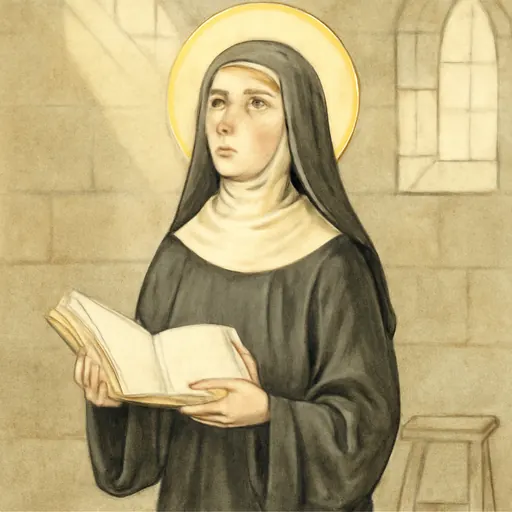
St. Elizabeth of Schönau (about 1129–1164) was a German Benedictine nun at Schönau Abbey, near the Rhine, who from 1152 received visions of Christ, the Virgin Mary, angels and the saints. Her brother Egbert wrote them down in the books of Visions, the Book of the Ways of God and a revelation about St. Ursula that shaped the later legend. Her feast is June 18.
Who was St. Elizabeth of Schönau?
St. Elizabeth of Schönau was a twelfth-century German Benedictine nun whose visions made her, after her friend St. Hildegard of Bingen, the best-known visionary of the Rhineland in her day. She spent almost her whole life in the small convent of Schönau, a double monastery in the hills of the Taunus not far from the Rhine. She was often sick, she suffered much in body and spirit, and from the age of twenty-three she saw Christ, His Blessed Mother, angels and the saints. Her brother Egbert set her visions down in Latin, and they were copied all over Europe. We keep her feast on June 18, the day she died.
The life of St. Elizabeth of Schönau
A child of the cloister
Elizabeth was born about 1129, of a family the Catholic Encyclopedia calls obscure. At twelve she entered the convent of Schönau, a house of nuns attached to the Benedictine abbey that, Butler says, the nobleman Hildelin founded in 1125 before becoming its first abbot. She made her profession in 1147. In 1157 she was made magistra, the superior of the nuns, under Abbot Hildelin. Butler calls her abbess, but strictly the abbot ruled both houses.
The visions begin
From 1152 Elizabeth was favored with ecstasies and visions, usually on Sundays and feast days, during Mass or the Divine Office, or after she had heard the life of a saint read aloud. Sometimes Christ, Our Lady, an angel or the saint of the day appeared and taught her. At other times she saw the Passion, the Resurrection and the Ascension as if they were happening before her. She wrote what she saw on wax tablets.
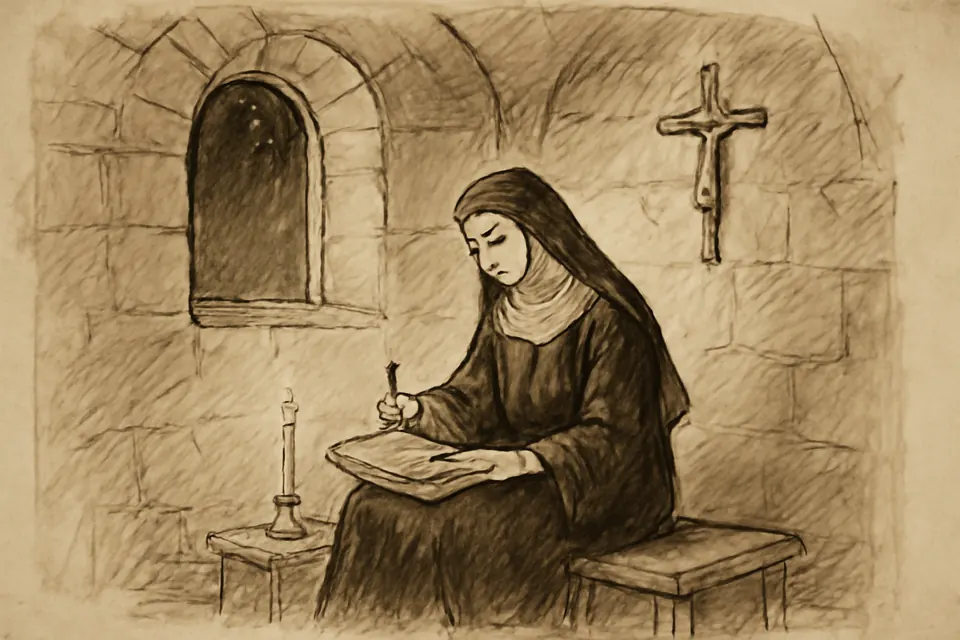
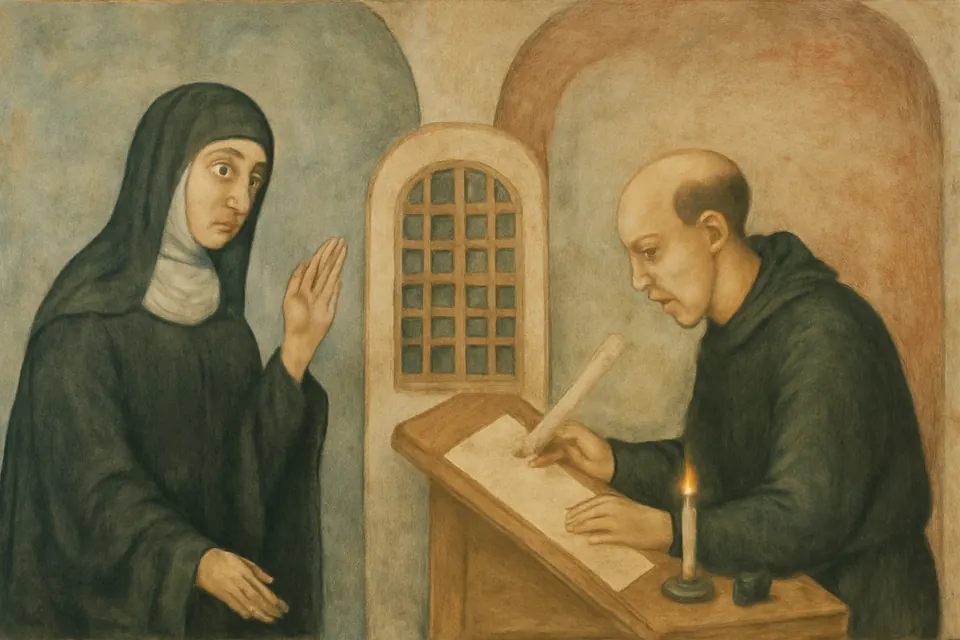
At first she was afraid. The Catholic Encyclopedia says she hesitated, "fearing lest she be deceived or be looked upon as a deceiver." But Abbot Hildelin told her to share them with her brother Egbert, then a priest at Bonn, and she obeyed. Egbert became a monk of Schönau in 1155 and later its abbot. He wrote everything down, arranged it and published it under her name.
Her writings
Three books of Visions came from this work. The Catholic Encyclopedia judges that the first, in very simple language, may easily be Elizabeth's own, while the other two show more of Egbert's hand. The Book of the Ways of God (Liber viarum Dei), modeled on Hildegard's Scivias, calls clergy, monks and lay people to conversion. It warns unfaithful shepherds and worldly monks, and urges resistance to the Cathar heresy. It also sides with the antipope Victor IV against Pope Alexander III, a view the encyclopedia traces to Egbert. Among her visions is also one on the bodily resurrection and assumption of the Virgin Mary into heaven, a belief the Church defined as dogma in 1950.
Her revelation on St. Ursula and her companions, the virgin martyrs of Cologne, became the base of the later Ursula legends. Her books traveled far: by the middle of the thirteenth century they had even been translated into Icelandic. She wrote to Hildegard and told her she was convinced her visions came from God.
She died at Schönau on June 18, 1164, at about thirty-five, and was buried in the abbey church of St. Florin.
The visions and miracles of St. Elizabeth of Schönau
No miracle of Elizabeth has been formally examined, and the Church has never passed judgment on her visions. They are reported private revelations. Opinions differed even in the old days: the abbot Trithemius thought them genuine, while the eighteenth-century theologian Eusebius Amort doubted them because parts disagree with history. We read her best as a witness to the prayer of a twelfth-century nun, faithful to her rule, who suffered and loved God.
Symbols of St. Elizabeth of Schönau in art
She is not often painted, and is easiest to recognize by context. Look for:
- A Benedictine nun in black habit and veil.
- An open book or writing tablets, for the visions she recorded.
- An angel speaking to her, or rays of light from above, as in the engraving on this page.
- In the church at Schönau, a statue beside the side altar where her relic is kept.
Where St. Elizabeth of Schönau is honored
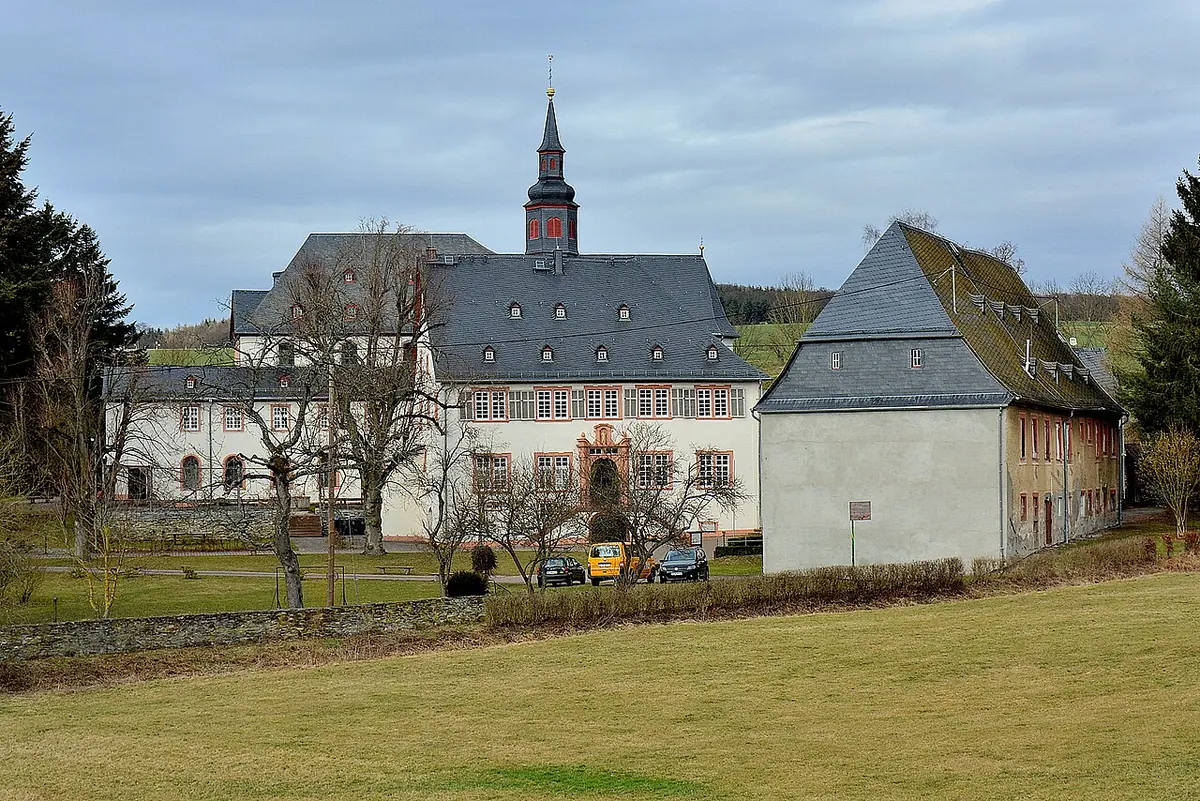
The convent at Schönau ended long ago, but the abbey church of St. Florin still stands at Strüth. Her bones were later moved to a chapel of their own. According to the abbey's local history, soldiers who plundered Schönau during the Thirty Years' War broke open her tomb and scattered her bones, and only the top of her skull was saved. It is kept today in a gilded reliquary on a side altar of the church.

See our feast days calendar for other saints of June.
Prayer to St. Elizabeth of Schönau
We know of no traditional prayer to St. Elizabeth of Schönau in common use. We may ask her, in our own words, to help us listen for God in the liturgy as she did, and to stay faithful in sickness and in doubt. St. Elizabeth of Schönau, pray for us.
Frequently asked questions
When is the feast of St. Elizabeth of Schönau?
June 18, the day she died, in the Roman Martyrology. The Martyrology calls her a virgin 'celebrated for her observance of monastic discipline.' Some local calendars keep June 19.
Was St. Elizabeth of Schönau canonized?
Not formally. She was honored as a saint from the time of her death, and in 1584 her name was entered in the Roman Martyrology, where it has stayed.
Did the Church approve her visions?
No. The Catholic Encyclopedia notes that the Church has never passed judgment on her revelations or even examined them. They are private revelations; Catholics are free to read them with reverence and with caution.
What is the connection between St. Elizabeth of Schönau and St. Ursula?
Elizabeth received a series of revelations about Ursula and her companions, the virgin martyrs honored at Cologne. Her account became the foundation of the later Ursula legends, though the Catholic Encyclopedia calls it full of exaggerations and anachronisms.
Keep exploring
Sources
- Catholic Encyclopedia (1909): St. Elizabeth of Schönau. Her profession in 1147, the wax tablets, Egbert's role, the books of her visions, the antipope Victor IV, the 1584 entry in the Martyrology, and the Icelandic translation
- Alban Butler, Lives of the Saints, vol. VI (1866): St. Elizabeth of Sconauge, Virgin and Abbess. The founding of Schönau and the remark that she was never solemnly beatified
- Biographisch-Bibliographisches Kirchenlexikon, vol. I: Elisabeth von Schönau (F. W. Bautz). Entry at age twelve, made magistra of the nuns in 1157, death on June 18, 1164
- The Roman Martyrology (1916 English edition), June 18