St. Robert of Newminster, Cistercian Abbot
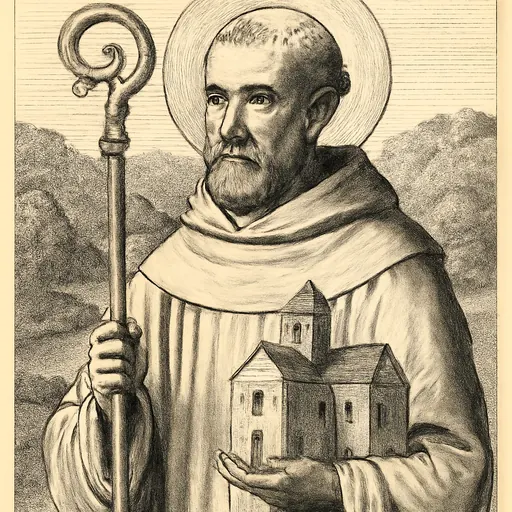
St. Robert of Newminster (about 1100–1159) was a Yorkshire parish priest who became a monk, helped found the great Cistercian abbey of Fountains in 1132 and was sent out to be the first abbot of Newminster, near Morpeth in Northumberland. He was a friend of St. Bernard and of the hermit St. Godric. His feast day is June 7.
Who was St. Robert of Newminster?
St. Robert of Newminster was a twelfth-century English priest and monk who helped found Fountains Abbey, the greatest Cistercian house in the north of England, and then led its first colony of monks to Newminster in Northumberland, where he was abbot for twenty years. He was a man of prayer, gentle with others and hard on himself, a friend of St. Bernard of Clairvaux and of the hermit St. Godric of Finchale. He died on June 7, 1159, and we keep his feast on that day.
He is less famous than his Yorkshire neighbor St. Aelred of Rievaulx, and few details of his life survive. What we know comes from the life of him printed by the fifteenth-century English writer John Capgrave, from the records of the monasteries he founded, and from the traditions about his friend Godric. This page keeps to what those sources say.
The life of St. Robert
A priest from Craven
Robert was born about 1100 in the district of Craven in the West Riding of Yorkshire, probably in the village of Gargrave near Skipton. The Catholic Encyclopedia says he studied at the University of Paris, where he is said to have written a commentary on the Psalms, now lost. He came home, was ordained, and served as parish priest of Gargrave. Butler, in the eighteenth century, says he served "with great assiduity and zeal" and then gave up his living to become a monk.
A monk at York or Whitby
Here the sources part ways. Butler says Robert took the Benedictine habit at the abbey of St. Mary in York. The Catholic Encyclopedia says he became a Benedictine at Whitby, the old abbey on the cliffs where St. Hilda had ruled five centuries earlier, and joined the York monks later with his abbot's permission. Both agree on where he ended up.
The founding of Fountains
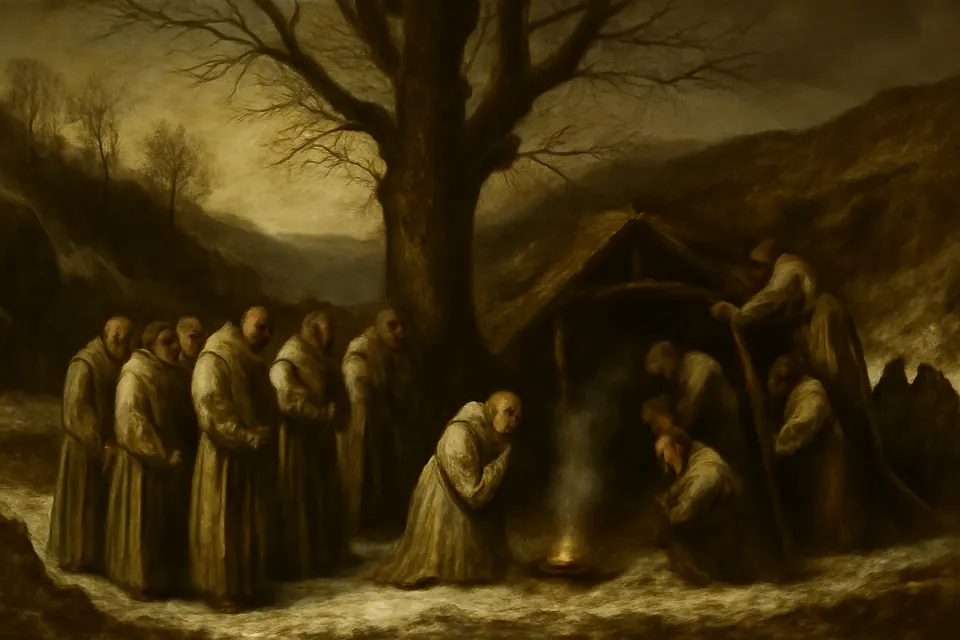
In 1132 Prior Richard of St. Mary's in York and twelve of his monks wanted to live the Rule of St. Benedict in its first strictness, the way the new Cistercians were doing at Rievaulx. With the abbot's leave they left their rich house. Archbishop Thurstan of York gave them a wild valley on the River Skell, and there, in the middle of winter and in extreme poverty, they began a monastery named for the springs that rose there: Fountains. At their request St. Bernard received them into the Cistercian Order. Butler describes the early community living on pulse and roots from their garden, working until they dropped, and singing the Divine Office without a murmur of complaint. Robert, he says, so outshone the rest in fervor that the others watched him to learn how to pray.
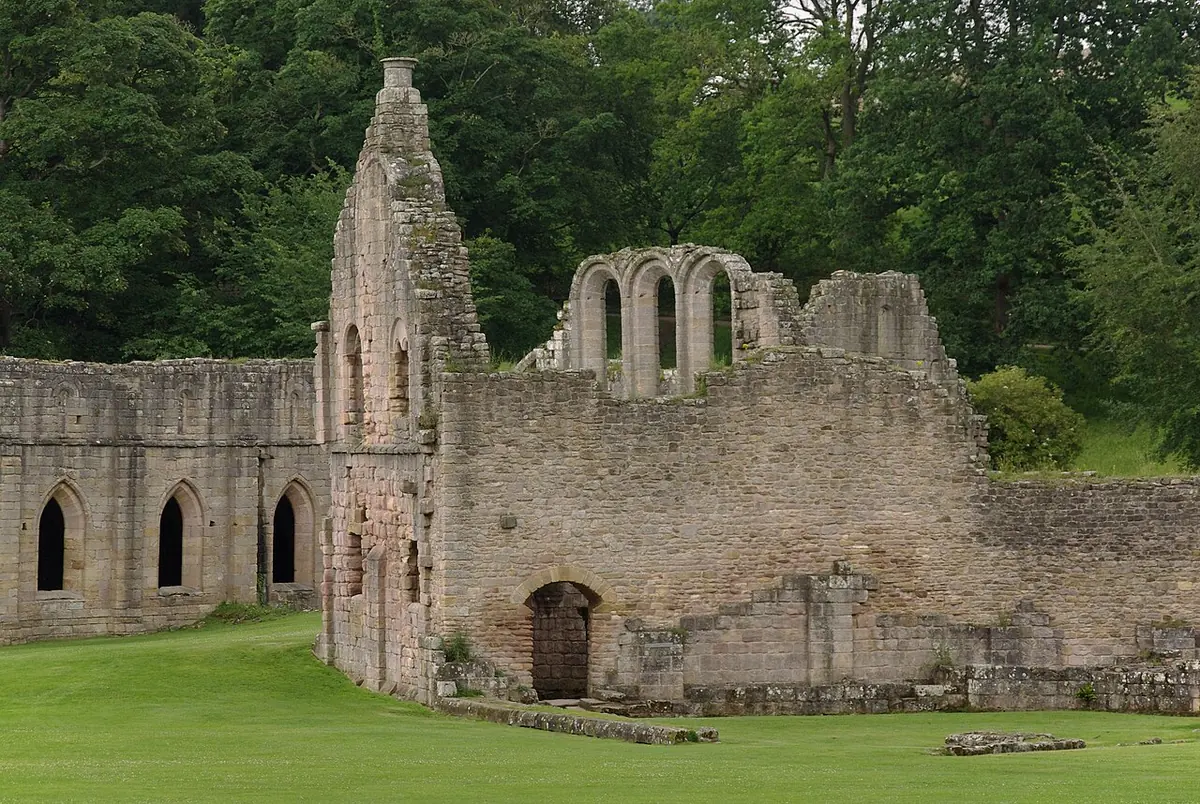
Fountains grew into one of the largest abbeys in England. Its ruins, now a World Heritage Site, still stand in the Skell valley.
First abbot of Newminster
Five years after the founding, Ranulph of Merlay, baron of Morpeth, visited Fountains and was so moved by the monks that he asked for some of them to found a house on his lands. Robert was chosen to lead them. The parish history of St. Robert's in Newcastle says the monks set out in December 1137 and moved into their new buildings on January 6, 1138, and that the bishop of Durham blessed Robert as abbot. Within months Scottish raiders burned the wooden buildings, and rebuilding in stone went on until about 1180, long after Robert's death. The new monastery was called Newminster, the "new minster."
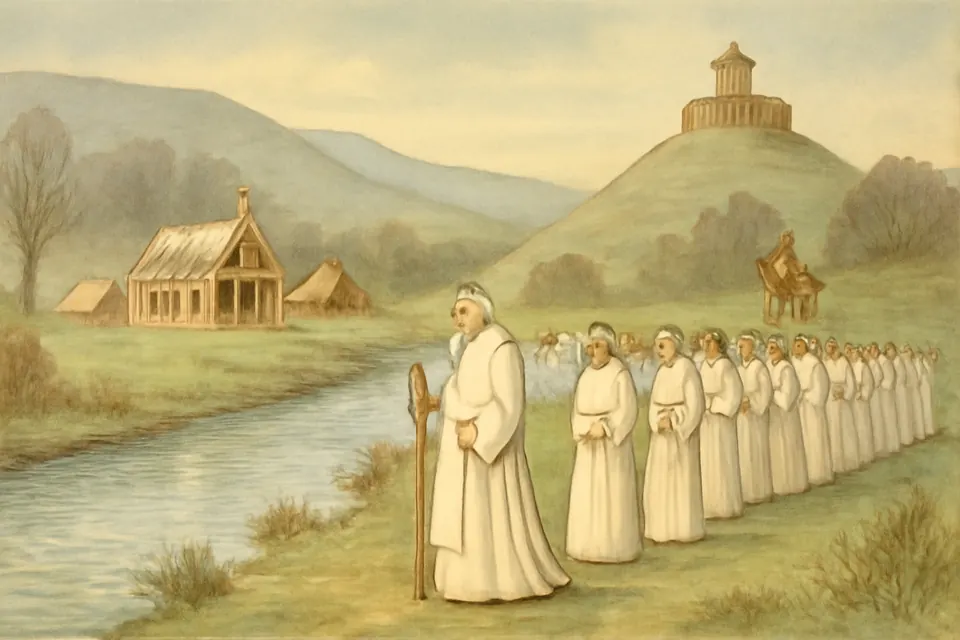
As abbot, Butler says, Robert thought it his duty "not only to walk before his brethren, but to go beyond them all in every religious observance." He prayed for his monks night and day, often in tears, and kept strict fasts, above all in Lent. Under him Newminster became one of the largest Cistercian houses in the north and sent out three colonies of its own: to Pipewell in Northamptonshire in 1143, to Roche in South Yorkshire in 1147, and to Sawley in Lancashire in 1148.

An accusation, and St. Bernard
Capgrave's life tells that some of Robert's own monks accused him of misconduct, and that around 1147–1148 he crossed the sea to answer the charge before St. Bernard at Clairvaux. Bernard believed him, and the story adds that he gave Robert his own belt as a sign of trust. The Catholic Encyclopedia notes that this story may not be true, and may have grown from a wish to link the English abbot personally with the greatest of the Cistercians. What is certain is that the two were bound by the same ideal, and Butler counts Robert among Bernard's friends.
A friend of St. Godric
Robert's other great friendship was with Godric, a former sailor and merchant who lived as a hermit at Finchale on the River Wear near Durham. Godric had no learning, and Butler calls him "a most spiritual man." Robert died at Newminster on June 7, 1159.

The miracles of St. Robert
Butler writes that Robert had "the gift of prophecy and miracles," and that miracles after his death "attested his sanctity to the world." None has come down to us in detail, and none was formally investigated, since his cult began before the Church's modern process. Sorted by the labels this encyclopedia uses:
- Cures at his tomb at Newminster: reported. The Catholic Encyclopedia says his tomb became a place of pilgrimage.
- Godric's vision: traditional. On the night Robert died, the story goes, Godric was at prayer at Finchale and saw his friend's soul carried up toward heaven by angels like a ball of fire, and heard a voice saying, "Enter now my friends."
- The gift of prophecy: traditional, mentioned by Butler without examples.
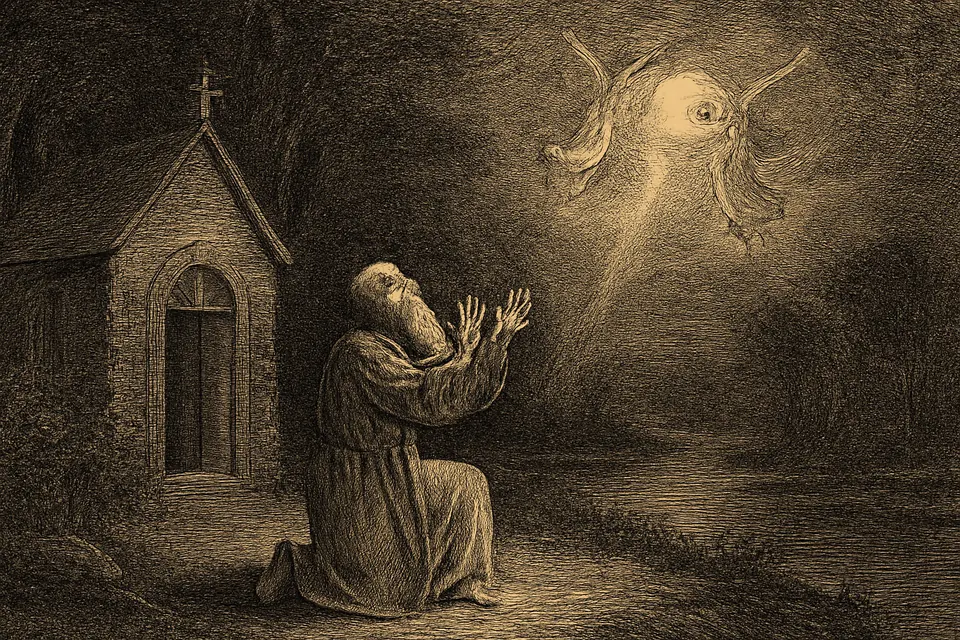
Symbols of St. Robert of Newminster in art
Very few old images of St. Robert survive, which is not surprising for a saint whose shrine was destroyed in the Reformation. In the images that do exist, and in modern statues and windows, look for:
- The white Cistercian habit and cowl: the undyed wool that earned the Cistercians the name "White Monks."
- An abbot's crozier: for his twenty years as abbot of Newminster.
- A model of a church: the usual sign of a founder, here for Fountains, Newminster and the three daughter houses.
- A book: the Rule of St. Benedict, which he kept strictly.
He can be confused with two other abbot saints of his century named Robert who are shown in the same white habit: St. Robert of Molesme, who founded Cîteaux, the mother house of the Cistercians, and St. Robert of La Chaise-Dieu. If the image is in a Cistercian house in France, it is more likely Robert of Molesme; in the north of England, Robert of Newminster.
Newminster and St. Robert today
Newminster was dissolved under Henry VIII in the 1530s, and its stones were carried off for other buildings. Robert's tomb, once a place of pilgrimage, disappeared with it. The parish history in Newcastle says his remains probably still lie somewhere on the site. The ruins stand on private land west of Morpeth, mostly hidden in woods, though some cloister arches have been set up again.
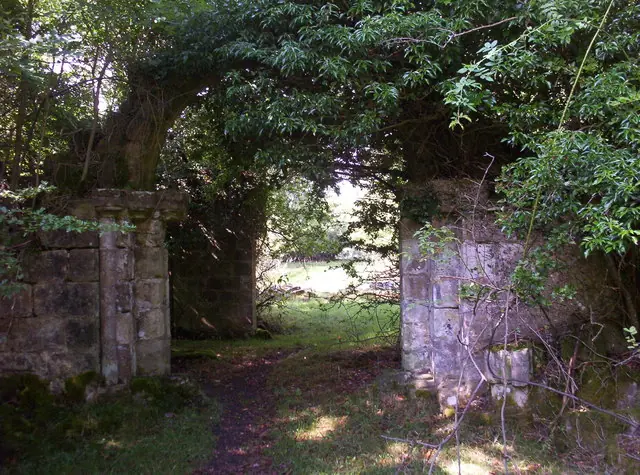
His memory lives on in the Catholic parishes named for him, in Morpeth, in Fenham in Newcastle, and in Catforth in Lancashire, and in the north of England, where his feast is kept on June 7. You can find other saints of early June on our feast days page and other saints of northern England, such as St. Cuthbert and St. Bede, across this encyclopedia.
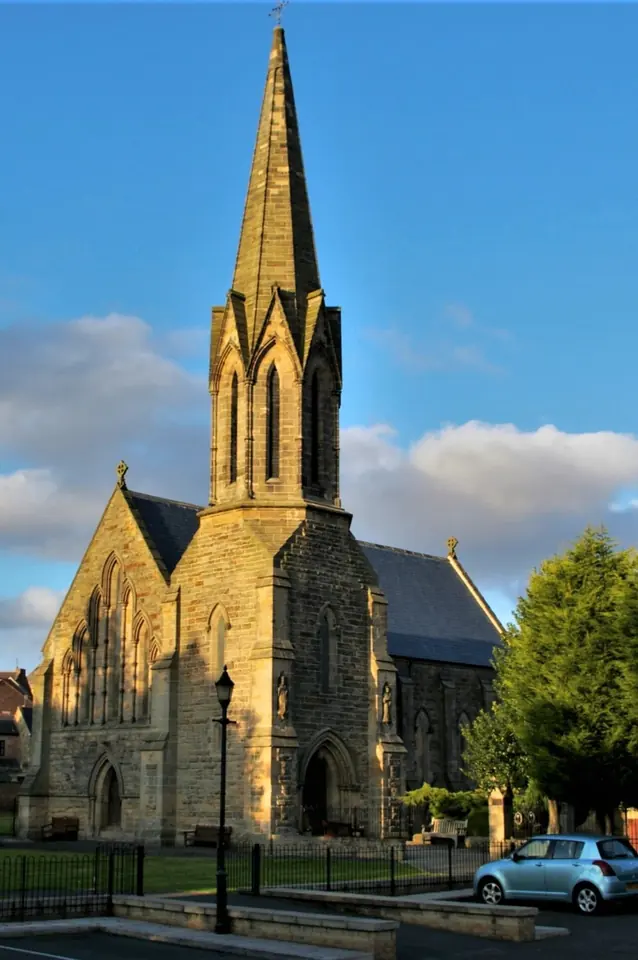
Prayer to St. Robert of Newminster
We have not found a traditional prayer to St. Robert with a citable text, so we won't print one. On his feast, Mass is said with the prayers for an abbot from the Common of Holy Men and Women, and the faithful ask his intercession in their own words.
Let us ask St. Robert, who left a comfortable parish for a cold valley and a poor monastery, to pray for all monks and nuns, for priests, and for everyone who wants to live the Gospel more strictly than before.
Frequently asked questions
Who was St. Robert of Newminster?
An English priest from Gargrave in Yorkshire who joined the founders of Fountains Abbey in 1132 and became the first abbot of its daughter house, Newminster, in 1138. Under him Newminster sent out monks to found Pipewell, Roche and Sawley. He died at Newminster on June 7, 1159.
When is the feast of St. Robert of Newminster?
June 7, the day he died in 1159. Older editions of Butler's Lives of the Saints list him on June 8.
Was St. Robert of Newminster canonized?
Not by a formal process; he lived before papal canonization became the rule. He was honored as a saint from his death, his tomb drew pilgrims, he is named in the Roman Martyrology, and the Cistercian Order approved his cult in 1656.
How is St. Robert of Newminster shown in art?
As a Cistercian abbot in a white habit with a crozier, usually holding a small model of a church, for the abbeys he founded.
Keep exploring
Sources
- Catholic Encyclopedia (1912): St. Robert of Newminster. Gargrave, Paris, Whitby, Newminster about 1138, the daughter houses with dates, Capgrave's story and the doubts about it, his tomb
- Alban Butler, Lives of the Saints (1864 Sadlier ed.), vol. 6: St. Robert, Abbot of Newminster (EWTN). St. Mary's at York, the founding of Fountains, Ranulph of Merlay, his friendship with St. Bernard and St. Godric, the Roman Martyrology
- RC Parish of All Saints, Newcastle (St. Robert's, Fenham): Robert of Newminster, Abbot (1100–1159). The move to Newminster in 1137–1138, the Scottish raid, Godric's vision and the Cistercian approval of his cult in 1656
- Catholic Culture: Liturgical Year, June 7, St. Robert of Newminster