St. Sophia of Ainos, Mother of Orphans

St. Sophia of Ainos was a Byzantine woman of Ainos in Thrace who lost her husband and all six of her children to sickness. She adopted about a hundred orphans over twenty years and gave all she had to the poor. She became a nun and died at 53. The Orthodox Church keeps her feast on June 4.
Who was St. Sophia of Ainos?
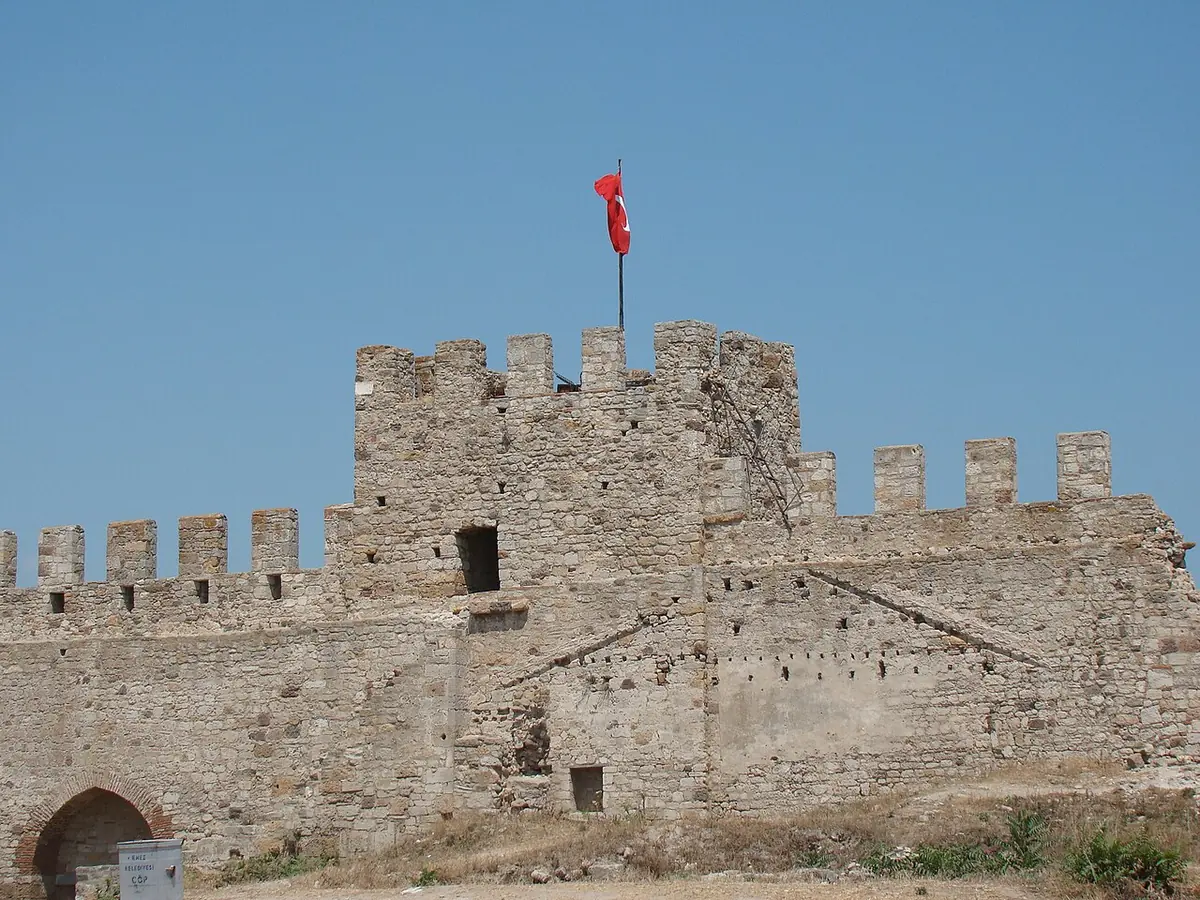
St. Sophia of Ainos was a Byzantine widow of Thrace who buried her whole family and then became a mother to a hundred children who were not her own. She lived in Ainos, an old port town at the mouth of the Evros River on the northern Aegean coast, today Enez in Turkey, sometime in the tenth or eleventh century. The Orthodox Church honors her as a holy mother, "Venerable" Sophia, and keeps her feast on June 4. She is sometimes called St. Sophia the Mother of Orphans.
We know little about her beyond what the Orthodox life tells, and it is brief. We give it here as it has come down to us.
The life of St. Sophia
A wife and mother in Ainos
Sophia was born in the province of Ainos to prominent, wealthy Christian parents. When she was of age, they arranged her marriage, and she and her husband had six children. The Orthodox life says that though she was busy with the cares of a household, she kept God's commandments and loved to go to church, and so she grew in virtue.
Grief
Then sickness took her husband, and after him, one after another, all six of her children. We are not told how long it took or what illness it was. We are told only that she did not despair and turned even more to God.
A hundred children
Sophia found comfort in caring for those who had lost what she had lost. She protected orphans and widows and spent her days in almsgiving, prayer and fasting. Over twenty years, the Orthodox life says, she adopted one hundred children and raised them to love God.

She sold her property and gave the money to the poor and to widows. She ate only bread and water and would rather go without what she needed herself than let a poor person leave her door with empty hands. The psalms were always on her lips, the Orthodox life says, and tears came often to her eyes.
The miracle of the wine jar
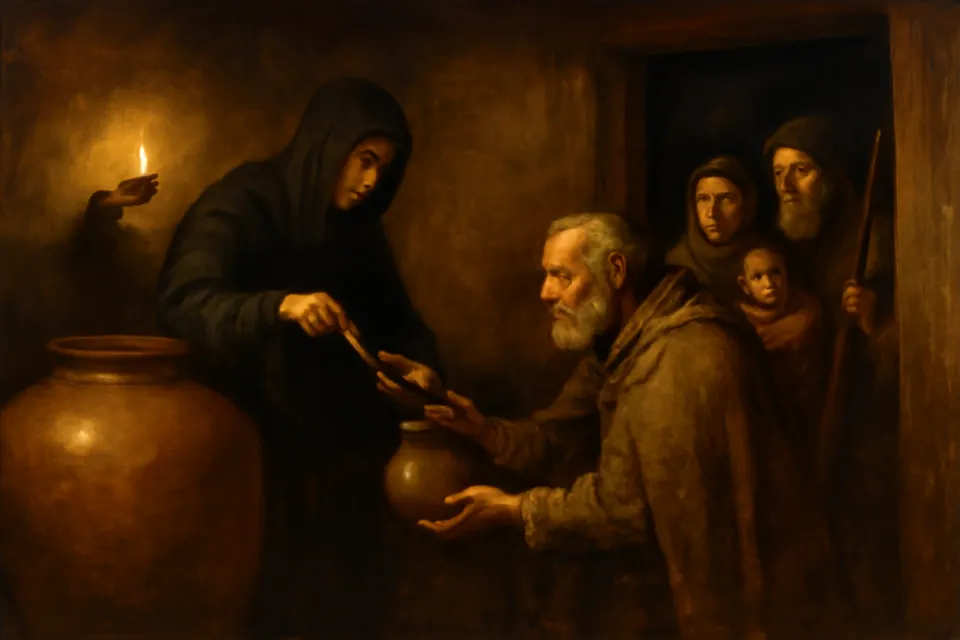
The one wonder told of her is a traditional miracle, from the Orthodox life. In her home she kept a jar of wine set aside for the poor. She noticed that however much she drew from it, it stayed full. When she told someone about it and gave glory to God, the jar went empty.
Sophia took it hard. She believed the wine had failed because she was unworthy, and she increased her fasting and prayer until her health suffered. The Orthodox life draws a lesson from her: the ascetic life can be lived in the world, and when it goes hand in hand with selfless charity, God works wonders, but "it is enough to live this way 'in secret.'"
Her last days
When she sensed her end was near, Sophia received the tonsure and became a nun, and from then on she gave herself completely to the worship of God. She died in peace at fifty-three.

St. Sophia, mother of orphans
No formal patronage has been given to her, but the name the Orthodox life records, the Mother of Orphans, says what she was. She took in a hundred children over twenty years, after losing six of her own. Her story speaks to anyone who has buried a husband, a wife or a child and wondered how to go on. See other saints honored by families and children on our patron saints page.
Symbols of St. Sophia in art
We have found no old icon or painting of St. Sophia. Modern Orthodox icons show her as a Byzantine nun in a dark veil and mantle, holding a cross or with her hands raised in prayer, as the Church paints holy women who ended their lives in monastic vows. Look for her name in the inscription, since many holy women named Sophia are painted the same way, including the martyr Sophia, mother of Faith, Hope and Love.
Her feast day
The Orthodox Church keeps her feast on June 4. See more saints of the season on our feast days page.
Prayer to St. Sophia of Ainos
The Orthodox Church sings a troparion (tone 8) for her feast that praises her for taking up the cross and following Christ, and for teaching us that the flesh passes away while the soul matters most. It is a fitting hymn for a widow who buried her husband and six children and then gave her life to the orphans; the OCA prints the full text on its website.
Let us ask St. Sophia of Ainos to pray for orphans and the families who take them in, for widows, and for every mother and father who has buried a child.
Frequently asked questions
Who was St. Sophia of Ainos?
A wealthy Christian woman of Ainos in Thrace who lived in the tenth or eleventh century. After her husband and six children died, she devoted herself to orphans and widows, adopting about a hundred children, and is remembered as the Mother of Orphans.
When is the feast of St. Sophia of Ainos?
June 4 in the Orthodox Church.
Where is Ainos?
Ainos was a Greek and Byzantine town at the mouth of the Evros (Maritsa) River on the Aegean coast of Thrace. Today it is Enez, in Edirne Province, Turkey.
Keep exploring
Sources
- Venerable Sophia of Ainos, Orthodox Church in America. Her life: six children, the hundred adopted orphans, the wine jar, her tonsure, her death at 53 and her dates (10th–11th century)
- Venerable Sophia of Ainos, Troparion and Kontakion, Orthodox Church in America. Full text of the troparion