St. William of York, Archbishop and Patron of York
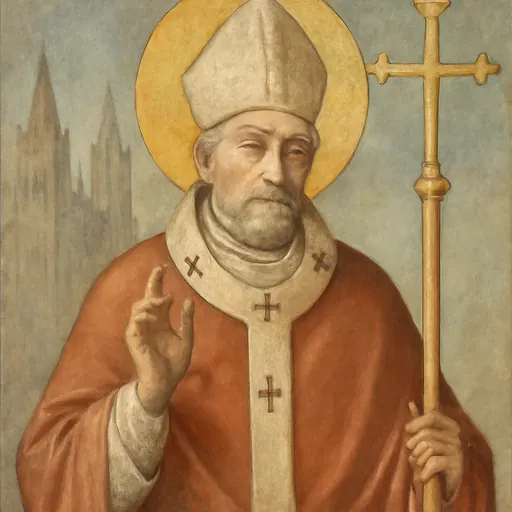
St. William of York (William Fitzherbert, died 1154) was an Archbishop of York accused of simony, opposed by St. Bernard and the Cistercians, deposed, and restored a few weeks before his sudden death. Miracles reported at his tomb led Pope Honorius III to canonize him in 1226. He is the patron saint of York, and his feast is June 8.
Who was St. William of York?
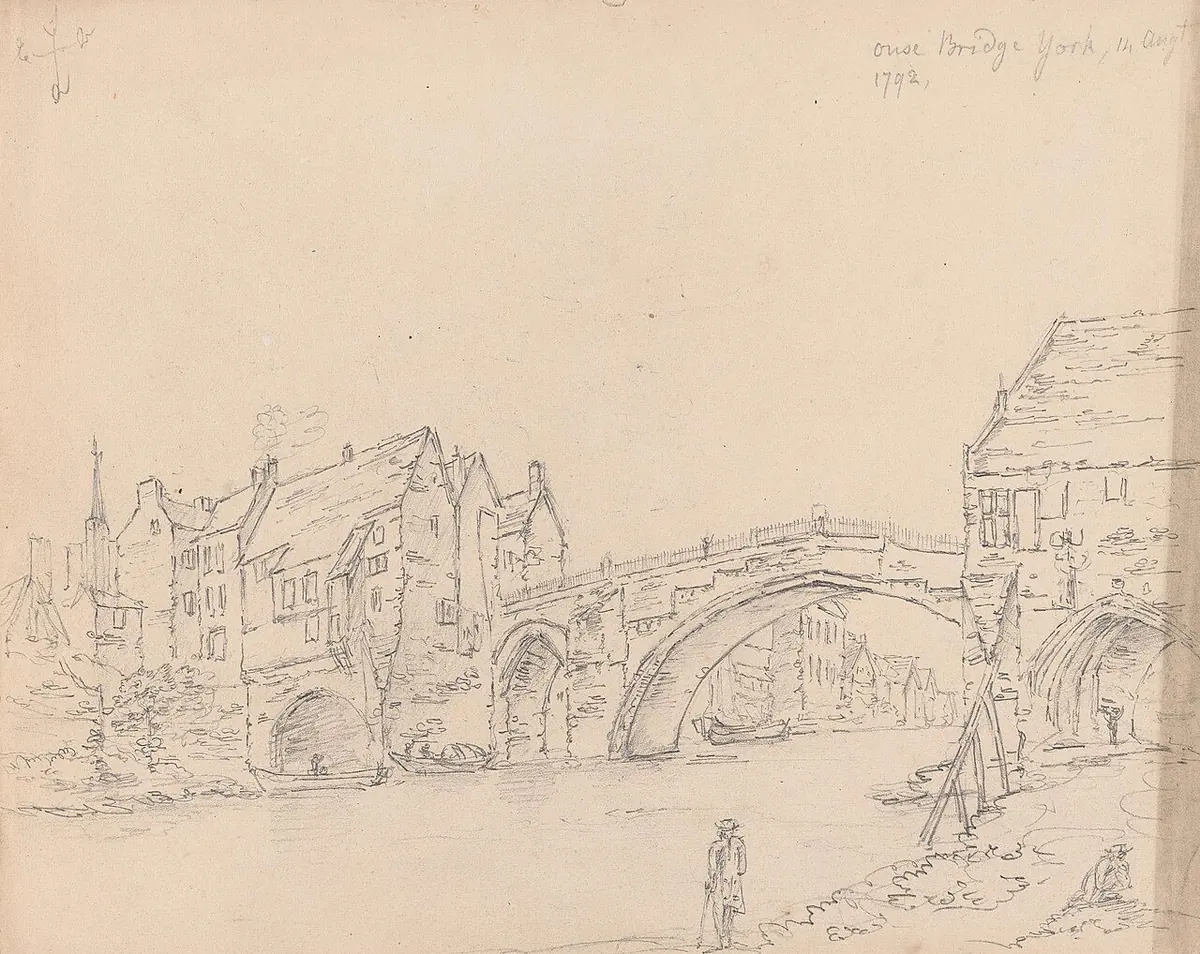
St. William of York was William Fitzherbert, a 12th-century Archbishop of York whose life was one long quarrel he never wanted. Elected in 1141 with the backing of King Stephen, he was accused of buying his office, opposed by St. Bernard of Clairvaux and the reforming Cistercian monks of Yorkshire, consecrated, then suspended and deposed by the pope. He spent six quiet years in prayer at Winchester. In 1154 a new pope restored him, and the people of York met him with such crowds that the Ouse Bridge collapsed under them. A month later he was dead.
The people of York had no doubt about him. Healings were reported at his tomb, his cult grew for seventy years, and in 1226 Pope Honorius III declared him a saint. He is the patron saint of York, and the great St William Window in York Minster still tells his story in 95 panels of medieval glass.
His feast day is June 8. We honor him as a gentle pastor who was wronged, waited on God without bitterness, and forgave the men who had worked against him.

Early life: a well-connected churchman
William's family stood close to the throne. According to the Catholic Encyclopedia, tradition makes him a nephew of King Stephen through his mother, Emma, believed to be the king's half-sister, while his father, Herbert of Winchester, was treasurer to King Henry I. The exact year of his birth is not known.
He became a priest and, by about 1130, was a canon and treasurer of York Minster. He was also a royal chaplain. Everything we know about his character from this period points the same way: he was kind, easygoing and well liked. Even the Cistercian writers who disliked him did not accuse him of cruelty. Their complaints were about how he got his office, not how he treated people.
The disputed election of 1141
When Archbishop Thurstan of York died in 1140, the chapter of York had to choose a successor. Their choice fell on William, with the clear support of King Stephen. That support was the problem. England was in the middle of the civil war between Stephen and the Empress Matilda, and Church reformers were determined to keep kings out of bishops' elections.
The Cistercian abbots of Yorkshire, led by the monks of Rievaulx and Fountains, backed another candidate, Henry Murdac, a Cistercian. They charged that William's election was simoniacal (bought) and forced by royal pressure. Archbishop Theobald of Canterbury, the same Theobald who would later raise up St. Thomas Becket, refused to consecrate William until Rome had ruled.
St. Bernard against William
The most powerful voice against William belonged to St. Bernard of Clairvaux, the leading churchman of the age. The Catholic Encyclopedia says Bernard "exercised his powerful influence against William in favour of Murdac," and he wrote to one pope after another on the matter.
It is one of the stranger facts of Church history that both men are saints. Bernard believed he was defending the freedom of the Church against royal interference. William, as far as anyone could prove, had done nothing wrong. Holiness does not make good men agree on every question, and the Church honors both.
Consecration, suspension and deposition
In 1143 the pope ruled that William could be consecrated if he cleared himself on oath of the charge of bribery and if the chapter showed there had been no undue royal pressure. William did, and on September 26, 1143, he was consecrated at Winchester.
He began well. The Catholic Encyclopedia says that "his gentleness and charity soon won him popularity." But he was slow to collect the pallium, the woolen band an archbishop receives from the pope, and the pope who had sent it died before William was invested. The next pope, Blessed Eugenius III, was himself a Cistercian, a former monk of Bernard's own Clairvaux, and the complaints began again.

Eugenius suspended William. Then William's supporters in Yorkshire made everything worse: angry at the Cistercians, a band of them attacked Fountains Abbey, where Murdac was abbot, and set it on fire. William had not ordered the attack, but it ruined his cause. In 1147 the pope deposed him and consecrated Henry Murdac as Archbishop of York in his place.
The quiet years at Winchester
William did not raise an army or a faction. He went to Winchester and lived for six years in prayer and penance. The Catholic Encyclopedia describes it simply: he "devoted himself to prayer and mortification at Winchester till 1153."
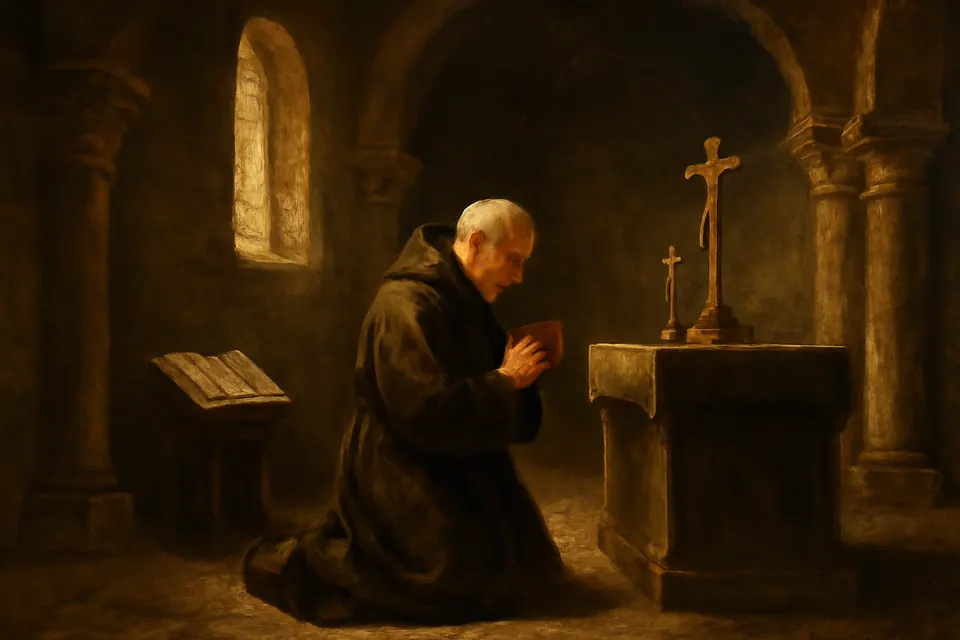
This is the part of his life that made him a saint in the eyes of many who knew him. He had been treated harshly, whatever his faults, and he did not answer with bitterness. When we are falsely accused, misunderstood or pushed aside, William shows us a way through it: keep praying, keep quiet, and leave the verdict to God.
Restored to York, and the Ouse Bridge
In 1153 the three great obstacles to William's return died within a few months of one another: Pope Eugenius III, St. Bernard and Henry Murdac. William went to Rome and appealed to the new pope, Anastasius IV, who restored him to his see and gave him the pallium at last.
York Minster's own account says he came back to the city on May 9, 1154. The people turned out in such numbers that, as he crossed the river, the timbers of the wooden Ouse Bridge gave way and threw many of them into the water.

His kindness to his old enemies
What William did next tells us more about him than any miracle. According to the Catholic Encyclopedia, once he was back in York he "showed the greatest kindness to the Cistercians who had opposed him, and promised full restitution to Fountains Abbey." The man who had lost his see to the Cistercians promised to repair the abbey his own supporters had burned.
The death of St. William of York
He did not have long. A few weeks after his return, William fell violently ill while celebrating Mass, and he died on June 8, 1154. Rumors spread at once that his communion chalice had been poisoned. One of his rivals, Osbert, the archdeacon of York, was accused, but York Minster notes that "Osbert's case never came to trial." The truth is not known, and the Minster's own historians call his death "an unsolved medieval mystery."
He was buried in York Minster, at the east end of the nave.
The miracles of St. William of York
The miracles attributed to William are recorded in a Latin Life, probably written in the 1220s, in later miracle stories, and in the panels of the St William Window. They were not tested by the kind of process the Church uses today, but the reports from his tomb were the reason Pope Honorius III canonized him.
- The Ouse Bridge (traditional). As York Minster tells it, when the bridge collapsed in May 1154, William, "seeing the carnage, prayed to God for those in peril to be saved and he made the sign of the cross over them. All were saved." York has long counted this as his first miracle.
- Healings at the tomb (reported). People "from all walks of life, rich and poor, young and old" came to his tomb asking for help, and many reported cures. The York Glaziers Trust notes that miracles were recorded there from 1177 onward.
- The sweet oil of 1223 (reported). In 1223 a sweet-smelling oil flowed from William's tomb. York Minster says William "is the first English saint recorded to have performed this miracle."
- The falling stone (reported). A canon's servant fell asleep during Matins, leaning against the pulpit, and a heavy stone fell on his head. He got up unharmed and thanked St. William. The stone itself is on display in York Minster's 2026 anniversary exhibition.
- King Edward I (reported). Edward I accepted an invitation to the translation of William's relics. Later he survived a near-fatal fall from a mountain in Wales, and he credited his escape to St. William, whom he had promised to honor.
- The ship with a broken mast (traditional). Sailors caught in a storm reported that William appeared to them in a vision and kept their damaged ship from being driven onto the rocks.

Some of the window's panels are homely, too. One shows a woman who accidentally swallowed a frog and was cured at the tomb. The medieval glaziers did not think any trouble was too small to bring to a saint, and neither should we.
Canonization and the shrines
In recognition of the miracles reported at his tomb, Pope Honorius III canonized William in 1226. Some older works, including the Catholic Encyclopedia, give the year as 1227; York Minster, which marked the 800th anniversary in 2026, uses 1226.
His relics were moved in 1284 to a new shrine, an event recorded in the St William Window and attended by King Edward I. Over the centuries at least four structures were raised in William's honor, and York Minster had two great shrines to him, one in the nave and one in the quire. His tomb became one of the most visited pilgrim sites in England.

Between 1538 and 1541, during the English Reformation, the two-story stone shrine over his tomb was dismantled and buried under the streets of York. York Minster notes that "the care taken to hide the pieces suggests a hope that one day the shrine would be found and restored." The fragments were dug up later and kept in the Yorkshire Museum. In January 2026, for the 800th anniversary of his canonization, they returned to the Minster for the first time in nearly 500 years.
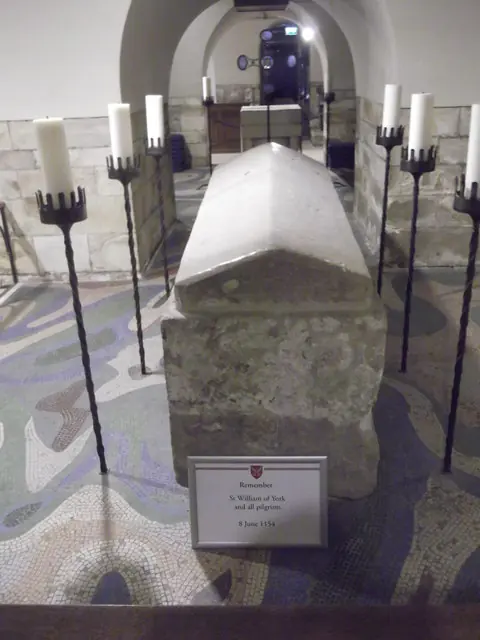
His stone sarcophagus survived. York Minster says that the top of it has been "worn smooth by the countless hands reaching out in prayer," and that it now lies in the Minster's crypt, "a site of pilgrimage still."
The St William Window
The greatest monument to William is not a shrine but a window. The St William Window, in the north quire aisle of York Minster, dates to about 1414 and is attributed to John Thornton, the glazier of the Great East Window. It was given by the Ros family of Helmsley, who kneel in the donor panels at the bottom, led by Lady Beatrice de Ros.
Above them, 95 scenes tell William's life and miracles, from his early life through the bridge collapse, his death, the miracles at his tomb, his canonization and the translation of his relics. The York Glaziers Trust calls it "one of the largest cycles of the life of a saint in existence."
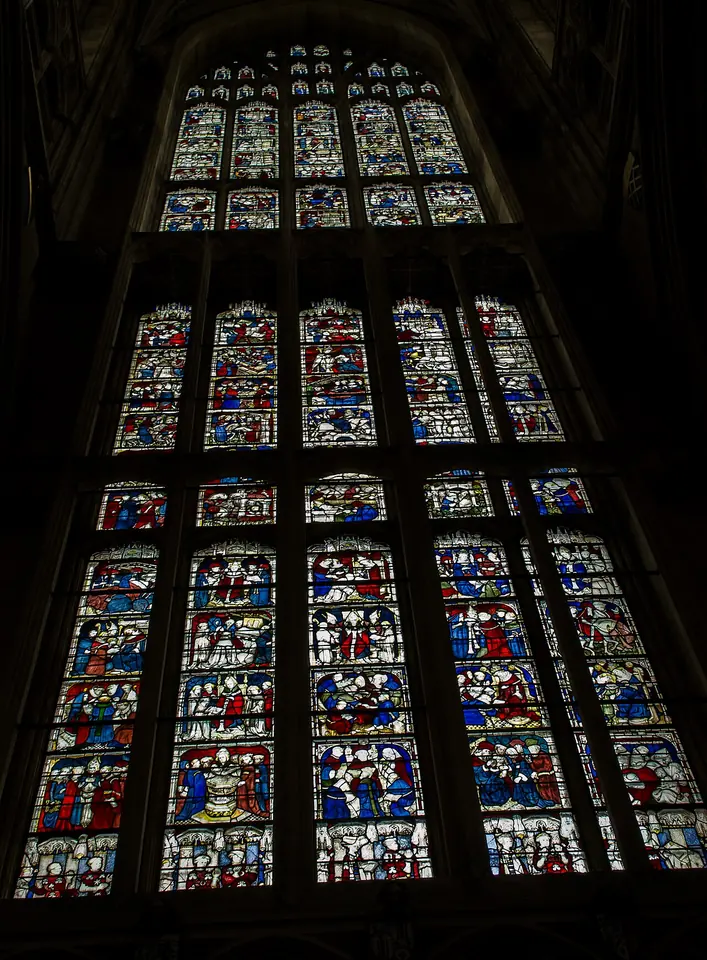
For centuries the panels were out of order, and the window was in poor condition. The York Glaziers Trust restored it between 1997 and 2007, and research by Professor Christopher Norton of the University of York found the original sequence. Today the story can be read again as Thornton meant it, starting at the bottom left and climbing row by row.
Why St. William is the patron saint of York
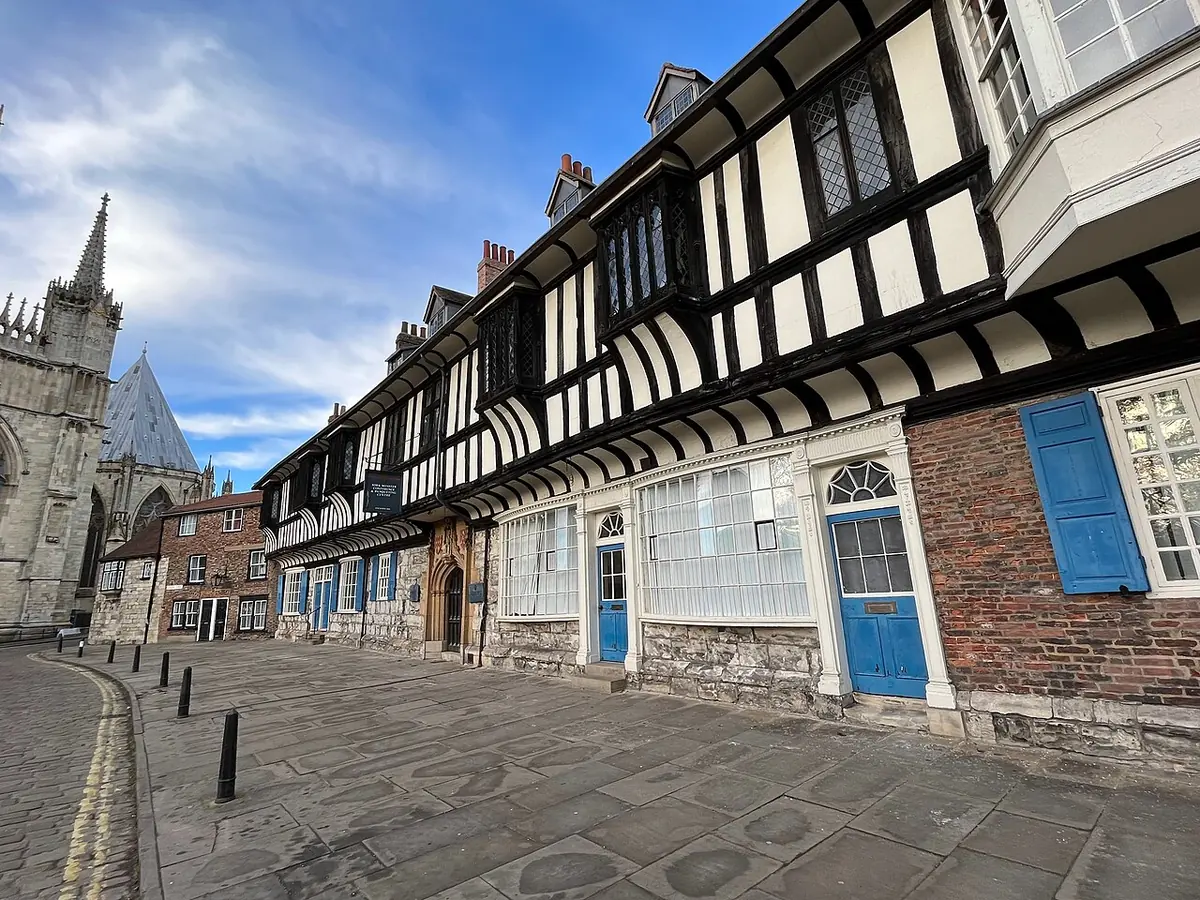
William is York's own saint. The York Glaziers Trust calls him "the Minster's own archbishop saint," and York Minster calls him "our city's patron saint." Pilgrims came to his tomb for nearly four centuries, and the timber-framed St William's College near the Minster was founded in 1456 for the priests of St. William's chantry.
Patron of the falsely accused
William is also invoked by people who are wrongly accused or unjustly treated. This is not an ancient formal patronage, but it fits his story well: he was charged with simony, never convicted of it, removed from his office, and restored only after years of waiting. Independent Catholic News, reporting on the 2026 anniversary, calls him the patron saint of victims of injustice. For anyone caught in a slander or a workplace injustice, he is a good saint to know.
Symbols of St. William of York in art
William is not shown often outside England, and his images are easiest to recognize at York.
- Archbishop's vestments and pallium. Like other archbishops, he wears a miter, chasuble and the white woolen pallium marked with crosses. The pallium has a special meaning in his story, since his delay in receiving it helped bring about his fall.
- Archiepiscopal cross and crozier. He usually holds a cross on a tall staff, the sign of an archbishop, or a bishop's crozier.
- The Ouse Bridge. Scenes of a broken bridge with people in the river point to his first miracle. In the St William Window it appears in the panel numbered 9c.
- Pilgrims at his tomb. Many panels show the sick and troubled gathered around his shrine, a reminder that his fame came from the people who prayed at his grave.
In York Minster, look for him in the Great East Window, where John Thornton placed him among the churchmen of York, and in the St William Window, where nearly every panel shows him. A small number of modern Catholic churches in England are dedicated to him, including St. William of York in Stanmore, northwest London.
Feast day and where St. William is honored
St. William's feast day is June 8, the day he died. It is kept in England, especially in York. See our feast day calendar for other saints honored in early June.
The place to honor him is York Minster. His sarcophagus lies in the crypt, and the anniversary exhibition St William of York: Life and Legacy, with fragments of his shrine, a Sicilian ivory casket and the stone from the miracle of the falling stone, runs in the Minster's Treasury until January 2027. The St William Window is in the north quire aisle.
A few hundred yards away, Ouse Bridge still crosses the river at the same point, although the present bridge dates from the early 19th century. The medieval stone bridge that replaced the timber one stood until then.
Prayer to St. William of York
No prayer written by St. William survives, and we have not found a traditional English prayer to him with a source we can cite, so we will not print one. His feast is still kept on June 8 in the calendar of the Diocese of Leeds.
We can still ask his help in our own words. Let us ask St. William of York to pray for us when we are slandered or wrongly judged, that we may keep our peace as he did at Winchester, wait on God's time, and forgive those who have wronged us. Let us also pray for the city of York and its cathedral, which he loved, and for all bishops, that they may be gentle shepherds as he was. A visit to his tomb, a quiet prayer before the St William Window, or the simple words "St. William of York, pray for us" are all good ways to begin.
The legacy of St. William of York
William's life would make a poor story for anyone who likes clear heroes and villains. A reformer saint opposed him. A Cistercian pope removed him. His friends burned an abbey in his name. And yet the people of York, who knew him, remembered him as kind, and the Church agreed with them.
His story is also a reminder of how slowly the truth sometimes comes. William waited six years at Winchester, a few weeks in York, and seventy years in his grave before the Church called him a saint. The shrine over his tomb waited nearly five hundred years under the streets of York before it came home. In 2026, eight hundred years after his canonization, the pieces of it are back in his cathedral.
Frequently asked questions
When is St. William of York's feast day?
June 8, the anniversary of his death in 1154. It is kept in England, especially in York and the Yorkshire dioceses, but it is not on the General Roman Calendar.
Why is St. William of York a saint?
Reports of healings began at his tomb in York Minster after his death, and they continued for decades, including a flow of sweet-smelling oil from the tomb in 1223. In recognition of these miracles and the devotion of the people, Pope Honorius III canonized him in 1226.
Was St. William of York poisoned?
Nobody knows. He fell violently ill after celebrating Mass in June 1154 and died within days. Rumor blamed poison in his chalice, and Archdeacon Osbert was accused, but the case never came to trial. York Minster calls his death an unsolved medieval mystery.
What is the Ouse Bridge miracle?
When William returned to York as archbishop in May 1154, the crowds packed onto the wooden Ouse Bridge were so heavy that it collapsed and threw many people into the river. William prayed and made the sign of the cross over them, and the story says no one died. It was counted as his first miracle.
Where is St. William of York buried?
In York Minster. His great shrines were dismantled during the Reformation, but his stone sarcophagus survives and now lies in the Minster's crypt, where pilgrims still come to pray.
What is St. William of York the patron saint of?
He is the patron saint of the city of York. Because he was cleared of the charges brought against him only after years of exile, he is also invoked by people who are falsely accused or treated unjustly.
What is the St William Window?
A huge stained glass window in the north quire aisle of York Minster, made about 1414 and attributed to John Thornton. Its 95 story panels show William's life and miracles, one of the largest cycles of a saint's life in medieval glass.
Keep exploring
Sources
- Catholic Encyclopedia (1912): St. William (Archbishop of York)
- York Glaziers Trust, Stained Glass Navigator: The St William Window
- York Minster: The Miracles of St William of York (Collections)
- York Minster: The Life of St William of York, Part 3 (video transcript, 2026)
- York Minster: The lost shrine of St William of York returns to York Minster for the first time since the Reformation
- York Minster: Restoring St William's College
- Independent Catholic News (Feb. 1, 2026): Lost shrine returns to York Minster