Blessed Thomas Green, Carthusian Martyr of the London Charterhouse
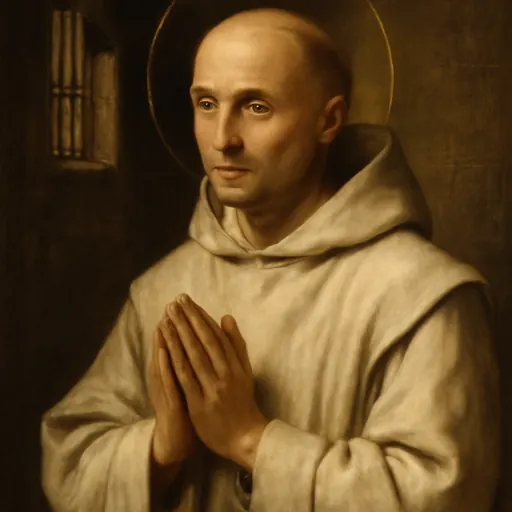
Blessed Thomas Green (sometimes searched as St. Thomas Green) was a priest-monk of the London Charterhouse who refused to accept Henry VIII as head of the Church. Chained in Newgate prison with nine of his brothers and left to starve, he died there on June 10, 1537, his feast day. Pope Leo XIII confirmed his title of Blessed in 1886.
Who was Blessed Thomas Green?
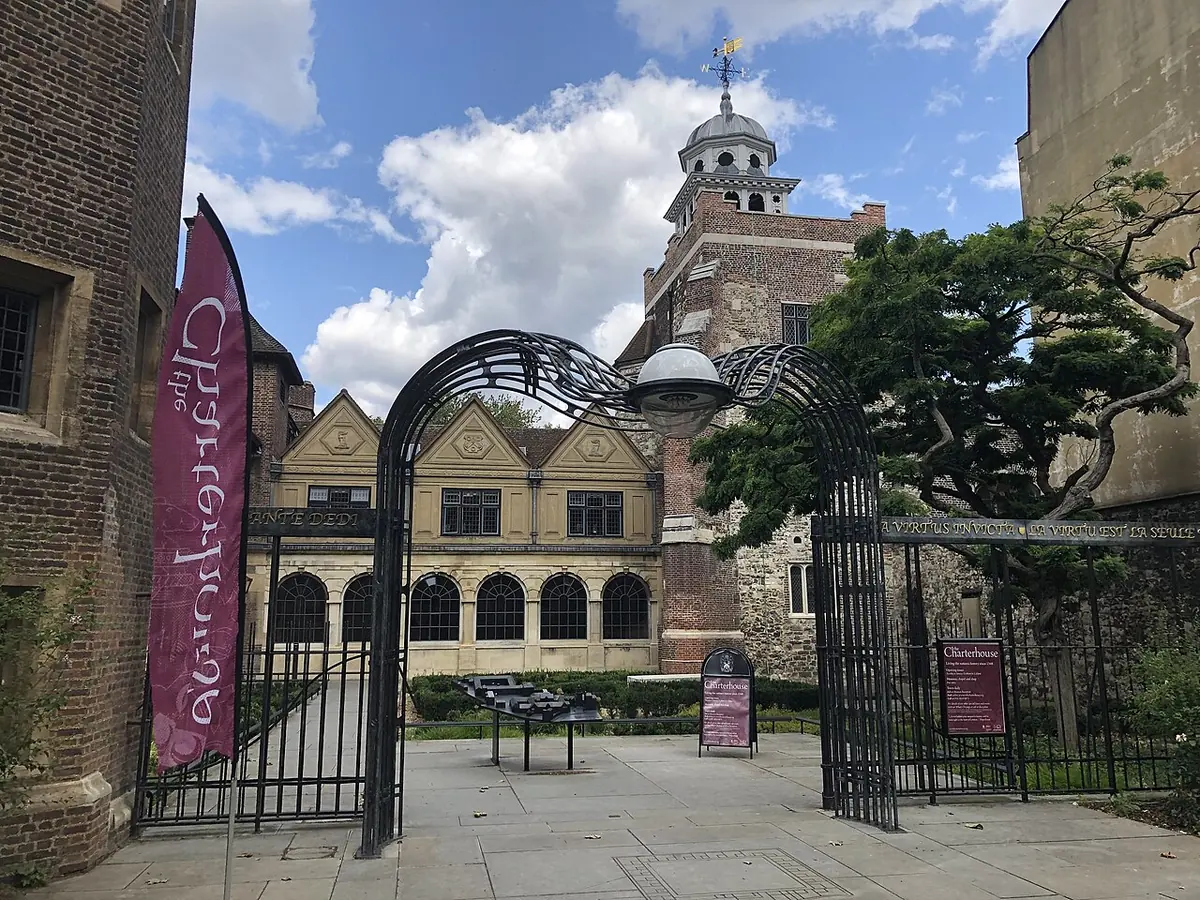
Blessed Thomas Green, whom some people search for as St. Thomas Green, was a priest and monk of the London Charterhouse, the house of the Carthusian order just outside the walls of the City of London. In 1537 he was one of ten Carthusians who would not swear that King Henry VIII was supreme head of the Church in England. They were chained in Newgate prison and left to starve, and Thomas Green died there on June 10, 1537. Pope Leo XIII confirmed him as Blessed in December 1886, with the other English martyrs whose sufferings had been painted on the walls of the English College in Rome three centuries before.
Very little is known of his life before the Charterhouse. His contemporaries called him "a famous martyr," yet Lawrence Hendriks, the nineteenth-century historian of the house, found no record of where or when he was born. Hendriks thought he was probably the same man as Dr. Thomas Greenwood of St. John's College, Cambridge, but that is not certain.

The London Charterhouse under Henry VIII
The Carthusians, founded by St. Bruno in 1084, are the strictest contemplative order in the Church. The monks live in silence, each in his own cell, meeting for the night office and Mass. The London Charterhouse was famous for its fervor, and St. Thomas More had lived beside it as a young man, sharing its prayers.
When Henry VIII broke with Rome, the Carthusians were among the first to suffer. Their prior, St. John Houghton, was hanged, drawn and quartered at Tyburn on May 4, 1535, with St. Augustine Webster and St. Robert Lawrence, the priors of two other charterhouses. Three more of the London monks followed in June 1535. For two years after that, royal commissioners kept up the pressure on the community, trying to wear down the monks one by one.
The ten who refused
In May 1537 the community was ordered to take the oath of supremacy. Twenty of the monks, worn out by two years of persecution, signed. A notary recorded that "some of the convent, though frequently and earnestly requested and exhorted to take the same oath, contumaciously refused to do so." There were ten of them: three priests, Thomas Johnson, Richard Bere and Thomas Green; a deacon, John Davy; and six lay brothers, Robert Salt, William Greenwood, Thomas Reding, Thomas Scriven, Walter Pierson and William Horn.
On May 29, 1537, the ten were taken to Newgate. They were chained standing to posts in a filthy cell and given no food.
Margaret Clement and the milk pail
They would have died within days but for a brave woman. Margaret Clement, the adopted daughter of Thomas More, bribed the jailer to let her in. Disguised as a milkmaid, with a great pail on her head, she came in and fed the chained monks by hand, putting the food into their mouths because they could not move. When the king heard they were still alive he ordered a stricter watch. Even then she persuaded the jailer to let her onto the roof, where she lifted the tiles and let food down to them in a basket on a string. At last the jailer, afraid for his own life, refused to let her come any more.
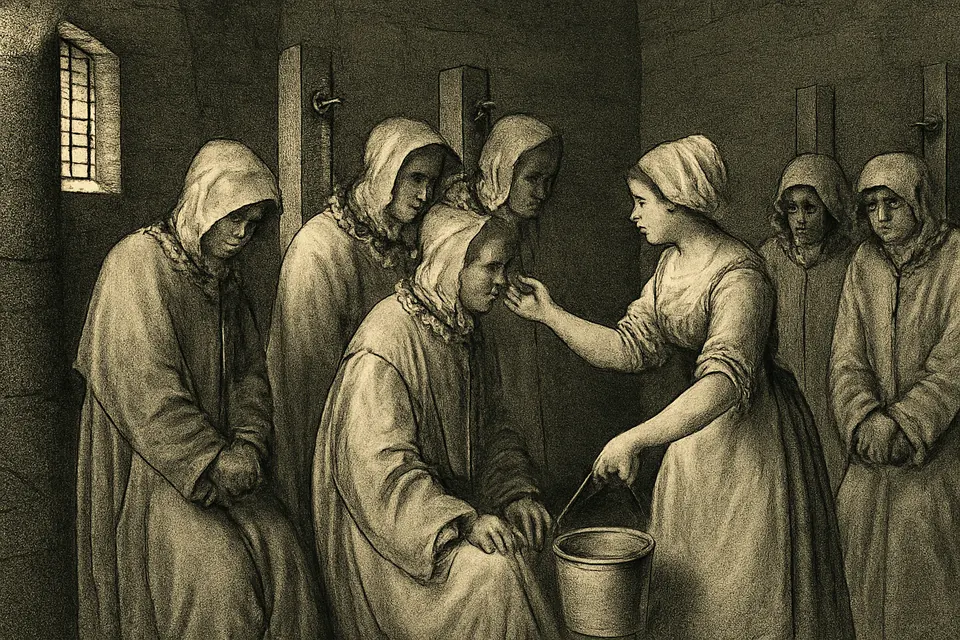
The death of Blessed Thomas Green
On June 14, 1537, Thomas Bedyll, one of the king's commissioners, wrote to Thomas Cromwell that the monks of the Charterhouse "be almost despatched by the hand of God." He enclosed a list. It begins: "There be departed: Brother William Greenwood, Dom John Davy, Brother Robert Salt, Brother Walter Pierson, Dom Thomas Green." An old Carthusian manuscript gives the day of Thomas Green's death as June 10, the same day as Walter Pierson's, and the Roman Martyrology keeps them together on that date, saying that, "worn out by hunger and disease, they met a glorious death." Of the ten, only William Horn survived; he was executed at Tyburn in 1540. No miracles, approved or reported, are recorded for Thomas Green; the Church honors him for his faithfulness unto death.
Symbols of Blessed Thomas Green in art
Blessed Thomas Green is not shown alone in any old image we know of. He appears with his brothers in the white Carthusian habit, bound with chains, as in Carducho's great painting for the Charterhouse of El Paular. Carthusian paintings of the English martyrs often show the monks with ropes or iron collars at their necks and the martyr's palm.
Feast day and prayer
We keep the memory of Blessed Thomas Green on June 10, the day of his death, with Blessed Walter Pierson. The Carthusian order celebrates all its English martyrs together on May 4, the day of St. John Houghton's martyrdom.
We have no traditional prayer to Blessed Thomas Green that we can cite here. Let us ask him to pray for all who suffer in prison for their conscience, for the monks and nuns of the Carthusian order, and for the courage to stay faithful when everyone around us gives way.
Blessed Thomas Green, pray for us.
Frequently asked questions
Who was Blessed Thomas Green?
A Carthusian priest of the Charterhouse of the Salutation of Our Lady in London. In 1537 he was one of ten monks who refused the oath recognizing Henry VIII's supremacy over the Church, and he died of starvation and disease in Newgate prison.
Is Thomas Green a saint?
He is a Blessed, not a canonized saint. His prior, St. John Houghton, and two other Carthusian priors were canonized in 1970, but Thomas Green and the monks who died in Newgate remain Blessed.
When is the feast day of Blessed Thomas Green?
June 10, the day he died, in the Roman Martyrology. The Carthusians celebrate all their English martyrs on May 4.
Keep exploring
Sources
- Lawrence Hendriks, The London Charterhouse: Its Monks and Its Martyrs (London, 1889), pp. 222–229, 354–356. The ten who refused the oath, their imprisonment on May 29, 1537, Margaret Clement's visits, Bedyll's letter of June 14, the death dates, the possible identity with Thomas Greenwood, and the 1886 beatification
- Roman Martyrology 2004, June (GCatholic). June 10 entry for Blesseds Thomas Green and Walter Pierson
- John Hungerford Pollen, "English Confessors and Martyrs (1534–1729)," The Catholic Encyclopedia, vol. 5 (1909). His place among the Carthusian Beati under Henry VIII