St. Paula Frassinetti, Foundress of the Sisters of St. Dorothy
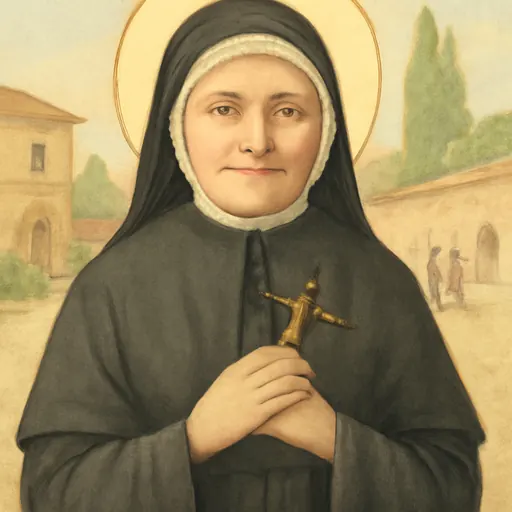
St. Paula Frassinetti (1809–1882) was a merchant's daughter from Genoa who, with six companions, founded the Sisters of St. Dorothy in 1834 to educate poor girls and young women. She led the congregation from Rome for forty years and lived by the words "The will of God is my paradise." Pope John Paul II canonized her in 1984. Her feast is June 11.
Who was St. Paula Frassinetti?
St. Paula Frassinetti was an Italian woman who founded the Sisters of St. Dorothy, a congregation of teaching sisters devoted to poor girls and young people. She began with six companions and a small, poor house at Quinto, a seaside village outside Genoa, in 1834, and by her death in Rome in 1882 her sisters were teaching in Italy, Portugal and Brazil. Her motto was short: "Will of God - my paradise!"
Pope John Paul II canonized her on March 11, 1984.
The life of St. Paula Frassinetti
A girl keeping house
Paula was born in Genoa on March 3, 1809, and baptized the same day in the parish of Santo Stefano. She was the third of five children of Giovanni Battista Frassinetti, a cloth merchant, and his wife Angela; the other four were boys, and all four became priests. Her mother died when Paula was nine, and she took over the care of the house for her father and brothers. She learned to read and write at home, and her eldest brother, Giuseppe, then studying theology, taught her the things of God.
Quinto by the sea
At nineteen she was worn out and in poor health, and Giuseppe, by then parish priest of Quinto, invited her to stay with him. The sea air restored her. In the parish she began gathering the young women of the neighborhood, and on Sundays they went into the woods to talk about God. Out of these meetings came the idea of a new community.
On August 12, 1834, in the sanctuary of San Martino in Albaro, Paula and her companions gave themselves to God, and Father Giuseppe said Mass for them. They owned nothing. They opened a school for very poor children and worked at night to support themselves. When cholera struck Genoa, the young sisters went to nurse the sick.

The Sisters of St. Dorothy
In 1835 Father Luca Passi of Bergamo, a friend of Giuseppe, asked Paula to take up his Pious Work of St. Dorothy, a network for reaching poor young people where they lived and worked. She accepted, and her "Daughters of the Faith" became the Sisters of St. Dorothy. The Holy See's biography sums up the aim she found: "To be fully available in the hands of God to evangelize through education, with a preference for youth and the poorest."
Rome
On May 19, 1841, Paula arrived in Rome with two novices. Their first home was two rooms over a stable near the church of the Holy Apostles. Pope Gregory XVI received her and in 1844 put her in charge of the Conservatory of Santa Maria del Rifugio at Sant'Onofrio, on the Janiculum hill, which became the mother house. She held the community together through the revolution of 1848–1849, when Pius IX fled the city, and she remained close to him for the rest of his life. Pius IX gave the congregation final approval in 1863.
In 1866 her first missionaries left for Brazil and Portugal. She told her daughters: "Be burning flames that inflame with God's love all those you come in contact with."
Her death
Paula suffered strokes in 1876, 1879 and 1882, the last leaving her helpless. According to the Norwegian bishops' biography, St. John Bosco visited her in her last illness. She died at dawn on June 11, 1882, at Sant'Onofrio, praying to the Blessed Virgin: "My Mother, remember I am your child."
Miracles and her incorrupt body
She was first buried at the Campo Verano cemetery in Rome. In 1906, as her cause was opened, her grave was opened and her body was found intact, together with her clothes, and moved to the mother house chapel. This finding is reported: it is recorded in accounts of her cause but is not itself a miracle the Church approved.
Pius XI beatified her on June 8, 1930, and John Paul II canonized her on March 11, 1984; each step required a cure attributed to her intercession, examined and approved by the Church. We have not found a fully sourced published account of those cures, so we don't describe them here.
Symbols of St. Paula Frassinetti in art
- Black habit and white ruffled bonnet: the dress of the early Sisters of St. Dorothy, as in her photograph.
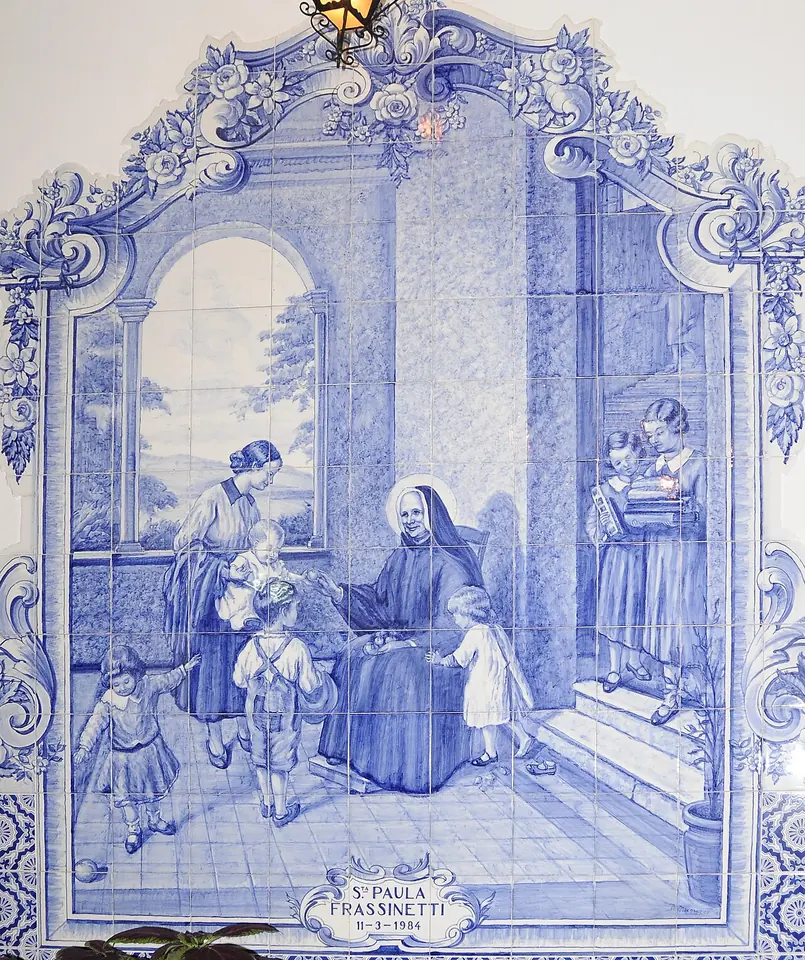
- Children around her: her life's work of educating the young.
- Crucifix: her love of the cross. "Those who suffer most, love most," she said.
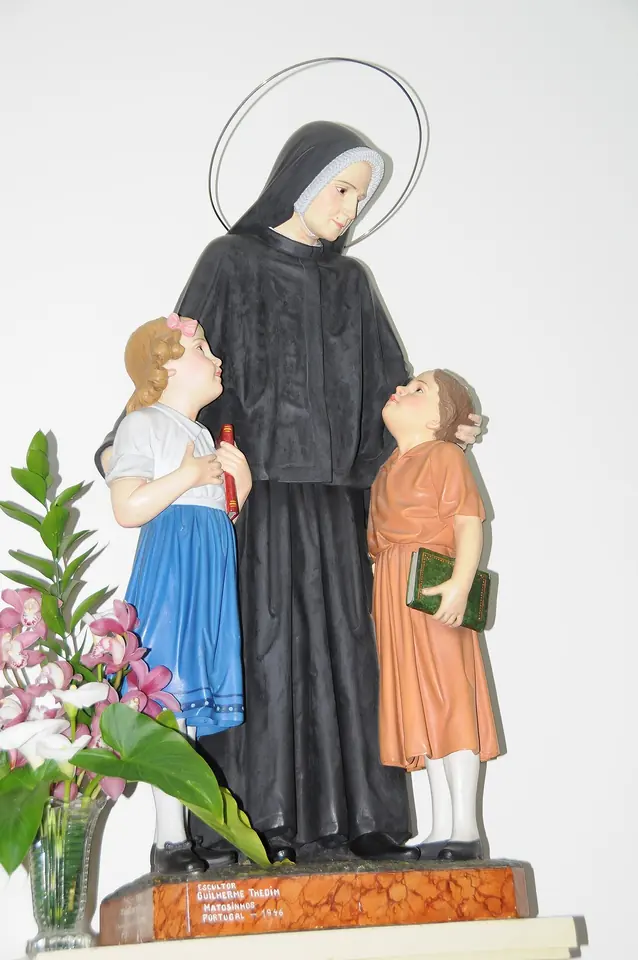
- Book: the schools her sisters opened.
Statues and tile panels in Portugal and Brazil, where her sisters arrived in 1866, often show her between two little girls.
Feast day and where she is honored
We keep her memory on June 11. Her body rests in a silver and crystal reliquary in the chapel of the Dorothean mother house at Sant'Onofrio in Rome, and she is honored wherever the Sisters of St. Dorothy teach. See other saints of June on our feast days page.
Praying with St. Paula Frassinetti
We have not found a traditional prayer to St. Paula Frassinetti in the standard prayer books; her sisters pray to her in their own devotions. Her own short prayer to Our Lady, spoken as she died, is one we can make ours: "My Mother, remember I am your child."
Let us ask St. Paula Frassinetti to pray for teachers and for children who are poor, and to help us accept God's will as she did, as our paradise.
Frequently asked questions
Who was St. Paula Frassinetti?
An Italian woman from Genoa who kept house for her widowed father and brothers from the age of nine, then founded a community of teaching sisters at Quinto in 1834. It became the Congregation of the Sisters of St. Dorothy, which spread to Portugal, Brazil and many other countries.
When is the feast of St. Paula Frassinetti?
June 11, the day she died in Rome in 1882.
Who are the Sisters of St. Dorothy?
The congregation St. Paula founded. Its work began as the 'Pious Work of St. Dorothy,' started by Father Luca Passi of Bergamo to reach poor young people, which Paula took up in 1835. The sisters run schools, boarding schools and works with youth in Europe, the Americas, Africa and Asia.
What did St. Paula Frassinetti say about the will of God?
Her best-known words are "Will of God - my paradise!" She also wrote, "Those who suffer most, love most."
Keep exploring
Sources
- Paola Frassinetti (1809–1882), biography for the canonization of March 11, 1984, Holy See. The foundation on August 12, 1834, Father Luca Passi, the move to Rome on May 19, 1841, S. Onofrio, the missions of 1866, and her sayings quoted here
- Den hellige Paula Frassinetti (1809–1882), Den katolske kirke (Norway). Her strokes of 1876, 1879 and 1882, Don Bosco's visit, her burial at Campo Verano, the opening of her grave in 1906 and the reliquary in the mother house chapel