St. Gaspar Bertoni: Founder of the Stigmatines and the 'Angel of Counsel' of Verona
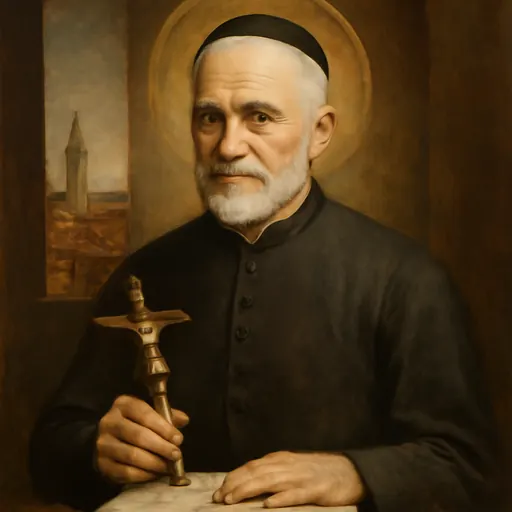
St. Gaspar Bertoni (1777–1853) was a priest of Verona who founded the Congregation of the Sacred Stigmata of Our Lord Jesus Christ, the Stigmatine Fathers and Brothers. He formed young people and seminarians, guided several founders of religious communities, and spent his last decades bedridden, enduring some 300 operations on his leg. His feast is June 12.
Who was St. Gaspar Bertoni?
St. Gaspar Bertoni was a priest of Verona who lived through the French invasion, Napoleon and the Austrian years, and answered all of it with prayer, teaching and patient suffering. He founded the Congregation of the Sacred Stigmata of Our Lord Jesus Christ, known as the Stigmatine Fathers and Brothers, to preach missions and form young people and clergy. He spent most of his priesthood in poor health, and the whole city came to his sickroom for advice. We keep his feast on June 12.
He is not the same saint as St. Gaspar del Bufalo, his Roman contemporary who founded the Missionaries of the Precious Blood.
A boy of Verona
Gaspar was born in Verona, then part of the Republic of Venice, on October 9, 1777, to Francis Bertoni and Brunora Ravelli. Both sides of the family were notaries and comfortably off. His baby sister died, and he grew up an only child. He was baptized the day after his birth by his great-uncle, a priest, in the parish church of St. Paul.
The Vatican biography says that from his First Communion at age eleven he "was called to a life of mystical union." At eighteen he entered the seminary.
War, the sick and the young
In his first year of theology, on June 1, 1796, the French armies entered Verona. Twenty years of upheaval followed. The young seminarian joined a brotherhood that served in the hospitals and nursed the sick and wounded.
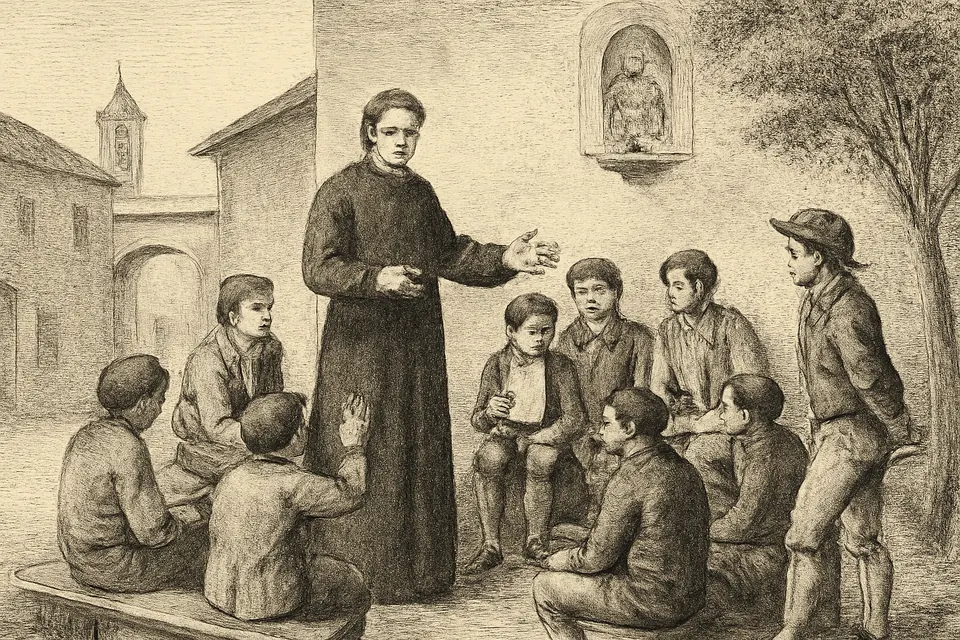
He was ordained a priest on September 20, 1800, and his pastor gave him the young people of the parish. He organized them into an oratory he called a "Marian Cohort," for their Christian and social formation. Napoleon's decree of 1807 suppressed it with all such associations. Bertoni waited for better times.
Director of souls
In May 1808 he became spiritual director of the community that St. Magdalene of Canossa had just founded in Verona. Over the years he also guided Leopoldina Naudet, foundress of the Sisters of the Holy Family, and Teodora Campostrini, foundress of the "Sorelle Minime." The bishop entrusted him with the spiritual direction of the diocesan seminary, which was in a bad way, and within a short time it recovered.
He was loyal to the Pope when the Pope was Napoleon's prisoner. For Bertoni, Pius VII was "the first and irremovable stone" of the Church. In 1817 Pius VII named him an apostolic missionary.
The Stigmatines
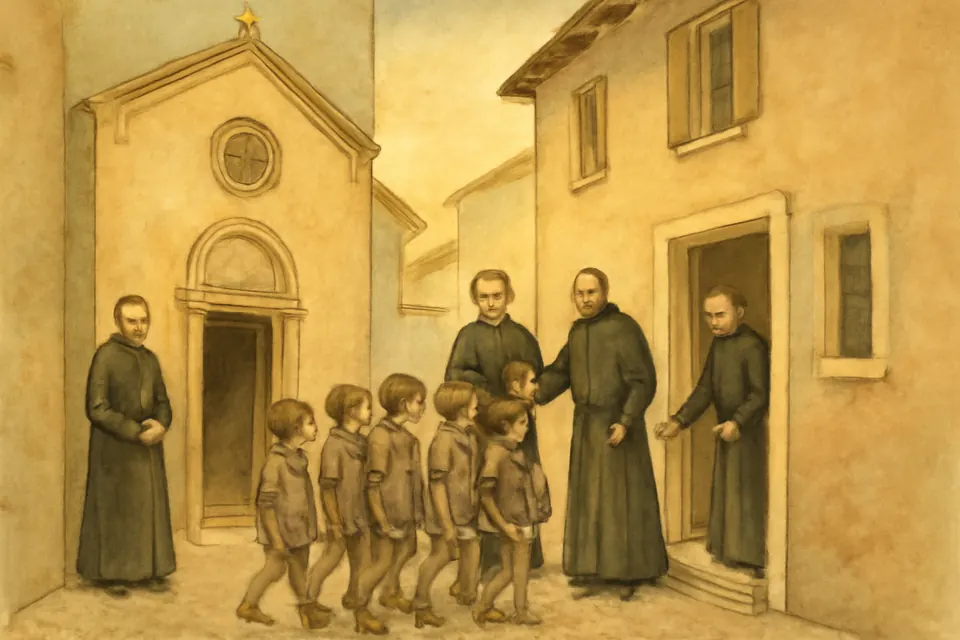
On November 4, 1816, Bertoni and two companions moved into a small house beside a suppressed church dedicated to the Sacred Stigmata of St. Francis. There they opened a free school and lived a common life of strict observance and penance. The community took its name from the little church, and from it Bertoni spread devotion to the Passion and the wounds of Christ.
In his homily at the canonization, Pope St. John Paul II pointed to what made Bertoni's vision new. He drew up a plan of Christian life in which the call to holiness was meant for everyone, "not only for priests, but for married couples, after the example of the holy spouses of Nazareth, for the young, for workers and for every other kind of person." His missionaries were to preach "the universal vocation to holiness."
The congregation spread beyond Verona to other Italian cities and then abroad, to the United States, Brazil, Chile, the Philippines and Africa.
Forty years of illness
On May 30, 1812, Bertoni experienced an ecstasy while praying before a crucifix. Soon afterward he fell gravely ill with miliary fever and nearly died. He recovered, but for the remaining forty-one years of his life his health stayed poor. A tumor on his right leg became an open wound, and the Vatican biography counts "nearly 300 surgical procedures" on it, many before anesthesia was in use.
He did not complain. The Diocese of Verona records that he used to say, in his Veronese dialect, "Dei, Signore, dei che gavé rason," that is, "Strike, Lord, strike, for you are right; I deserve it, and worse."
From his bed he became Verona's "angel of counsel." Priests, nobles, magistrates, young people and the founders of new charitable works came to his room. Among them were Blessed Charles Steeb and the priests Nicola Mazza and Antonio Provolo.

When his infirmarian asked whether he needed anything, he gave one of his last answers: "I need to suffer." He died at 3:30 on a Sunday afternoon, June 12, 1853, in what the Vatican biography calls "a vision of vivid hope in the Risen Christ."
Miracles and canonization
Pope St. Paul VI beatified him on November 1, 1975, and Pope St. John Paul II canonized him on November 1, 1989, together with St. Riccardo Pampuri. As canonization requires, the Church examined and accepted approved miracles attributed to his intercession, but the official sources we consulted do not describe them, and we will not guess at the details. His own near-fatal illness and recovery in 1812, which the Vatican biography calls "almost miraculous," is a reported grace, not one of those approved miracles.
Symbols of St. Gaspar Bertoni in art
St. Gaspar is usually shown as an elderly priest in a black cassock, often with a crucifix, recalling his devotion to the wounds of Christ and the ecstasy of 1812. A book marks the teacher and spiritual director. He is also linked with the Holy Family: the Vatican biography says he died in a vision of the risen Christ, supported by "the Holy Spouses and Patrons, Mary and Joseph."
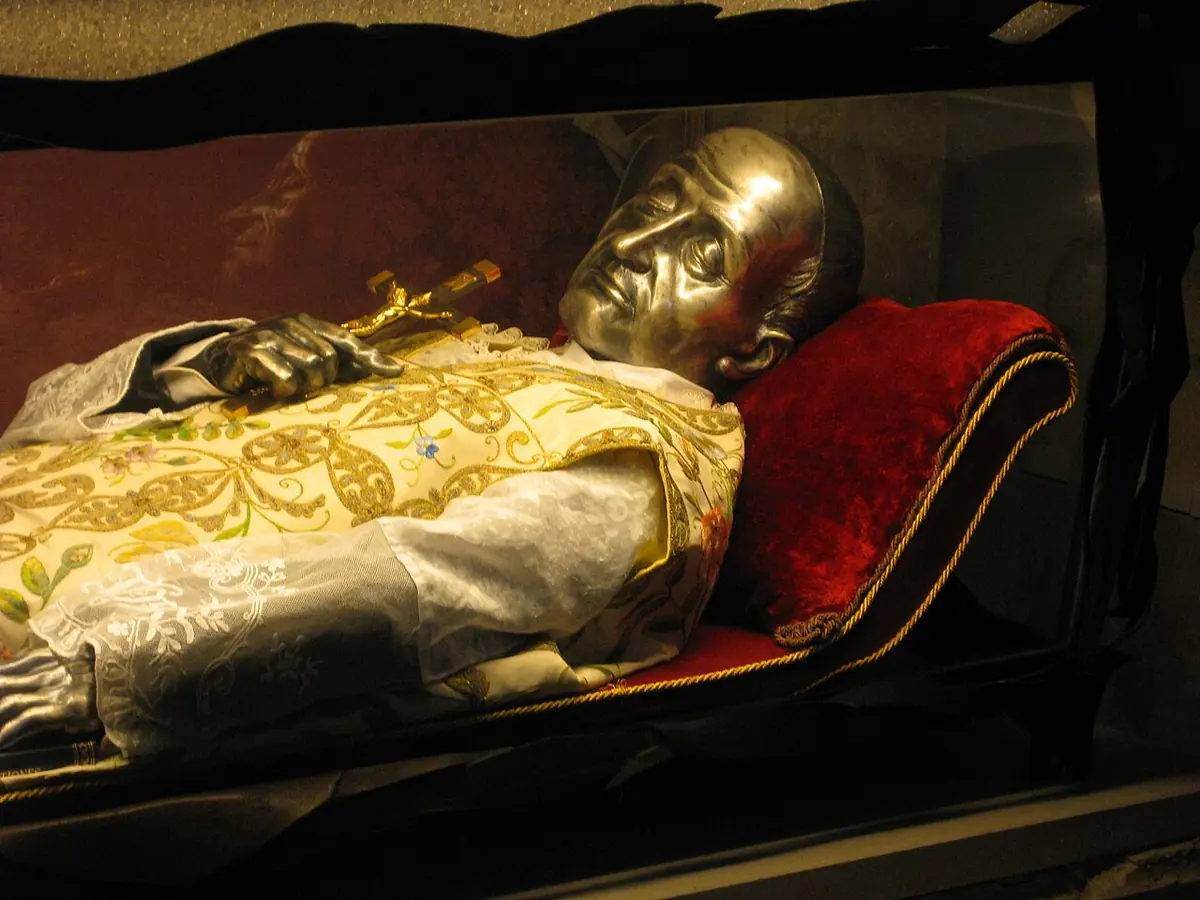
His body rests in a glass urn at a side altar of the Church of the Stimmate in Verona, his face covered by a silver mask.
Feast day and prayer
We keep his feast on June 12; see our feast day calendar. We know of no traditional English prayer to him in wide use. He left a short motto that serves as one: "Fidati di Dio che è un bel fidarsi," "Trust in God: it is a fine thing to trust him." Let us pray: St. Gaspar Bertoni, patient in pain and wise in counsel, pray for the sick, for priests and seminarians, and for all who are looking for the right advice.

Frequently asked questions
Who was St. Gaspar Bertoni?
An Italian priest born in Verona in 1777 and ordained in 1800. He ran youth oratories, directed seminarians and religious, and in 1816 founded the community that became the Stigmatines. Despite decades of illness he was sought out across the city as an "angel of counsel." He died on June 12, 1853, and was canonized on November 1, 1989.
Why are they called Stigmatines?
Bertoni and his first two companions moved on November 4, 1816, into a small house next to a suppressed church dedicated to the Sacred Stigmata of St. Francis. The congregation took its name from that church, and Bertoni spread devotion to the Passion and the wounds of Christ.
When was St. Gaspar Bertoni canonized?
Pope St. John Paul II canonized him on November 1, 1989, the Solemnity of All Saints, together with St. Riccardo Pampuri. Pope St. Paul VI had beatified him on November 1, 1975.
What did St. Gaspar Bertoni say about trust in God?
The Diocese of Verona's liturgical notes for his memorial quote his saying "Fidati di Dio che è un bel fidarsi," which means roughly "Trust in God: it is a fine thing to trust him."
Keep exploring
Sources
- Gaspar Bertoni (1777-1853): biography, Vatican News Services (Holy See). His life, the 1812 ecstasy and illness, the nearly 300 operations, the founding of November 4, 1816, his last words and death
- Pope St. John Paul II, homily for the canonization of Gaspare Bertoni and Riccardo Pampuri, November 1, 1989 (Italian). The universal call to holiness in his plan of Christian life
- Diocese of Verona: San Gaspare Bertoni, sacerdote (memoria obbligatoria, 12 giugno). His sayings in Veronese and Italian, quoted here