Blessed Dermot O'Hurley, Archbishop of Cashel and Martyr

Blessed Dermot O'Hurley (about 1530–1584) was an Irish scholar who taught law at Louvain and Reims before Pope Gregory XIII made him Archbishop of Cashel in 1581. He slipped back into Ireland in 1583, ministered in disguise, and was arrested, tortured and hanged without a proper trial in Dublin on June 20, 1584, because he would not deny the Catholic faith or the Pope. John Paul II beatified him in 1992 at the head of seventeen Irish martyrs. His feast is June 20.
Who was Blessed Dermot O'Hurley?
Blessed Dermot O'Hurley was a learned Irish layman who became an archbishop and then a martyr. After decades as a professor of law in Louvain and Reims, he was chosen by Pope Gregory XIII for the see of Cashel, one of the four archbishoprics of Ireland, at a time when that meant a death sentence. He landed in secret in 1583, ministered in disguise, and was betrayed within months. Tortured in Dublin and condemned without a regular trial, he was hanged at dawn outside the city walls on June 20, 1584. Pope John Paul II beatified him in 1992 as the first named of seventeen Irish martyrs.
The life of Blessed Dermot O'Hurley
Scholar of Louvain and Reims
Dermot O'Hurley was born around 1530 in the district of Emly, son of William O'Hurley and Honora O'Brien, a family of some standing. He studied at the University of Louvain, where he took a doctorate in both canon and civil law and became dean of the law faculty. After about fifteen years there he taught at Reims for four more. Philip O'Sullivan Beare, writing in the early 1600s, says that compared with men of his own age he "was second to scarcely anyone as a grammarian; he was equal to the most eloquent as a rhetorician; superior to most in jurisprudence."
Archbishop of Cashel
Around 1570 he went to Rome. In 1581 Gregory XIII named him Archbishop of Cashel while he was still a layman, and he was ordained priest and consecrated bishop that same year. In 1583 he set out for Ireland from Reims, traveling in secular clothes because the authorities in Dublin already knew of his appointment.
Discovered at Slane
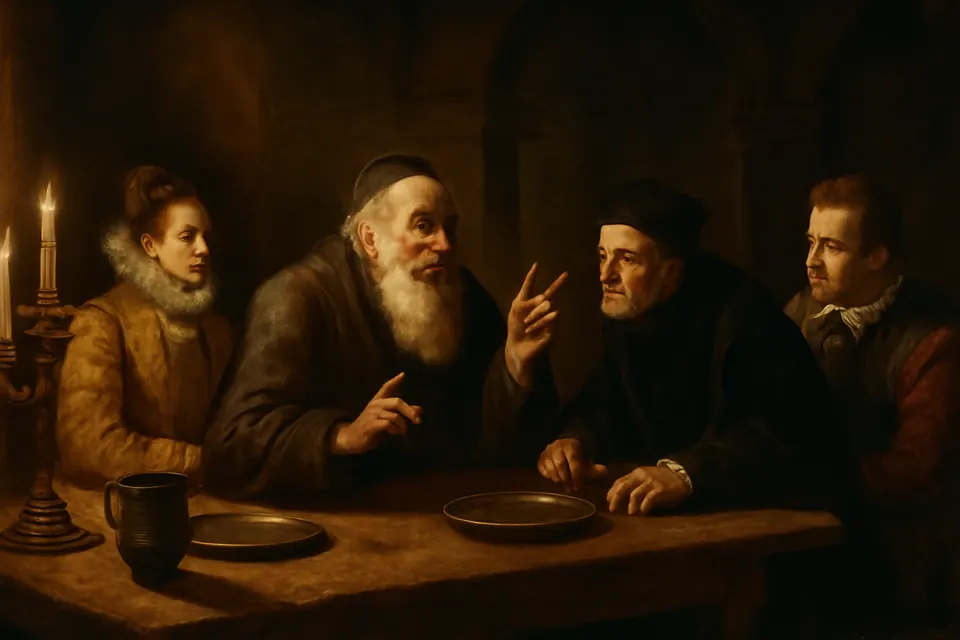
He moved among the Catholics of the east and south, staying for a time with Thomas Fleming, Baron of Slane. O'Sullivan Beare tells the story of his discovery. At dinner in the castle, with Robert Dillon, one of the queen's judges, at the table, the talk turned to religion. Dermot kept quiet as long as he could, then answered the others "with an air of authority, and great eloquence and learning." Dillon guessed he was someone important and reported it. The baron was ordered under heavy penalties to deliver him, and Dermot was arrested in September 1583 at Carrick-on-Suir, where he was the guest of Thomas Butler, Earl of Ormond, who was distressed by the arrest and later tried to save him.
Prison and torture
He was brought to Dublin and kept in chains. On October 7, 1583, the Italian Santi e Beati entry notes, he was moved to the Dublin prison together with Margaret Ball, later beatified with him. The Lord Chancellor, Adam Loftus, and the Treasurer, Henry Wallop, first offered him rewards and the archbishopric under the queen's authority if he would give up the Pope. He refused. They then had his legs encased in boots filled with oil, pitch and boiling water and held over a fire. O'Sullivan Beare records that he bore it in silence, "with the same cheerfulness and serenity of countenance he had exhibited at the commencement of his sufferings." A Jesuit skilled in medicine, Charles MacMoris, treated his wounds in prison.
Death at Hoggen Green
Fearing that the Earl of Ormond would intervene, and that the people of Dublin would riot, the authorities condemned him without a regular trial and had him taken out on a cart before sunrise. He was hanged on Hoggen Green, outside the city walls, on June 20, 1584. O'Sullivan Beare says only two citizens and one faithful friend followed him. William Fitzsimon, a Dublin citizen, later moved his body to a secret grave.

The miracles of Blessed Dermot O'Hurley
As a martyr, he needed no approved miracle for beatification. O'Sullivan Beare passes on two traditional stories: that before he died he pressed his friend's hand and left on the palm a red sign of the cross that would not wash away, and that at the place of his death a noble lady was freed from a long torment by an evil spirit. These come from a pious account written decades later and are honored as tradition, not as proven events.
Why Blessed Dermot O'Hurley is honored
He is a patron of the Church in Ireland in the sense John Paul II gave at the beatification, when he commended "the whole people of Ireland" to the intercession of the Irish martyrs. The Pope said of them: "Their victory lay precisely in going to death with no hatred in their hearts." Lawyers and scholars can claim him too, a law professor who gave up a quiet career for his flock. See more causes on our patron saints page.
Symbols of Blessed Dermot O'Hurley in art
- Pallium and miter: his office as Archbishop of Cashel.
- Palm: the martyr's victory.
- A rope or halter: he was hanged.
- Iron boots: some images show the instrument of his torture.
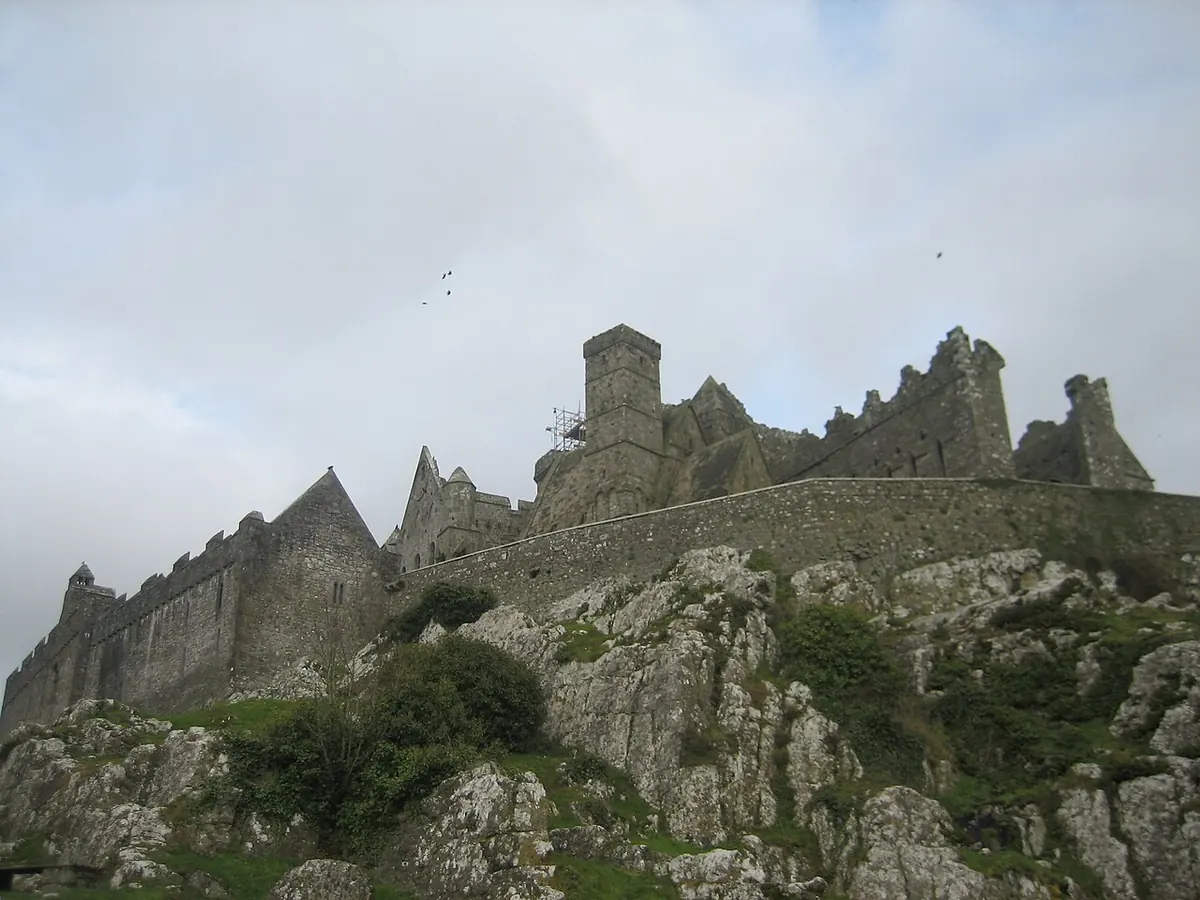
Modern Irish images usually show him as a bearded bishop in Elizabethan dress, sometimes with the Rock of Cashel behind him.
Feast day and prayer
We keep his feast on June 20, the day of his martyrdom. Find other saints of June on our feast days page.
We have not found a traditional English prayer to Blessed Dermot O'Hurley to reprint here. We can pray with the words John Paul II used on the day of the beatification: "Blessed Irish Martyrs, intercede for the beloved Irish people!" Let us ask him also to pray for bishops who serve under pressure, and for all who suffer for the faith in prison.
Frequently asked questions
Who was Blessed Dermot O'Hurley?
An Irishman from the Emly district, educated at Louvain, where he became a doctor of both laws and taught for years, then a professor at Reims. Gregory XIII named him Archbishop of Cashel in 1581. He was captured in Ireland in 1583 and executed in Dublin in June 1584.
How did Dermot O'Hurley die?
After months in prison and torture with boots filled with boiling oil and pitch, he was condemned without a regular trial and hanged at dawn at Hoggen Green, outside the walls of Dublin, on June 20, 1584.
When was Dermot O'Hurley beatified?
On September 27, 1992, by Pope John Paul II in Rome, with Margaret Ball, Francis Taylor and fourteen other Irish martyrs.
Where is Dermot O'Hurley buried?
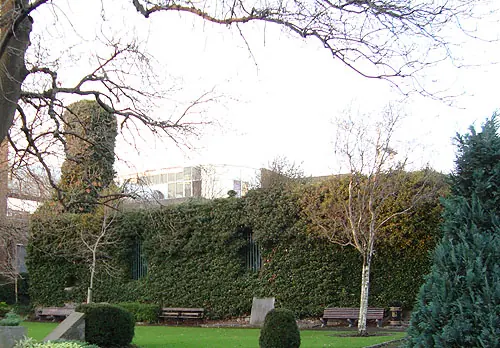
A friend secretly reburied his body after the execution. Tradition places his grave in the churchyard of St. Kevin's, Camden Row, Dublin, where a memorial to him stands.
Keep exploring
Sources
- Philip O'Sullivan Beare, 'Dermot O'Hurley, Archbishop of Cashel, the most unconquerable and illustrious Martyr,' in Ireland under Elizabeth (trans. M. J. Byrne, 1903), CELT (archived). The 17th-century account: the dinner at Slane, the arrest at Carrick-on-Suir, the torture, the dawn execution and the traditions after his death
- John Paul II, Homily, Rite of Beatification, September 27, 1992. The beatification of the seventeen Irish martyrs and the Pope's words on them
- Beato Dermot (Dermizio) O'Hurley, Santi e Beati (Italian). Roman Martyrology entry and date, his studies, consecration, the boot torture and his imprisonment with Margaret Ball
- Irish Confessors and Martyrs, Catholic Encyclopedia (1910). Places him in the list of Irish martyrs under Elizabeth, 1584