St. Methodius of Olympus
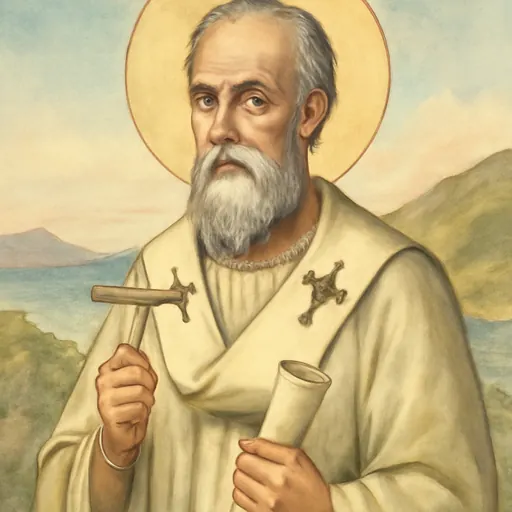
St. Methodius of Olympus (died about 311) was a bishop in Lycia, in today's southern Turkey, and a martyr of the last great persecution. A gifted writer, he composed the Banquet of the Ten Virgins, a dialogue in praise of consecrated virginity, and defended the resurrection of the body against Origen. The Orthodox Church keeps his feast on June 20.
Who was St. Methodius of Olympus?
St. Methodius of Olympus was a bishop of the late third century in Lycia, the rugged southern coast of Asia Minor, and one of the last martyrs of the Roman persecutions. He was a scholar and a stylist, the first writer of note to answer the great Alexandrian theologian Origen point by point, and the author of one of the loveliest books of the early Church, the Banquet of the Ten Virgins.
His name has come down in several forms: Methodius of Olympus, of Patara, even of Philippi. The Orthodox Church honors him as a hieromartyr, a bishop who died for Christ, on June 20. He is a different man from St. Methodius, the apostle of the Slavs, who lived five centuries later.
The life of St. Methodius
What we know, and what we don't
Very little of his life is certain. Eusebius, who admired Origen, never mentions him in his Church History, probably because Methodius had criticized Origen. Our earliest witness is St. Jerome, in his Illustrious Men (chapter 83), who says Methodius was Bishop of Olympus in Lycia and later of Tyre, and died a martyr at the end of the last persecution. The Catholic Encyclopedia doubts the Tyre detail, since other records name different bishops there in those years; it suggests he may have been taken to Tyre as a prisoner and died there.
The Orthodox tradition calls him Bishop of Patara, the old Lycian port, and says he was beheaded in 312. The Catholic Encyclopedia gives the date as probably 311, under the emperor Maximinus Daia.
A bishop who wrote dialogues
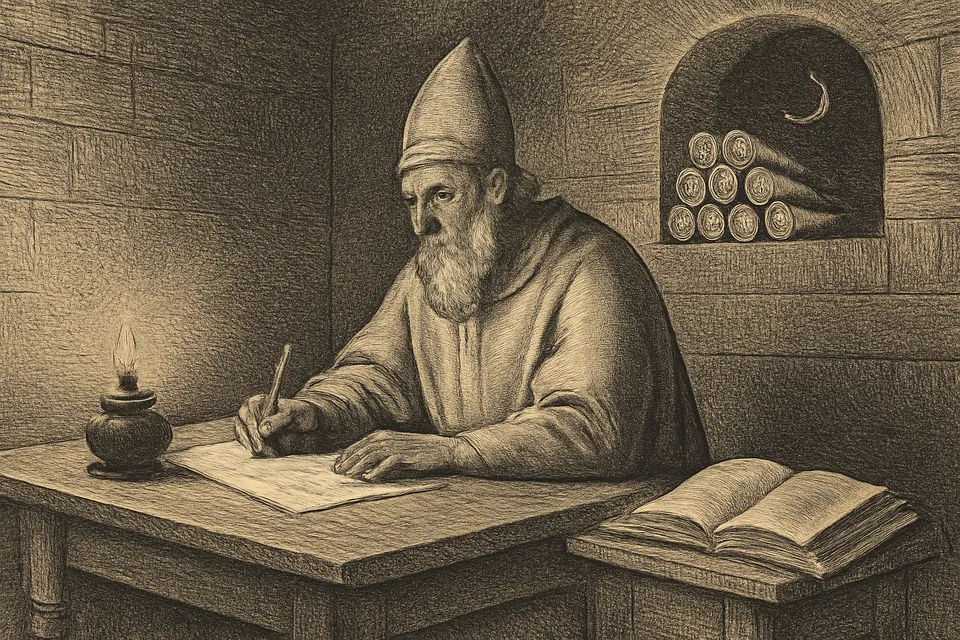
Methodius was well read in Plato, and he liked to teach through conversation. In On the Resurrection he argued against Origen that God will raise the same body we have now, made incorruptible. In On Free Will he defended human freedom against the Gnostic idea that matter itself is evil. Shorter works on leprosy, on food laws and on the leech of Proverbs survive in Slavonic, the language of the Orthodox Slavs who copied him for centuries.
The Banquet of the Ten Virgins
His great book is modeled on Plato's Symposium. Ten virgins gather for a feast in the garden of Arete, whose name means Virtue. Each gives a speech in praise of a life given wholly to Christ. The prize goes to St. Thecla, the companion of St. Paul, and at the end Thecla stands under a chaste tree and leads them in a hymn to Christ the Bridegroom of the Church. The others answer each verse with the same refrain:
I keep myself pure for You, O Bridegroom, and holding a lighted torch I go to meet You.
The words echo the wise virgins of the Gospel, who went out with lamps burning to meet the bridegroom (Matthew 25). Thecla's first verse sets the scene of the Last Day:
From above, O virgins, the sound of a noise that wakes the dead has come, bidding us all to meet the Bridegroom in white robes
The hymn runs through twenty-four verses. It sings of Abel, Joseph, Jephthah's daughter, Judith and Susanna, of John the Baptist, and of the Virgin Mary, and ends with the Church as the pure bride of Christ. For Methodius, virginity was not contempt for marriage, which he defends in the same book, but a way of living now the life of the world to come.

Copies of the Banquet traveled far. A torn papyrus strip with lines from it, copied in Egypt within two or three centuries of his death, is now in the Abbey of Montserrat in Spain.
Miracles of St. Methodius
No miracles are recorded of St. Methodius, and we don't add any. His martyrdom itself is traditional in its details: the Orthodox life says he confessed Christ before the pagans and was beheaded, while Jerome says only that he died a martyr.
Symbols of St. Methodius of Olympus in art
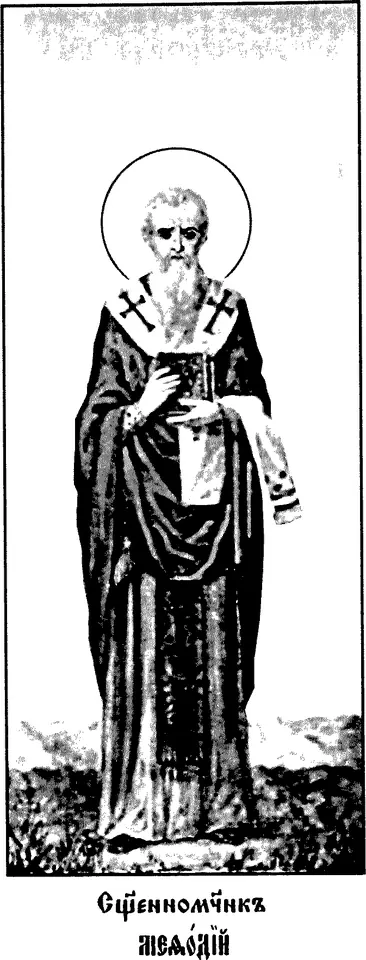
Icons of St. Methodius follow the pattern of the early martyr bishops. Look for:
- The omophorion: the bishop's stole with crosses, for his office.
- A scroll or book: for his writings.
- A cross held in the hand: the sign of a martyr in Eastern icons.
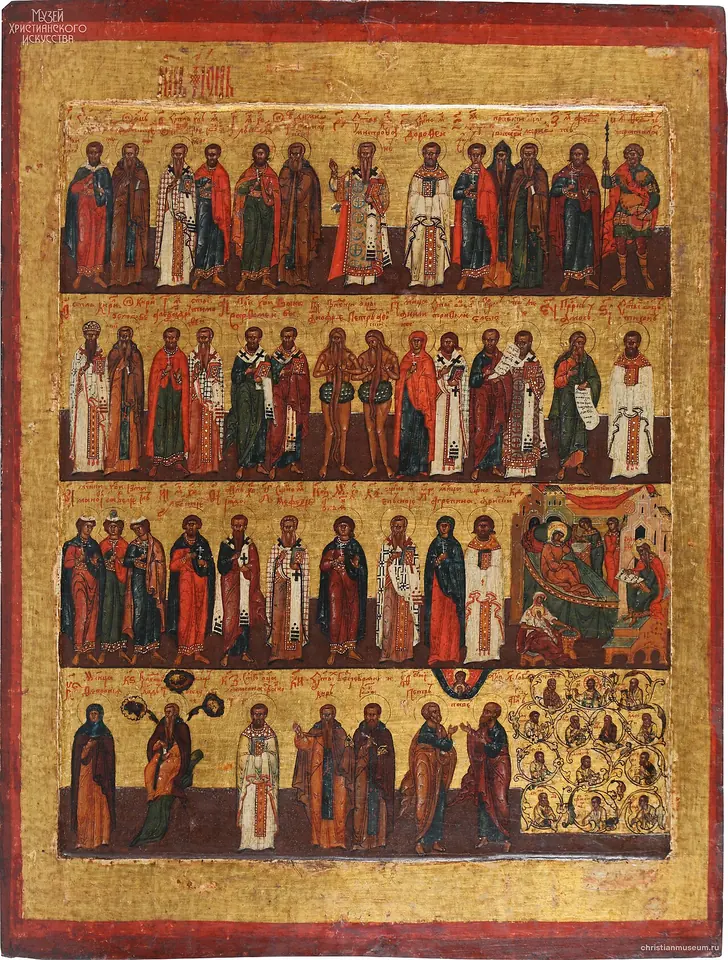
Russian calendar icons place him among the saints of June 20. Some Balkan frescoes show the moment of his beheading. Because his face follows the common type of an elderly bishop, read the inscription to be sure.
Feast day and prayer
The Orthodox and Byzantine Catholic churches keep his feast on June 20. See more saints of June on our feast days page.
No traditional Western prayer to St. Methodius has come down to us. The hymn of his Banquet is a fine prayer in its own right for anyone who has given their life to God, and for all of us who wait for Christ with our lamps lit. Let us ask St. Methodius to pray for consecrated men and women, for theologians, and for the Christians of Turkey. Holy Hieromartyr Methodius, pray to God for us.
Frequently asked questions
When is the feast day of St. Methodius of Olympus?
June 20 in the Orthodox Church, where he is honored as Hieromartyr Methodius, Bishop of Patara. He is not on the General Roman Calendar.
What did St. Methodius of Olympus write?
His only work to survive whole in Greek is the Symposium, or Banquet of the Ten Virgins. Large parts of his dialogues On Free Will and On the Resurrection also survive, and several shorter works are kept in old Slavonic translations.
Is Methodius of Olympus the same as St. Methodius of the Slavs?
No. Methodius of Olympus was a third-century bishop and martyr in Asia Minor. St. Methodius, brother of St. Cyril, was a ninth-century missionary to the Slavs.
Why did St. Methodius oppose Origen?
He argued against Origen's teaching that the risen body is not the same body we have in this life, and against his idea that the world is eternal, while still honoring Origen's service to the Church.
Keep exploring
Sources
- Catholic Encyclopedia (1911): St. Methodius of Olympus. Jerome's account, the doubts about Tyre, his works and his answer to Origen
- Methodius, The Banquet of the Ten Virgins, Discourse 11 (ANF, New Advent). Thecla's hymn and its refrain
- Orthodox Church in America: Hieromartyr Methodius, Bishop of Patara. The Orthodox commemoration on June 20 and his martyrdom by beheading