St. Clotilde, Queen of the Franks

St. Clotilde (about 474 to 545) was a Burgundian princess who became queen of the Franks as the wife of King Clovis I. Her steady faith and prayers led Clovis to be baptized at Reims, which brought the Franks into the Catholic Church. Widowed young, she spent her last years in prayer at Tours. Her feast day is June 3.
Who was St. Clotilde?
St. Clotilde was the queen of the Franks whose prayers brought her husband, King Clovis I, to baptism around the year 496. Born a Burgundian princess about 474, probably in Lyon, she married the young pagan king, raised their children in the Catholic faith, and outlived him by 34 years, most of them spent in prayer near the tomb of St. Martin at Tours. She died there on June 3, 545. The Roman Martyrology sums up her life in one line: "St. Clotilde, queen, by whose prayers her husband, king Clovis, was converted to the faith of Christ."
Nearly everything we know comes from St. Gregory of Tours, who wrote his History of the Franks a generation after her death. The Catholic Encyclopedia warns that Frankish poets later turned her into a vengeful heroine of epic and that historians have to separate those legends from the facts. What is left is a faithful wife, a grieving mother and a widow who lived "more as a religious than as a queen."
The life of St. Clotilde
A Catholic princess
Clotilde was the daughter of Chilperic, one of the four kings who shared Burgundy, and of his wife Caretena, a devout Catholic praised in her own day. Burgundy's royal family was divided between Catholics and Arians. Gregory of Tours tells a dark story in which her uncle Gundobad killed her father and drowned her mother, but the Catholic Encyclopedia rejects it: Caretena lived until 506, and Gundobad mourned his brother. The envoys of Clovis found the princess "of good bearing and wise," and he asked for her hand.
Winning Clovis
She did not stop speaking about Christ. Gregory gives her a long speech against the old gods, who were "graven out of stone or wood or some metal," and in favor of the one God who "created by his word heaven and earth." Clovis was not moved, but he let her baptize their first son, Ingomer. The baby died still wearing his white baptismal garments. Clovis blamed her God. Clotilde answered that she thanked God for taking a child of hers to his kingdom, and she had their second son, Chlodomer, baptized too. When he fell ill, she prayed, and he recovered.
The turning point came in a war against the Alamanni. With his army breaking, Clovis cried out: "Jesus Christ, whom Clotilda asserts to be the son of the living God... I will believe in thee and be baptized in thy name." The enemy fled. Clotilde then sent secretly for St. Remigius, bishop of Reims, to instruct him.

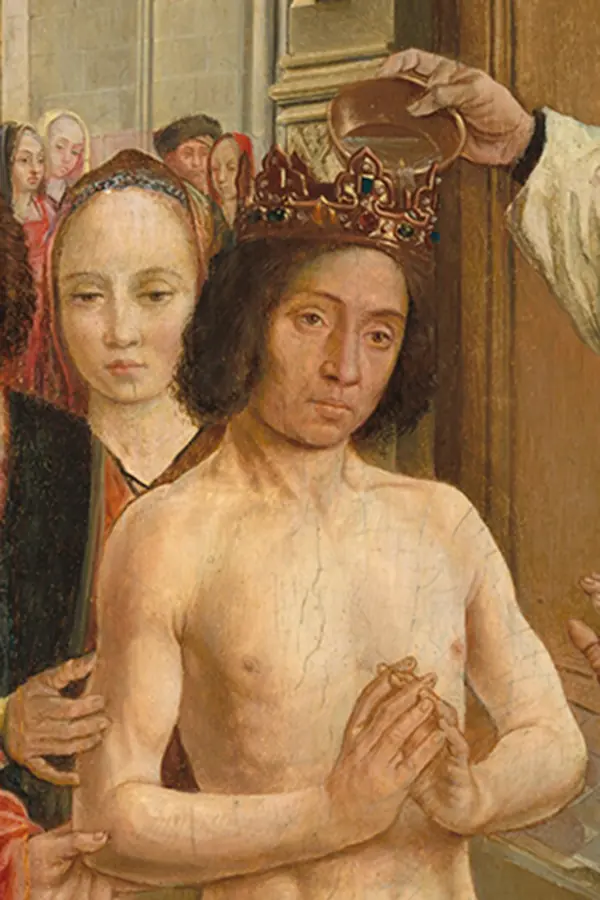
At the font, Gregory writes, Remigius told the king, "Gently bend your neck, Sigamber; worship what you burned; burn what you worshipped," and more than 3,000 of his warriors were baptized with him. Gregory called Clovis "another Constantine." Because the Franks became Catholic rather than Arian, France would later be called the eldest daughter of the Church.
Widow and mother
Clovis died in Paris in 511. Clotilde buried him in the Church of the Holy Apostles, which they had built together on the hill where St. Genevieve was also laid to rest. Then the sorrows began. Her son Chlodomer was killed in battle in 524. Her sons Childebert and Clotaire tricked her into handing over Chlodomer's three small boys and murdered two of them; the third escaped, became a monk and gave his name to Saint-Cloud. Her daughter, also named Clotilde, was mistreated by her Visigothic husband and died on the journey home.
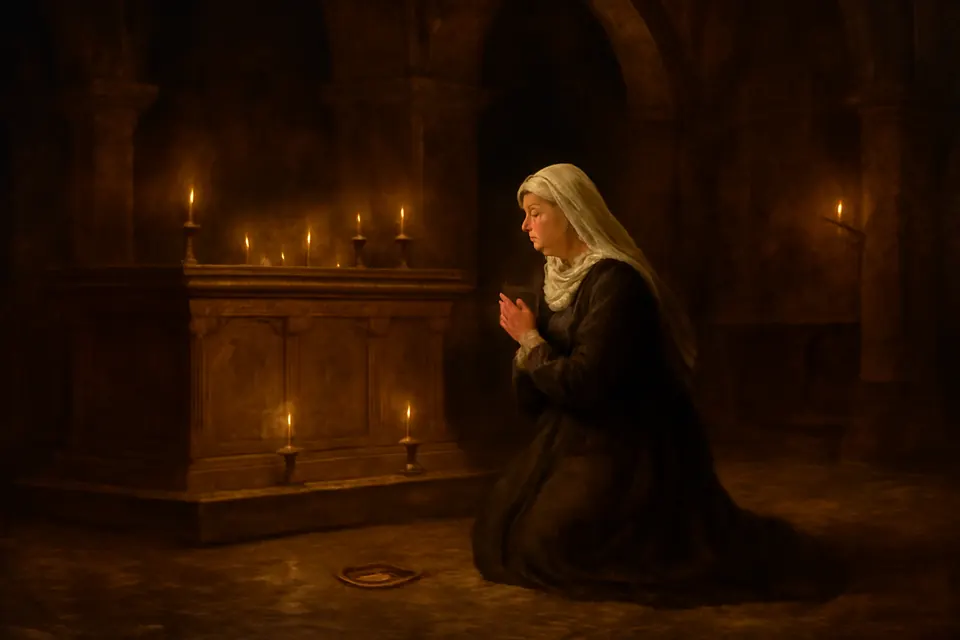
Clotilde withdrew to Tours and lived near St. Martin's tomb in prayer and good works.
The miracles of St. Clotilde
Her great miracle, as Gregory sees it, is the conversion of a king and a people, which is grace rather than a wonder. Two stories are told as miracles:
- The healing of Chlodomer: traditional. Gregory says the boy recovered "through the prayers of his mother, and the Lord's command."
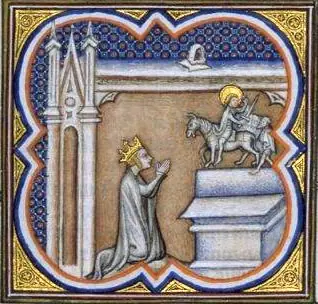
- The storm at Tours: traditional. When her sons Childebert and Clotaire were about to fight a war against each other, Clotilde spent the whole night in tears before St. Martin's tomb. A violent storm broke over the two armies and scattered them before the battle. Gregory took it as the saint's answer to a mother's prayer.
Les Andelys in Normandy, where tradition says she founded a monastery for women, keeps a spring called the Fontaine Sainte-Clotilde; local tradition holds that she turned its water into wine for thirsty workmen. That story is traditional and much later than Gregory.
Why St. Clotilde is the patron saint of queens and widows
As a queen who used her place to bring her husband and people to Christ, Clotilde became the model of the Christian queen in French tradition. Her long widowhood and the loss of children and grandchildren made her a patron of widows and of grieving parents. Wives and mothers who pray for an unbelieving husband or child ask her help, as they ask St. Monica's. See our list of patron saints for others.
Symbols of St. Clotilde in art
Clotilde is shown as a queen, usually crowned and veiled, often with her hands joined in prayer. Look for:
- Crown and veil: queen and, later, widow.
- Clovis at the baptismal font: the scene she is most often part of, as in the Master of Saint Giles's painting above, where she stands behind the king with lowered eyes.
- A small church: for the churches she founded or endowed, among them the Church of the Holy Apostles in Paris.
- Kneeling at a tomb: her prayer at St. Martin's shrine.
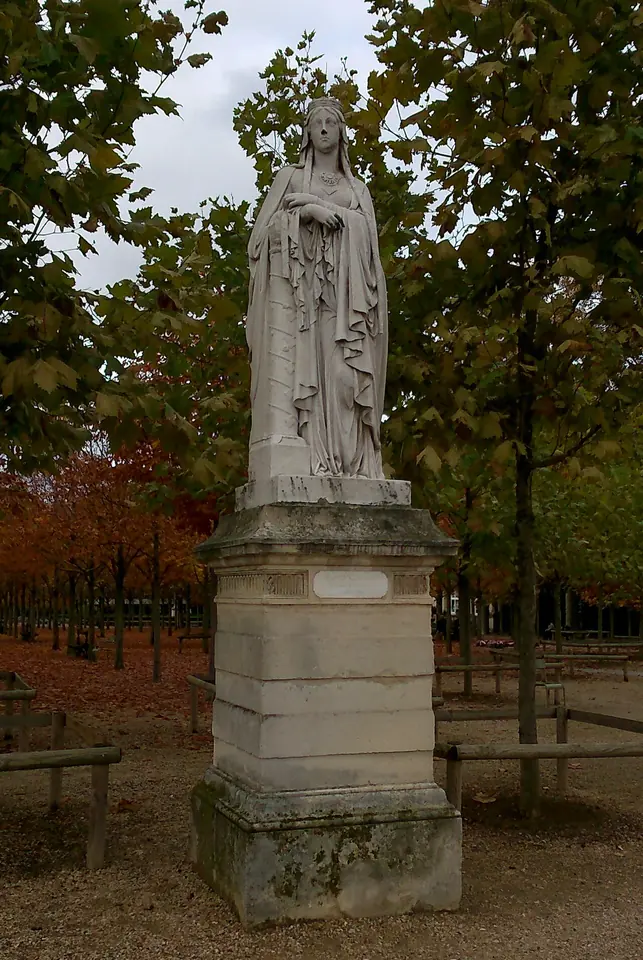
In 1847 Jean-Baptiste-Jules Klagmann carved her for the series of queens of France in the Luxembourg Garden in Paris, where she still stands.
The church at Les Andelys has a whole window of her life, made by Didion in 1866.

Feast day and where St. Clotilde is honored
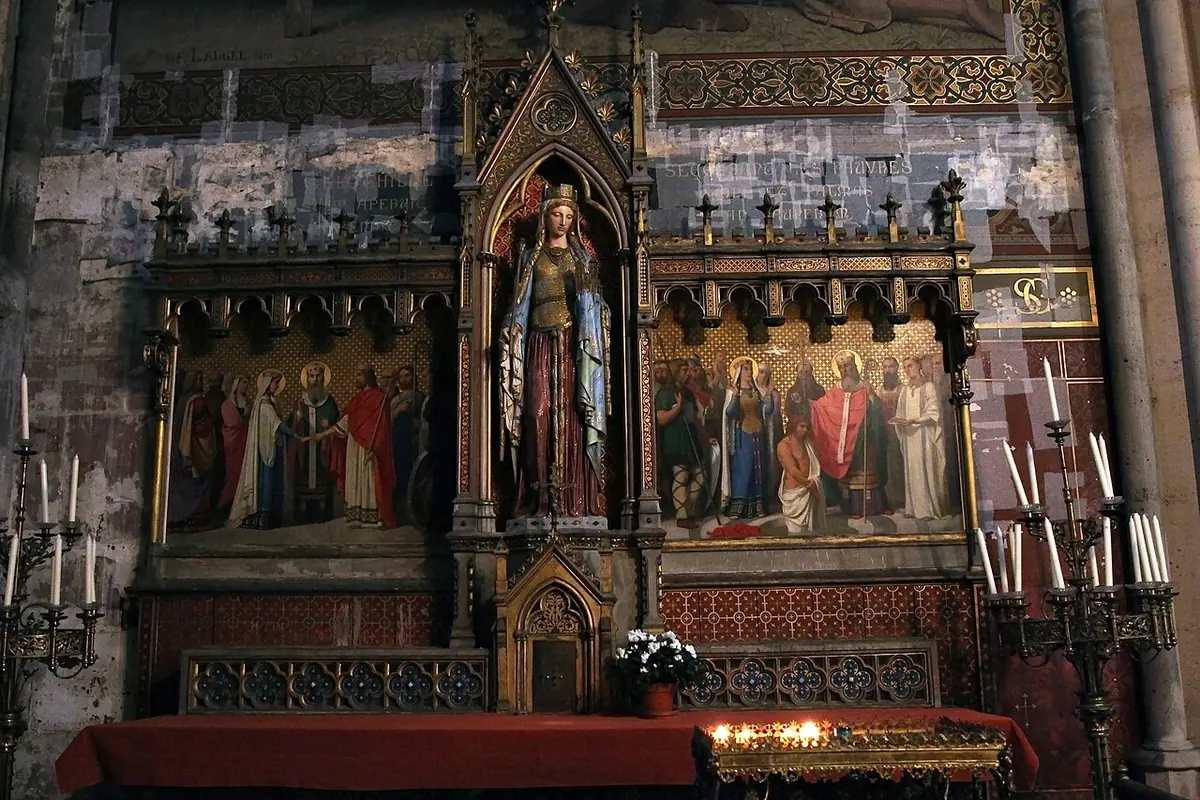
We keep the feast of St. Clotilde on June 3. Her body was laid beside Clovis in the Church of the Holy Apostles, later the Abbey of Sainte-Geneviève; the church is gone, and only its tower, the Tour Clovis, still rises beside the Panthéon. Paris built the Gothic Revival Basilica of Sainte-Clotilde in her honor in the 19th century, and its Chapel of St. Clotilde has a painted statue of her between scenes of her marriage and of Clovis's baptism.
Prayer to St. Clotilde
There is no prayer from St. Clotilde herself, and no single traditional prayer to her is widely printed in English. We ask her intercession simply, especially for husbands, wives and children far from the faith: "St. Clotilde, faithful wife and patient mother, pray for us." Her own words in Gregory of Tours are a prayer in themselves: thanks to "the omnipotent God, creator of all," even in the hour of grief.
Frequently asked questions
Who was St. Clotilde?
St. Clotilde was the Catholic wife of Clovis I, the first king of all the Franks, and the mother of three kings. Gregory of Tours, writing about 40 years after her death, tells how she urged her pagan husband to believe in Christ until he was baptized by St. Remigius at Reims, traditionally in 496.
What is St. Clotilde the patron saint of?
Queens, widows and those who pray for the conversion of a husband or child, because of her long prayer for Clovis and her sorrows as a widowed mother. She is also honored as a patron of France. These patronages come from devotion over the centuries rather than any formal decree.
When is St. Clotilde's feast day?
June 3, the day she died at Tours in 545. It is in the Roman Martyrology and is kept in France, especially at the Basilica of Sainte-Clotilde in Paris and in Les Andelys in Normandy.
How did St. Clotilde convert Clovis?
By patient witness. Gregory of Tours records her arguments against the pagan gods and her insistence on baptizing their sons. In a battle against the Alamanni, Clovis called on "Jesus Christ, whom Clotilda asserts to be the son of the living God," won, and was baptized.