St. Joseph Mukasa Balikuddembe, First of the Uganda Martyrs
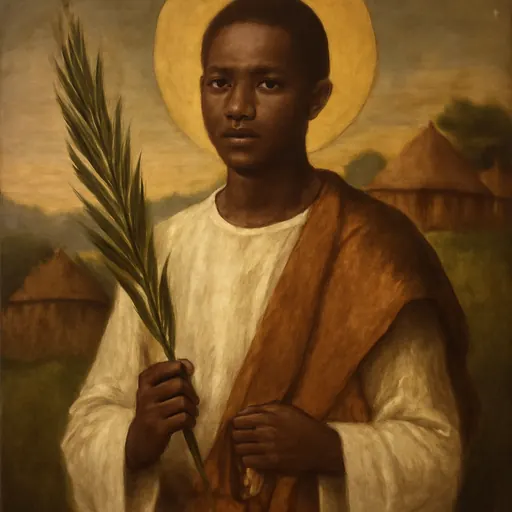
St. Joseph Mukasa Balikuddembe (about 1860–1885) was the Catholic majordomo of the court of King Mwanga II of Buganda and the first of the Uganda Martyrs. He protected the royal pages, rebuked the king for the murder of Bishop James Hannington, and was killed near the Nakivubo River on November 15, 1885. He was canonized in 1964, and we honor him with the Uganda Martyrs on June 3.
Who was St. Joseph Mukasa Balikuddembe?
St. Joseph Mukasa Balikuddembe was the first Catholic to die for the faith in Uganda. He was the majordomo of the royal court of Buganda, the man in charge of the young pages who served the king, and he protected them at the cost of his life. He was killed on November 15, 1885, half a year before St. Charles Lwanga and his companions were burned at Namugongo.
We honor him with all the Martyrs of Uganda on June 3.
The life of St. Joseph Mukasa
A page at the king's court
He was born around 1860 in Mawokota county, on the shore of Lake Victoria. His father, Kajwayo, belonged to the Kayozi (giant rat) clan. At about fourteen, around 1874, he became a page to Kabaka Mutesa I at Kasubi, and he served at court for some eleven years, rising to be the king's personal attendant.
Baptism
The Missionaries of Africa, the "White Fathers," reached Buganda in 1879. Mukasa became a catechumen the next year, and on April 30, 1882, Fr. Siméon Lourdel baptized him with the name Joseph. St. Andrew Kaggwa was baptized the same day.
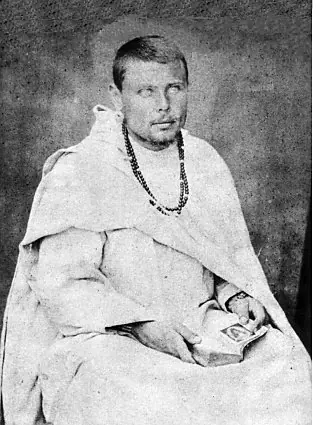
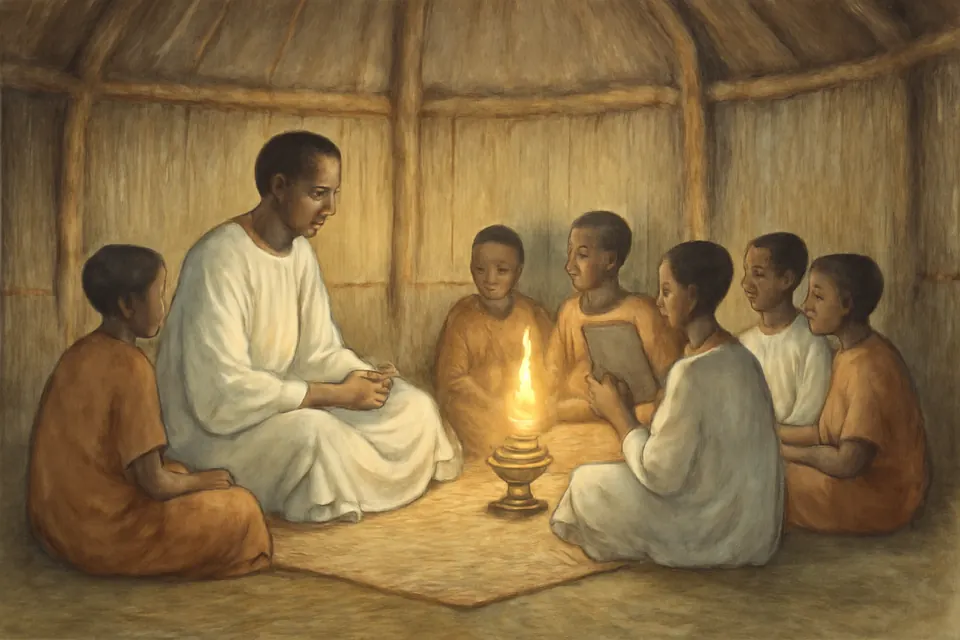
When the missionaries withdrew from the country between 1882 and 1885, Mukasa became the leader of the young Catholic community at court. He looked after the Catholic pages' bodies and souls alike and taught them the faith. Charles Lwanga worked under him, and Mukasa came to rely on him more and more.
Majordomo under Mwanga
When the young Mwanga II became king in 1884, Mukasa was made majordomo, with the rare right to rebuke the king. He used it. He pleaded for the life of Sarah Nalwanga, an Anglican convert condemned to death. He helped foil a plot against the king early in 1885. But he lost the king's favor by shielding the pages from Mwanga's sexual demands, urging him to give up his charms, and holding catechism classes in the court itself.
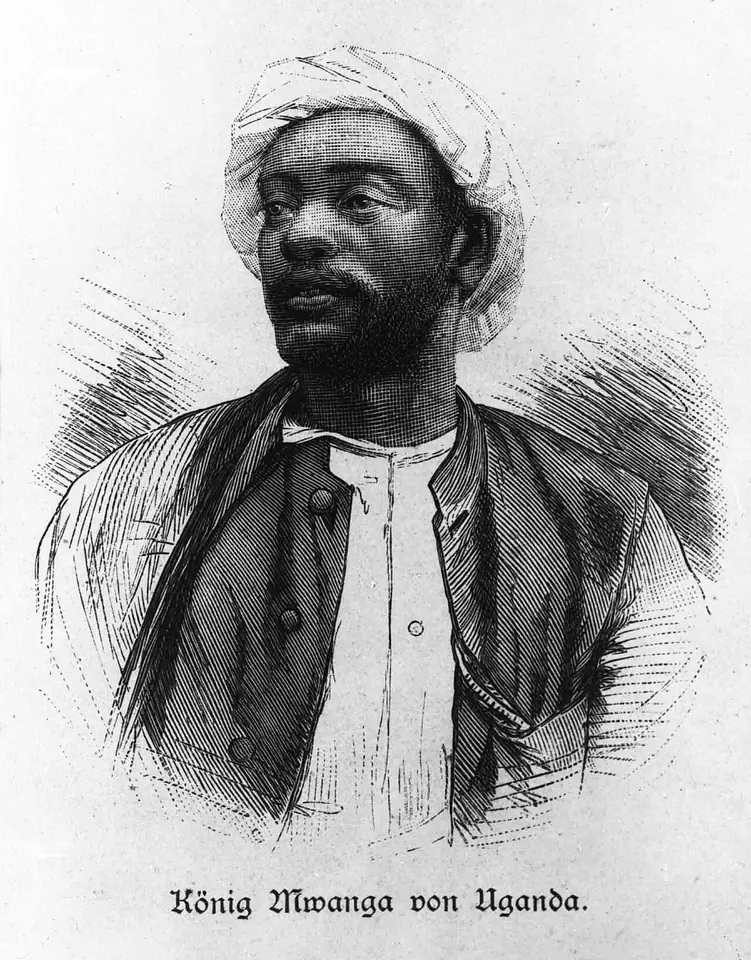
In 1885 the Anglican bishop James Hannington approached Buganda overland from the east. Mwanga resolved to kill him. Mukasa begged him not to, reminding him that his father Mutesa had never killed a European. Hannington and his porters were murdered all the same, in October 1885.
The martyrdom of St. Joseph Mukasa
In November the king seized on a pretext: he blamed the side effects of a medicine Fr. Lourdel had given him on a plot by the Catholics. After a long night interview with the king, Mukasa received Holy Communion from Fr. Lourdel. Summoned again, he was condemned to death, and the king made it clear that he was to die for his religion. He was led to a spot near the Nakivubo River, between the hills of Mengo and Nakasero. There, as Fr. Aylward Shorter writes, "he forgave the king and his other enemies." He was killed with a knife and his body burned to ashes on a pyre. It was November 15, 1885.
That same day Charles Lwanga and several other catechumens went to the mission and asked to be baptized. Lwanga took over Mukasa's care of the pages, and the great persecution of May and June 1886 followed.
Beatification and canonization
Pope Benedict XV beatified Joseph Mukasa with Charles Lwanga, Matthias Mulumba and their companions, twenty-two Catholic martyrs in all, on June 6, 1920. Pope Paul VI canonized them in Rome on October 18, 1964. As martyrs they needed no approved miracle for canonization.
Symbols of St. Joseph Mukasa in art
Images of the Uganda Martyrs are modern, from the twentieth century on. You'll know Joseph Mukasa by:
- The white kanzu: the long robe of the Buganda court, often with a bark-cloth wrap.
- The martyr's palm: the sign of all who died for Christ.
- Flames or a pyre: his body was burned after he was killed, as the Namugongo martyrs were burned alive.
- His place in the group: in paintings of the twenty-two martyrs he is often shown near Charles Lwanga, the young pages gathered around them.
Feast day and places of pilgrimage
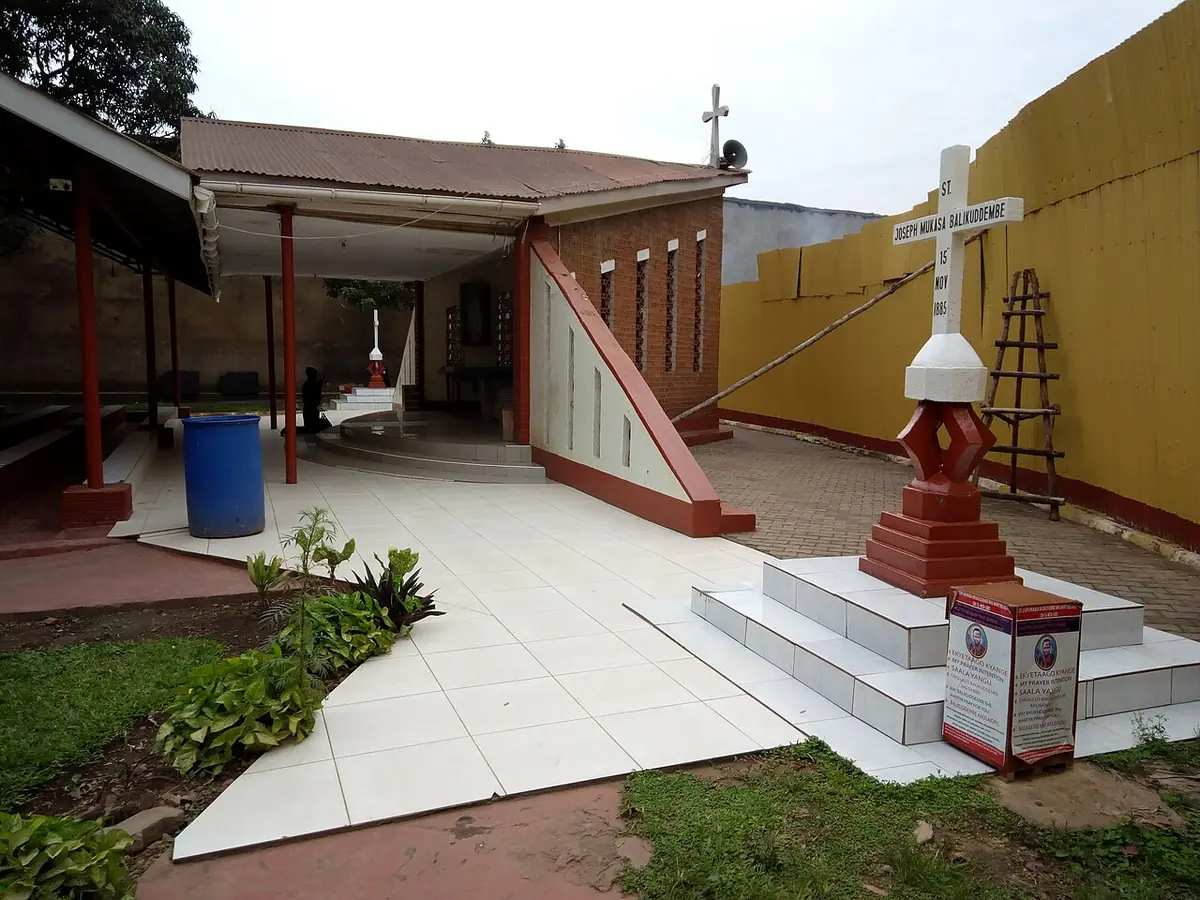
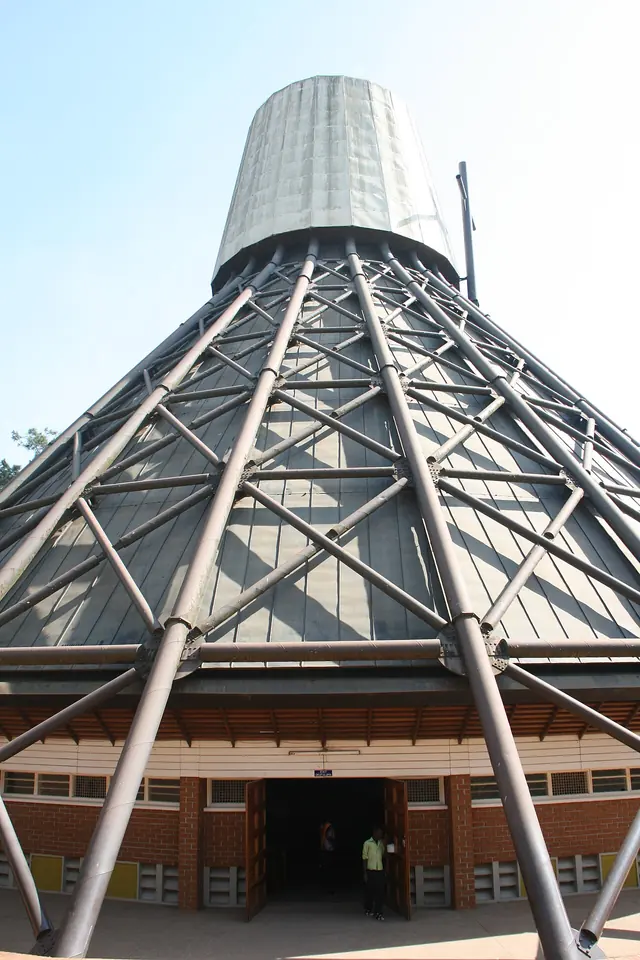
His feast is June 3, the day of the Martyrs of Uganda; see our feast days page. Each year huge crowds of pilgrims walk to the Basilica of the Uganda Martyrs at Namugongo for that day. In Kampala, the busy market near the place where he died is named St. Balikuddembe Market, and a small memorial shrine stands within it.
Prayer to St. Joseph Mukasa
We know of no traditional prayer addressed to him alone. The Church prays to God through all the Uganda Martyrs together in the collect of June 3. Let us ask St. Joseph Mukasa to pray for those who protect the young from abuse, for leaders who must tell the powerful the truth, for catechists, and for the Church in Uganda. St. Joseph Mukasa Balikuddembe and all the holy Martyrs of Uganda, pray for us.
Frequently asked questions
Who was the first Uganda martyr?
St. Joseph Mukasa Balikuddembe, killed on November 15, 1885. He is called the Catholic proto-martyr of Uganda; Charles Lwanga and the others died in 1886.
Why was Joseph Mukasa Balikuddembe killed?
He had angered King Mwanga by protecting the royal pages from the king's abuse, urging him to give up his charms, teaching the catechism at court and pleading for the life of Bishop Hannington. The king used a pretext to accuse the Catholics of plotting against him and condemned Mukasa for his faith.
When is the feast day of St. Joseph Mukasa?
June 3, with the Martyrs of Uganda. He died on November 15, 1885, months before the others.
What is the St. Balikuddembe memorial in Kampala?
A small shrine near the place where he was killed, in the middle of the market now named for him, St. Balikuddembe (Owino) Market.
Keep exploring
Sources
- Aylward Shorter, M.Afr., Mukasa Balikuddembe, Joseph (Dictionary of African Christian Biography). His birth in Mawokota, his years as a page from 1874, baptism on April 30, 1882, his care of the pages, Hannington, the pretext of Lourdel's medicine, his forgiveness of the king and his death at Nakivubo
- Sts. Charles Lwanga, Joseph Mkasa and companions, Martyrs of Uganda (EWTN). Beheaded on November 15, 1885, the first victim of the persecution
- Paul VI, homily for the canonization of the Martyrs of Uganda, October 18, 1964 (Spanish). The canonization and the 1920 beatification