St. Kizito, Youngest of the Uganda Martyrs
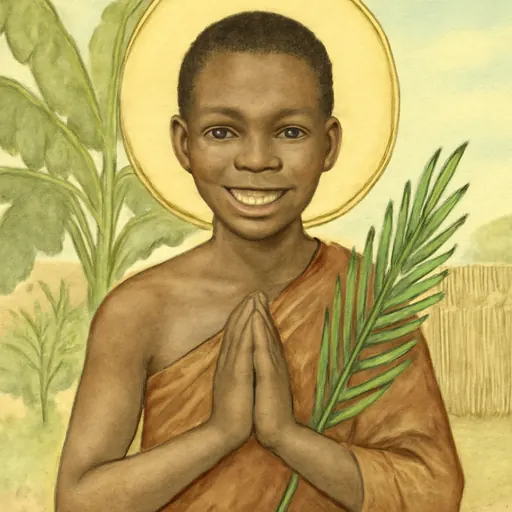
St. Kizito (about 1872–1886) was the youngest of the Uganda Martyrs, a page at the court of King Mwanga of Buganda who was baptized by St. Charles Lwanga the night before he was condemned and was burned alive at Namugongo on June 3, 1886, at about fourteen. His last words were "Goodbye friends, we are on our way." He is honored as a patron of children, and we keep his feast on June 3.
Who was St. Kizito?
Kizito was a boy page at the court of King Mwanga II of Buganda, the kingdom on the northern shore of Lake Victoria that is now part of Uganda. He was about fourteen when he was burned alive at Namugongo on June 3, 1886, for refusing to give up his faith in Christ and for refusing the king's demands on his body. He was the youngest of the twenty-two Catholic Martyrs of Uganda, whom Pope Paul VI canonized on October 18, 1964.
He had been a Christian for only nine days when he died. St. Charles Lwanga, the head of the royal pages, baptized him in secret on the night before they were condemned.
The life of St. Kizito
A boy at the king's court
The fullest account of Kizito's short life is by Fr. Aylward Shorter, a Missionary of Africa, in the Dictionary of African Christian Biography. Kizito's father was Lukomera of the Lungfish clan and his mother Wangabira of the Civet Cat clan. Because of an old blood pact between clans, he was adopted as a small child by Nyika, a powerful chief whom Mwanga made Guardian of the Royal Umbilical Cord, a post second only to the chancellor's. Through Nyika's favor Kizito became a page in the king's private apartments.
Shorter describes him as "a handsome boy, though small for his age, with a spirited and lively character." He ran the king's errands, rounding up canoes for royal hunts and driving cattle to the butchers.
The boy who would not leave
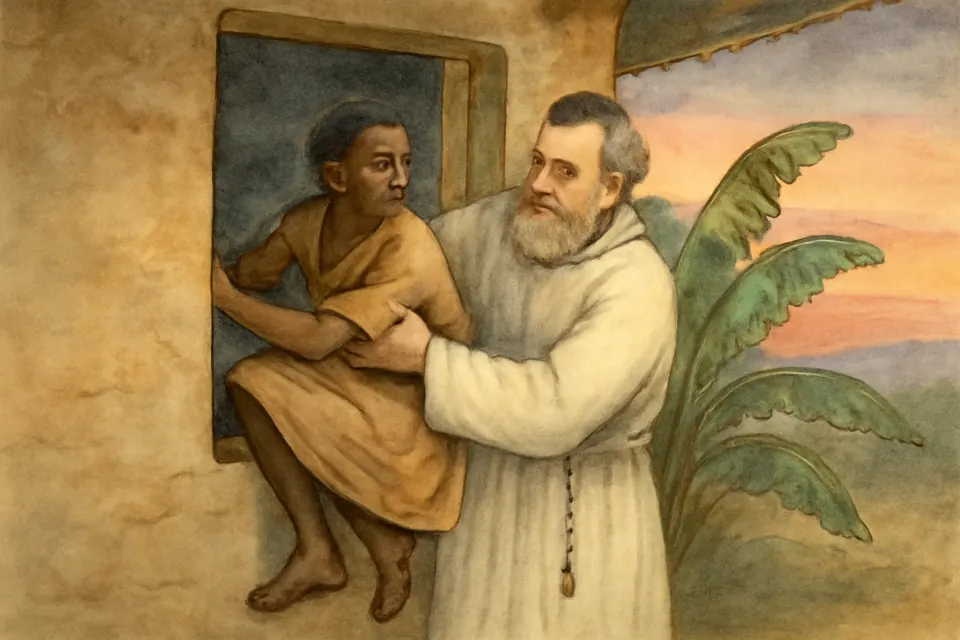
Nyika's household was friendly to the Catholic missionaries, the White Fathers, and Kizito became an eager catechumen. After the martyrdom of St. Joseph Mukasa, the danger to the Christian pages was plain, and Kizito begged the missionaries to baptize him. The priests thought him too young and not yet ready. Once he stayed all night at the mission and refused to go home until they set a date. Another time Fr. Siméon Lourdel, worn out, picked him up and put him out through a ground-floor window. In the end Lourdel promised to baptize him in a month.
A child's purity under threat
Mwanga had turned against the Christians at his court in part because the Christian pages refused his sexual advances. Shorter writes that Kizito, young as he was, understood the evil that threatened him and, "strengthened by the counsels of Charles Lwanga," resisted the king. When Mwanga killed another page, St. Denis Ssebuggwawo, on May 25, 1886, Kizito was badly shaken. That evening Lwanga reassured him: "If we have to die for Jesus, we shall die together hand in hand." That night, in the audience hall at Munyonyo, Lwanga baptized Kizito and four other catechumens.
Laughing on the way to Namugongo
The next day Mwanga called the court together and condemned those who prayed. The pages were roped together, the taller boys in one line and the smaller in another, and marched toward Namugongo, the place of execution. Lourdel, waiting outside in vain to see the king, watched them go. In Shorter's telling, Lourdel noticed that little Kizito was laughing at their strange situation, "looking as happy as if he were at play with his friends."
At Namugongo they waited a week, bound with ropes and slave yokes. The Catholics prayed morning and evening prayers, grace at meals, the Angelus and the rosary, and their guards were amazed at their calm.
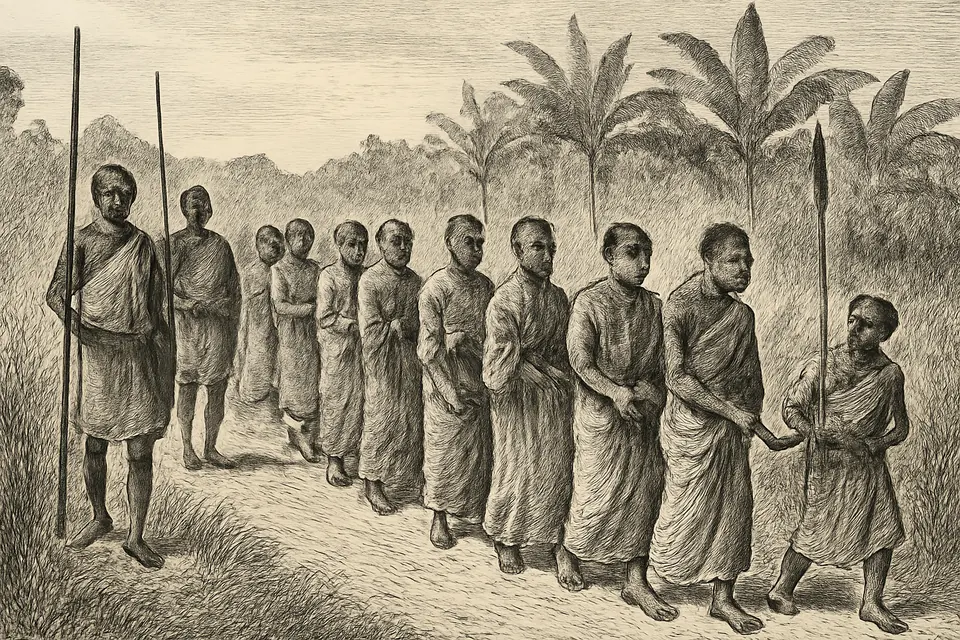
On June 3, 1886, the young men and boys were wrapped in reed mats and laid on a great pyre. As the flames rose, witnesses heard them praying and encouraging one another. Kizito's last words, Shorter records, were "Goodbye friends, we are on our way."
Miracles and the cause of St. Kizito
Kizito was beatified by Pope Benedict XV in 1920 and canonized by Paul VI in 1964 as a martyr. His holiness rests on his death for Christ, not on wonders, and we know of no miracle story attached to him alone.
- His joy on the road to death (reported). Lourdel's own eyewitness memory of a laughing child among the condemned is the most moving thing told of him.
- Answered prayers at Namugongo (reported). Huge crowds of pilgrims come to Namugongo each June, some walking for days, to ask the martyrs' intercession. We know of no formally approved miracle attributed to Kizito himself.
Why St. Kizito is a patron of children
No decree names Kizito a patron, but African Catholics have long given him to their children. He was the youngest of the martyrs, he begged to be baptized when the grown-ups thought him too young, and he went to his death like a boy going to play. Schools, parishes and youth groups across East Africa bear his name, and he is honored especially as a patron of children and young people, and of converts who, like him, long for baptism. More patronages are on our patron saints page.
Symbols of St. Kizito in art
Kizito appears most often in group images of the Uganda Martyrs, where he is easy to spot as the smallest figure. On his own, look for:
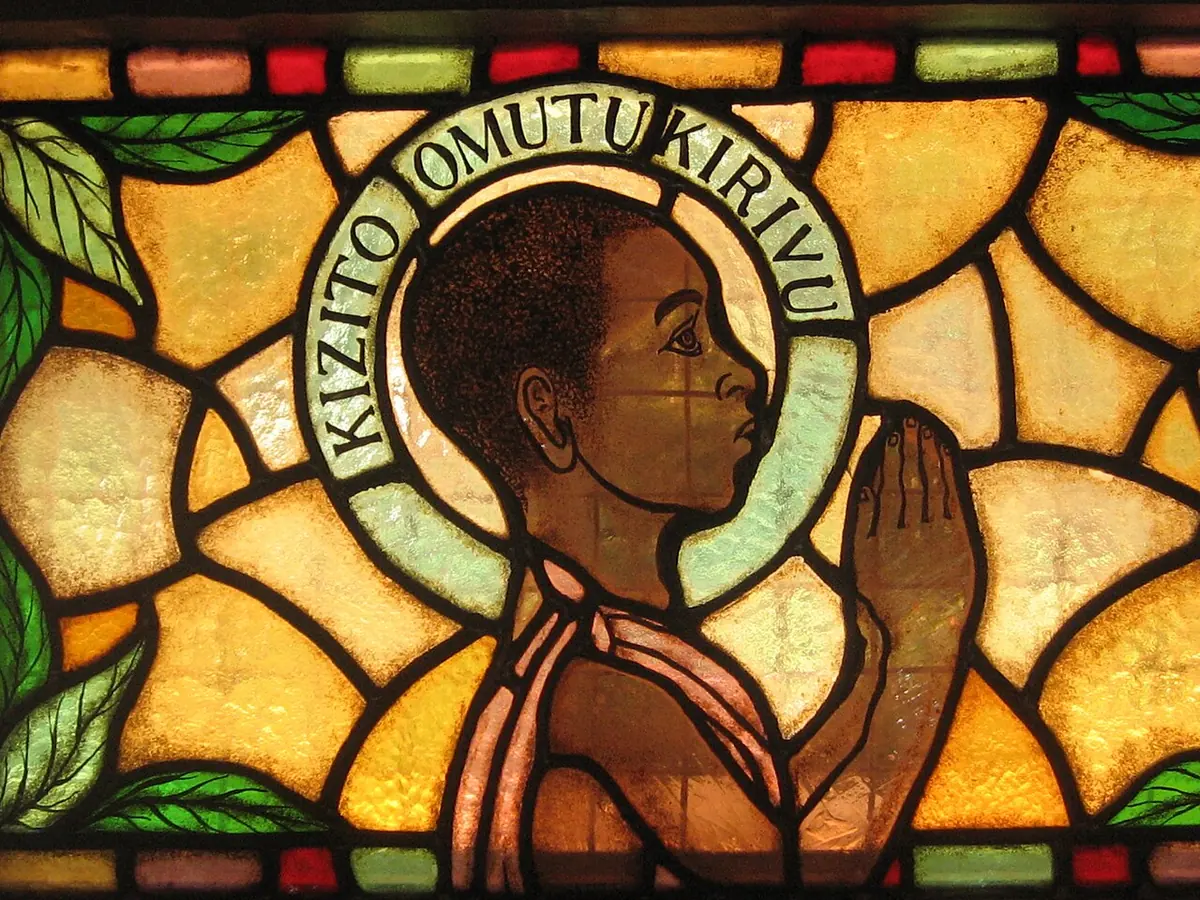
- A small boy: often in profile, with hands joined in prayer, as in the Namugongo window.
- A bark-cloth robe: the traditional Ganda garment the pages wore.
- The martyr's palm and flames: the sign of martyrdom and the fire of Namugongo.
- Water poured over his head: scenes of his baptism by Charles Lwanga show a kneeling boy and a young man pouring water.
The window at Namugongo calls him Kizito Omutukirivu, "Saint Kizito" in Luganda.
St. Kizito's feast day and shrines
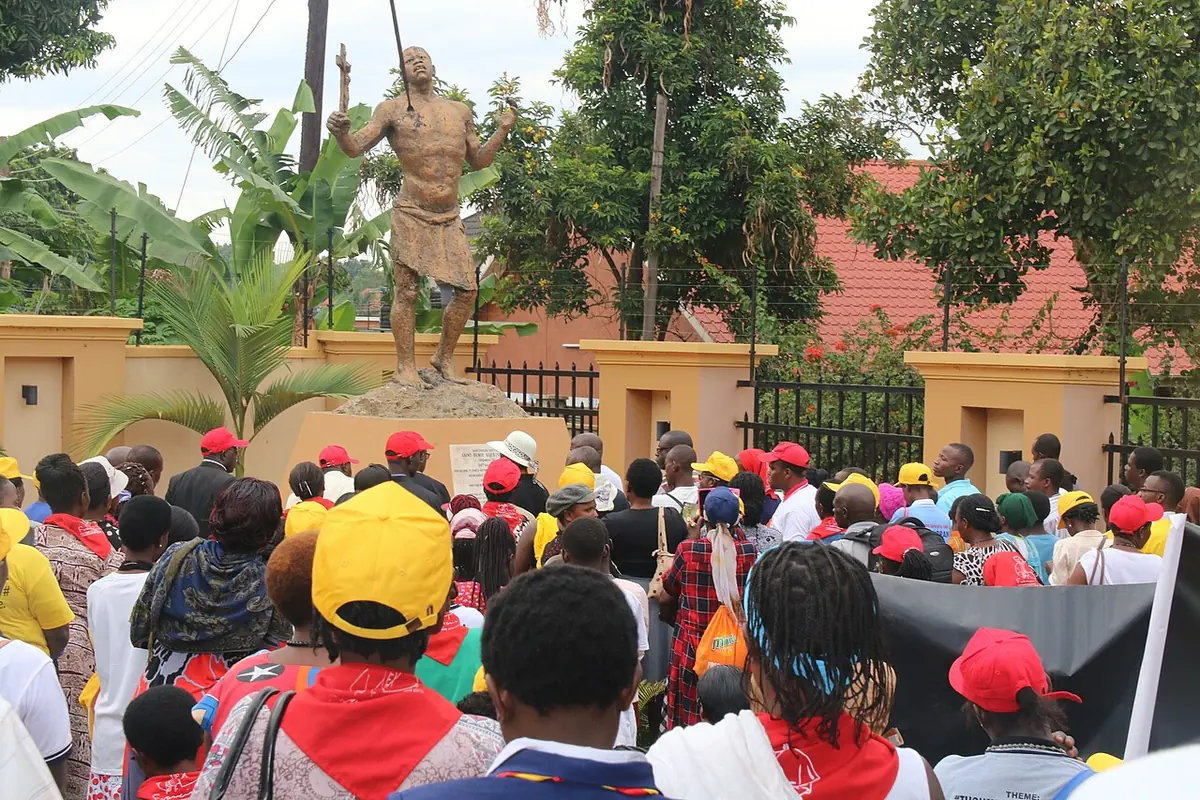
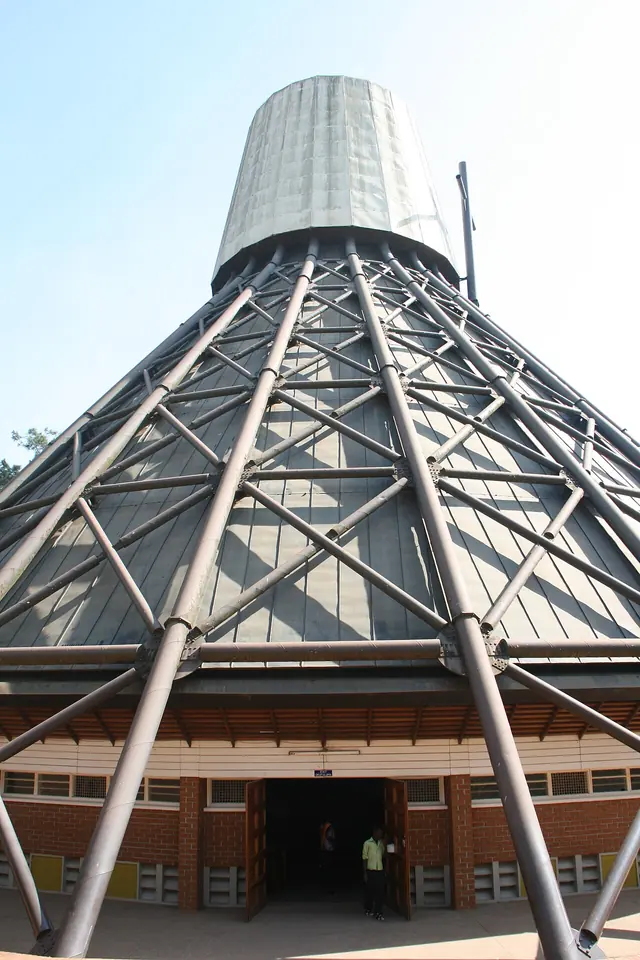
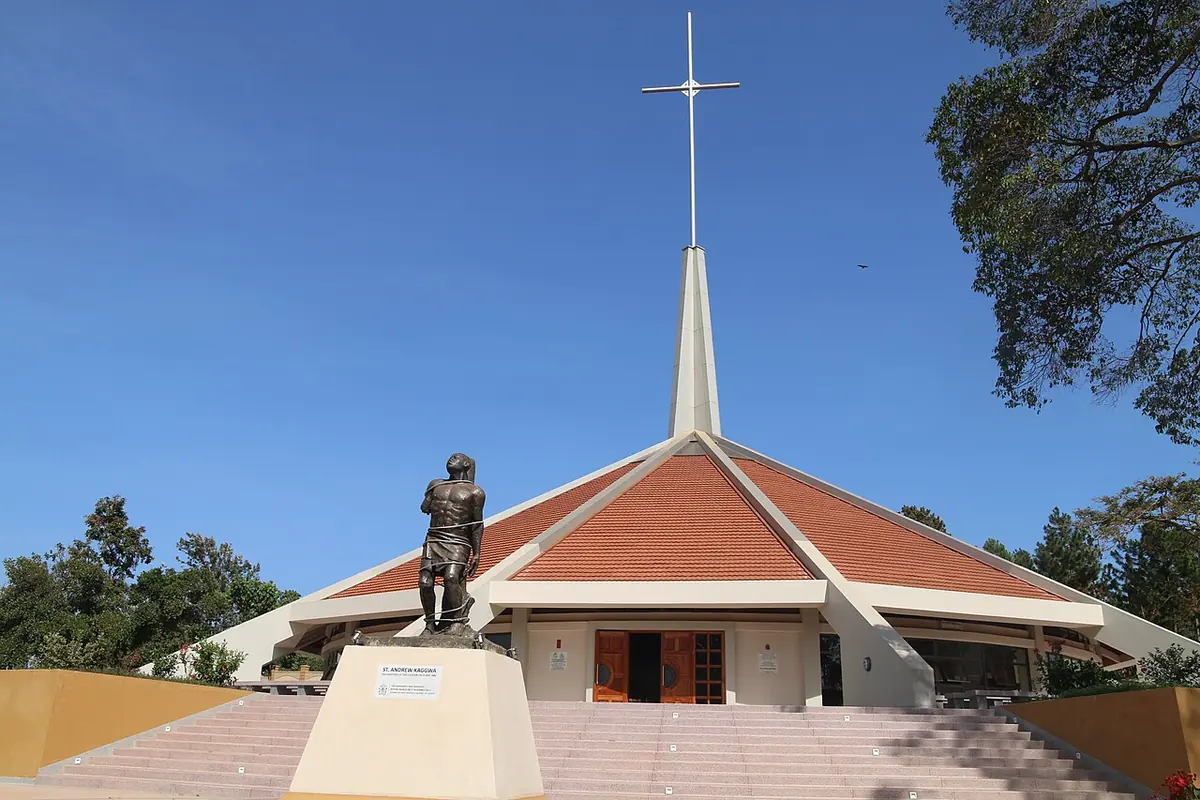
We keep his feast on June 3, the memorial of St. Charles Lwanga and Companions, Martyrs of Uganda. In Uganda it is Martyrs Day, a public holiday, when vast crowds gather at Namugongo. The Catholic basilica there stands near the place of execution, and the Uganda Martyrs Anglican Shrine is close by, since Anglican pages died in the same fire. At Munyonyo, on Lake Victoria, a shrine church marks the place where the pages were condemned and Kizito was baptized. See other June saints on our feast days page.
Prayer to St. Kizito
We know of no traditional prayer to St. Kizito alone. The Church honors him together with his companions, and the simplest way to pray is: Holy Martyrs of Uganda, pray for us. St. Kizito, pray for us.
Let us ask him to pray for children who are in danger, for young people who are being pressured to do wrong, and for every child who asks for baptism.
Frequently asked questions
Who was St. Kizito?
A boy page in the private apartments of King Mwanga II of Buganda, in what is now Uganda. He was a Catholic catechumen who resisted the king's advances, was baptized secretly by St. Charles Lwanga on the night of May 25, 1886, and was burned to death with his companions at Namugongo on June 3, 1886. He was about fourteen, the youngest of the 22 Catholic Uganda Martyrs.
What is St. Kizito the patron saint of?
He is honored as a patron of children and young people, because he was the youngest of the martyrs and faced death with a child's cheerfulness. Many Catholic schools in East Africa bear his name.
When is St. Kizito's feast day?
June 3, the memorial of St. Charles Lwanga and Companions, the Martyrs of Uganda.
What were St. Kizito's last words?
According to Fr. Aylward Shorter's article in the Dictionary of African Christian Biography, his last words were "Goodbye friends, we are on our way."
Sources
- Aylward Shorter, Kizito (Dictionary of African Christian Biography). His parents and adoption by Nyika; Lourdel putting him out of the window; baptism the night of May 25, 1886; laughing on the road; his last words; beatified 1920, canonized 1964
- Paul VI, Homily at the canonization of the Martyrs of Uganda, October 18, 1964 (Spanish text). The canonization of October 18, 1964