St. Macrina the Elder
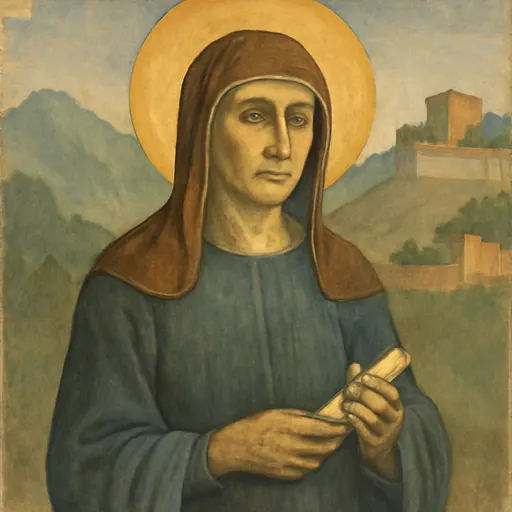
St. Macrina the Elder (before 270 to about 340) was the grandmother of Sts. Basil the Great, Gregory of Nyssa, Peter of Sebaste and Macrina the Younger. During the last great persecution she and her husband hid for about seven years in the forests of Pontus, and in old age she taught her grandchildren the faith of St. Gregory the Wonderworker. Her feast is January 14; she is a model for grandparents.
Who was St. Macrina the Elder?
St. Macrina the Elder was a Christian grandmother of the third and fourth centuries whose faith, handed down at home, formed some of the greatest saints of the early Church. Her son was Basil the Elder, a teacher of rhetoric. Her grandchildren included St. Basil the Great, St. Gregory of Nyssa, St. Peter of Sebaste and St. Macrina the Younger, who was named after her.
She left no writings, and no one wrote her Life. Everything we know comes from three of her grandchildren's generation: Basil's letters, Gregory of Nyssa's Life of Macrina, and the funeral oration of St. Gregory of Nazianzus for his friend Basil. That is a small amount of material, but it is all firsthand family memory.

The life of St. Macrina the Elder
A child of Neocaesarea
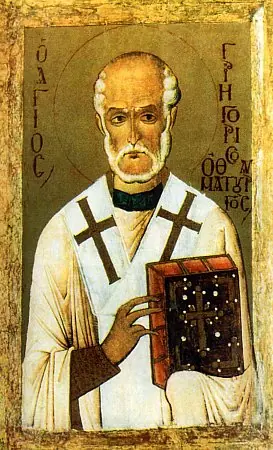
Macrina came from Neocaesarea in Pontus, near the Black Sea, today the town of Niksar in Turkey. As a girl she knew the city's first bishop, St. Gregory Thaumaturgus, the Wonderworker, who had brought almost the whole city to Christ. Gregory died between 270 and 275, so the Catholic Encyclopedia reasons that she must have been born before 270. She remembered what he taught, and later passed it on word for word.
Seven years in the forest
Then came the persecution of the early 300s, under Diocletian and his successor in the East, Maximinus Daia. Gregory of Nazianzus names it the persecution of Maximinus and calls it "the most frightful and severe of all." Basil's paternal grandparents, Macrina and her husband, whose name we do not know, would not deny Christ. They did not go out looking for martyrdom either, which the Church did not ask of anyone. They fled with a few servants into the deep forests of the mountains of Pontus.
Gregory says the flight lasted "about seven years, or a little more," for people brought up in comfort, exposed to frost, heat and rain, with no friends to speak to. Gregory of Nyssa adds that their goods were confiscated "for confessing Christ," and he calls his grandmother one "who had confessed Christ like a good athlete in the time of the persecutions."

The stags in the hills
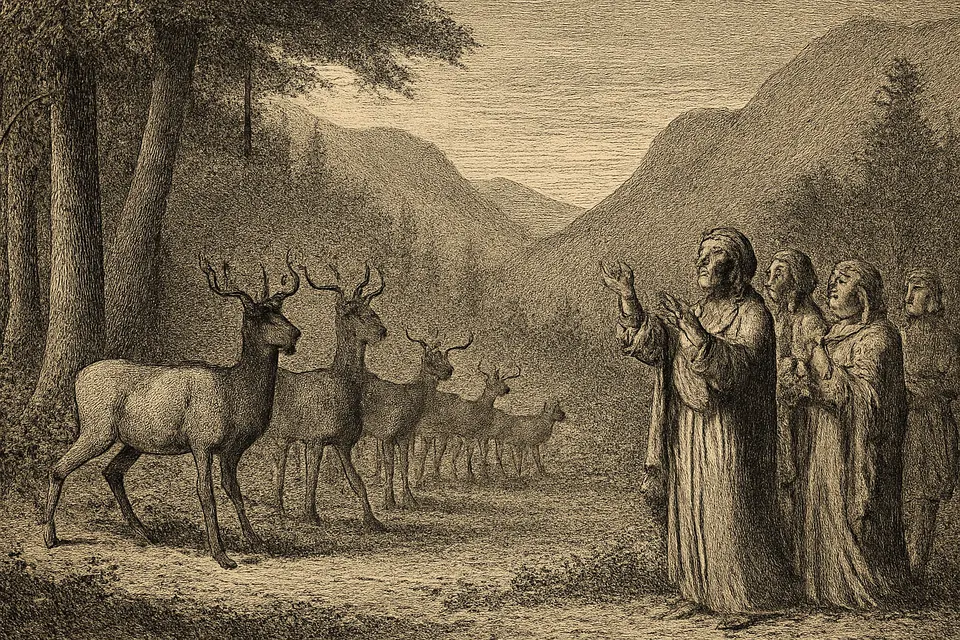
Gregory of Nazianzus tells one story from those years and says it is "my history." Weary of their poor food, the fugitives prayed that the God who fed Israel in the desert would feed them too. At once, he writes, their meal came to them, "stags appearing all at once from some place in the hills," with no hunters, dogs or nets to drive them:
They were the prisoners of prayer and righteous petition. Who has known such a hunt among men of this, or any day?
They took what they needed and let the rest go back into the woods. This is a reported wonder: told by a close friend of the family, decades later, as part of the family's own story.
The grandmother who taught
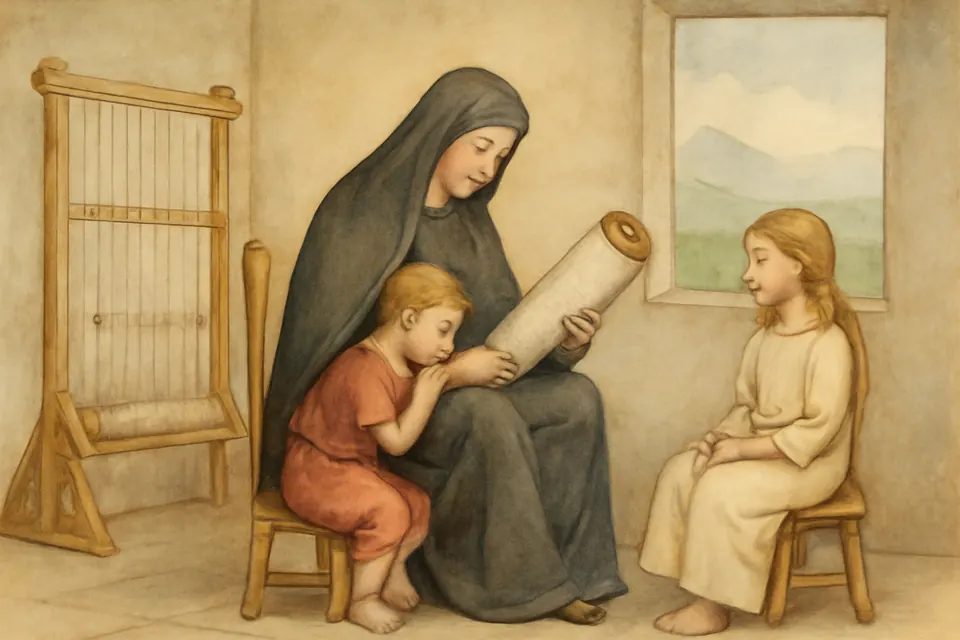
After the persecution ended, the family recovered its standing. Basil the Elder married St. Emmelia, and their ten children were born from the late 320s on. Macrina lived long enough to help raise the eldest of them. Basil tells the people of Neocaesarea in his Letter 204:
What clearer evidence can there be of my faith, than that I was brought up by my grandmother, blessed woman, who came from you? I mean the celebrated Macrina who taught me the words of the blessed Gregory; which, as far as memory had preserved down to her day, she cherished herself, while she fashioned and formed me, while yet a child, upon the doctrines of piety.
And when he was accused of heresy late in life, he answered that he had never changed his faith: "The teaching about God which I had received as a boy from my blessed mother and my grandmother Macrina, I have ever held with increased conviction." Basil was born about 330, and since she lived to teach him, the Catholic Encyclopedia places her death in the 330s; most calendars say about 340.
Why St. Macrina is a saint for grandparents
Macrina has no official patronage, but her story speaks straight to grandparents. She did not preach or found anything. She kept the faith in danger and handed it on at home, and her grandchildren became bishops, a Doctor of the Church, a great monastic founder and a holy abbess. When Basil had to prove his orthodoxy to a whole city, the first witness he named was his grandmother.
Symbols of St. Macrina the Elder in art
Images of her are rare, and no ancient portrait survives. When she appears, in modern icons and in pictures of the holy family of Basil, she is shown:
- As an elderly matron in a dark veil and long robes: the dress of a Christian widow.
- With a scroll or book: the teaching of St. Gregory the Wonderworker that she handed on.
- Among children: her grandchildren, whom she taught.
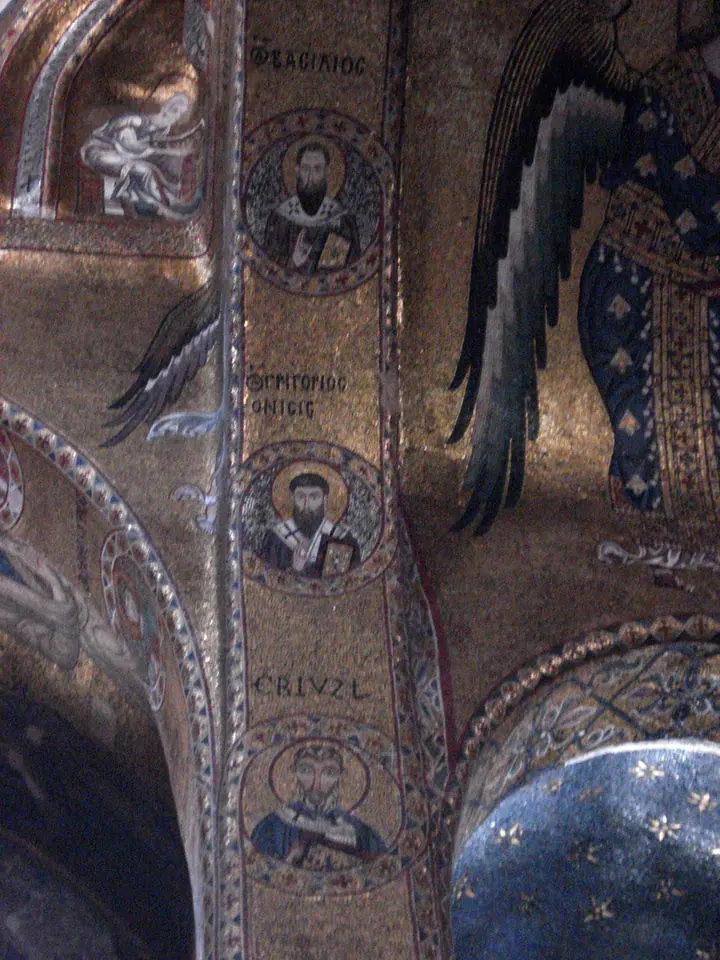
In churches you will far more often find her grandsons, as in the 12th-century medallions of Basil and Gregory of Nyssa at the Martorana in Palermo.
Feast day and prayer
We keep the feast of St. Macrina the Elder on January 14. See the other saints of mid-January on our feast days page.
No ancient prayer to her has come down to us, and none with a known author is in common use. Let us simply ask her help in the words of the Church's litanies: St. Macrina, pray for us. Let us ask her especially for grandparents who pass on the faith to children whose parents no longer practice it, and for Christians who must hide or flee for the name of Christ today.
Frequently asked questions
Who was St. Macrina the Elder?
A Christian woman of Neocaesarea in Pontus, born before 270, who knew the teaching of St. Gregory Thaumaturgus, the city's first bishop. She survived the persecution of the early 300s as a fugitive with her husband, and later raised her grandchildren in the faith. Her son was Basil the Elder; her grandchildren included Sts. Basil the Great, Gregory of Nyssa, Peter of Sebaste and Macrina the Younger.
What is the difference between Macrina the Elder and Macrina the Younger?
Macrina the Elder is the grandmother, a confessor of the persecutions, kept on January 14. Macrina the Younger, named after her, is her granddaughter, sister of Basil and Gregory and founder of a community of women in Pontus, kept on July 19.
Is St. Macrina the Elder the patron saint of grandparents?
She has no formal patronage, but she is often called a saint for grandparents, and rightly: St. Basil himself credits her with forming him in the faith as a child. Sts. Joachim and Anne are the Church's best-known patrons of grandparents.
What miracle is told of St. Macrina's family?
St. Gregory of Nazianzus says that when Basil's paternal grandparents were starving in the forests of Pontus, they prayed, and stags came out of the hills and offered themselves as food. The story is reported by a friend of the family about seventy years after the event.
Keep exploring
- Patron saint pages
- Families
- Feast-day calendar
- Saints remembered in JanuarySaint of the day
- More
- Saints A to ZPatron saints A to ZExplore every section
Sources
- Catholic Encyclopedia (1910): St. Macrina the Elder. Her dates, flight in the persecution and January 14 feast
- St. Basil the Great, Letter 204, to the Neocaesareans. "The celebrated Macrina who taught me the words of the blessed Gregory"
- St. Basil the Great, Letter 223, against Eustathius. The teaching he received as a boy from his mother and his grandmother Macrina
- St. Gregory of Nazianzus, Oration 43, Funeral Oration on St. Basil. Sections 5 to 8, the seven years in the forests of Pontus and the stags
- St. Gregory of Nyssa, Life of St. Macrina, trans. W. K. Lowther Clarke (1916), tertullian.org. The grandmother who "confessed Christ like a good athlete" and the confiscation of the family's goods