St. Alberic Crescitelli

St. Alberic Crescitelli was an Italian missionary priest of the Pontifical Institute for Foreign Missions (PIME) who served the Christians of southern Shaanxi, China, for twelve years. During the Boxer persecution he was seized, tortured and killed at Yanzibian on July 21, 1900. He was beatified in 1951 and canonized in 2000 among the 120 martyrs of China; we keep his feast on July 21.
Who was St. Alberic Crescitelli?
St. Alberic Crescitelli (Alberico in Italian) was an Italian missionary priest who gave twelve years to the people of southern Shaanxi, in central China, and gave his life there in the Boxer persecution of 1900. He belonged to the Roman seminary for the foreign missions that later became part of the Pontifical Institute for Foreign Missions, known as PIME. Pope Pius XII beatified him in 1951, and Pope John Paul II canonized him on October 1, 2000, as one of the 120 martyrs of China. We keep his feast on July 21, the day he died.
A farmer's son from Altavilla
Alberic was born on June 30, 1863, at Altavilla Irpina, a hill town near Avellino, in a devout family. As a boy his father put him in charge of the family's scattered fields, which left little time for school but gave him a lifelong love of farming and the natural sciences. A local chaplain, Don Giovanni Fischetti, taught him, and under his guidance Alberic heard God's call. On November 8, 1880, at seventeen, he entered the Pontifical Seminary of Sts. Peter and Paul for the Foreign Missions in Rome. He was ordained a priest on June 4, 1887.
The cholera of 1887
Before leaving for China he went home to say goodbye. He was still in Altavilla when cholera broke out on September 12, 1887. Most of the town fled to the countryside. Alberic, with his superiors' permission, stayed and nursed the sick and buried the dead with two other priests. The epidemic struck 275 people and killed 103. Pius XII told the pilgrims at his beatification that he served the sick "without rest or truce, careless of the grave danger of contagion," and only when the epidemic ended did he leave.

Twelve years in Shaanxi
He sailed in April 1888 and reached southern Shaanxi after 36 days at sea and 81 days by boat up some 2,000 kilometers of rivers. He settled first in Hanzhong to learn the language, which he found very hard, then traveled up and down the Han River visiting scattered Christian communities and building a church. In his letters home he told his mother not to worry: "I am in the hands of God and I am content."
Pius XII drew a warm picture of him: a sharp observer of the land and its people who wrote a study of rice growing. "Let it not seem strange that a missionary concerns himself with agriculture," he wrote; trying to know and care for what matters to people "seems to me one of the ways of making oneself all things to all." He tried to gather poor Christians into farming colonies, ran homes for hungry children, and in a time of famine insisted, at the cost of making enemies, that Christians receive the same share of relief rice as their neighbors.
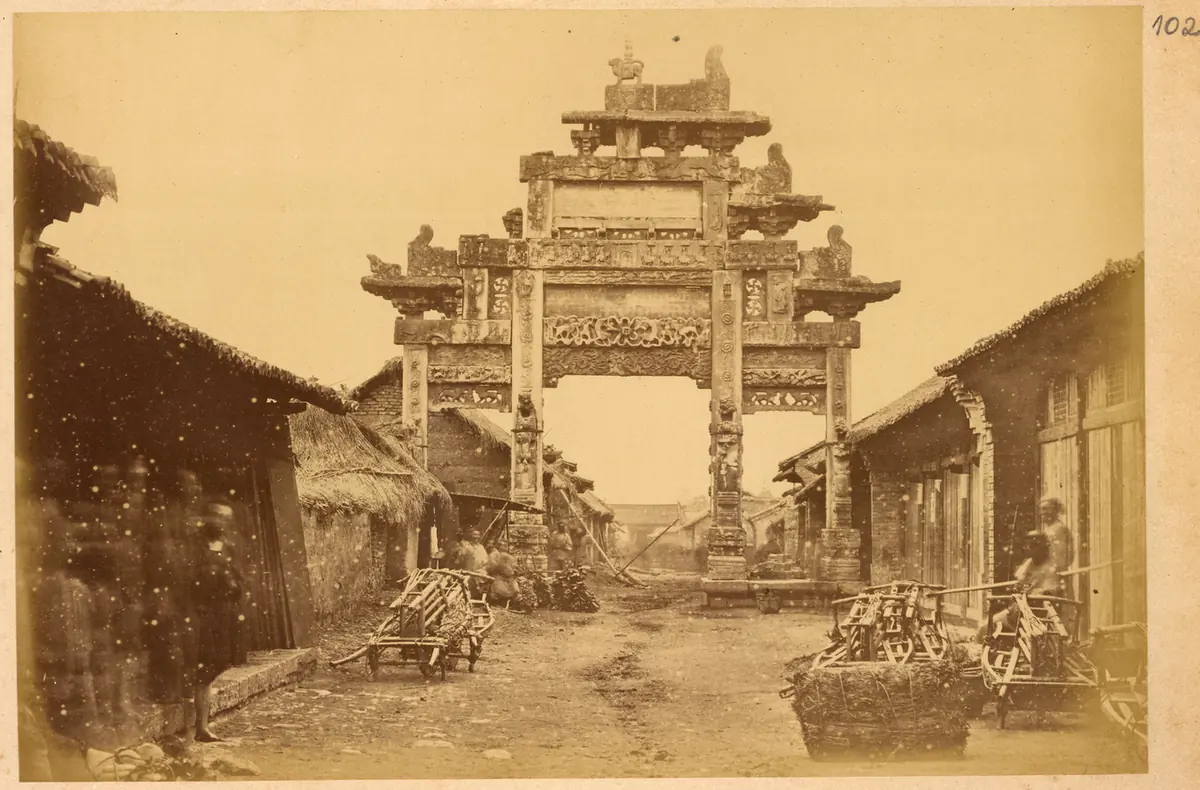
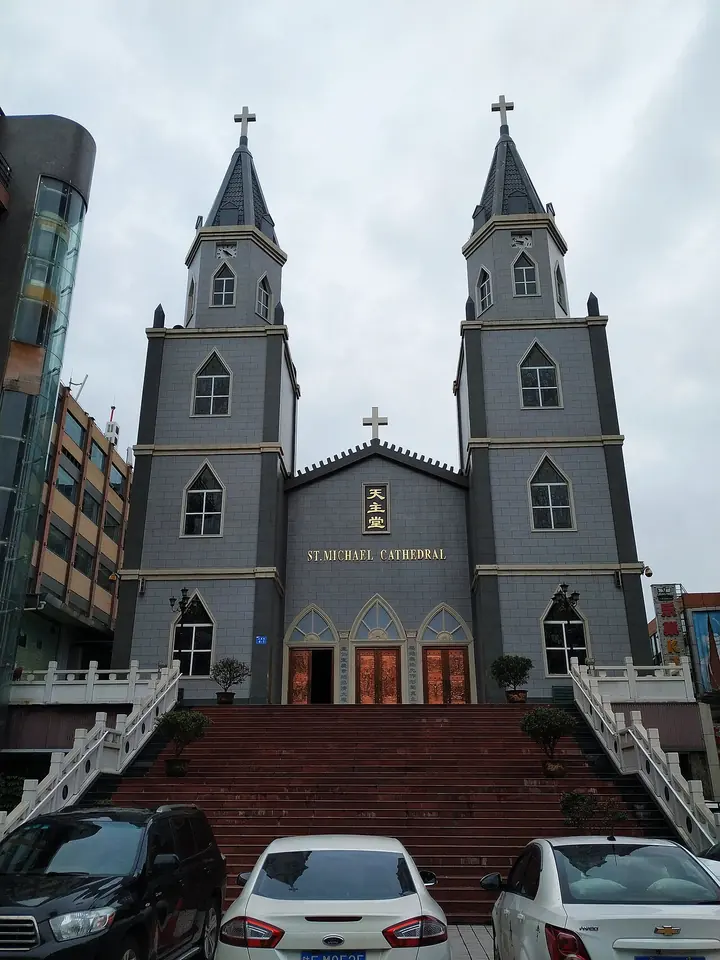
In January 1900 he was given charge of three districts, the farthest being Ningqiang, in the mountains near the border of Sichuan.
Martyrdom at Yanzibian
That summer the Boxer movement and an imperial decree turned against foreign missionaries. Rumors blamed Father Alberic for the shortage of food. Urged to flee toward Sichuan, he set out, and at the market town of Yanzibian a customs officer persuaded him to shelter in the customs house. That night, while he prayed, a mob surrounded the building. He was pushed out of a back door into their hands.
The Roman Martyrology tells the rest briefly: he was "cruelly beaten almost to death" and the next day "dragged along a pavement with his feet bound to the river," where he was killed and beheaded. His body was cut apart and thrown into the river. Pius XII spoke of a death "humanly speaking, horrible, perhaps one of the most atrocious that history records," with "the hypocritical betrayals of false friends" among its sufferings.

Miracles and canonization
We know of no miracle connected with him. He was beatified and canonized as a martyr, for whom the Church does not require a miracle. His fellow missionaries, who had known him for years, opened his cause in 1908.
In his canonization homily, John Paul II spoke of the 33 missionaries among the 120, Father Alberic among them, "who left their land and sought to immerse themselves in the Chinese world, lovingly assimilating its features in the desire to proclaim Christ and to serve those people." He added that the Church meant only to recognize that the martyrs "are an example of courage and consistency to us all, and that they honour the noble Chinese people."
Symbols of St. Alberic Crescitelli in art
- The Chinese scholar's robe and round cap: missionaries in inland China dressed in local clothes, and he is shown that way.
- A crucifix, held against the chest, the mark of a missionary priest.
- The martyr's palm.
- The river, sometimes in the background, for the Han River missions and the river where his body was thrown.
Feast day and where he is honored
We keep his feast on July 21. See the feast day calendar. He is also remembered on July 9, with St. Augustine Zhao Rong and all the martyrs of China. His hometown of Altavilla Irpina and the PIME missionaries honor him as their own.

There is no traditional prayer to St. Alberic Crescitelli in common use. Let us ask him, who stayed with the dying in a plague and with his people in a famine, to pray for missionaries, for the Church in China, and for all who are hated for the good they do.
Frequently asked questions
Who was St. Alberic Crescitelli?
An Italian priest born in 1863 at Altavilla Irpina, near Avellino, who joined the Roman seminary for foreign missions (later part of PIME), was ordained in 1887 and went to China in 1888. He worked along the Han River in southern Shaanxi until his martyrdom in 1900.
How did St. Alberic Crescitelli die?
During the Boxer persecution a mob seized him at a customs post at Yanzibian, beat and wounded him through the night, and the next day dragged him by the feet to the river, where he was killed and his body thrown into the water. Pope Pius XII called his death "one of the most atrocious that history records."
When is his feast day?
July 21, the day of his death, in the Roman Martyrology. He is also honored on July 9 with St. Augustine Zhao Rong and the other martyrs of China.
When was he canonized?
Pope Pius XII beatified him on February 18, 1951, and Pope John Paul II canonized him on October 1, 2000, with 119 other martyrs of China.
Keep exploring
Sources
- Pope Pius XII, address to pilgrims for the beatification of Alberico Crescitelli, February 19, 1951 (in Italian). His service in the cholera epidemic, his defense of Christians' share of famine rice, his study of rice farming, his sayings "In the hands of God," and the description of his martyrdom
- Santi e Beati: Sant'Alberico Crescitelli (Roman Martyrology text, Avvenire, and Antonio Borrelli). The Roman Martyrology entry, his birth, seminary and ordination dates, the 1887 cholera at Altavilla (275 sick, 103 dead), his journey to Shaanxi, and the account of his death at Yanzibian
- Pope John Paul II, homily at the canonization of Augustine Zhao Rong and 119 companions, October 1, 2000. The canonization of the 120 martyrs and the words on the 33 missionaries among them