St. Isaac the Syrian (Isaac of Nineveh), Bishop, Hermit and Teacher of Mercy
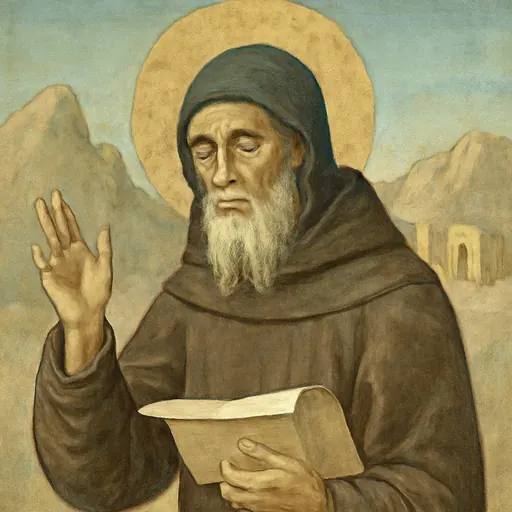
St. Isaac the Syrian, also called St. Isaac of Nineveh, was a 7th-century monk from the region of present-day Qatar who was made bishop of Nineveh, resigned after about five months, and spent the rest of his life as a hermit in the mountains of southwestern Iran. His Ascetical Homilies are among the most loved spiritual books of the Christian East. His feast is January 28, and in 2024 Pope Francis added him to the Roman Martyrology.
Who was St. Isaac the Syrian?
St. Isaac the Syrian, known to scholars as St. Isaac of Nineveh, was a 7th-century monk who was made bishop of Nineveh, gave up his see after about five months, and spent the rest of his long life as a hermit in the mountains of what is now southwestern Iran. There, near the end of his life, he wrote discourses on prayer, silence, humility and the boundless mercy of God. Those few books, carried from Syriac into Greek, Arabic, Georgian, Ethiopic, Latin and Slavonic, made a hermit of a small and distant church into one of the best-loved spiritual teachers of the whole Christian world.
He wrote in Syriac, the Christian form of Aramaic, the language closest to the one Our Lord spoke. He belonged to the Church of the East, the church of the Persian Empire, which in his day was not in communion with Rome or Constantinople. Yet monks of every tradition took him to their hearts. The Orthodox Church keeps his feast on January 28, alongside St. Ephrem the Syrian, and on November 9, 2024, Pope Francis announced that "the great Isaac of Nineveh, one of the most venerated Fathers of the Syro-Oriental tradition, acknowledged as a teacher and a saint by all traditions, will be added to the Roman Martyrology."
What draws people to him is the warmth of his teaching. Isaac writes like a father speaking to children he loves, and his great theme is God's mercy, which he compares to a fountain that no handful of earth can stop. Let us come to know him and learn to pray with him.
The life of St. Isaac the Syrian
We know very little about his life. Isaac never wrote about himself, and the old accounts are short. The oldest notice of him comes from Isho'dnah, a Church of the East bishop of Basra, whose writings the French scholar Jean-Baptiste Chabot brought to light in 1896. A later Arabic life, printed in Rome in 1719, adds stories that appear in the Orthodox lives of Isaac today. As the Orthodox Church in America notes, for a thousand years Western Christians knew nothing of him "except for his name and works."
A monk from Beth Qatraye
Isaac was born in Beth Qatraye, the Christian region along the Persian Gulf coast of Arabia that included present-day Qatar. In the 7th century it was a lively center of learning for the Church of the East, with monasteries, schools and scholars of its own. The Dicastery for Promoting Christian Unity says he "first embraced monastic life" there. Sebastian Brock, the Oxford scholar who has done more than anyone to make Isaac known, calls Beth Qatraye "an important intellectual centre" of that church.
The Orthodox life tells a different story of his beginnings. It says that Isaac and his brother entered the monastery of Mar Matthew (Mar Mattai) near Nineveh, and that when the brothers wanted to make Isaac their superior, he fled to live alone in the desert, refusing even his own brother's pleas to come back. This account comes from the later Arabic life, so we hold it more loosely than the Qatar tradition.
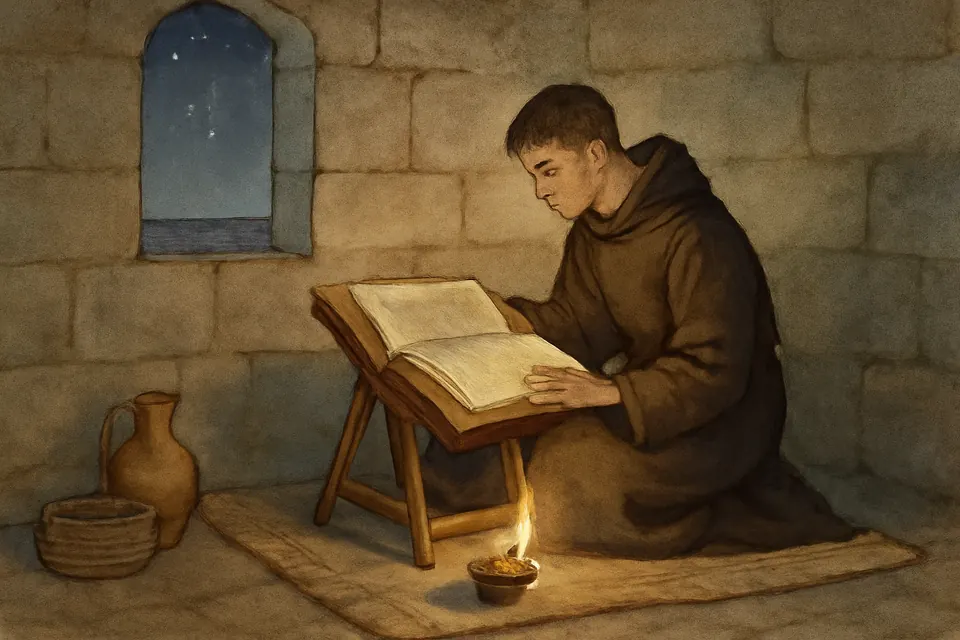
What is clear is the sort of monk he became. He loved Scripture and silence above everything. Through long years of reading, prayer and fasting he became learned without ever becoming a mere scholar, and the books he wrote later breathe a deep familiarity with the Bible and with the desert fathers who had gone before him.
Bishop of Nineveh for five months
Sometime between 676 and 680, Catholicos George I, the head of the Church of the East, brought Isaac from Beth Qatraye and consecrated him bishop of Nineveh, the ancient city across the Tigris from modern Mosul. Holy Transfiguration Monastery gives the year as 676. It was an honor and a heavy charge, and Isaac did not keep it long.
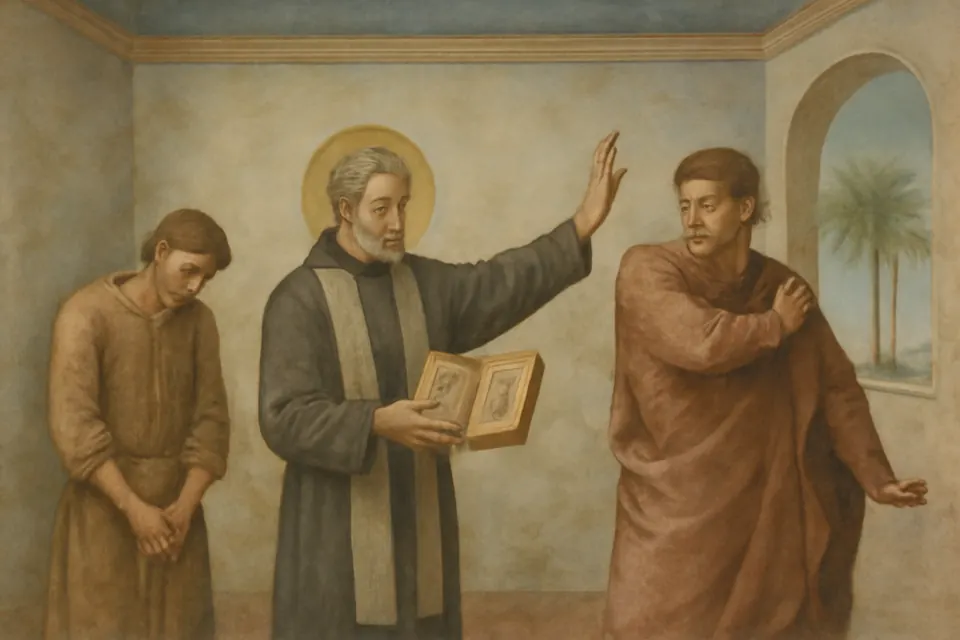
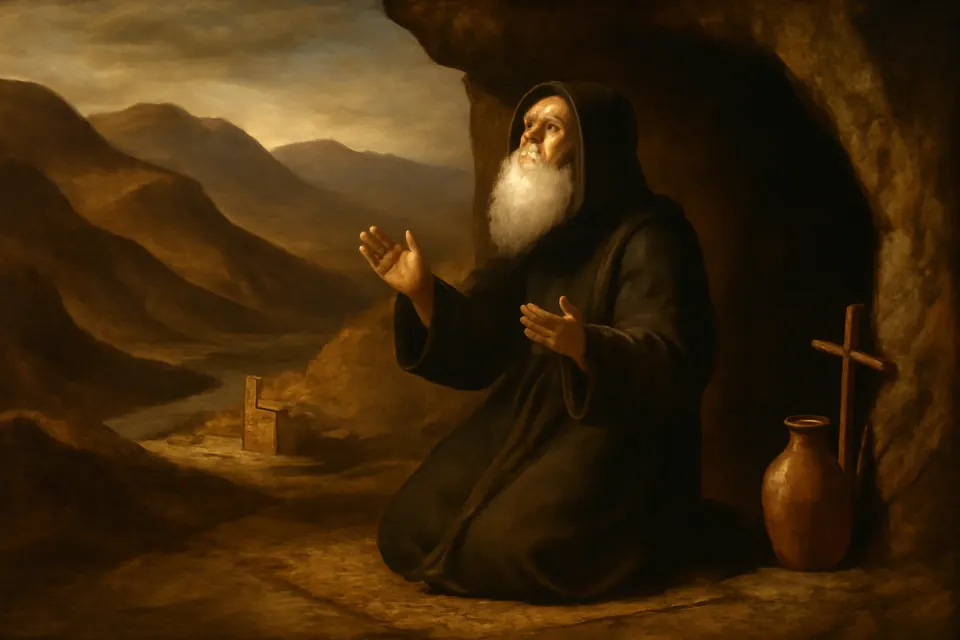
After about five months he resigned. Brock writes that he left "for reasons only God knows." The Orthodox life preserves a story that may explain it. Two Christians came to the new bishop with a dispute: one owed the other money and asked for a little more time to pay, but the lender threatened to take him to court. Isaac pleaded with the lender to show mercy as the Gospel commands. "Leave your Gospel out of this!" the man answered. Isaac replied, "If you will not submit to Lord's commandments in the Gospel, then what remains for me to do here?" Soon afterward he laid down his office and went into the mountains. The story is traditional, but it fits everything Isaac later wrote about mercy.

A hermit near Rabban Shabur
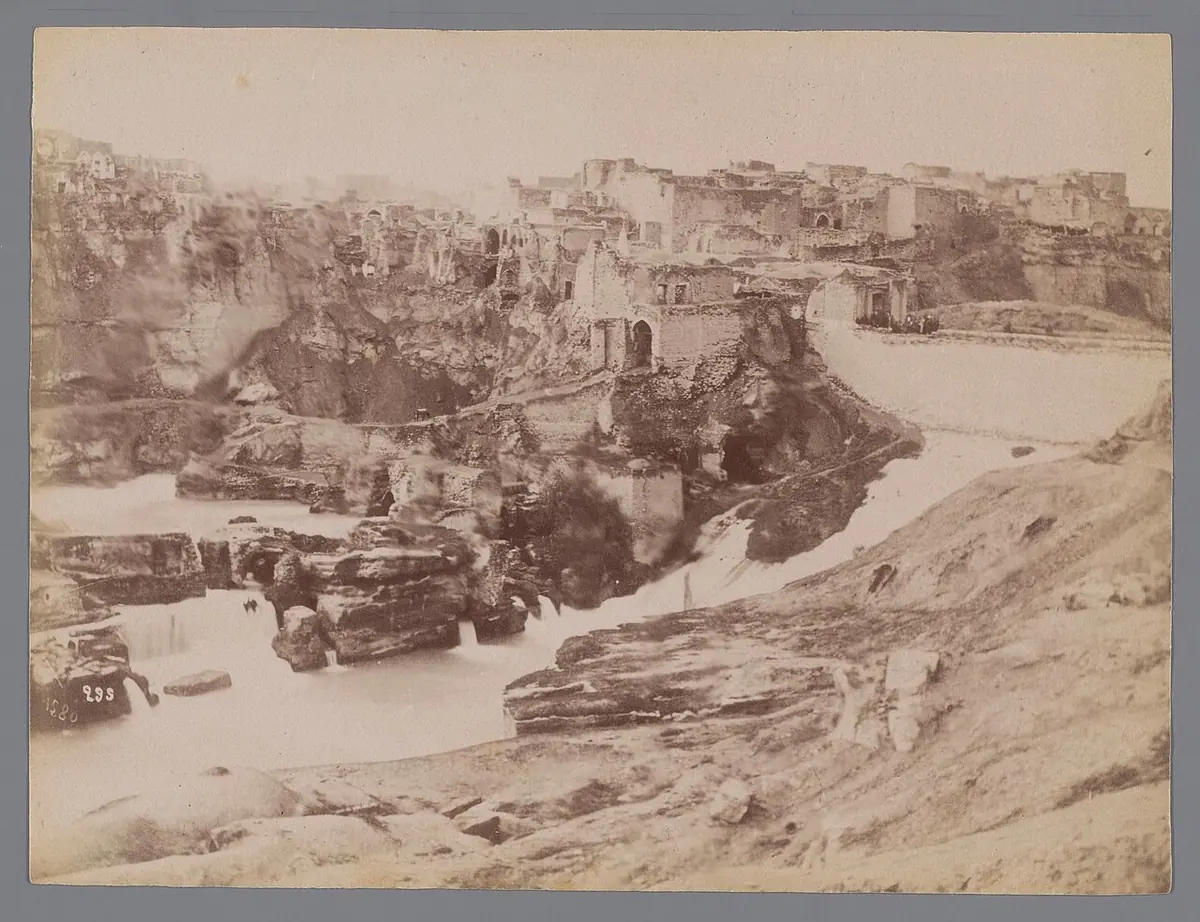
Isaac withdrew to the mountains of Beth Huzaye, the province now called Khuzestan in southwestern Iran, and lived there with the hermits. He later attached himself to the monastery of Rabban Shabur, founded a generation or so earlier by a holy man of that name. Brock places it "somewhere in the region of Shustar," the old river town of Shushtar, and adds that "the exact site is no longer known."
There Isaac lived out his days in stillness. He is said to have gone blind toward the end of his life. He died in old age and was buried at the monastery. We do not know the year; it was probably around the turn of the 8th century. The place of his grave, like the monastery itself, has been lost, so no relics of St. Isaac are known today.
The writings of St. Isaac the Syrian
Isaac left several collections of discourses, which the Church now counts among the treasures of Christian prayer.
The Ascetical Homilies
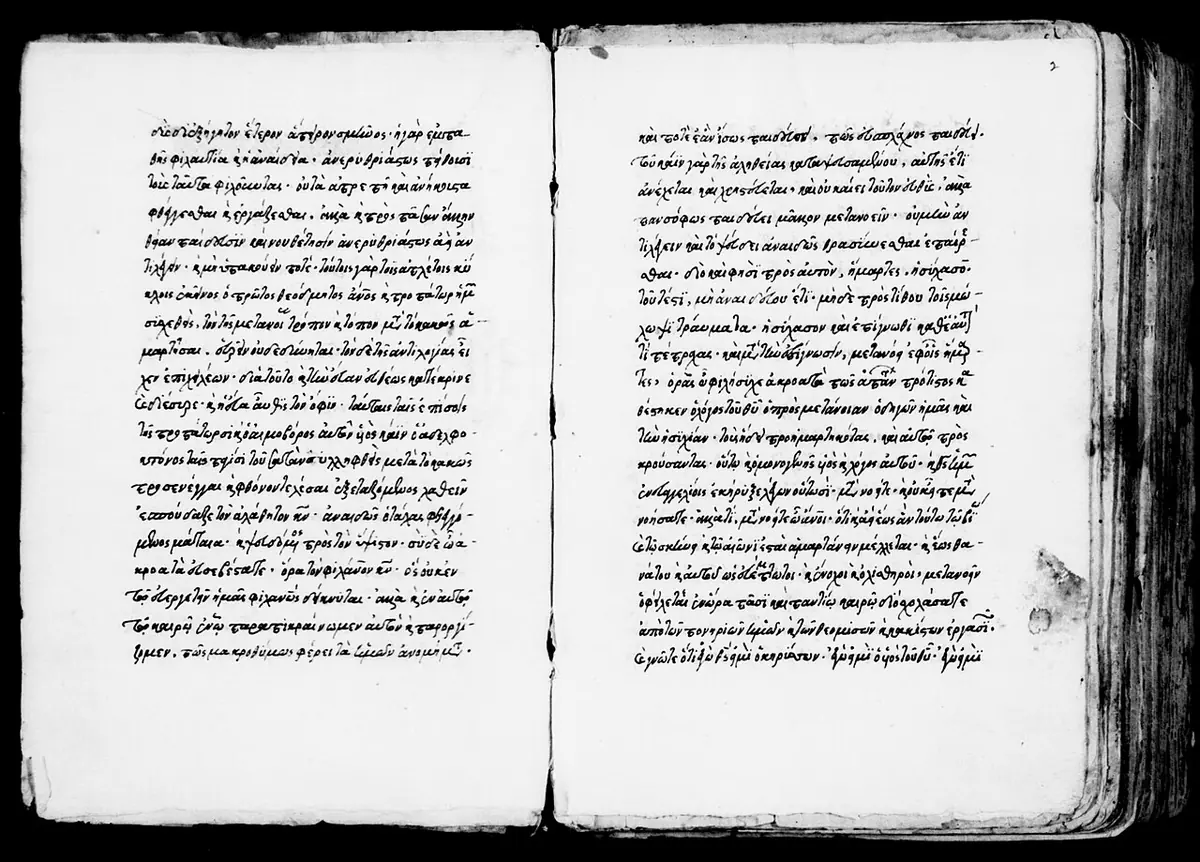
The First Part is the book most Christians know as the Ascetical Homilies (or Mystic Treatises). It is a set of discourses for hermits on renunciation, prayer, tears, humility, temptation, silence and the love of God. In the 9th century two monks of the great Monastery of St. Sabas near Bethlehem, Abramios and Patrikios, translated it from Syriac into Greek. From the Greek it passed into Latin and Slavonic, and from Slavonic into Russian; other translations carried it into Georgian, Arabic and Ethiopic. The Dicastery for Promoting Christian Unity notes that his writings "were translated into all the languages spoken by Christians."

An Italian translation was printed in Venice in 1500, with a woodcut that calls him simply "Abbate Ysaac," Abbot Isaac. Greek monks copied the homilies at Mount Sinai and Mount Athos for centuries. Holy Transfiguration Monastery names St. Gregory Palamas, St. Paisius Velichkovsky and St. Seraphim of Sarov among the saints who loved them. In 2012 the Monastery of Iviron on Mount Athos published a critical edition of the Greek text, based on thirty-one manuscripts, most of them from Athos and Sinai.
Isaac reached Russian homes too. In Dostoevsky's The Brothers Karamazov, the old servant Grigory owns "the sayings and sermons of 'the God-fearing Father Isaac the Syrian,'" which he read "persistently for years together, understanding very little of it, but perhaps prizing and loving it the more for that."
The Second and Third Parts
For more than a thousand years, Christians outside the Syriac churches knew only the First Part. Then, in 1983, Brock ordered up a Syriac manuscript in the Bodleian Library in Oxford, which had been sold to the library in 1898, and found that it held the lost Second Part of Isaac's writings. Brock published his translation of most of it in 1995, and the collection has since been put into Russian, Romanian, French and modern Greek. Manuscripts photographed in Tehran, in the library of the Chaldean bishop there, later brought to light a Third Part of seventeen discourses.
The teaching of St. Isaac: mercy, prayer and silence
Isaac wrote for monks living in strict solitude, and he is honest that his advice is meant for them. Yet his words have a way of reaching anyone who prays. All of the quotations below come from A. J. Wensinck's English translation of 1923, which keeps the old "thee" and "thou."
The merciful heart
His most famous page answers a simple question. Asked "what is a merciful heart?" the old man replied:
The burning of the heart unto the whole creation, man, fowls and beasts, demons and whatever exists; so that by the recollection and the sight of them the eyes shed tears on account of the force of mercy which moves the heart by great compassion.
Such a heart, he goes on, can no longer bear to hear of "any insignificant suffering of anything in the creation," and so it "offers prayers with tears" even for animals, for the enemies of truth, and for those who do it harm, "after the example of God." In the same passage he sums up the whole Christian journey in three words: "Repentance, purity and perfection," and he defines purity as "a heart full of mercy unto the whole created nature."
God's mercy is greater than our sins
Isaac never tired of speaking about the mercy of God. Some of his images are unforgettable:
As a handful of sand thrown into the ocean, so are the sins of all flesh as compared with God's mind.
As a fountain that flows abundantly is not dammed by a handful of earth so the mercy of the Creator is not vanquished by the wickedness of the creatures.
This is no excuse for sin. In another discourse he says plainly, "This life has been given thee for repentance; do not spend it with various things." The two belong together. Because God's mercy is so great, we can always turn back to Him, and because life is short, we should turn back today.
The ladder within
Like St. John Climacus, Isaac spoke of a ladder to heaven, but he placed it inside us:
Be on peaceful terms with thy soul; then heaven and earth will be on peaceful terms with thee. Be zealous to enter the treasury within thee; then thou wilt see that which is in heaven. For the former and the latter are one, and entering thou wilt see both. The ladder unto the Kingdom is hidden within thee and within thy soul.
Silence and love of neighbor
Silence, for Isaac, is not emptiness. "Silence is a symbol of the future world," he writes; "speech is an organ of this world." And his love of solitude never cooled his love of people. One of his short counsels could hang over any Christian's door: "Be instead of an avenger, a deliverer; instead of an accuser, a peace maker." A few lines later come four words that hold his whole life: "Love all men. And be far from all men."

The miracles of St. Isaac the Syrian
St. Isaac is honored for his holiness and his teaching, not as a wonderworker, and the old accounts tell no miracles of him during his life. We label what tradition does record:
- His flight from the bishop's throne after the debt dispute: traditional, from the later Arabic life followed by the Orthodox synaxarion. It is a story of courage and mercy, not a miracle.
- His blindness in old age: traditional. Brock and the 1923 translation both report that he "is said to have" lost his sight.
- Graces received through his prayers: reported. Readers in the Orthodox world speak of comfort and conversion through his books and his intercession, but none of these has been formally investigated.
Isaac would not mind the shortness of this list. The wonder he cared about was a heart changed by mercy, and that is the miracle we ask him to help God work in us.
Is St. Isaac the Syrian a patron saint?
No patronage has been formally given to him. Readers turn to him in practice as a guide in prayer, a helper in times of despair over their sins, and a teacher of compassion toward all creatures. Since Pope Francis added him to the Roman Martyrology, Catholics also look to him as a saint of Christian unity, and the Pope asked his intercession for the Christians of the Middle East. Browse other heavenly helpers on our patron saints page.
Symbols of St. Isaac the Syrian in art
Images of St. Isaac come almost entirely from the Byzantine and Russian traditions, and he is shown simply, as befits a hermit:
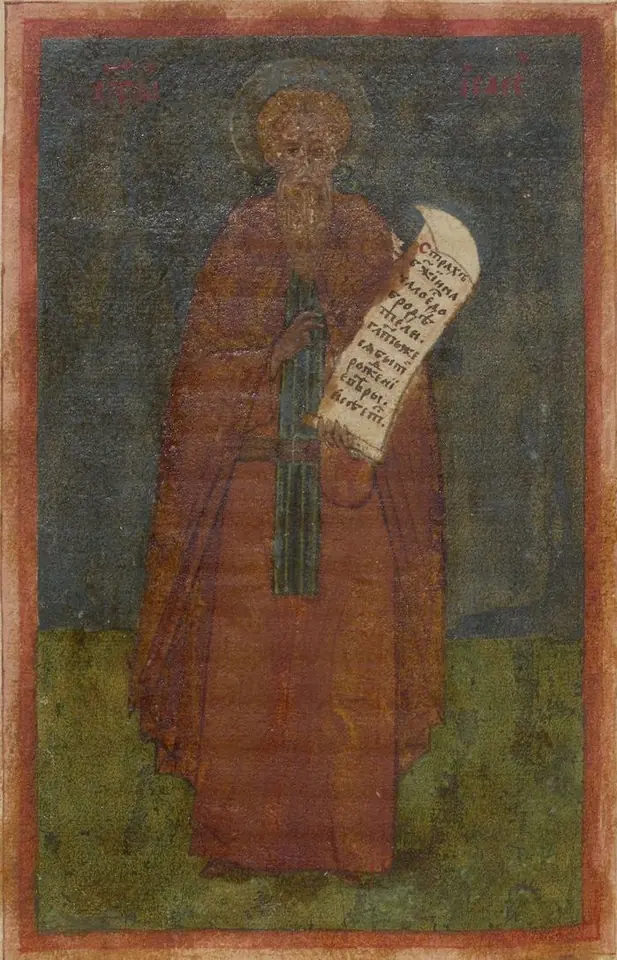
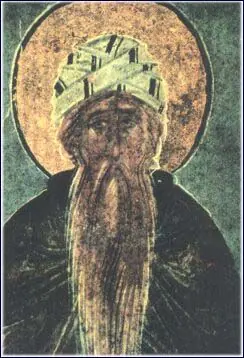
- Monastic habit and hood: he is nearly always painted as a monk, not a bishop, since the Church remembers him above all as a hermit. Russian icons often give him the hooded black schema of the great monastic vow, or a brown habit.
- A long white or gray beard: the sign of a desert elder. Some Russian images make it very long and narrow, falling to his waist.
- A scroll: the most common attribute, unrolled to show a line from his homilies in Church Slavonic or Greek. It marks him as a teacher.
- A book or writing desk: in manuscripts of his works, he appears as the author, seated at a desk with his book, as in the Russian miniature of 1518 on this page.
- A hand raised in blessing: as in many icons of holy monks.
Western images of him are rare. The 1500 Venice edition of his homilies shows him in a woodcut as "Abbate Ysaac," a standing abbot with a halo, a book and a staff, because Latin readers did not know he had been a bishop. If you see an icon of a gray-bearded monk with a scroll next to St. Ephrem, the deacon-poet, the two are probably the "Syrian fathers" of January 28.

Feast day and where St. Isaac is honored
The feast of St. Isaac the Syrian is January 28 in the Orthodox Church and the Byzantine Catholic churches, which keep the same day for St. Ephrem the Syrian. Find his neighbors on the calendar on our feast days page.
For Catholics of the Latin Church, the great event of recent years came on November 9, 2024. Receiving Mar Awa III, Catholicos-Patriarch of the Assyrian Church of the East, Pope Francis announced that Isaac would be added to the Roman Martyrology, with the agreement of the Assyrian patriarch and the Patriarch of the Chaldean Church. The decision followed the recent Synod's wish to honor "the saints of other Churches" in the Catholic calendar. The Dicastery for Promoting Christian Unity explained that his inclusion shows "that holiness transcends ecclesiastical divisions."
Orthodox monasteries and parishes in several countries bear his name. His real shrine, though, is his book. Monks of Sinai, Athos and St. Sabas copied it by hand for centuries, and it is still read aloud in Orthodox monasteries.

Prayer to St. Isaac the Syrian
We know of no prayer composed by St. Isaac himself in the traditional prayer books, and his homilies are discourses rather than prayers. The Orthodox Church sings this troparion on his feast (Tone 4), in the translation of the Orthodox Church in America:
In truth you were revealed to your flock as a rule of faith, / an image of humility and a teacher of abstinence; / your humility exalted you; / your poverty enriched you. / Hierarch Father Isaac, / entreat Christ our God / that our souls may be saved.
When he announced Isaac's addition to the Roman Martyrology, Pope Francis also prayed:
Through the intercession of Saint Isaac of Nineveh, united to that of the Blessed Virgin Mary, Mother of Christ, our God and Saviour, may the Christians of the Middle East always bear witness to the Risen Christ in those war-torn lands.
Let us ask St. Isaac to pray for us, and especially for the persecuted Christians of Iraq, Iran and the Gulf, the lands where he lived. Let us ask him for a heart like his, one that burns with mercy for every creature and never despairs of the mercy of God.
Frequently asked questions
Who was St. Isaac the Syrian?
He was a monk and, for a few months, bishop of Nineveh (near modern Mosul, Iraq) in the second half of the 7th century. He was born in Beth Qatraye, the Christian region on the Persian Gulf that included today's Qatar, and belonged to the Church of the East. After resigning his see he lived as a hermit near the monastery of Rabban Shabur in southwestern Iran, where he wrote the homilies that made him famous.
Is Isaac the Syrian the same as Isaac of Nineveh?
Yes. "Isaac of Nineveh" comes from the city where he was bishop, and "Isaac the Syrian" (Isaac Syrus, or Isaak Sirin in Russian) from the language he wrote in. Greek, Latin and Slavonic readers knew him by the second name, while Syriac Christians and most modern scholars use the first.
When is the feast day of St. Isaac the Syrian?
January 28. The Orthodox Church and the Byzantine Catholic churches keep him on that day together with St. Ephrem the Syrian. Pope Francis announced on November 9, 2024, that Isaac would be added to the Roman Martyrology, the official list of saints of the Latin Church.
Is St. Isaac the Syrian a Catholic saint?
Yes, now formally. He belonged to the Church of the East, which was out of communion with the Catholic Church in his day, yet the Byzantine and Slavic churches honored him as a saint for centuries. In 2024 Pope Francis, with the agreement of the Assyrian and Chaldean patriarchs, added him to the Roman Martyrology, calling him "acknowledged as a teacher and a saint by all traditions."
What is the "merciful heart" of St. Isaac the Syrian?
It is his most famous teaching. Asked what a merciful heart is, he answered that it is "the burning of the heart unto the whole creation, man, fowls and beasts, demons and whatever exists," a compassion so strong that the person prays with tears even for enemies and for "the kinds of reptiles." The passage is in Wensinck's 1923 translation of his homilies.
What did St. Isaac the Syrian write?
Discourses on prayer, silence, humility, repentance and the love of God, written for hermits but read by every kind of Christian. The First Part, translated into Greek at the monastery of St. Sabas in the 9th century, became the classic Ascetical Homilies. A Second Part was rediscovered in an Oxford manuscript in 1983, and a Third Part later turned up in manuscripts in Tehran.
Why does Dostoevsky mention Isaac the Syrian?
In The Brothers Karamazov, the old servant Grigory reads "the sayings and sermons of the God-fearing Father Isaac the Syrian" for years, and the same book later lies on Smerdyakov's table. It shows how widely Isaac was read in 19th-century Russia, by monks and by ordinary believers alike.
Keep exploring
Sources
- Dicastery for Promoting Christian Unity: Inclusion of Isaac of Nineveh in the Roman Martyrology (November 11, 2024). His birth in present-day Qatar, ordination by Catholicos George I between 676 and 680, and the translations of his works
- Pope Francis, Address to His Holiness Mar Awa III, Catholicos-Patriarch of the Assyrian Church of the East (November 9, 2024)
- Sebastian P. Brock, St Isaac the Syrian: from Tehran to Moni Iviron, Mount Athos, Kulturní studia 1/2026, pp. 32-43. The rediscovery of the Second and Third Parts, the Greek translators at St. Sabas, and the lost site of Rabban Shabur
- A. J. Wensinck (trans.), Mystic Treatises by Isaac of Nineveh (Amsterdam, 1923), Internet Archive. Source of every quotation from Isaac on this page
- Orthodox Church in America: Saint Isaac the Syrian, Bishop of Nineveh
- Orthodox Church in America: Saint Isaac the Syrian, Bishop of Nineveh, Troparion and Kontakion
- Holy Transfiguration Monastery Publications: Saint Isaac the Syrian and his Writings. The saints who prized his homilies
- Fyodor Dostoevsky, The Brothers Karamazov, trans. Constance Garnett, Project Gutenberg