Blessed Francesco Mottola, the "Carthusian of the Street" of Tropea
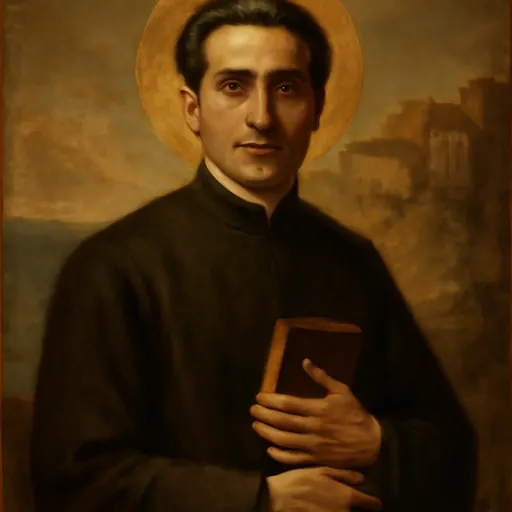
Blessed Francesco Mottola (1901–1969) was a priest of Tropea in Calabria who joined contemplation and charity, founding the Houses of Charity for the poor and disabled and the Oblates of the Sacred Heart. Paralyzed and unable to speak from 1942, he kept guiding souls until his death. He was beatified in Tropea on October 10, 2021. His feast is June 30.
Who was Blessed Francesco Mottola?
Blessed Francesco Mottola was a priest of Tropea, the old cliff-top town on the coast of Calabria, who lived what his followers call a "social holiness." He prayed like a monk and worked like a parish priest among the poorest. His postulator called him "a Carthusian of the street." He founded Houses of Charity for the poor, the disabled and the abandoned, and a family of priests, women and laypeople, the Oblates of the Sacred Heart, to carry the work on. For the last twenty-seven years of his life he was paralyzed and could not speak, and he went on guiding souls anyway.
On the day of his beatification Pope Francis called him "a zealous pastor and tireless herald of the Gospel," "an exemplary witness of a priesthood lived in charity and contemplation" (our translation).

The life of Blessed Francesco
A wounded childhood
Francesco Mottola was born in Tropea on January 3, 1901, into a noble family that had come down in the world. His childhood was marked by tragedy: his mother took her own life, and a brother died young. ACI Prensa's biography is frank about the young man who came out of those years: lively, intelligent and poetic, but also nervous, scrupulous, critical, restless and proud. The seminary became his school of conversion. By his ordination in 1924 he had learned to put his complicated temperament at God's service.
In his rule of life he wrote, as John Paul II later quoted:
The pivotal centre of my spiritual life will be complete and absolute abandonment in the Heart of Jesus.
Priest of Tropea
His ministry ran in many directions: preaching, confession, spiritual direction, writing and journalism, and charity. He began his apostolate as an assistant to Catholic Action, and as a diocesan director he gave himself to forming the young. He brought priests together for prayer and study and drew laypeople into the apostolate.
He was moved above all by the poor. He opened Houses of Charity (Case della Carità) to take in and care for the poor, the disabled and the most abandoned. To serve them he founded the Family of the Oblates of the Sacred Heart: priests who remain diocesan priests, consecrated women and lay oblates. He liked to call his priests "cenobites of the street," monks without a monastery, and he explained it with an image from his Calabrian mountains:
The apostolate - for which we have refused the [monastic] cell and have remained travellers in the world - is born of the fullness of contemplation: just as from the snowy peaks the rivers flow down, which though they return to the sea, long for the blue sky, in order to be drawn up to the sun.

The silent years
In 1942, at forty-one, a paralysis left him unable to speak. He did not stop. "The physical immobility did not stop him," John Paul II said, "but made the rays of his influence more intense and effective." People came to him for direction, and his Oblates grew. His motto in suffering was "Usque ad sanguinem!" ("Even to the shedding of blood"). A text of his, kept by the Catholic Action Foundation's record of his cause, sees his whole life as a lamp: "I am a poor lamp that burns... It is the secret of all life: a flame that seeks the heavens in agony and feeds on death."
He died in Tropea on June 29, 1969, the feast of Sts. Peter and Paul.

Beatification and the approved miracle
The diocesan inquiry opened in 1982 and closed six years later. On October 2, 2019, the Church promulgated the decree recognizing a miracle through his intercession. The approved miracle was the healing of a young Oblate, Don Felice Palamara, then a seminarian at the Pontifical Major Seminary in Rome and today a parish priest near Vibo Valentia, from functional urinary retention, a gravely disabling condition. ACI Prensa adds that he was healed after seeing Don Mottola in a dream.
Cardinal Marcello Semeraro beatified him in Tropea on October 10, 2021, the first beatification ever held in the Diocese of Mileto-Nicotera-Tropea.
Symbols of Blessed Francesco in art
- Black cassock: he lived in the age of photography, so he is shown as he looked, a diocesan priest in cassock.
- Sacred Heart: the heart of his spirituality and the name of his Oblates.
- Armchair or wheelchair: for his twenty-seven years of paralysis.
- Lamp: his own image of a life burning slowly toward God.
Feast day and where he is honored
His feast is June 30. His body rests in the cathedral of Tropea, dedicated to Maria Santissima di Romania, the Madonna of Romania whom he loved with a son's affection and whom John Paul II called "the special Patron of Tropea." His tomb is a place of pilgrimage. See others honored in June on our feast days page.

Praying with Blessed Francesco
We have not found an official English prayer to Blessed Francesco Mottola, so we do not print one. His own rule of life is a fine prayer to make our own: complete abandonment to the Heart of Jesus.
Let us ask Blessed Francesco Mottola to pray for priests, for the poor and disabled and those who care for them, and for all who can no longer speak or move, that their suffering may become a lamp burning for God.
Frequently asked questions
Who was Blessed Francesco Mottola?
A diocesan priest of Tropea, Calabria, born in 1901 and ordained in 1924. He worked with Catholic Action and the youth, founded Houses of Charity for the poor, disabled and abandoned, and founded the Oblates of the Sacred Heart, priests, women and laypeople who join prayer and service. He died on June 29, 1969.
When is the feast of Blessed Francesco Mottola?
June 30, the day after his death on June 29, 1969.
What miracle led to his beatification?
The healing of Don Felice Palamara, then a seminarian at the Pontifical Major Seminary in Rome and now a parish priest in the Vibo Valentia area, from functional urinary retention, a gravely disabling condition. The decree was promulgated on October 2, 2019.
Where is Francesco Mottola buried?
In the cathedral of Tropea, dedicated to Maria Santissima di Romania, where his tomb is a place of pilgrimage.
Keep exploring
Sources
- John Paul II, Address to the Oblates of the Sacred Heart, 15 September 2001, Vatican. His rule of life, the "cenobites of the street," his sayings, his long illness and his love of Our Lady of Romania
- Raffaele Iaria, "Don Francesco Mottola sarà proclamato beato il 10 ottobre," Avvenire, August 25, 2021. Ordination in 1924, the Houses of Charity, his tomb in the cathedral, the cause from 1982 and the approved healing of Don Felice Palamara
- El Papa expresa su alegría por la beatificación del sacerdote Francesco Mottola en Italia, ACI Prensa, October 10, 2021. His family's tragedies, his ministry, and the paralysis of 1942 that left him unable to speak
- Mottola Francesco, Catholic Action Foundation Pius XI School of Holiness. Liturgical memorial on June 30 and the "poor lamp" text
- Il Papa, non lasciare soli quanti soffrono di disagio mentale, Vatican News, October 10, 2021