Blessed Hermann Lange, Priest and Martyr of Lübeck

Blessed Hermann Lange (1912–1943) was a Catholic chaplain at the Church of the Sacred Heart in Lübeck who, with two fellow priests and a Lutheran pastor, spread Bishop von Galen's sermons against Nazism. Arrested in 1942, he was guillotined in Hamburg on November 10, 1943, and beatified in Lübeck in 2011 as one of the Lübeck martyrs.
Who was Blessed Hermann Lange?
Blessed Hermann Lange was a young German priest who refused to keep quiet. As a chaplain at the Church of the Sacred Heart in Lübeck, he and two fellow priests, Johannes Prassek and Eduard Müller, together with the Lutheran pastor Karl Friedrich Stellbrink, copied and passed around the sermons in which Bishop Clemens August von Galen of Münster denounced the crimes of the Nazi state. All four were guillotined in Hamburg on November 10, 1943. The Church beatified the three Catholic priests in Lübeck in 2011 as martyrs, killed in hatred of the faith.
On the morning he died, Lange wrote to his parents: "Heute ist die große Heimkehr in's Vaterhaus" ("Today is the great homecoming to the Father's house").
The life of Blessed Hermann Lange
Leer and the youth movement
Hermann Lange was born on April 16, 1912, at Leer in East Frisia, the son of a teacher at the navigation school. His uncle and namesake, Hermann Lange, cathedral dean at Osnabrück, was his model, also in his choice of the priesthood. As a schoolboy he joined the Catholic youth movement Bund Neudeutschland and led its group in Leer. He was drawn by the writings of Romano Guardini and the liturgical movement, and he studied theology for the priesthood. He was ordained in Osnabrück in 1938.
Chaplain at the Sacred Heart in Lübeck
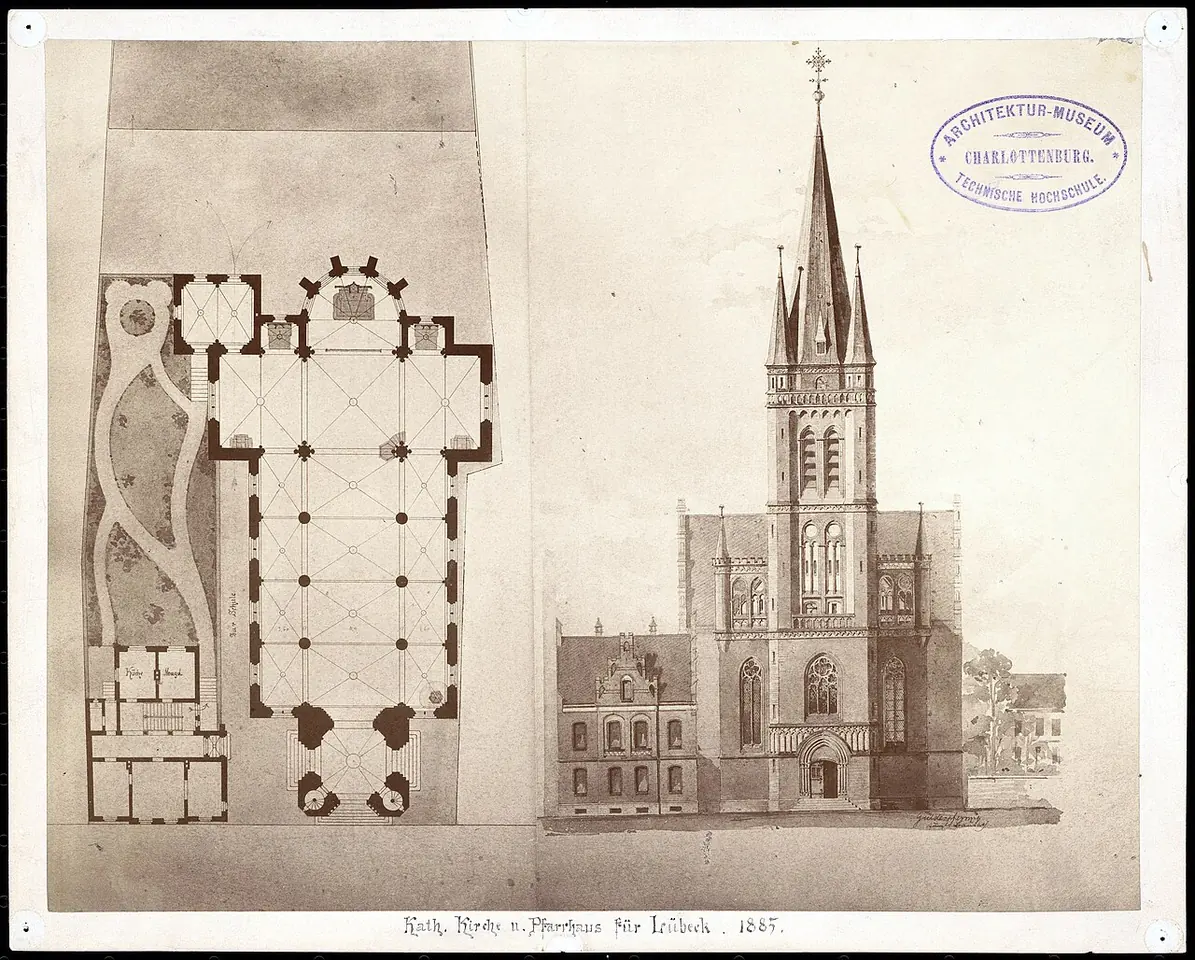
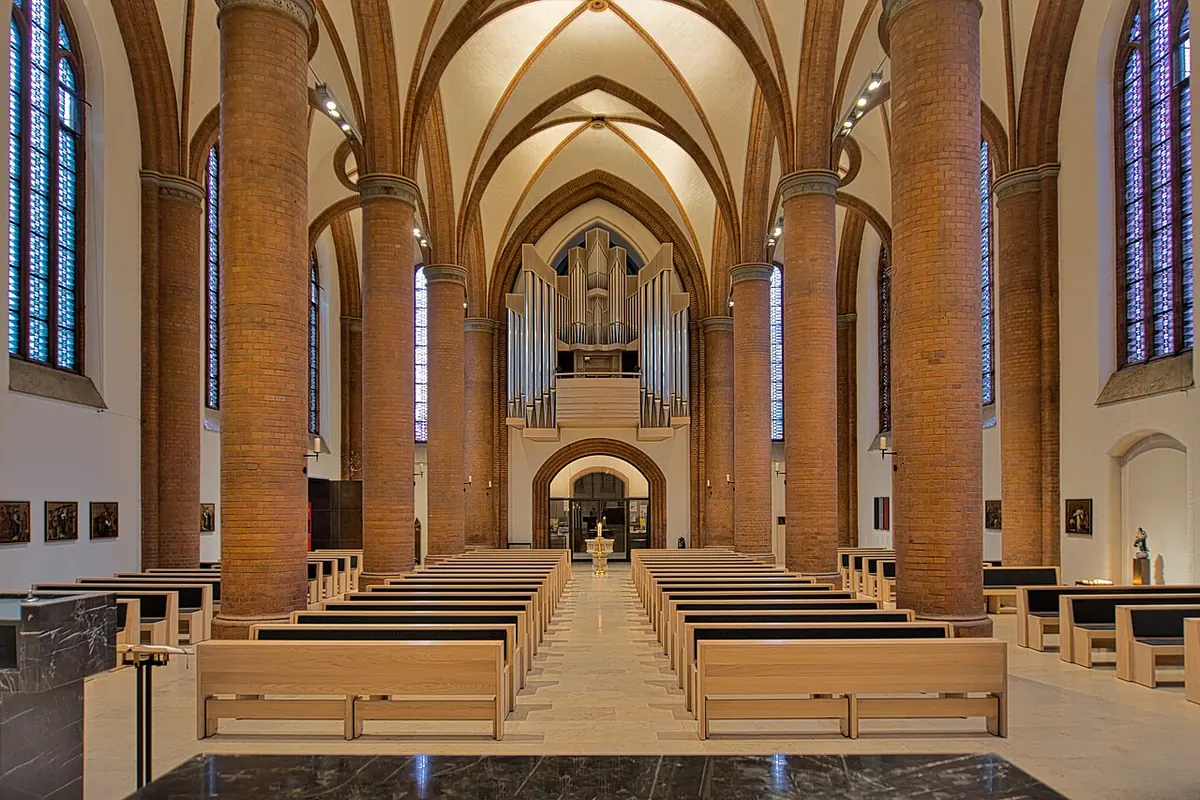
On June 1, 1939, he was sent to the Sacred Heart parish in Lübeck as assistant, and a year later he became its vicar. His work was above all with young people. Parishioners remembered him as the scholar among the three chaplains, a priest who wrote his sermons out with great care and who loved to teach. He saw the Eucharist and the preaching of God's word as the center of a priest's life.

Lange rejected National Socialism completely. When a young soldier asked him about the war, he told him that taking part in such a war could not be squared with the Christian faith, a judgment that went further than the official line of the German bishops at the time.
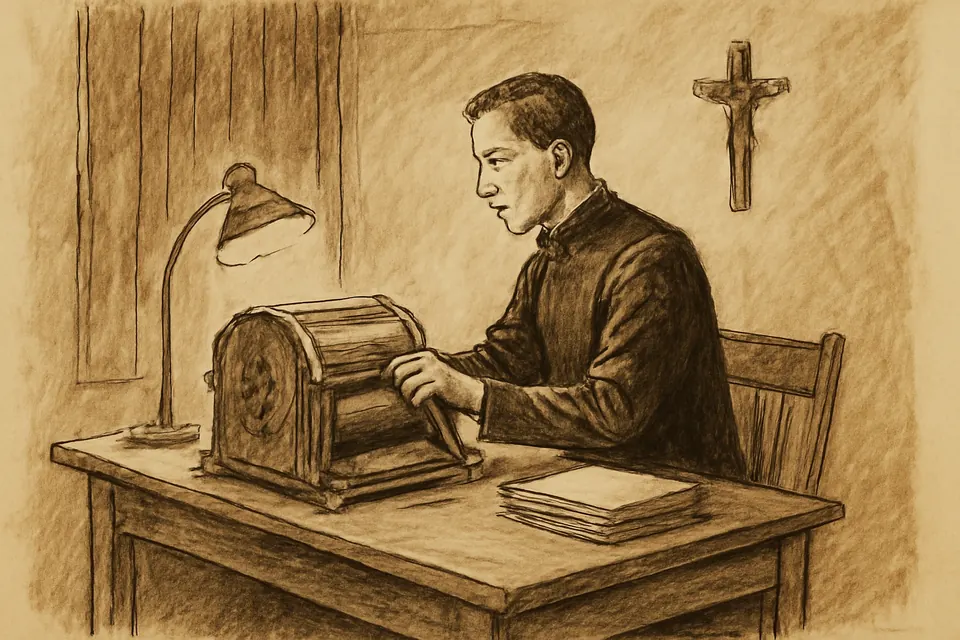
In the summer of 1941 the three chaplains became friends with Pastor Stellbrink of the Lutheran Luther Church. Together they read, copied and handed on texts critical of the regime, among them Bishop von Galen's sermons of that summer. The Gestapo placed an informer in the rectory.
Arrest and trial
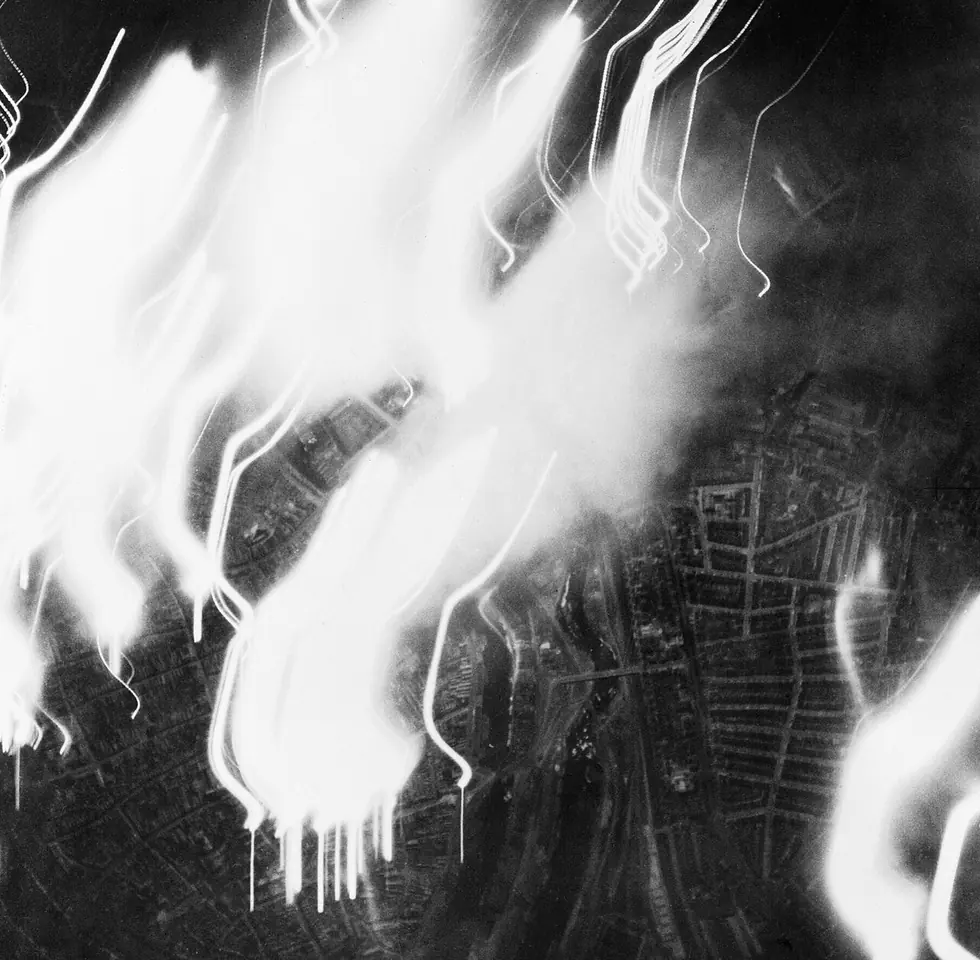
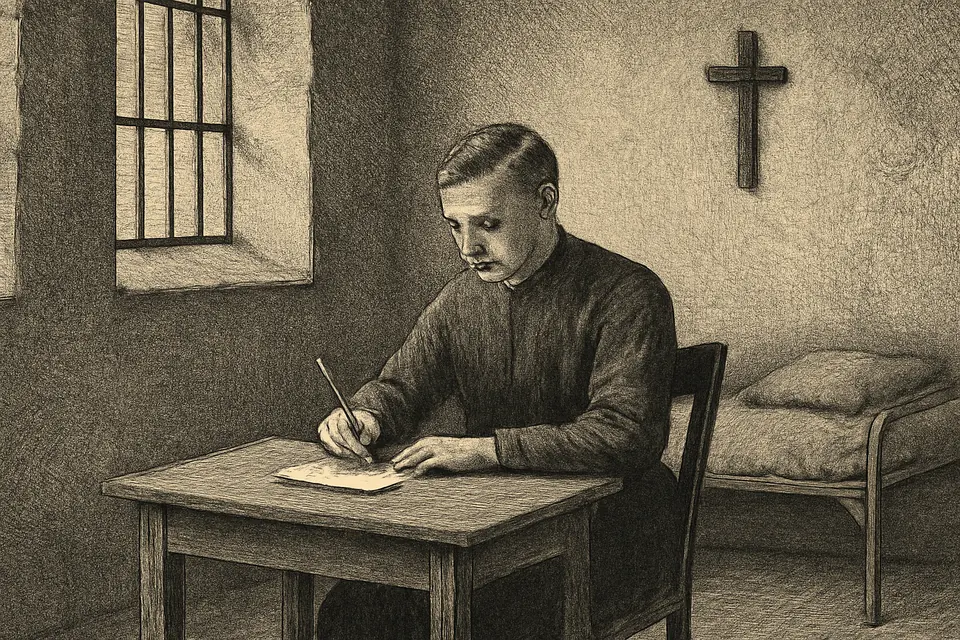
On the night of March 28–29, 1942, the Royal Air Force bombed Lübeck and burned much of the old town. Stellbrink preached on Palm Sunday about the raid and was arrested in April. Prassek was arrested in May. Hermann Lange was arrested on June 15, 1942, and held in the Lauerhof prison; Müller followed a week later. Eighteen lay Catholics of the parish were also arrested.
After a year in custody the four clergymen were tried by the People's Court, which came to Lübeck for the purpose, on June 22 and 23, 1943. They were found guilty of defeatism, malicious attacks on the state, aiding the enemy and listening to enemy radio, and all four were sentenced to death. Bishop Wilhelm Berning of Osnabrück and others asked for clemency, without success.
The martyrdom of Hermann Lange
On November 10, 1943, at the Holstenglacis prison in Hamburg, the four were beheaded by guillotine, three minutes apart: Müller first, then Lange, then Prassek and Stellbrink. That morning Lange wrote farewell letters to his bishop, his parents and his brothers and sisters. To his parents he wrote that he was full of joy and full of expectation: today his faith would pass into sight and his hope into possession. He wrote that he would rest at the feet of Mary, who had been his mother and guide on earth, and that St. Thérèse of the Child Jesus, "meine besondere Freundin" ("my special friend"), would take him by the hand. And he copied out for them a hymn he loved, which begins: "Ganz der Wille Gottes!" ("Wholly the will of God!").
His body was cremated at Ohlsdorf on November 15. In 1956 his urn was placed in the crypt of the Sacred Heart church in Lübeck.
Beatification
The parish held a secret Mass for the martyrs on November 10, 1944, and a public one in 1945, and it has gathered every year since. Archbishop Werner Thissen of Hamburg opened the cause in 2004.
- Approved: on July 1, 2010, Pope Benedict XVI approved the decree on the martyrdom of Johannes Prassek and two companions, diocesan priests killed in hatred of the faith. As martyrs, they did not need an approved miracle for beatification.
They were beatified in Lübeck on June 25, 2011, before more than nine thousand Catholic and Protestant pilgrims, with Cardinal Angelo Amato presiding. Stellbrink, who as a Lutheran could not be beatified, was honored at the same celebration.
Symbols of Blessed Hermann Lange in art
As a modern martyr he has no old iconography. He is shown as a young priest in a black cassock, sometimes with a stole, with the palm of martyrdom. Memorials in Lübeck and Hamburg show the four martyrs together, the three chaplains and the Lutheran pastor side by side. Some images add the copied sermons of Bishop von Galen, the "crime" for which they died.
Feast day and where he is honored
His memorial is June 25, the anniversary of the beatification, kept with Blessed Johannes Prassek and Companions in the Archdiocese of Hamburg. The day of his death, November 10, is remembered too: each year on that evening the parish of the Sacred Heart in Lübeck holds its service of remembrance, and the crypt, where his urn rests, is a memorial to all four martyrs. See the feast day calendar.
We know of no traditional prayer to him that we can quote. Let us make his last words our own and place ourselves wholly in God's will: Blessed Hermann Lange, pray for us, and for all who suffer for the truth.
Frequently asked questions
Who was Blessed Hermann Lange?
A priest from Leer in East Frisia, ordained in 1938, who served from 1939 as a chaplain at the Sacred Heart church in Lübeck, working with the young. He was arrested by the Gestapo in 1942 and executed in 1943.
Who are the Lübeck martyrs?
Three Catholic chaplains of the Sacred Heart parish, Johannes Prassek, Eduard Müller and Hermann Lange, and the Lutheran pastor Karl Friedrich Stellbrink. All four were sentenced to death by the People's Court and guillotined in Hamburg on November 10, 1943, three minutes apart.
When were the Lübeck martyrs beatified?
The three Catholic priests were beatified in Lübeck on June 25, 2011, with Cardinal Angelo Amato presiding; Pastor Stellbrink was honored at the same celebration.
What is Blessed Hermann Lange's feast day?
June 25, the memorial of the Lübeck martyrs kept in the Archdiocese of Hamburg. November 10, the day of his death, is also marked each year in Lübeck.
Keep exploring
Sources
- Lübecker Märtyrer (Archdiocese of Hamburg): Kurzchronik. Dates of his appointment, arrest, trial, sentence, execution, cremation, the urn in the crypt and the annual November 10 service
- Lübecker Märtyrer: Hermann Lange, letter to his parents, November 10, 1943. Source of the quotations from his last letter
- Lübecker Märtyrer: Porträt Hermann Lange
- Gedenkstätte Deutscher Widerstand: Biografie Hermann Lange
- Holy See Press Office: Promulgation of decrees of the Congregation for the Causes of Saints, July 1, 2010
- EWTN News: Three priest-martyrs of Nazis beatified in Germany (June 25, 2011)