St. Zygmunt Gorazdowski
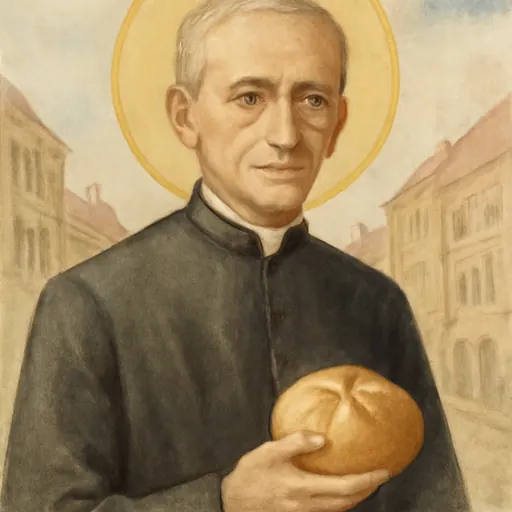
St. Zygmunt Gorazdowski (1845–1920) was a Polish priest in Lviv who spent forty years among its poor, founding a soup kitchen and homes for the homeless, the incurably ill, and single mothers and abandoned babies. He founded the Sisters of St. Joseph in 1884. Pope Benedict XVI canonized him in 2005; his feast is June 26.
Who was St. Zygmunt Gorazdowski?
St. Zygmunt Gorazdowski was a Polish parish priest in Lviv, then the capital of Austrian Galicia, who gave his life to the poorest people of the city. Over forty years he opened a soup kitchen, a house of work for homeless beggars, a home for the incurably ill, a hostel for poor students and the first home in Galicia for single mothers and abandoned infants. To keep it all going he founded the Sisters of St. Joseph. Lviv called him "the father of the poor" and "the priest of the homeless." He was canonized in 2005, and we keep his feast on June 26.

A sick boy who wanted to help
Zygmunt Karol Gorazdowski was born on November 1, 1845, in Sanok, in the far southeast of today's Poland, into a family that kept the Catholic faith seriously. He was gravely ill as a child, with a lung disease that followed him all his life, and the Dicastery for the Causes of Saints says that even then he wanted to help others who suffered.
He began law at the University of Lviv, but in his second year he felt the call to the priesthood and entered the seminary. There his faith was tested hard. His illness grew so serious that his ordination was put off. His classmates remembered: "Being refused ordination was a very painful blow for Zygmunt; he suffered both morally and physically, but he did not lose his trust in the Lord God." Two years later his health had improved enough, and he was ordained in the cathedral of Lviv on July 25, 1871.
Cholera at Wojnilow
His first six years were spent in country parishes. At Wojnilow, during an outbreak of cholera, the young priest went from house to house to the sick and dying, and with his own hands laid the dead in their coffins. Pope John Paul II recalled the scene when he beatified him:
The figure of the young priest who, disregarding the grave risk of infection, moved among the sick people of Wojnilow and personally prepared for burial the bodies of those who had died of cholera, remained in the memory of his contemporaries as a living sign of the merciful love of the Saviour.

Forty years in Lviv
In 1877 he came to the parish of St. Nicholas in Lviv, first as curate, then administrator and finally pastor. He taught catechism in many schools and wrote his own Catechism, which, the Vatican's Polish biography says, went out in more than fifty thousand copies. He introduced the practice of common First Communion for children in the archdiocese, wrote books on Christian upbringing for parents and teachers, and founded the Bonus Pastor association to support priests.
Works of mercy
As secretary of the Institute of Poor Christians he opened a house of voluntary work for homeless beggars, including children. Its reports said that many of them stopped begging and returned, with their dignity restored, to a decent life. Then came:
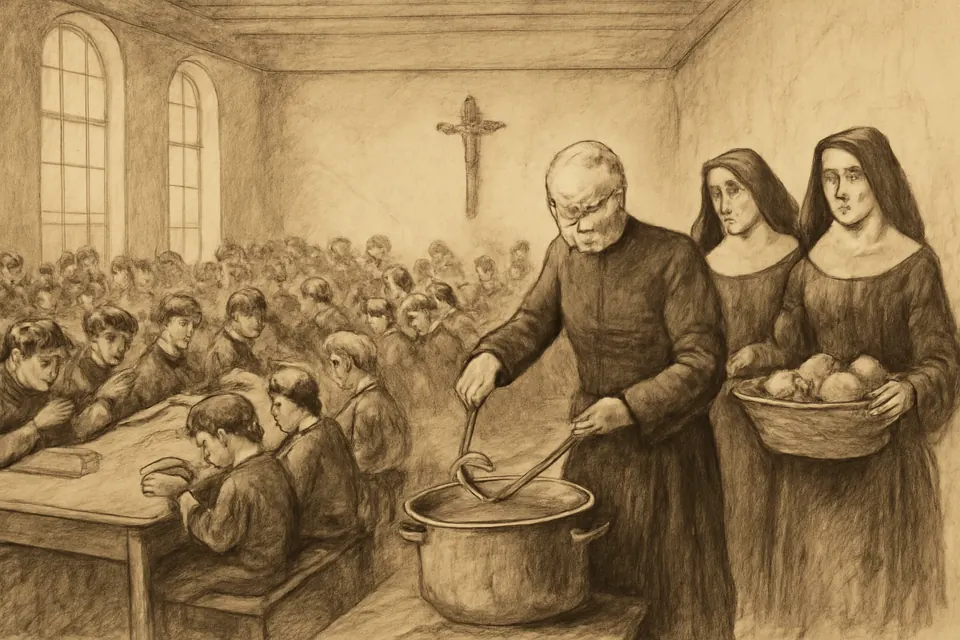
- A people's kitchen where workers, students, schoolchildren and the poor of Lviv could eat cheaply.
- A home for the incurably ill and convalescents, at a time when hospitals discharged patients after six weeks whatever their condition.
- St. Josaphat's hostel for poor students of the teachers' seminary.
- The Infant Jesus home for single mothers and abandoned babies, where about three thousand children were saved.
- A Catholic Polish-German school, which he entrusted to the Brothers of the Christian Schools, and a Catholic daily newspaper.
The school and the newspaper brought him fierce opposition, and, the biography says, years of humiliation that lasted almost until his death.
The Sisters of St. Joseph
To run his works he gathered Franciscan tertiaries, saw to their formation and sought Church approval for them as a religious congregation. February 17, 1884, is the official founding date of the Sisters of St. Joseph. Their motto grew out of his example: "The heart with God, the hands at work." Today they serve in Poland, Ukraine, Germany, France, Italy and on missions in Africa and South America.
He died in Lviv on January 1, 1920. People said of him that "he was an eye to the blind, a foot to the lame, a father to the poor." John Paul II added that he was recognized at his death as "a true religious, even if he had no special vows."
Beatification, canonization and miracles
His cause opened in 1989. Pope John Paul II beatified him at Lviv on June 26, 2001, together with Archbishop Józef Bilczewski, during his visit to Ukraine. Pope Benedict XVI canonized him in St. Peter's Square on October 23, 2005, at the close of the Year of the Eucharist, on the same day as St. Alberto Hurtado. Benedict XVI said:
St Zygmunt Gorazdowski also became famous for his devotion founded on the celebration and adoration of the Eucharist. Living Christ's offering urged him toward the sick, the poor and the needy.
- Approved: as for every saint who was not a martyr, the Church approved one miracle attributed to his intercession for his beatification and a second for his canonization. We have not found the details of either in an official source.
Symbols of St. Zygmunt Gorazdowski in art
He lived in the age of photography, so his likeness comes from photographs and from paintings and statues made from them, especially in Sanok and Lviv. He is shown as a lean, gray-haired priest in a black cassock. Look for:
- Bread or a bowl of soup: his people's kitchen.
- A baby in his arms: the Infant Jesus home for mothers and abandoned children.
- A book: his Catechism.
- A monstrance: the Eucharistic devotion Benedict XVI praised.
Feast day and prayer
We keep his feast on June 26, the day he was beatified. See the feast day calendar for the other saints of June. Like St. Albert Chmielowski, who served the homeless of Kraków in the same years, he shows what charity looked like in Galicia's poorest streets.
We have not found an approved English prayer to St. Zygmunt. Let us ask him to pray for the homeless, for single mothers and abandoned children, and for priests who carry the burdens of their people. St. Zygmunt Gorazdowski, father of the poor, pray for us.
Frequently asked questions
Who was St. Zygmunt Gorazdowski?
A Polish priest born in Sanok in 1845 who worked in Lviv from 1877 until his death in 1920. The people of Lviv called him "the father of the poor" and "the priest of the homeless." He founded many works of charity and the Congregation of the Sisters of St. Joseph.
When was Zygmunt Gorazdowski canonized?
Pope John Paul II beatified him at Lviv on June 26, 2001, and Pope Benedict XVI canonized him in St. Peter's Square on October 23, 2005, together with St. Józef Bilczewski, St. Gaetano Catanoso, St. Alberto Hurtado and St. Felix of Nicosia.
When is the feast of St. Zygmunt Gorazdowski?
June 26, the anniversary of his beatification. He died on January 1, 1920, the day the Roman Martyrology remembers him.
What congregation did Zygmunt Gorazdowski found?
The Congregation of the Sisters of St. Joseph (the Józefitki), officially founded on February 17, 1884, which serves the poor, the sick and children in Poland, Ukraine and other countries.
Keep exploring
Sources
- Dicastery for the Causes of Saints: Zygmunt Gorazdowski (1845–1920). Beatification and canonization dates, his delayed ordination, the motto of his sisters (quoted), the liturgical memorial
- Holy See: Zygmunt Gorazdowski (1845–1920), Polish biography. The catechism's 50,000 copies, the Infant Jesus home and its 3,000 children, the newspaper and school, the June 26 memorial
- John Paul II, homily for the beatification of Józef Bilczewski and Zygmunt Gorazdowski, Lviv, June 26, 2001. The cholera at Wojnilow and "a true religious, even if he had no special vows" (quoted)
- Benedict XVI, homily for the canonization of five saints, October 23, 2005. His Eucharistic devotion (quoted)