St. Vincenza Gerosa, Co-Foundress of the Sisters of Maria Bambina
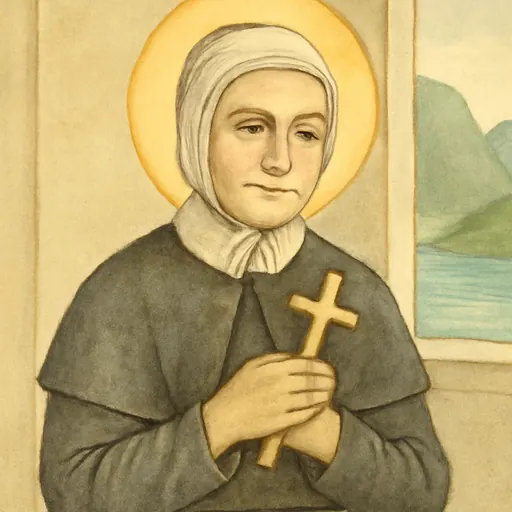
St. Vincenza Gerosa (1784–1847), born Caterina Gerosa, was a shy, generous woman of Lovere, on Lake Iseo in northern Italy, who founded the Sisters of Charity, now known as the Sisters of Maria Bambina, with the young St. Bartolomea Capitanio in 1832. When Bartolomea died months later, Vincenza carried the work on for fourteen years. Pope Pius XII canonized them together in 1950. We keep her feast on June 28.
Who was St. Vincenza Gerosa?
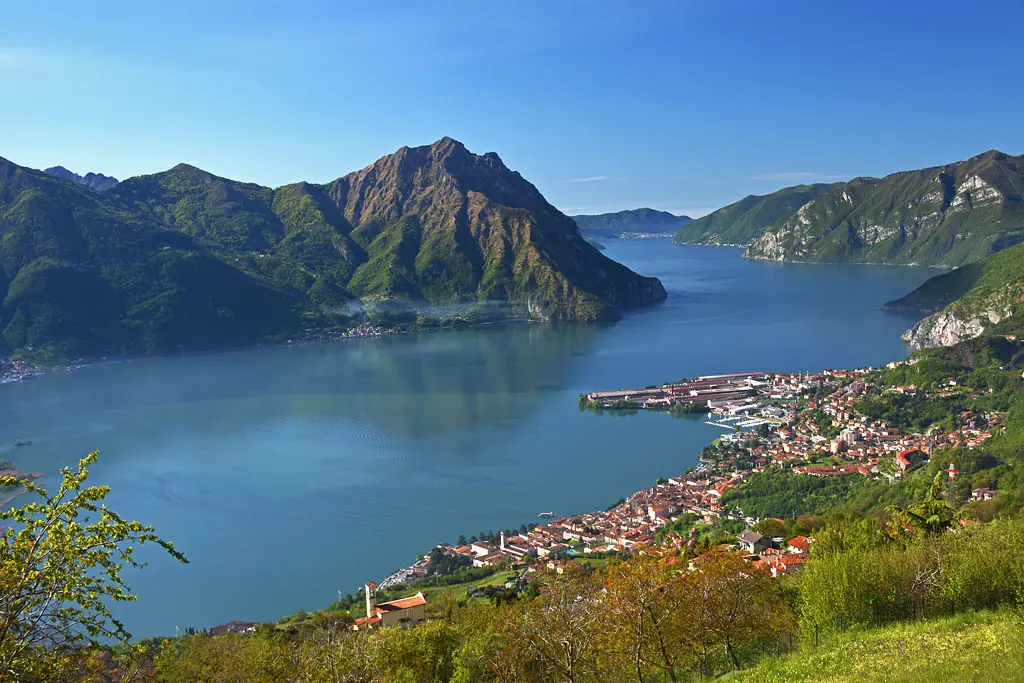
St. Vincenza Gerosa was a quiet, reserved woman of Lovere, a small town on Lake Iseo in the province of Bergamo, who never set out to found anything. With the much younger St. Bartolomea Capitanio, she founded the Sisters of Charity of Lovere in 1832, known today around the world as the Sisters of Maria Bambina. Bartolomea had the vision and died eight months later; Vincenza had the patience to make it last. Pope Pius XII canonized the two women together on May 18, 1950. We keep her feast on June 28.
Her life
A merchant's daughter
She was born Caterina Gerosa on October 29, 1784, the daughter of a well-off family of Lovere that dealt in leather. She began school with the Benedictine nuns at Gandino, in the Val Seriana, but poor health sent her home, and she went to work behind the counter of the family shop. Even as a girl, Santi e Beati says, she went to church to pray before the shop opened and again after it closed.
The years of Napoleon's wars were hard on Lombardy and on her family. Her father died, then her sister Francesca, and in 1814 her mother. Caterina was left to run the business. She accepted these sorrows, the Roman Martyrology's summary says, as the will of God and suffered them in silence.
"Zia"
She was rich, and she lived like the poor. She wore mended clothes and ate little, often just polenta and walnuts, and gave what she saved to the hungry. She raised the pay of her workmen, cooked meals for mothers who could not feed their children and brought bread to houses where there was nothing. Everyone in Lovere, her biographer Mariella Lentini writes, called her zia, "aunt." She turned down an offer of marriage. In the parish she gathered the young women into an oratory, led retreats and opened a practical school where poor girls learned the work of a household.

Before the crucifix
The sisters of her congregation tell how she would go to pray before an old crucifix in the church of Santa Maria in Lovere. There, in a little notebook, she wrote a resolution:
Soprattutto, adorabile mio Salvatore, io riconoscerò voi stesso in ciascuno dei tribolati, dei poverelli.
(Above all, my adorable Savior, I will recognize you yourself in each one of the afflicted and the poor.)
From that prayer came the saying her sisters still repeat: "Chi sa il Crocifisso sa tutto," "Whoever knows the Crucified knows everything."

The founding with Bartolomea Capitanio
In 1824 she met Bartolomea Capitanio, a schoolteacher of Lovere then seventeen years old, full of plans. Bartolomea wanted a hospital; Caterina had the means. With money from the Gerosa estate the two opened a small hospital a couple of years later. Bartolomea also dreamed of a religious institute devoted wholly to works of mercy, and she won over her timid older friend. On November 21, 1832, the two women consecrated themselves to God and began their common life in the Gaia house.
On July 26, 1833, Bartolomea died at twenty-six. Caterina, who had little schooling and felt, as Domenico Agasso puts it, "almost old," was tempted to give it all up and go back to her former life. Her spiritual director, Don Angelo Bosio, urged her to go on, and she did.
Sister Vincenza
For seven years the little community followed the rule of the Sisters of Charity of St. Jeanne-Antide Thouret. In 1840 Pope Gregory XVI approved the institute, with the rule Bartolomea had written. Caterina made her vows and took the name Vincenza, which means "victorious." The sisters ran orphanages, cared for the sick and taught poor girls for free. They spread through Lombardy, the Trentino and the Veneto, and in 1842 they were called to Milan. The archbishop, Cardinal Gaysruck, wanted to make them a diocesan institute of his own. Vincenza, gentle as she was, held firm: the sisters had been born at Lovere, and Lovere would stay their home.
She died at Lovere in June 1847. By then there were 171 sisters. Domenico Agasso, writing for Santi e Beati, puts the number at about 5,200 at the start of this century.
The miracles of St. Vincenza Gerosa
Her beatification in 1933 and canonization in 1950 followed the Church's ordinary process, which requires approved miracles. We have not been able to confirm the details of those healings from a source we could open, so we do not describe them here.
Symbols of St. Vincenza Gerosa in art
St. Vincenza lived in the 19th century and has no ancient attributes. She is shown as a middle-aged woman in the plain black habit and white cap of the first Sisters of Charity, often holding a crucifix, the "book" from which she said she learned everything. Santi e Beati gives the lily as her emblem. Most often she stands beside St. Bartolomea Capitanio, the older woman next to the younger. In the apse mosaic of their sanctuary, Christ crowns the two of them together.
Where she is honored
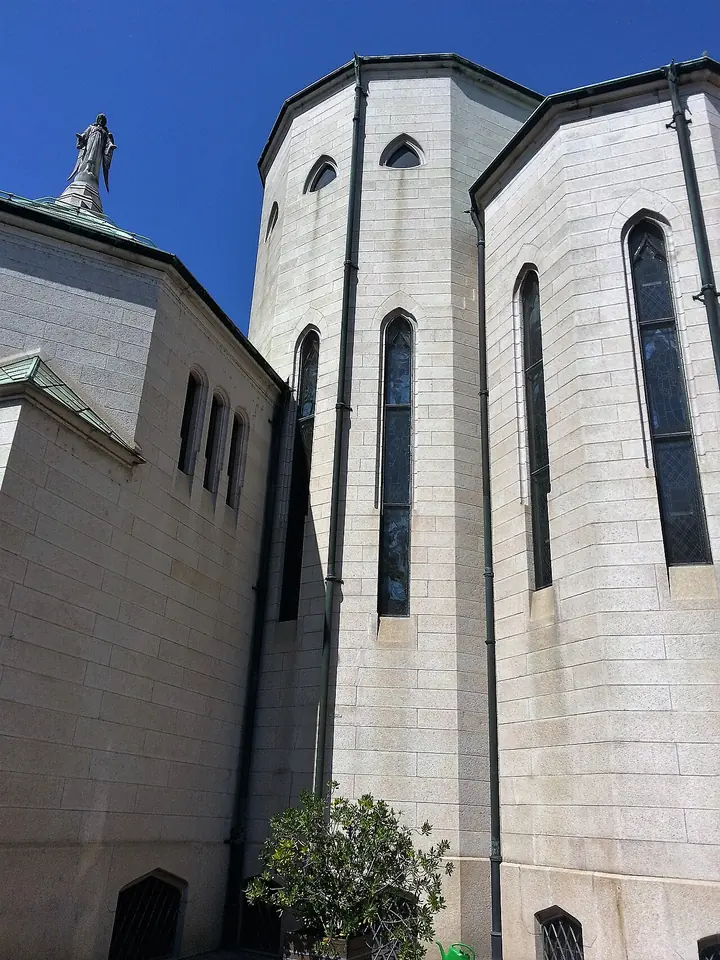
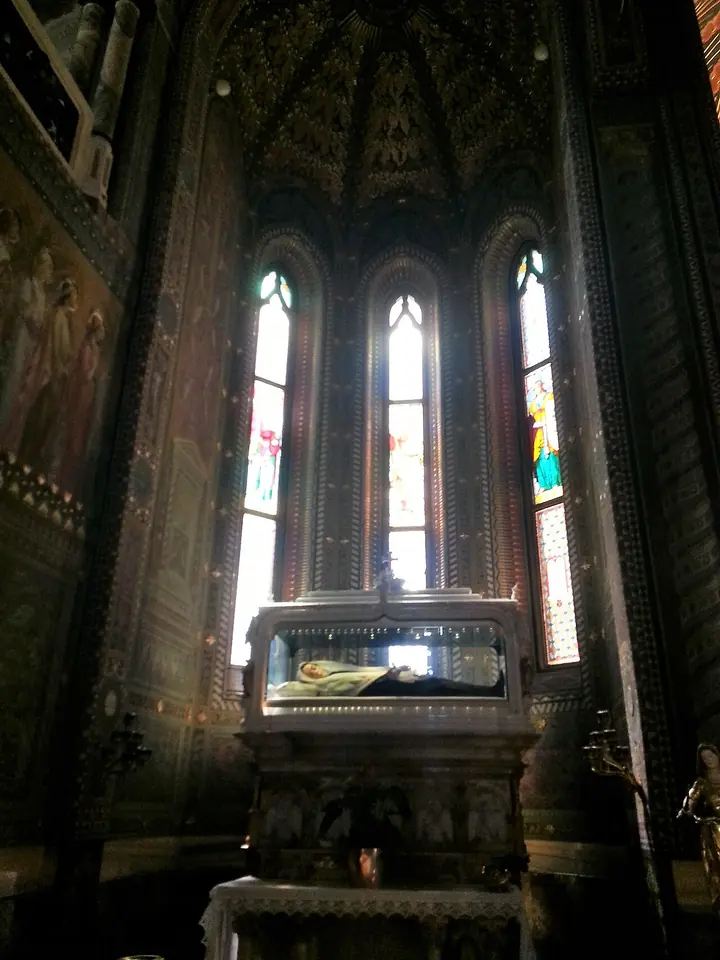
Vincenza and Bartolomea rest in the Sanctuary of Sts. Bartolomea Capitanio and Vincenza Gerosa in Lovere, consecrated in 1938. Their bodies lie in glass cases. The motherhouse of the Sisters of Maria Bambina is now in Milan, and the sisters serve in many countries.
Feast day and prayer
We keep the feast of St. Vincenza Gerosa on June 28; her sisters honor her with St. Bartolomea on May 18. See our feast day calendar.
Her own words before the crucifix, quoted above, make a fine prayer for anyone who serves the sick or the poor. Let us ask her to pray for nurses and caregivers, for those who carry on a work after its founder is gone, for shy people who feel unequal to what God asks of them, and for the Sisters of Maria Bambina. St. Vincenza Gerosa, pray for us.
Frequently asked questions
Who was St. Vincenza Gerosa?
Caterina Gerosa, a merchant's daughter of Lovere, near Bergamo, who spent her inheritance on the poor and, with Bartolomea Capitanio, founded the Institute of the Sisters of Charity. She took the name Vincenza and led the institute until her death in 1847.
When is the feast of St. Vincenza Gerosa?
June 28 in the Roman Martyrology. Her sisters and the dioceses of Brescia, Bergamo and Milan honor her on May 18, the day she was canonized in 1950.
What did St. Vincenza Gerosa say about the crucifix?
Her best-known saying is "Chi sa il Crocifisso sa tutto": whoever knows the Crucified knows everything.
Where is St. Vincenza Gerosa buried?
In the Sanctuary of Sts. Bartolomea Capitanio and Vincenza Gerosa at Lovere, where her body rests in a glass case near that of her friend.
Keep exploring
Sources
- Santi e Beati: Santa Vincenza Gerosa, vergine (Mariella Lentini and Domenico Agasso). The Roman Martyrology entry, her birth on October 29, 1784, her family, schooling at Gandino, losses in the Napoleonic years, the hospital, the rule of St. Jeanne-Antide Thouret's sisters, papal approval in 1840, Milan in 1842, 171 sisters at her death, the May 18 memorial
- Sisters of Charity of Sts. Capitanio and Gerosa: Vincenza e il Crocifisso. Her prayer before the crucifix of Santa Maria, her notebook and the saying "Chi sa il Crocifisso sa tutto" (our translations)
- Ökumenisches Heiligenlexikon: Vincentia Gerosa. Beatification on May 7, 1933, and canonization on May 18, 1950