Blessed Francis Taylor, Mayor of Dublin and Martyr
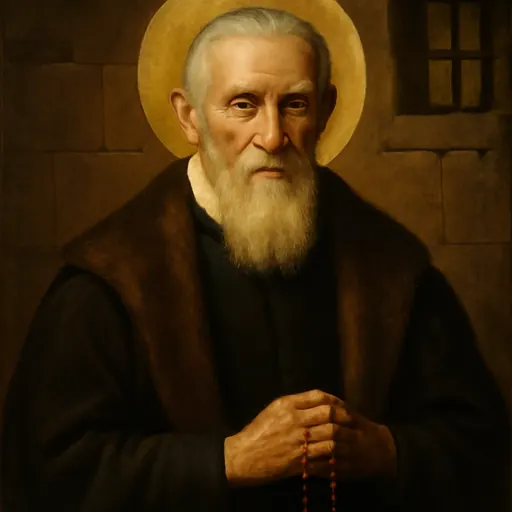
Blessed Francis Taylor (about 1550–1621) was a merchant of Swords who served as mayor of Dublin. Elected to Parliament, he was kept out of his seat and imprisoned as a Catholic recusant, and died in prison in January 1621, refusing to buy his freedom by giving up his faith. He was beatified with sixteen other Irish martyrs in 1992.
Who was Blessed Francis Taylor?
Blessed Francis Taylor was a rich Dublin merchant and a respected public man, a former mayor of the city, who died in prison an old man because he would not give up the Catholic faith. He was born in Swords, north of Dublin, about 1550, and died in prison in Dublin on January 29 or 30, 1621. Pope John Paul II beatified him on September 27, 1992, with sixteen other martyrs of Ireland's penal times.
He was not put to death by the executioner. Like his fellow Dubliner Blessed Margaret Ball, who died in prison in 1584, he was worn down by years of confinement. The Church counts both among its martyrs. Margaret Ball's story is the harsher one: her own son Walter, who had conformed to the new Church, had her arrested while he was mayor, and she died in Dublin Castle. A generation later Francis Taylor, who had held the same office, kept the faith she had died for.

A merchant of Swords and Dublin
Francis was the second son of Robert Taylor of Swords, a wealthy merchant, and Elizabeth Golding of the Grange, Portmarnock. Families like his, the old Catholic merchant families of the Pale, ran the business and the government of Dublin.
He rose steadily through the city's offices. The Dictionary of Irish Biography records that he was one of the sheriffs of Dublin in 1586–87, became an alderman in 1589, served as city treasurer six times, and was mayor in 1595–96. In April 1597 he was one of two agents sent to present the city's business to Queen Elizabeth. He married Gennet Shelton, the daughter of a Dublin merchant, and they had five sons, Thomas, George, Walter, James and Robert, and a daughter, Mary.
The election of 1613
When King James I at last summoned an Irish Parliament in 1613, Francis Taylor was one of two members elected for the city of Dublin on April 20. Both were Catholics. This angered the government, which meant to bring anti-Catholic laws before the Parliament.
The election had been held while the Protestant mayor, James Carroll, was away. When he returned the next day he ordered a new vote and let non-citizens take part. A riot broke out, and the English were thrown out of the city hall. The Lord Deputy, Sir Arthur Chichester, stepped in, ordered the arrest or silencing of the Catholic leaders and held another election on April 27 at Hoggin Green, where two Protestants were returned. Catholics complained of intimidation and fraud, but the result stood.
Years in prison
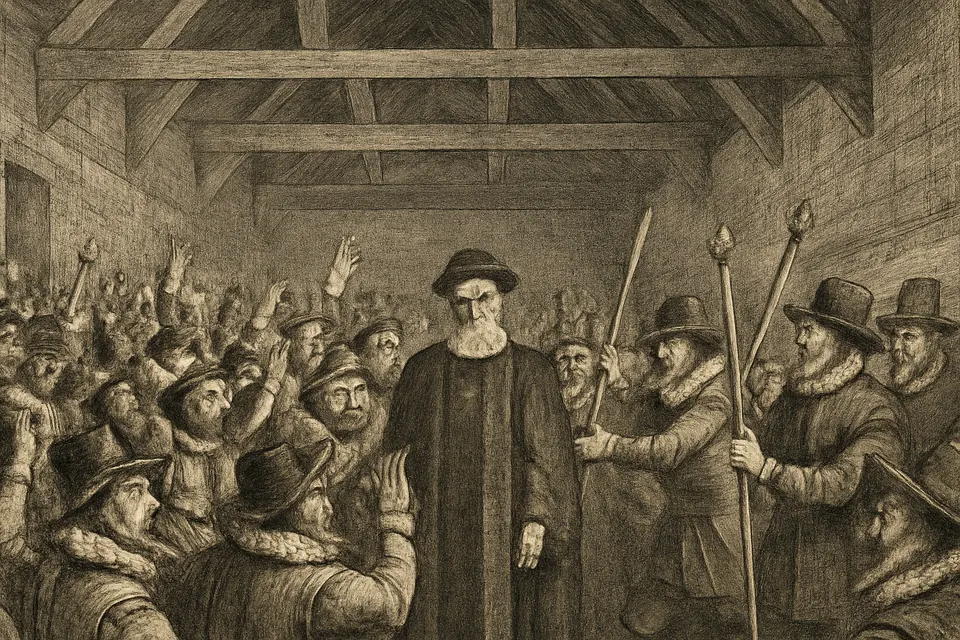
Tension between Catholics and the government stayed high, and Francis Taylor, now well past sixty, was arrested as a Catholic recusant, a man who would not attend the services of the established Church. The Dictionary of Irish Biography places his arrest in 1615–16; Patrick Duffy's account for CatholicIreland.net puts it in 1614 and says he stayed in prison until he died seven years later. His freedom, it is told, was his for the asking if he would conform.
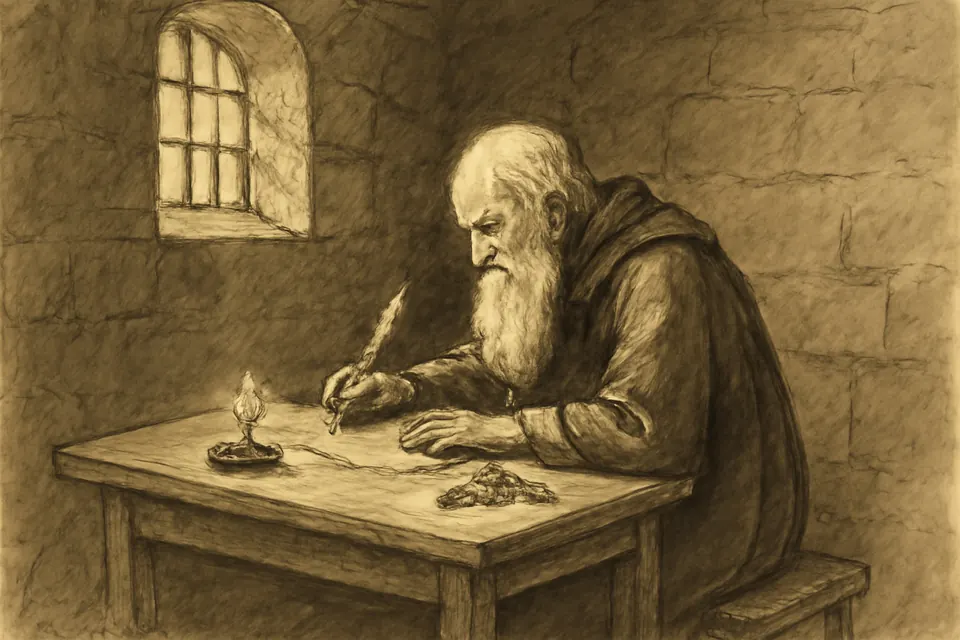
He did not. On January 4, 1621, old and in poor health, he made his will, leaving his son Thomas his heir and providing for his wife. He seems to have handed over his property to friends and family to keep it from being seized. He died in prison a few weeks later.
Remembered as a martyr
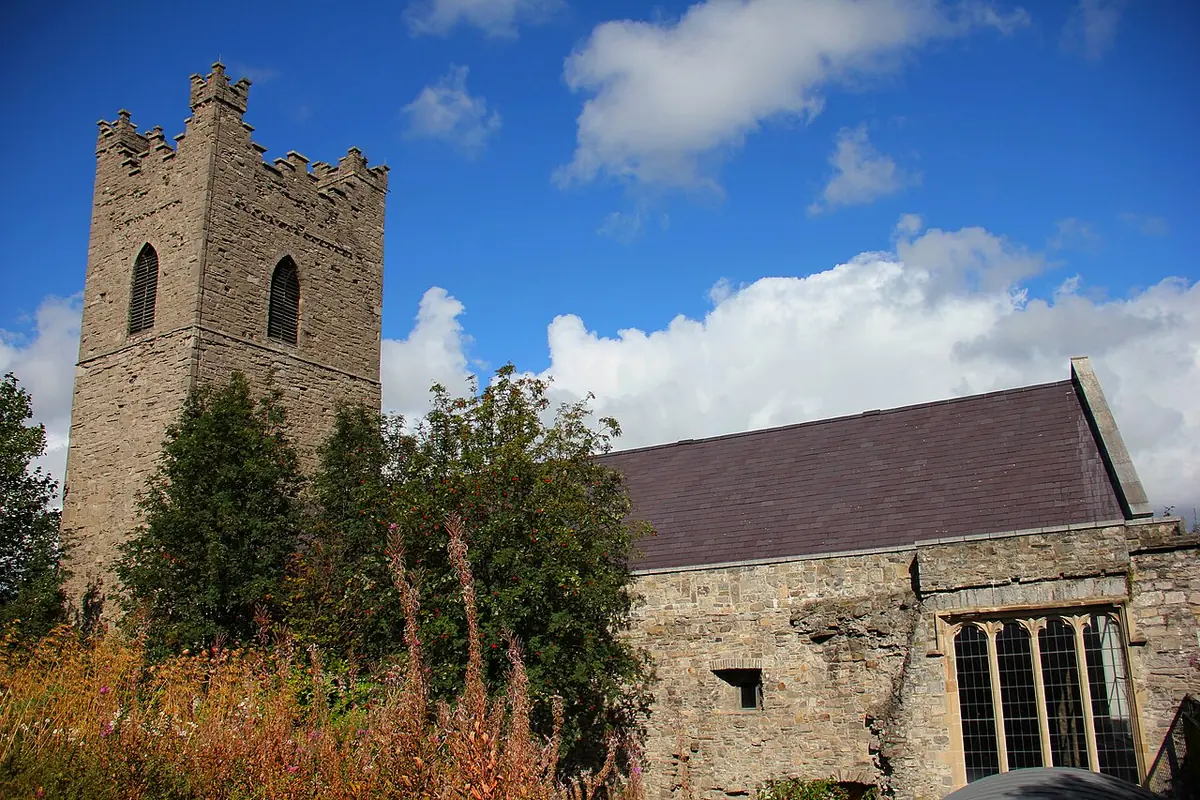
Dubliners regarded him as a martyr almost at once. Within eight years of his death a Latin account of his life, Idea togatae constantiae (roughly, "a picture of constancy in the civic gown"), was published in Paris by John Mullan. He asked in his will to be buried in St. Audoen's Church in Dublin, and he seems to have been laid there.
At the beatification in 1992, John Paul II said of the Irish martyrs: "Their victory lay precisely in going to death with no hatred in their hearts." As a martyr Francis Taylor was beatified without a miracle, and we know of no miracle approved or reported through his prayers.
Symbols of Blessed Francis Taylor in art
There is no early portrait of Francis Taylor. Modern images show him as an elderly Dublin alderman in a civic gown, sometimes with the mayor's chain, holding the martyr's palm or a rosary. Outside St. Mary's Pro-Cathedral in Dublin a bronze statue shows him beside Blessed Margaret Ball.
Feast day and prayer
In Ireland we remember Blessed Francis Taylor on January 30, together with Blessed Margaret Ball. With all seventeen Irish Martyrs beatified in 1992 he is honored again on June 20.
We know of no traditional prayer to Blessed Francis Taylor that we can cite here. Let us ask him to pray for Catholics in public life, for those who suffer for their conscience in old age, and for the city of Dublin. John Paul II ended his words on the Irish martyrs with this cry, which we can make our own: "Blessed Irish Martyrs, intercede for the beloved Irish people!"
Blessed Francis Taylor, pray for us.
Frequently asked questions
Who was Blessed Francis Taylor?
A Dublin merchant and politician, born in Swords, County Dublin, about 1550. He was mayor of Dublin in 1595–96 and was elected one of the city's members of Parliament in 1613. Imprisoned as a Catholic, he died in prison in January 1621 and is honored as a martyr.
Why was Francis Taylor imprisoned?
Because he was a leading Catholic who would not conform to the established Church. The 1613 election of two Catholic members for Dublin angered the government, which was planning anti-Catholic laws; the election was rerun, and Taylor was later arrested with other Catholic recusants.
When is the feast of Blessed Francis Taylor?
In Ireland he is remembered on January 30, together with Blessed Margaret Ball, another Dublin layperson who died in prison for the faith. The seventeen Irish Martyrs beatified in 1992 also share a feast on June 20.
Where is Francis Taylor buried?
In his will he asked to be buried in St. Audoen's Church in Dublin, and the Dictionary of Irish Biography says he seems to have been buried there.
Keep exploring
Sources
- Anthony M. McCormack, "Taylor, Francis," Dictionary of Irish Biography (2009). His family, civic offices, the 1613 election, his arrest, his wife and children, his will of January 4, 1621, his death, his burial at St. Audoen's and John Mullan's Paris life
- Patrick Duffy, "Jan 30 – Bl Margaret Ball (d. 1584) and Bl Francis Taylor (d. 1621)," CatholicIreland.net. The January 30 commemoration, the length of his imprisonment and the statue at the Pro-Cathedral
- John Paul II, homily for the beatification of twenty-one Servants of God (September 27, 1992). The beatification of Dermot O'Hurley, Margaret Ball, Francis Taylor and fourteen companions; the quotation on forgiveness