Blessed Ramon Llull
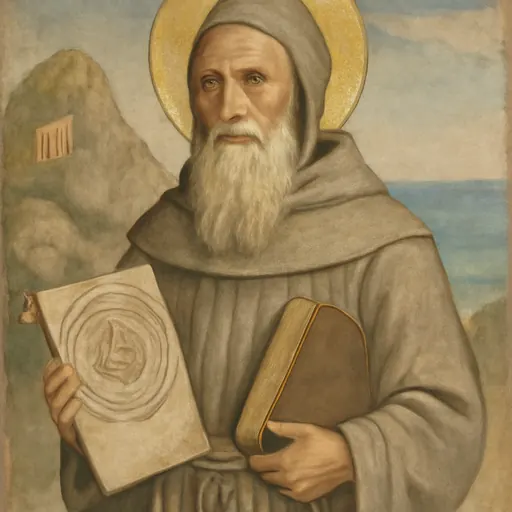
Blessed Ramon Llull (about 1232–1316) was a courtier of Majorca who, after visions of Christ crucified, became a Franciscan tertiary and spent fifty years writing, teaching and preaching to bring Muslims to Christ by reason and love, not force. He wrote some 300 works. Pius IX beatified him in 1847, and the Franciscans keep his feast on June 30.
Who was Blessed Ramon Llull?
Blessed Ramon Llull was a courtier of the kingdom of Majorca who became one of the strangest and most gifted Christians of the Middle Ages: poet, mystic, philosopher, novelist and missionary. Born in Palma about 1232, he lived his first thirty years for pleasure and the court. Then Christ crucified appeared to him, and he spent the next fifty years trying to bring the whole world, and above all the Muslims of North Africa, to know and love God.
He was a layman all his life, a member of the Third Order of St. Francis. He wrote in Catalan, Latin and Arabic, some 300 works by the Catholic Encyclopedia's count, and he is honored as a father of Catalan literature. Pope Pius IX beatified him in 1847, and the Franciscan family keeps his memorial on June 30.
The life of Ramon Llull
A courtier converted
Ramon's family came to Majorca from Barcelona with the army of King James I, who took the island in 1229. Ramon grew up at court, served as a seneschal in the royal household, married Blanca Picany and had two children. By his own account he wrote love songs and lived carelessly. Long afterward he looked back on those years in a few lines of autobiography:
When I was grown and knew the world and its vanities, I began to do evil and entered on sin. Forgetting the true God I went after carnal things. But it pleased Jesus Christ in His great pity to present Himself to me five times as if crucified, that I might remember Him and set my love on Him.
Tradition places the first of these visions on a night when he sat writing a song to a lady. He was then about thirty.

He made three resolutions: to give his life for the love of God, to work for the conversion of the Muslims, and to write the best book in the world against unbelief. A sermon he heard on the feast of St. Francis of Assisi decided him. He provided for his wife and children, sold the rest of his property, went on pilgrimage to Rocamadour and Santiago de Compostela, and came home to study.
Arabic, the mountain and the Art
He bought a Muslim slave to teach him Arabic and studied for some nine years. On Mount Randa, the highest point near Palma, he lived as a hermit, and there, in 1274, the plan of his great work came to him: the Art, a system that combined the basic attributes of God, set out on rotating wheels and diagrams, in order to show to Muslim and Jewish scholars by reason alone the truths of the Christian faith. He believed it was given to him by God.
In 1276, with the support of King James II of Majorca, he founded the college of Miramar, where thirteen Franciscan friars learned Arabic to go as missionaries. Rejecting the idea of conversion by force, he wrote that Christ should be preached "by love and prayers, and the pouring out of tears and of blood."
The missionary
For forty years he crossed the Mediterranean. He taught in Paris and Montpellier, pleaded with popes and kings for more language schools, and went himself to North Africa. Around 1291 he preached in Tunis and was expelled. Later, in Bougie (Béjaïa, in modern Algeria), he was imprisoned and then exiled. At the Council of Vienne in 1311 he saw part of his dream come true, when the council ordered the teaching of Hebrew, Arabic and Chaldean at the great universities.
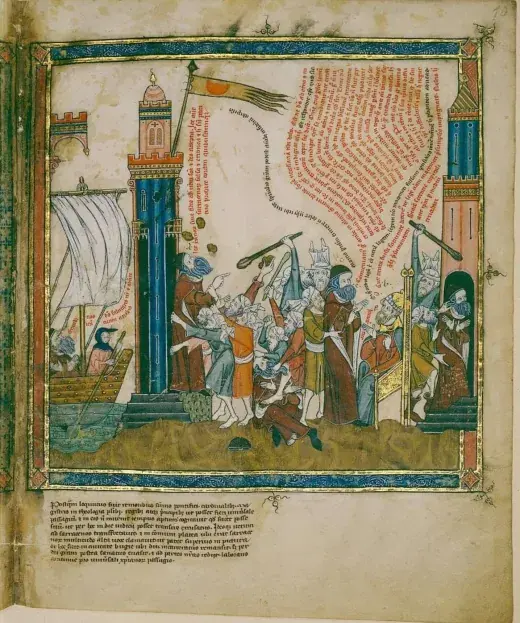
In 1314, past eighty, he sailed again for North Africa. In 1315 a crowd at Bougie stoned him. Tradition long held that he died there as a martyr. More recent research suggests that Christian merchants carried him off alive and that he died early in 1316, on the voyage home or soon after reaching Majorca. He was buried in the Franciscan church in Palma.
Miracles, legends and his beatification
The account of his five visions of Christ crucified is reported: it comes from Llull's own words. The story of his stoning as a martyr's death, and later legends that a light guided the merchants to his body and that life lingered in him until he reached Palma, are traditional.
His teaching drew enemies as well as followers. In 1376 the inquisitor Nicholas Eymerich obtained a condemnation of Lullist teaching under Gregory XI, and Paul IV later renewed it; the dispute was about his method of proving the faith by reason, not about his holiness. Majorca never stopped honoring him, and Pope Pius IX beatified him in 1847. We know of no individual miracle approved in his cause.
Symbols of Blessed Ramon Llull in art
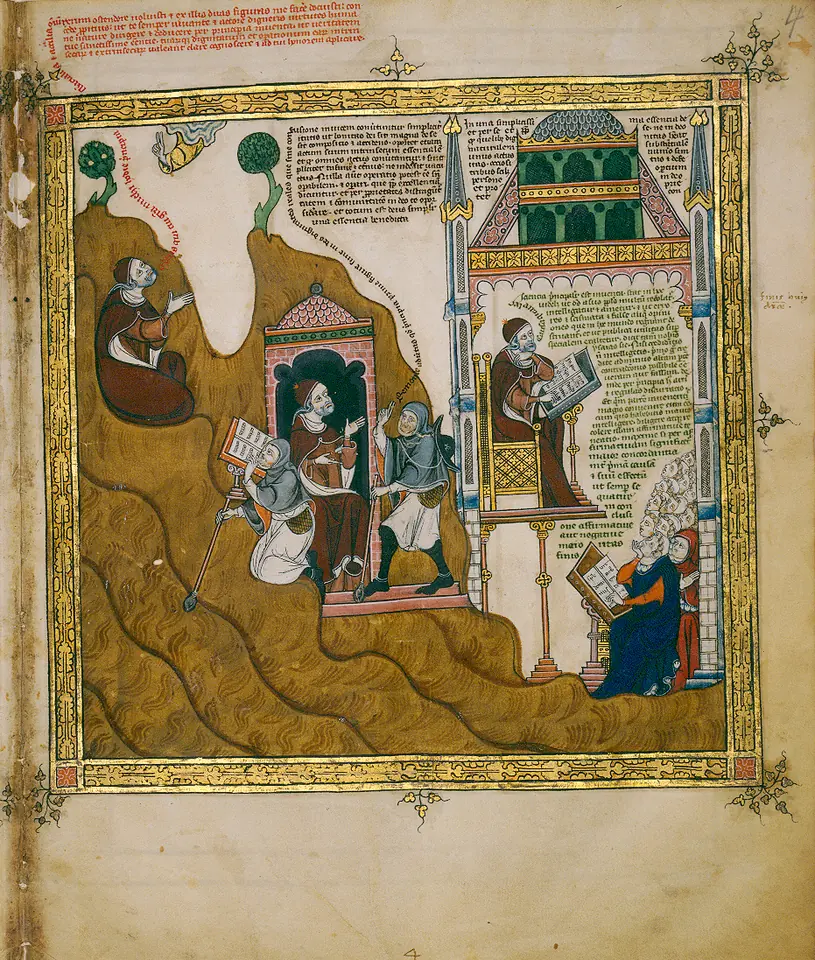
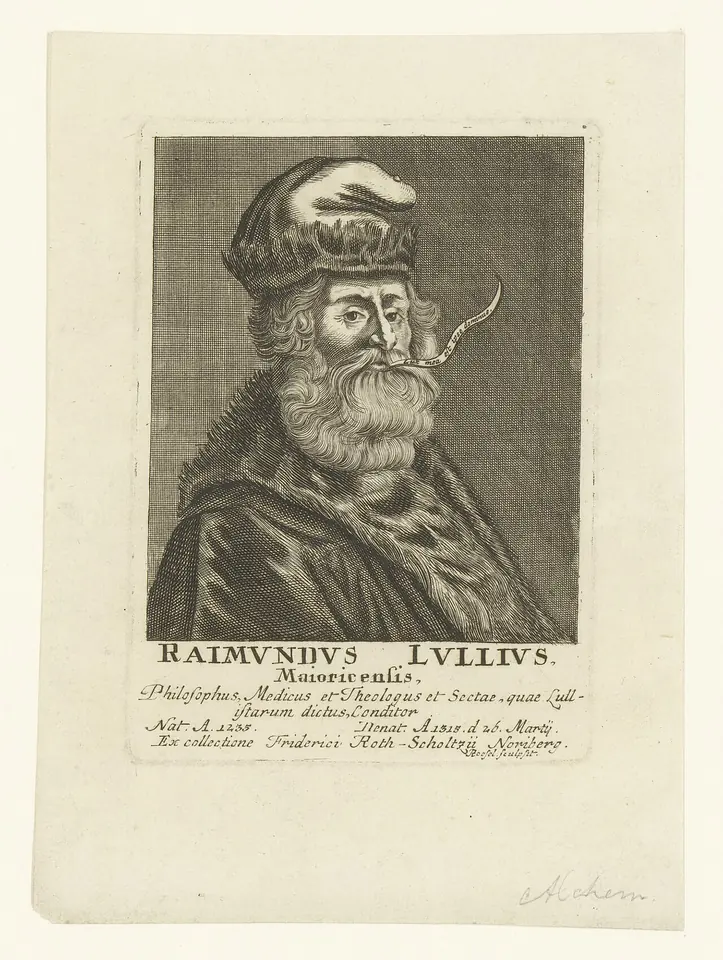
He is shown as an old man with a long white beard, in the gray or brown habit of a Franciscan tertiary, sometimes in a scholar's cap. Books and manuscripts surround him, because he wrote so much, and the circles and wheels of his Art often appear on a page or a scroll. A crucifix recalls his conversion. Stones, or a crowd with raised arms, recall Bougie. The oldest pictures of his life are the miniatures of the Breviculum, painted for his disciple Thomas Le Myésier around 1321 and now in Karlsruhe.
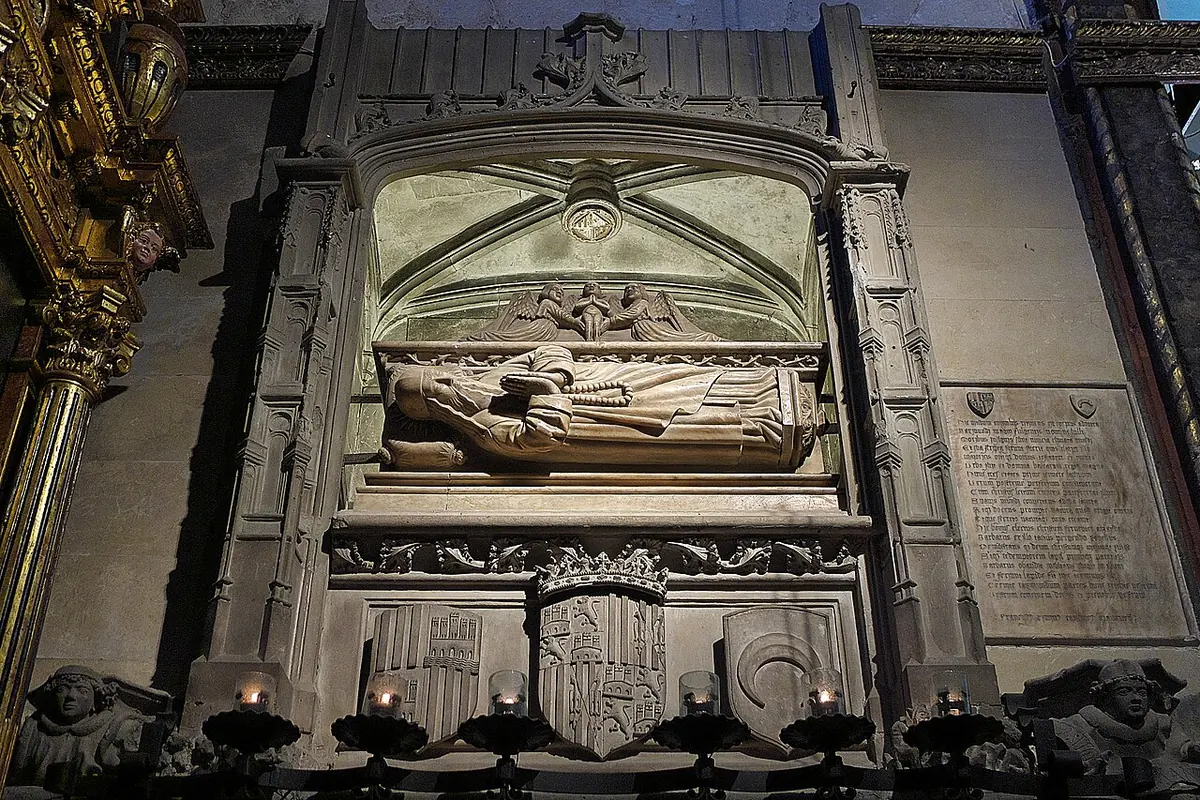
His tomb in Palma
His body rests in the Basilica of Sant Francesc in Palma. In 1448 work began on the Gothic wall tomb that still holds his remains, a stone figure lying beneath a pointed arch.
Praying with Blessed Ramon Llull
We have not found a traditional prayer to him with a citable origin. His own writing prays well. Here are lines from his Book of the Lover and the Beloved, in E. Allison Peers's 1923 translation:
Said the Lover to the Beloved: 'Thou that fillest the sun with splendour, fill my heart with love.' And the Beloved answered: 'Wert thou not filled with love, thine eyes had not shed those tears, nor hadst thou come to this place to see thy Beloved.'
'Say, O Lover,' asked the Beloved, 'if I double thy trials, wilt thou still be patient?' 'Yea,' answered the Lover, 'so that Thou double also my love.'
Let us ask Blessed Ramon Llull to pray for us, that we may love God with our whole mind as well as our heart, and share the faith with others by love and patience.
Frequently asked questions
Who was Blessed Ramon Llull?
A Catalan-speaking layman from Palma, Majorca, born about 1232, who served at the royal court, married and had two children, then was converted by visions of Christ crucified. He became a Franciscan tertiary, studied Arabic, wrote his great system called the Art, founded a missionary language school at Miramar in 1276, and traveled to North Africa to preach. He died early in 1316.
Is Ramon Llull a saint?
He is a blessed. Pope Pius IX beatified him in 1847, which confirmed the honor long paid to him in Majorca. He has not been canonized.
When is the feast of Blessed Ramon Llull?
The Franciscan family keeps his memorial on June 30.
Was Ramon Llull a martyr?
An old tradition says he was stoned to death at Bougie (Béjaïa) in North Africa in 1315. He was stoned there, but more recent research suggests local Christian merchants rescued him and that he died early in 1316, at sea or soon after reaching Majorca.
Keep exploring
Sources
- W. Turner, "Raymond Lully," Catholic Encyclopedia, vol. 12 (1911). His roughly 300 works, the Art, and the 1376 condemnation of Lullism under Gregory XI
- Ramon Llull, The Book of the Lover and the Beloved, translated by E. Allison Peers (London: SPCK, 1923), Project Gutenberg. Llull's own account of his five visions, the conversion story, and the verses quoted here
- Dominic Monti, OFM, "Blessed Ramon Llull: Secular Franciscan Committed to a Multicultural Mission," Commission on the Franciscan Intellectual Tradition. His beatification in 1847, the June 30 memorial, Miramar, and the evidence that he died in 1316