St. Joseph Freinademetz
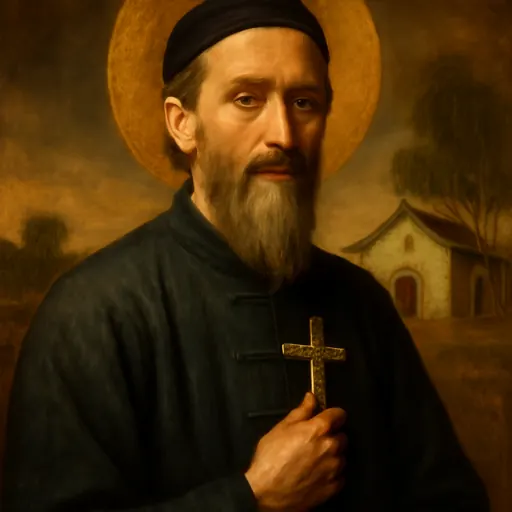
St. Joseph Freinademetz (1852–1908) was a priest from South Tyrol and one of the first two missionaries of the Society of the Divine Word, who spent 29 years in southern Shandong, China, and died there of typhus caught while caring for the sick. Pope John Paul II canonized him in 2003, and his feast is January 28.
Who was St. Joseph Freinademetz?
St. Joseph Freinademetz was a country priest from the Dolomite mountains who gave the last 29 years of his life to the people of southern Shandong in China. He was one of the first two missionaries sent out by St. Arnold Janssen, founder of the Society of the Divine Word, and he never went home again. Pope Paul VI, beatifying him in 1975, said of him in German: "Er ist den Chinesen ein Chinese geworden, um sie für Christus zu gewinnen" (He became a Chinese to the Chinese, to win them for Christ).
We keep his feast on January 28, the day he died in 1908.
The life of St. Joseph Freinademetz
A boy from Oies
He was born on April 15, 1852, at Oies, a hamlet of five houses above the village of Badia in the Val Badia, and baptized the same day. The valley, where the people speak Ladin, then belonged to the Austrian Empire. He studied theology at the diocesan seminary in Brixen (Bressanone) and was ordained a priest on July 25, 1875. His first post was at San Martin, not far from home.

Steyl and the call to China
About two years after his ordination he wrote to Fr. Arnold Janssen, who had just opened a mission house at Steyl in the Netherlands. He entered Steyl in August 1878. On March 2, 1879, he received the mission cross and sailed for China with Fr. John Baptist Anzer, the first two priests the new society sent abroad.
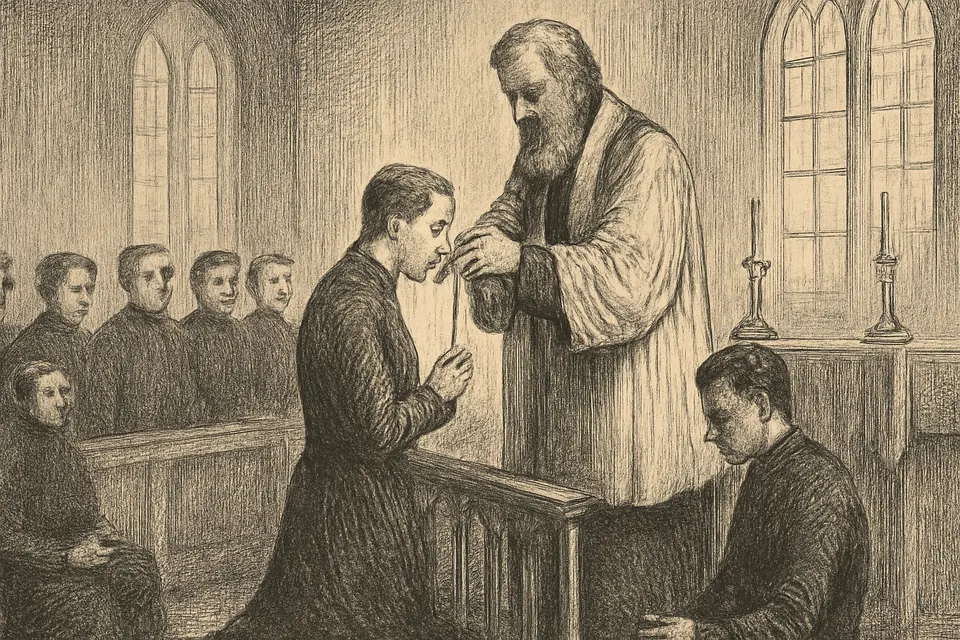
They spent two years in Hong Kong learning the language and the country. In 1881 they reached their mission in South Shandong, a region of about 12 million people with just 158 Christians.
Thirty years in Shandong
The early years were hard: long journeys on foot, attacks by bandits, and the slow work of starting Christian communities from nothing. His bishop often moved him just as a new community took shape and sent him to begin again somewhere else. He did it without complaint.
He came to see that China would be won by Chinese Christians, not by foreigners. He put great effort into training catechists, wrote a catechetical manual in Chinese for them, and with Anzer, by then a bishop, worked to form Chinese priests. He shared the living conditions of the people around him, and in his photographs he wears Chinese dress and a long beard. Writing home, he said: "I love China and the Chinese. I want to die among them and be laid to rest among them."
In 1898 he developed laryngitis and the first signs of tuberculosis. He was sent to Japan to recover and came back better, though never fully well.
The typhus of 1907
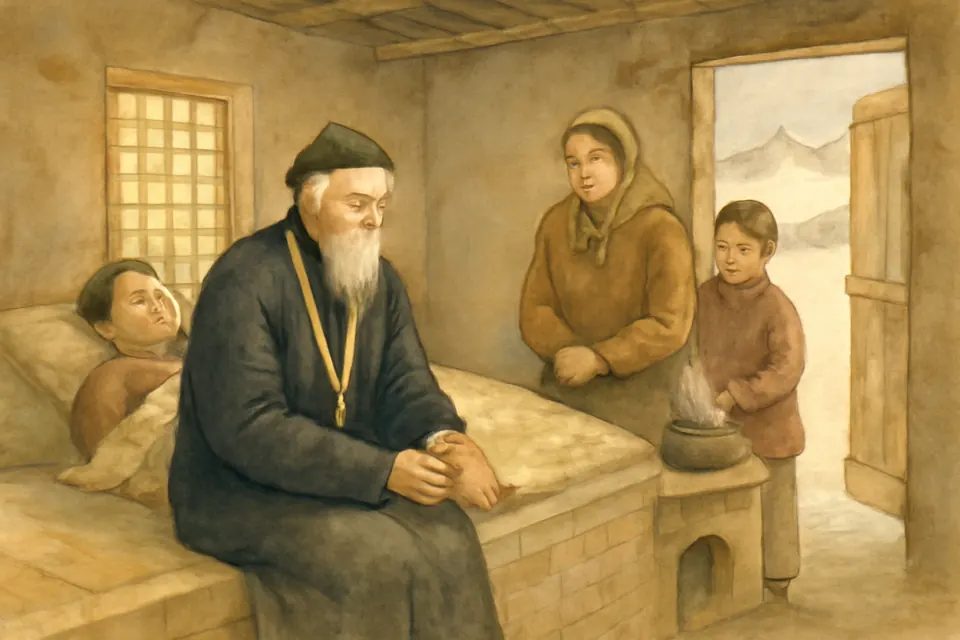
In 1907, with the bishop away in Europe, Freinademetz was left in charge of the diocese just as typhus swept through it. He went from community to community to care for the sick, caught the disease and returned to Taikia, the diocesan seat. He died there on January 28, 1908. He was buried at the twelfth station of the Way of the Cross, and the grave soon drew Christian pilgrims.
Beatification and canonization
Pope Paul VI beatified him on October 19, 1975, together with Arnold Janssen, Eugene de Mazenod and Maria Theresia Ledóchowska. Because he was not a martyr, each step required a healing that the Church investigated and approved as a miracle; we have not found a published account of those cases to cite here. Pope John Paul II canonized him on October 5, 2003, with Janssen and St. Daniel Comboni. In that homily the Pope quoted his conviction: "I do not consider missionary life as a sacrifice I offer to God, but as the greatest grace that God could ever have lavished upon me." He also repeated the advice Freinademetz gave his fellow missionaries: "Missionary work is useless if one does not love and is not loved." The Pope called him an exemplary model of Gospel inculturation.
Symbols of St. Joseph Freinademetz in art
He lived late enough to be photographed, so images of him follow his photographs closely. You'll know him by:
- The Chinese gown and round cap: the dress he took on to share the life of his people.
- The long beard: grown gray in the mission.
- The mission cross: the cross every departing Divine Word missionary receives, which he took to China in 1879.
- A book: the Gospel he preached, or the catechism he wrote for his catechists.
Statues in South Tyrol, the Philippines, Indonesia and the United States show him this way, often beside St. Arnold Janssen.
Feast day and places linked to him
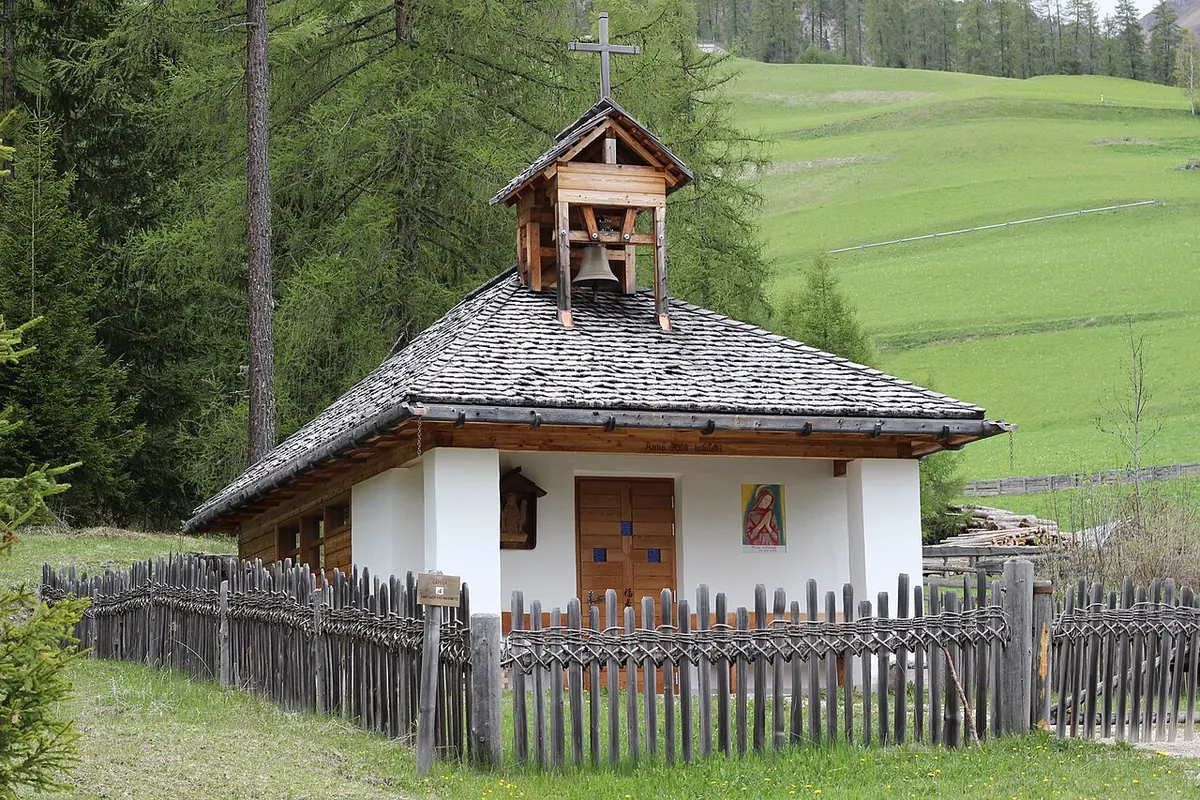
His feast is January 28, kept by the Society of the Divine Word and its sister congregations and by the Church in South Tyrol. See our feast days page for other saints of the season. His birth house at Oies has become a place of pilgrimage. Across the Val Badia, small chapels such as the one at Lungiarü carry his name in Ladin, Sant Ujöp Freinademetz.
Praying with St. Joseph Freinademetz
We know of no traditional prayer to him with a long history, though the Divine Word family has its own prayers for his feast. His motto makes a prayer of its own: "The language that all people understand is that of love."
Let us ask St. Joseph Freinademetz to pray for missionaries and catechists, for the Church in China, for priests far from home, and for all who care for the sick in time of epidemic. St. Joseph Freinademetz, pray for us.
Frequently asked questions
When is the feast day of St. Joseph Freinademetz?
January 28, the day he died in Taikia, Shandong, in 1908. The Society of the Divine Word and the Church in South Tyrol keep it.
What was St. Joseph Freinademetz's motto?
"The language that all people understand is that of love." He also wrote to his family: "I love China and the Chinese. I want to die among them and be laid to rest among them."
When was St. Joseph Freinademetz canonized?
Pope Paul VI beatified him on October 19, 1975, and Pope John Paul II canonized him on October 5, 2003, together with his founder, St. Arnold Janssen, and St. Daniel Comboni.
How did St. Joseph Freinademetz die?
Of typhus, on January 28, 1908. While his bishop was abroad in 1907 he ran the diocese during an epidemic, visited the sick communities and caught the disease himself.
Keep exploring
Sources
- Holy See, Joseph Freinademetz (1852–1908), biography. Birth at Oies, ordination in 1875, Steyl in 1878, departure on March 2, 1879, the 158 Christians of South Shandong, the typhus epidemic, his burial and both quotations
- John Paul II, homily for the canonization of Daniele Comboni, Arnold Janssen and Josef Freinademetz, October 5, 2003. Missionary life as "the greatest grace" and the quotations on love
- Paul VI, homily for the beatification of four Servants of God, October 19, 1975 (Italian and German). The beatification and the words "He became a Chinese to the Chinese"