St. Miguel Febres Cordero
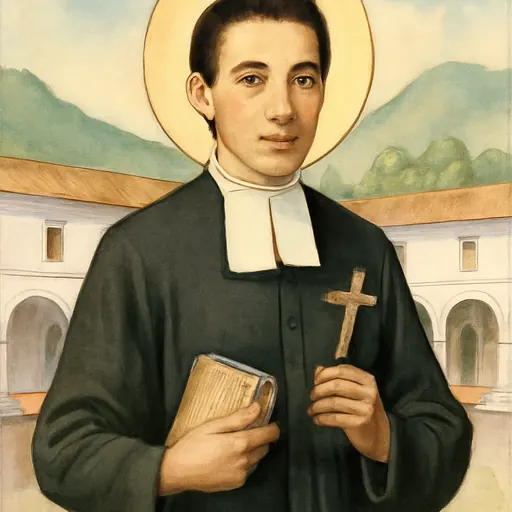
St. Miguel Febres Cordero (1854–1910), known in Ecuador as Hermano Miguel, was the first Ecuadorian to join the Brothers of the Christian Schools. A lifelong teacher in Quito, he wrote textbooks used across the country and was elected to Ecuador's national Academy of Language. He was canonized in 1984, and his feast day is February 9.
Who was St. Miguel Febres Cordero?
St. Miguel Febres Cordero was an Ecuadorian religious brother, a member of the Brothers of the Christian Schools founded by St. John Baptist de La Salle, who spent his life teaching children. Ecuadorians call him simply Hermano Miguel, Brother Miguel. He was a fine grammarian whose books were used in schools across the country, and he never let that work pull him away from the classroom.
He was born Francisco Febres-Cordero Muñoz in Cuenca on November 7, 1854, into a family prominent in Ecuadorian politics. He died in Spain in 1910. We keep his feast on February 9.
The life of St. Miguel Febres Cordero
The boy who could not walk
Francisco was born with deformed feet. His great-grandniece, Olga Murillo, told the Guayaquil newspaper El Universo the family story: he did not walk until he was five, when he called his aunt to come and see a beautiful lady dressed in white among the roses. No one was there when she came, but from that moment the boy walked. The pain in his feet never fully went away. Pope John Paul II spoke of the "malformation of the feet, which caused him considerable pain when walking" as one of the crosses he carried all his life.
A vocation his family opposed
In 1863 he was enrolled at the school the De La Salle Brothers had just opened in Cuenca, and he wanted to be one of them. His father and grandmother would not hear of it. The boy wrote a letter that John Paul II quoted at his canonization (our translation from the Italian text of the homily):
I assure you, before God and without any human respect, that I believe myself called to the Institute of the Brothers of the Christian Schools, and that in no other state shall I feel myself in my true place as I do there. Please share these feelings with my father. If he truly desires my happiness, that is, my eternal happiness, let him allow me to follow the road the good God has traced for me.
He received the habit on March 24, 1868, the first Ecuadorian ever to enter the Institute, and took the name Miguel. His father stayed cold toward him for years.
Teacher and grammarian
Brother Miguel taught in Quito for more than thirty years, first in a small school and then at the Brothers' college known as El Cebollar. When he was not yet twenty he published a Spanish grammar that became a standard text, and more books followed. His research in literature and language put him in touch with scholars abroad, and he was elected to the national academies of language of Ecuador and of Spain.

None of this changed his priorities. He prepared boys for their First Communion every year and called them "new living tabernacles." During their retreats he had them look at the crucifix before confession and explained Christ's wounds to them; witnesses at his cause said many left in tears. John Paul II added that he looked for the children who were poorest, "economically, culturally and spiritually."
In 1888 he was in St. Peter's Basilica for the beatification of his founder.
Last years in Europe
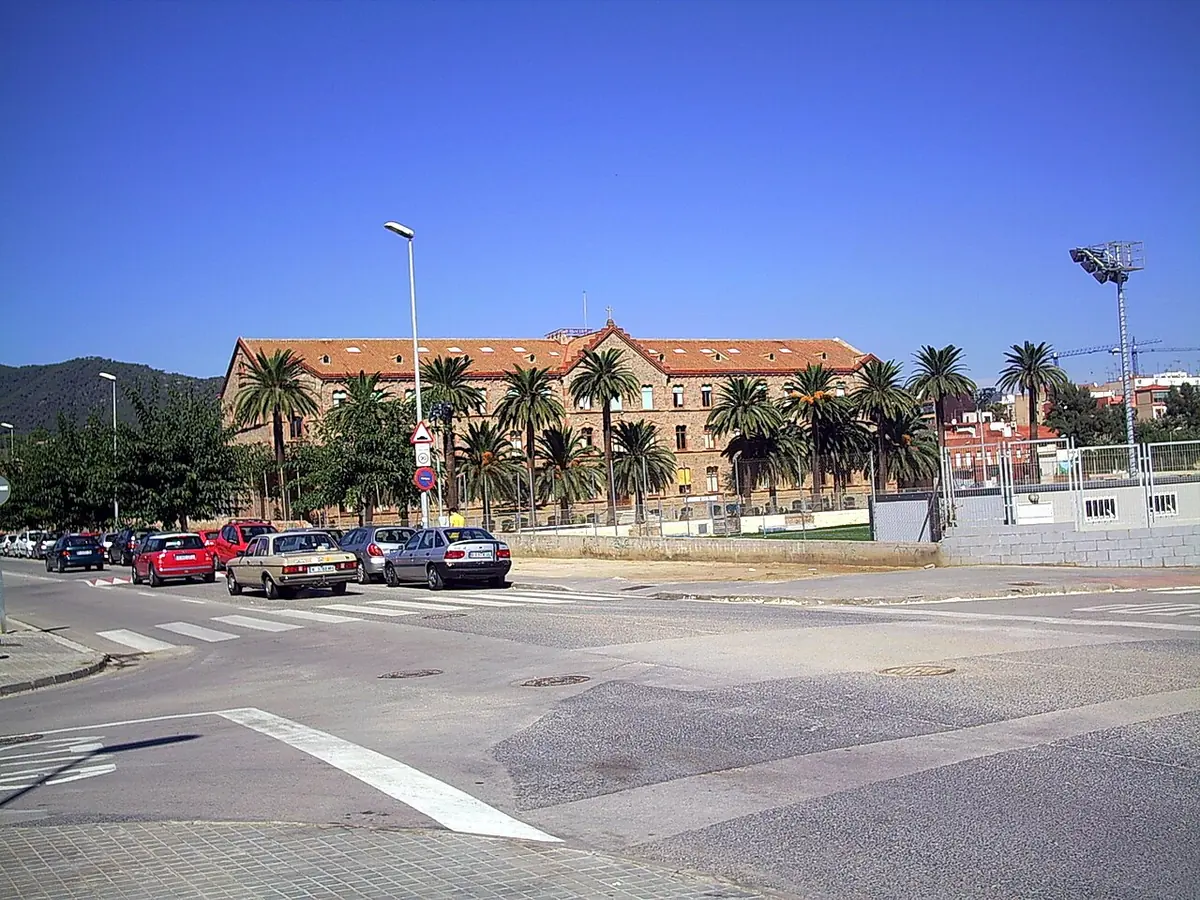
In 1907 his superiors called him to Europe to translate textbooks into Spanish for the Brothers, who had been driven out of France. He worked in Belgium, but his health suffered, and he was moved to the junior novitiate at Premià de Mar, on the coast north of Barcelona. During the revolutionary violence of 1909 he led the evacuation of the young students across the bay to Barcelona. Soon after they returned, he caught pneumonia. He died at Premià de Mar on February 9, 1910.
Miracles, beatification and canonization
- Walking for the first time at five: reported. A family tradition, told by his great-grandniece.
- The miracles of his cause: approved. His family's account names two cures: Sister Clementina Flores Cordero, gravely ill with liver disease in 1933, who got up and walked the corridors of her convent the day after the Brothers prayed to Brother Miguel for her; and Beatriz Gómez de Núñez, who suffered from myasthenia gravis and was healed while attending his beatification in St. Peter's Square.
Pope Paul VI beatified him on October 30, 1977. Pope John Paul II canonized him in St. Peter's Basilica on October 21, 1984, World Mission Sunday, and called him the "apostle of the school" and a true evangelizer of Latin America. He was the first Ecuadorian man to be canonized.
Symbols of St. Miguel Febres Cordero in art
Brother Miguel lived in the age of photography, and his images follow his real face: a slender man with dark hair. Look for:
- The black habit and white rabat, the two-tabbed collar of the De La Salle Brothers.
- Children around him, often boys he is teaching or leading to the altar.
- A book, for his grammars and his teaching.
- A crucifix, which John Paul II said "presided over his whole existence."

Feast day and shrine
His feast is February 9. You can find other saints of the season on our feast days page.
He was buried at Premià de Mar. Twenty-seven years after his death, in 1937, his remains were brought home to Ecuador and received in Quito with great emotion. His tomb there draws pilgrims, and streets and schools across Ecuador carry the name Hermano Miguel.
Prayer to St. Miguel Febres Cordero
The De La Salle Brothers pray for his intercession in the Mass of February 9, whose texts the Congregation for Divine Worship approved. We know of no other traditional prayer to him that we can cite, and we won't write one in his name.
Let us ask St. Miguel Febres Cordero to pray for teachers and catechists, for children preparing for their First Communion, for young people whose families resist their vocation, and for the people of Ecuador. St. Miguel Febres Cordero, pray for us.
Frequently asked questions
When is the feast day of St. Miguel Febres Cordero?
February 9, the day he died in 1910 at Premià de Mar in Spain. The De La Salle Brothers keep it as his liturgical memorial.
Who was Hermano Miguel?
Hermano Miguel is the name by which Ecuadorians know St. Miguel Febres Cordero, a De La Salle Brother from Cuenca who taught children in Quito for more than thirty years and wrote grammar books used in the country's schools.
When was St. Miguel Febres Cordero canonized?
Pope John Paul II canonized him in St. Peter's Basilica on October 21, 1984, World Mission Sunday. Pope Paul VI had beatified him on October 30, 1977.
Where is St. Miguel Febres Cordero buried?
He was first buried at Premià de Mar in Spain. In 1937 his remains were brought home to Quito, Ecuador, where his tomb is a place of pilgrimage.
Keep exploring
Sources
- John Paul II, Homily at the canonization of Blessed Miguel Febres Cordero (October 21, 1984, Spanish and Italian). His letter about his vocation, his foot deformity, the First Communion classes and the return of his remains
- Brothers of the Christian Schools (Generalate, Rome): Saint Miguel Febres Cordero. Dates of his entry, beatification, canonization and liturgical memorial
- El Universo (Guayaquil), "Hermano Miguel, una vida marcada por los milagros" (February 5, 2010). His great-grandniece's account of his first steps and of the two cures in his cause