St. Peter of Damascus

St. Peter of Damascus, or Peter Damascene, was a Byzantine monk of the 12th century whose two books on the spiritual life, A Treasury of Divine Knowledge and Twenty-four Discourses, fill a large part of the Philokalia. Almost nothing is known of his life. The Byzantine churches keep his memory on February 9.
Who was St. Peter of Damascus?
St. Peter of Damascus, also called Peter Damascene, was a Byzantine monk and spiritual writer of the 12th century. His two books, A Treasury of Divine Knowledge and Twenty-four Discourses, take up one of the largest sections of the Philokalia, the great collection of writings on prayer and the inner life that Orthodox Christians have read since 1782. He is one of the few authors in it who wrote with laypeople as well as monks in mind.
The Byzantine churches remember him on February 9.
Of his life we know almost nothing. His own writings show a monk who lived in a cell under the guidance of a spiritual father and knew the Fathers so well that he quoted them from memory. "Of Damascus" may describe his family or his monastery rather than his birthplace. What survives of Peter is his teaching.
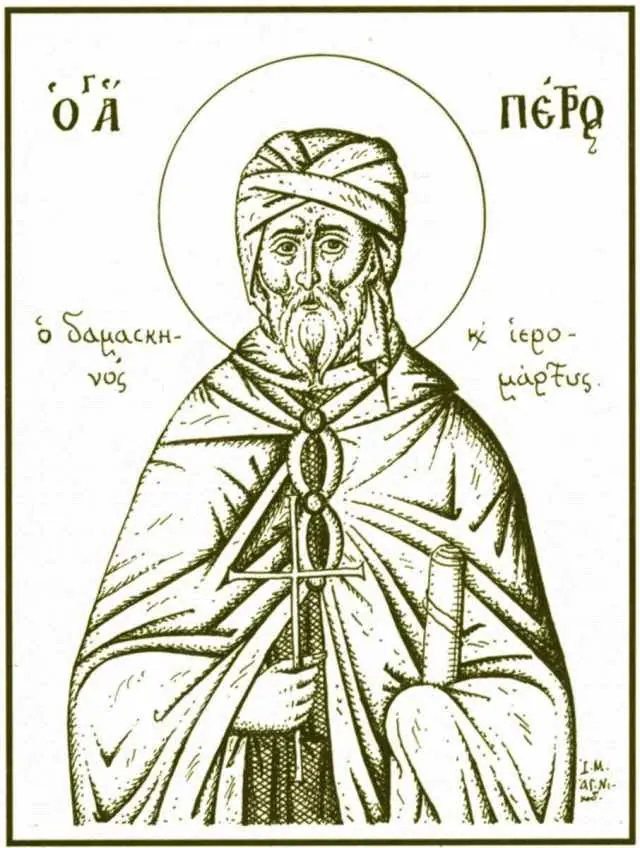
Two men called Peter of Damascus
The name has caused confusion for centuries. In the 8th century a bishop named Peter of Damascus suffered for the faith under the Arab caliphs, and he too is called Peter the Damascene. When St. Nicodemus the Hagiorite edited the Philokalia, he took the monk-writer to be this martyr.
That cannot be right. The writer quotes Symeon Metaphrastes, the 10th-century compiler of saints' lives, so he lived later. The translators of the English Philokalia, G. E. H. Palmer, Philip Sherrard and Kallistos Ware, place him in the 12th century, and modern scholars, among them Greg Peters in his 2011 study, agree. Many icons still carry the old title of martyr.
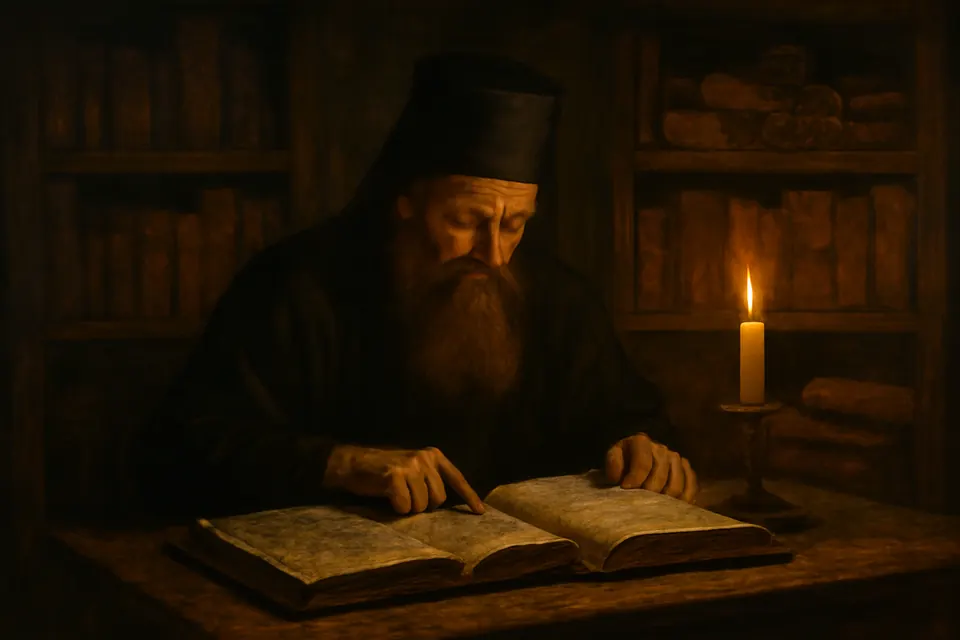
The writings of St. Peter of Damascus
A Treasury of Divine Knowledge
The first book is a handbook for anyone who wants to make progress toward God. Peter describes the bodily disciplines that help the soul, such as fasting and vigils, then the virtues, and then eight stages of contemplation, from understanding the trials of this life to the knowledge of God himself. Two long lists give the names of the virtues and of the passions, 228 virtues and 298 passions in the Greek text, so that the reader can examine his own heart. He returns again and again to humility and to discernment, the gift of judging rightly what to do.
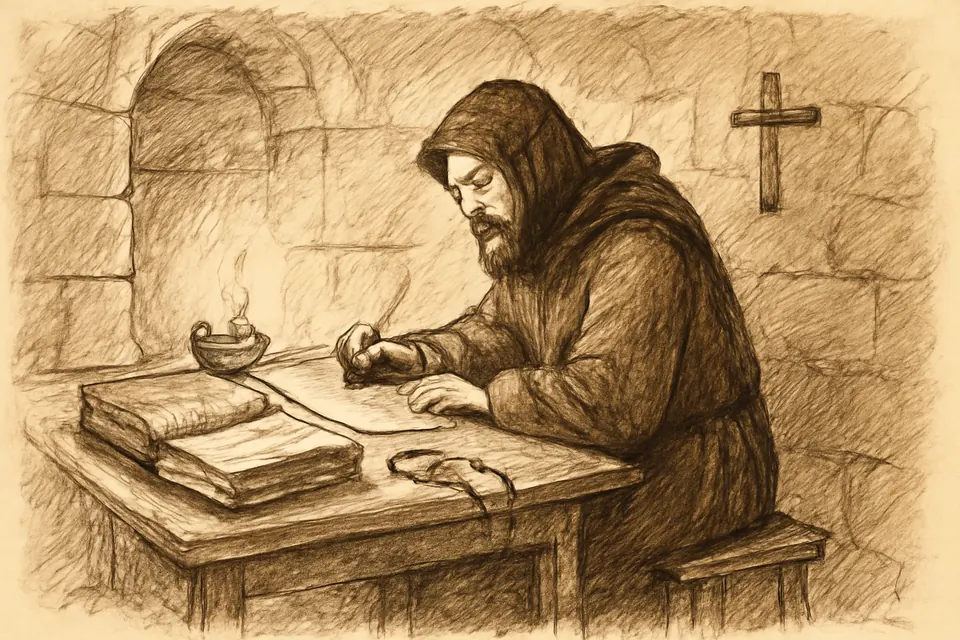
Twenty-four Discourses
The second book is a set of short discourses, one for each letter of the Greek alphabet, on faith, fear of God, hope, love, peace, joy and other gifts of the Spirit. Peter quotes Scripture and the Fathers constantly, often from memory, and the Philokalia's editors shortened some passages.
Holiness for everyone
What stands out in Peter is his insistence that salvation and the knowledge of God are open to every Christian, married or monastic, rich or poor, if they keep the commandments with humility. Kallistos Ware drew attention to this in the introduction to the English Philokalia. Peter also speaks of grace at every step: the effort is ours, but every good thing we do is God's gift. He warns the reader never to despair, even after falling many times, but to rise again and go on.
How his writings spread
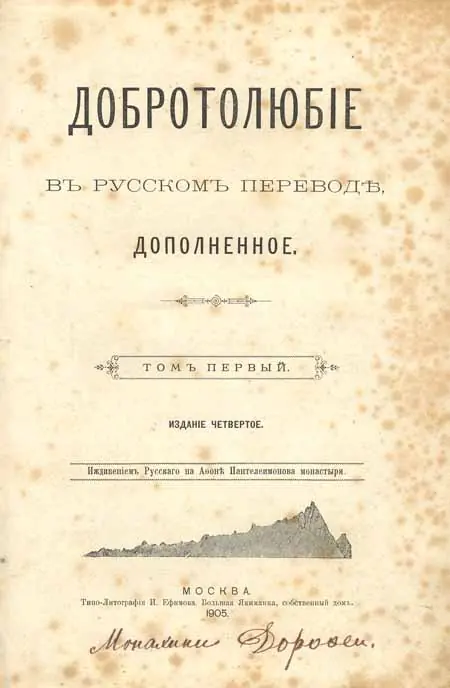
St. Nicodemus and St. Macarius of Corinth printed the Greek Philokalia, with Peter's works in it, in Venice in 1782. St. Paisius Velichkovsky translated it into Church Slavonic, and in the 19th century St. Theophan the Recluse made a fuller Russian version, the Dobrotolubie. Through these books Peter's teaching reached the monasteries and homes of Russia, Romania and the whole Orthodox world, and in the 20th century English readers.
Miracles
No miracles are told of St. Peter of Damascus. The Church honors him as a teacher of the spiritual life, and his books are his witness.
Symbols of St. Peter of Damascus in art
He is rarely painted. When he is, icons show him as a monk with a long beard and a hood wrapped around his head, holding a cross and a scroll, like the Kyiv print at the top of this page. Because of the old confusion, some icons give him a bishop's or martyr's attributes that belong to the 8th-century Peter.

Feast day and prayer
His memory is kept on February 9 in the Byzantine calendar. See other saints of February on our feast days calendar.
There is no traditional prayer to St. Peter of Damascus in common use. The best way to honor him is to read him slowly, a few lines at a time, as he read the Fathers. Let us ask St. Peter of Damascus to pray for all who are learning to pray, and for all who are tempted to give up after many falls. Holy Father Peter, pray to God for us.
Frequently asked questions
Who was St. Peter of Damascus?
A monk of the 12th century who wrote practical guides to prayer, the virtues and the struggle against the passions. His writings were collected in the Philokalia of 1782. We know very little else about him, not even where he lived; "of Damascus" may not mean he came from that city.
Is he the same as the martyr bishop Peter of Damascus?
No. An 8th-century Peter, bishop of Damascus, suffered for the faith under the Arab caliphs. St. Nicodemus the Hagiorite, who edited the Philokalia, took the writer to be that bishop, but the writer quotes authors who lived centuries later, so he must belong to the 12th century.
When is the feast of St. Peter of Damascus?
February 9 in the Byzantine calendar. The Melkite Greek Catholic Church lists "Peter of Damascus, whose writings are found in the Philokalia" among the saints of Antioch on that day.
Keep exploring
Sources
- Melkite Eparchy of Newton: The Saints of Antioch. His feast on February 9
- The Philokalia, vol. 3, translated and edited by G. E. H. Palmer, Philip Sherrard and Kallistos Ware (Faber and Faber, 1984). The English text of his works and the translators' introduction on his date and on the confusion with the 8th-century bishop
- Greg Peters, Peter of Damascus: Byzantine Monk and Spiritual Theologian (Pontifical Institute of Mediaeval Studies, 2011)