St. Ansbert of Rouen
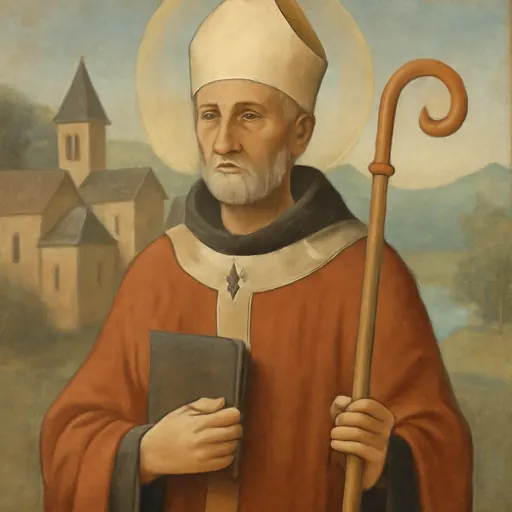
St. Ansbert of Rouen (died about 695) was chancellor to the Frankish king Clothar III before he became a monk at Fontenelle (today's Saint-Wandrille), its abbot, and then archbishop of Rouen in succession to St. Ouen. Falsely accused, he was banished by Pepin of Herstal to the abbey of Hautmont, where he died. His feast is February 9.
Who was St. Ansbert of Rouen?
St. Ansbert of Rouen was a seventh-century Frankish saint who went from the king's court to the cloister and then to the bishop's chair. He served as chancellor to King Clothar III, became a monk and later abbot of Fontenelle in Normandy (the abbey now called Saint-Wandrille), and succeeded St. Ouen as archbishop of Rouen in 683 or 684. Late in life he was banished on a false charge and died in exile at the abbey of Hautmont, about 695. We keep his feast on February 9.
He is sometimes called St. Aubert, and he should not be confused with St. Aubert of Avranches, the bishop who founded Mont-Saint-Michel.
Our knowledge of him rests mainly on a life written by a monk of Fontenelle, Aigradus (or Ansgrad), and dedicated to Hilbert, Ansbert's successor as abbot. Sabine Baring-Gould warns that this life "has, however, suffered from interpolators," so we keep to the facts the old historians agree on.
Chancellor of the king
Ansbert was a nobleman of Neustria, the western Frankish kingdom, and rose to be chancellor to Clothar III, who reigned in the 660s. Alban Butler says that in this high office he joined "the mortification and recollection of a monk" with the duties of a married man and a statesman. Baring-Gould puts it more simply: amid the temptations of a court he kept his integrity and his purity.
Then he left it all behind.

Monk and abbot of Fontenelle
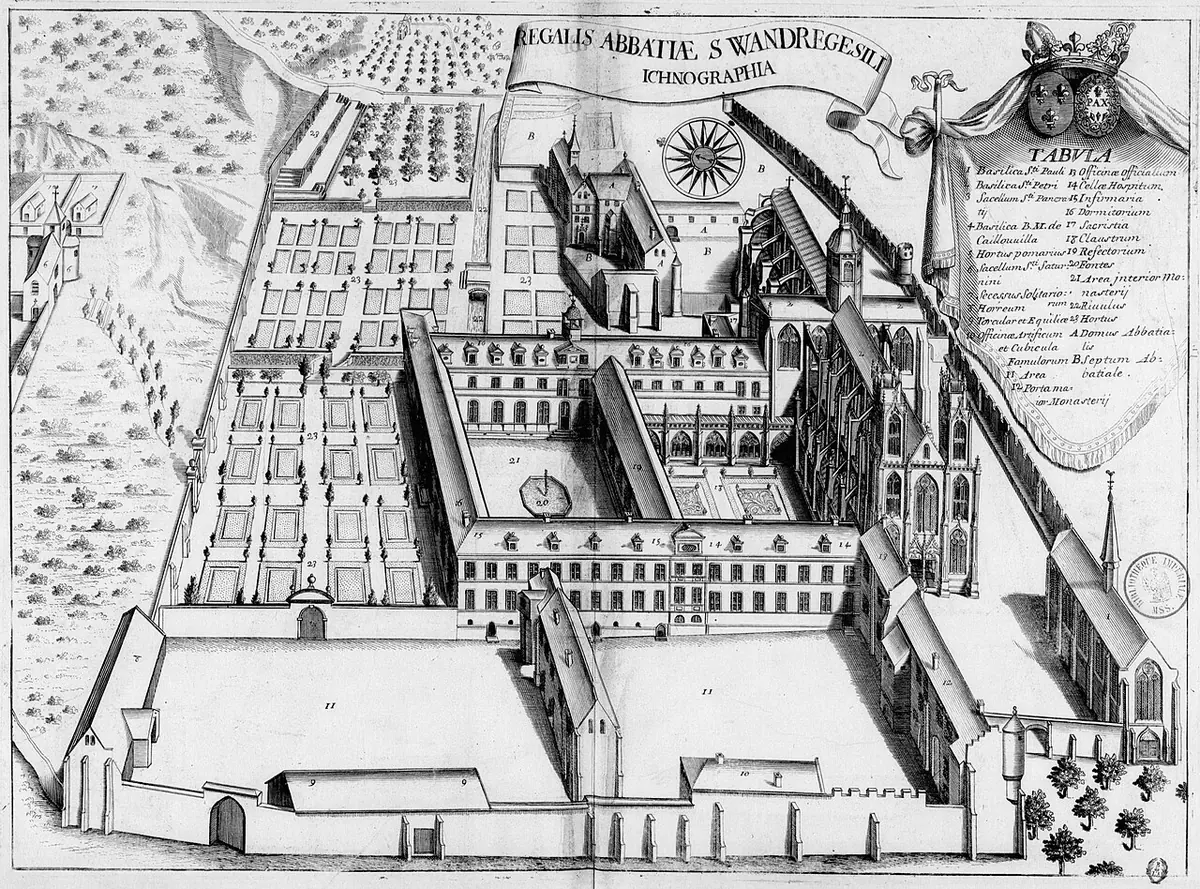
He took the monastic habit at Fontenelle, the abbey founded about 648 by St. Wandrille with the help of St. Ouen, the great bishop of Rouen. The Catholic Encyclopedia describes a house famous for its learning and its copyists, which in its best days had more than three hundred monks.
When Wandrille's successor, St. Lambert, was made bishop of Lyon, Ansbert was chosen abbot. He also became confessor to King Theuderic III.
Archbishop of Rouen
When St. Ouen died, Ansbert was elected archbishop of Rouen with the king's consent. Butler writes that under his care "good order, learning, and piety flourished" in the diocese. He also wrote: the Catholic Encyclopedia reports that a short seventh-century poem by Ansbert in honor of St. Ouen was found in the library at Karlsruhe, where it had come from the abbey of Reichenau.

Exile and death at Hautmont
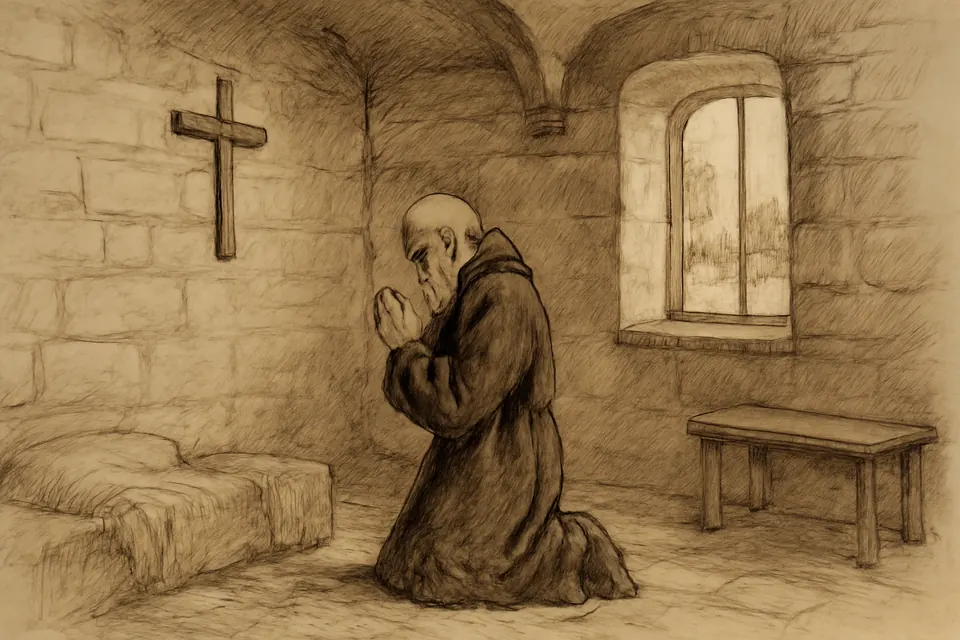
Power in the Frankish kingdoms was shifting to the mayors of the palace. Pepin of Herstal, who held that office, turned against the archbishop and banished him, on what Butler and Baring-Gould both call a false accusation, to the abbey of Hautmont on the River Sambre in Hainaut. Ansbert lived out his days there as a monk among monks.

He died at Hautmont on February 9. Baring-Gould gives the year as 695; Butler gives 698, and the Catholic Encyclopedia ends his episcopate in 692 or 693, so the exact dates are uncertain.
His relics
His body was carried back to Fontenelle for burial. The Roman Martyrology still names him "in the monastery of St. Vandrille." When the Northmen raided the Seine valley, the monks fled with their relics; Baring-Gould says that in 944 Ansbert's body was taken to the abbey of St. Peter in Ghent. There it was torn from its shrine by Calvinist soldiers in 1578, though some portions may have been saved.
The abbey he governed lives on. Fontenelle was suppressed in the Revolution and sold at auction in 1792, and the Catholic Encyclopedia tells how its owner gave the buildings back to the Benedictines of Solesmes in the 1890s. Benedictine monks of Saint-Wandrille still pray there today, in the valley where Ansbert once was abbot.
Where the relics of St. Ansbert of Rouen are kept: see them on the relics map →
The miracles of St. Ansbert
The old sources record no particular miracles of his that we can confirm. His holiness was recognized in the traditional way, by the veneration of his monks and his diocese from the early Middle Ages, long before formal canonization existed.
Symbols of St. Ansbert in art
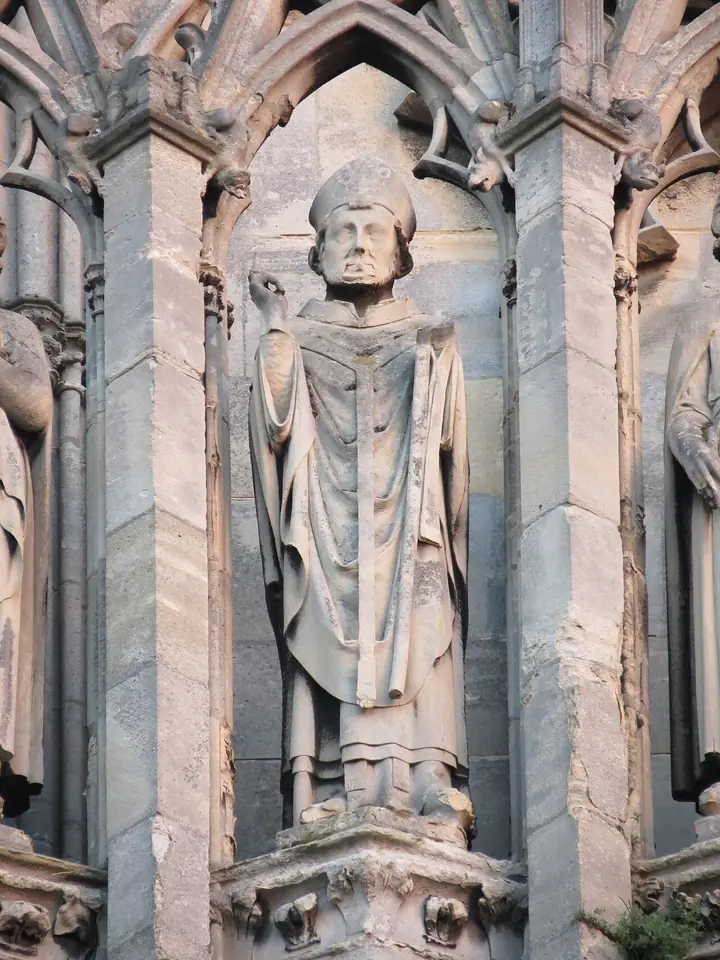
- Miter, crozier and vestments: he is shown as a bishop, as in the window and statue at Saint-Ouen in Rouen.
- A monk's habit: sometimes visible beneath the vestments, recalling Fontenelle.
- A book: the learned abbot and author.
Feast day and prayer
We keep his feast on February 9; see our feast day calendar. There is no traditional prayer to him in English. Let us ask his help in his own trials: St. Ansbert of Rouen, faithful in the court, in the cloister and in exile, pray for all who are falsely accused, and for those who govern.
Frequently asked questions
Who was St. Ansbert of Rouen?
A Frankish nobleman who served as chancellor to King Clothar III, left the court to become a monk at the abbey of Fontenelle, became its abbot, and was chosen archbishop of Rouen after the death of St. Ouen in 683 or 684. He died in exile at Hautmont about 695.
Why was St. Ansbert exiled?
Pepin of Herstal, the mayor of the palace, banished him on what the old sources call a false accusation, generally understood as a charge of treason. He was confined to the abbey of Hautmont on the Sambre, in Hainaut, and died there.
When is the feast of St. Ansbert of Rouen?
February 9. The Roman Martyrology reads, "In the monastery of St. Vandrille, St. Ansbert, bishop of Rouen."
Keep exploring
Sources
- The Roman Martyrology (English edition, 1916), Internet Archive. February 9
- Catholic Encyclopedia (1912): Archdiocese of Rouen. His years as bishop, his confinement at Hautmont, and his poem on St. Ouen found at Karlsruhe
- Alban Butler, The Lives of the Fathers, Martyrs, and Other Principal Saints, vol. 2 (1866), February 9
- Sabine Baring-Gould, The Lives of the Saints, vol. 2: February (Project Gutenberg). The life by the monk Aigradus, his election in 683, death on February 9, 695, and the later journeys of his relics
- Catholic Encyclopedia (1909): Abbey of Fontenelle