St. Paschal I, Pope (817–824)

St. Paschal I was pope from 817 to 824. He crowned the emperor Lothair and defended the holy icons. Above all, he rebuilt Rome's churches of Santa Prassede, Santa Cecilia and Santa Maria in Domnica and moved thousands of martyrs' relics into them from the crumbling catacombs. His feast is February 11.
Who was St. Paschal I?
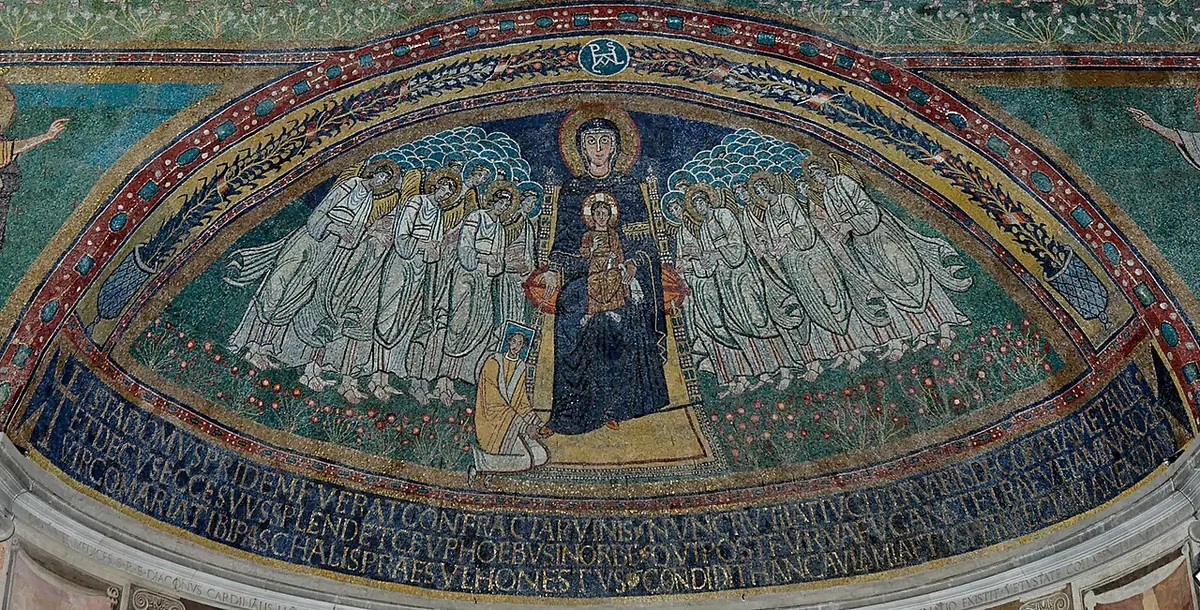
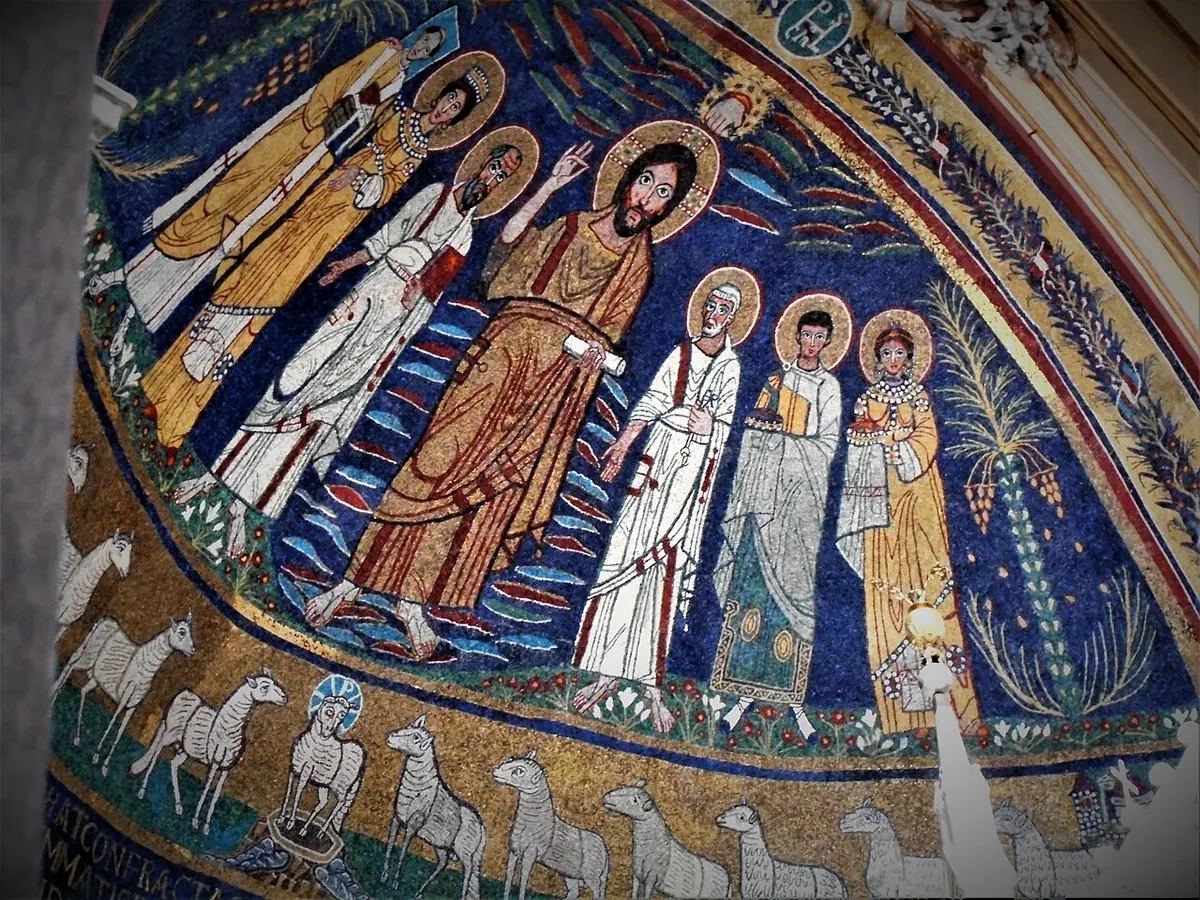
St. Paschal I was the Bishop of Rome from 817 to 824, in the years of Charlemagne's son Louis the Pious. His reign was short and not always peaceful, but if you have stood in the Roman churches of Santa Prassede, Santa Cecilia or Santa Maria in Domnica and looked up at the gold, you have seen his work. In each one, the pope who built it is still there in the mosaic, holding a model of the church in his hands, with the square halo that marked a man still living. We keep his feast on February 11.
Before he was pope
The Catholic Encyclopedia tells us he was a Roman, the son of Bonosus. His mother was named Theodora. Pope St. Leo III put him in charge of the monastery of St. Stephen beside St. Peter's Basilica, where the monks cared for the pilgrims who came to the tomb of the apostle. When Pope Stephen IV died in January 817, the clergy and people of Rome chose Paschal unanimously, and he was consecrated the next day, January 25.
The pope and the emperor
The same year Paschal received from the emperor Louis the Pactum Ludovicianum, which confirmed the rights and lands of the Holy See. On April 5, 823, he crowned Louis's son Lothair as emperor in St. Peter's.
The last year of his life was clouded. Soon after Lothair left Rome, two high papal officials who had sided with the Franks, the primicerius Theodore and his son-in-law Leo, were blinded and then killed by men of the pope's household. Paschal was suspected of ordering it. He swore a solemn oath that he had not, but he called the dead men traitors and protected those who had done it. The Catholic Encyclopedia records these facts without softening them, and so should we. A saint is not a man without failures or enemies; the Church honored Paschal for his love of the martyrs and his care for the house of God.
The pope of the martyrs
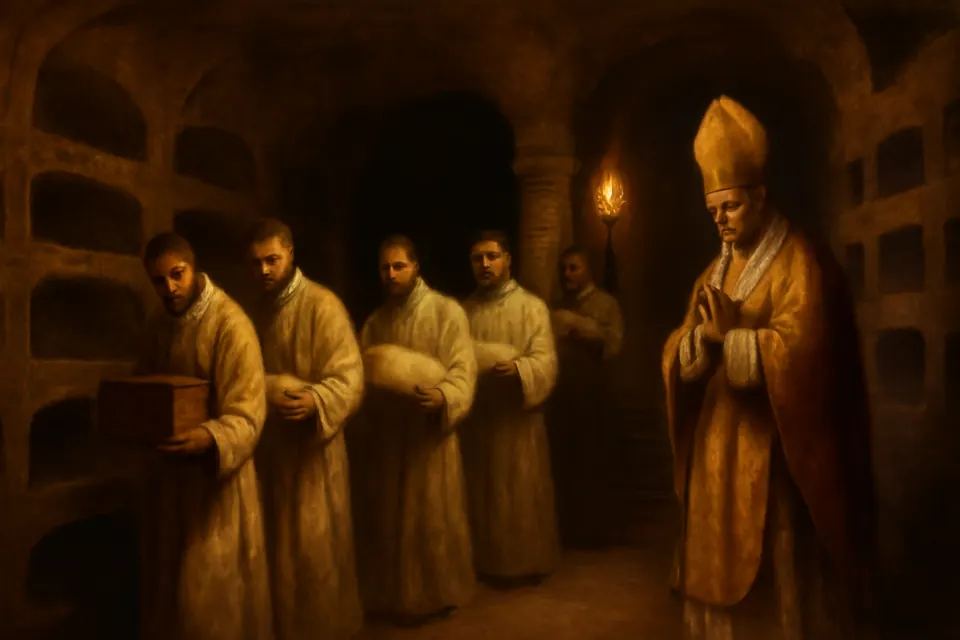
In Paschal's time the great catacombs outside the walls of Rome were in ruins. Raids had broken into them, and the old shrines of the martyrs were neglected. Paschal decided to bring the martyrs into the city. According to the Enciclopedia dei Papi, an inscription he set up in Santa Prassede records the translation of 2,300 bodies of martyrs from the catacombs to that church on the Esquiline. He also placed relics of Sts. Processus and Martinian and other martyrs in St. Peter's.
Santa Prassede
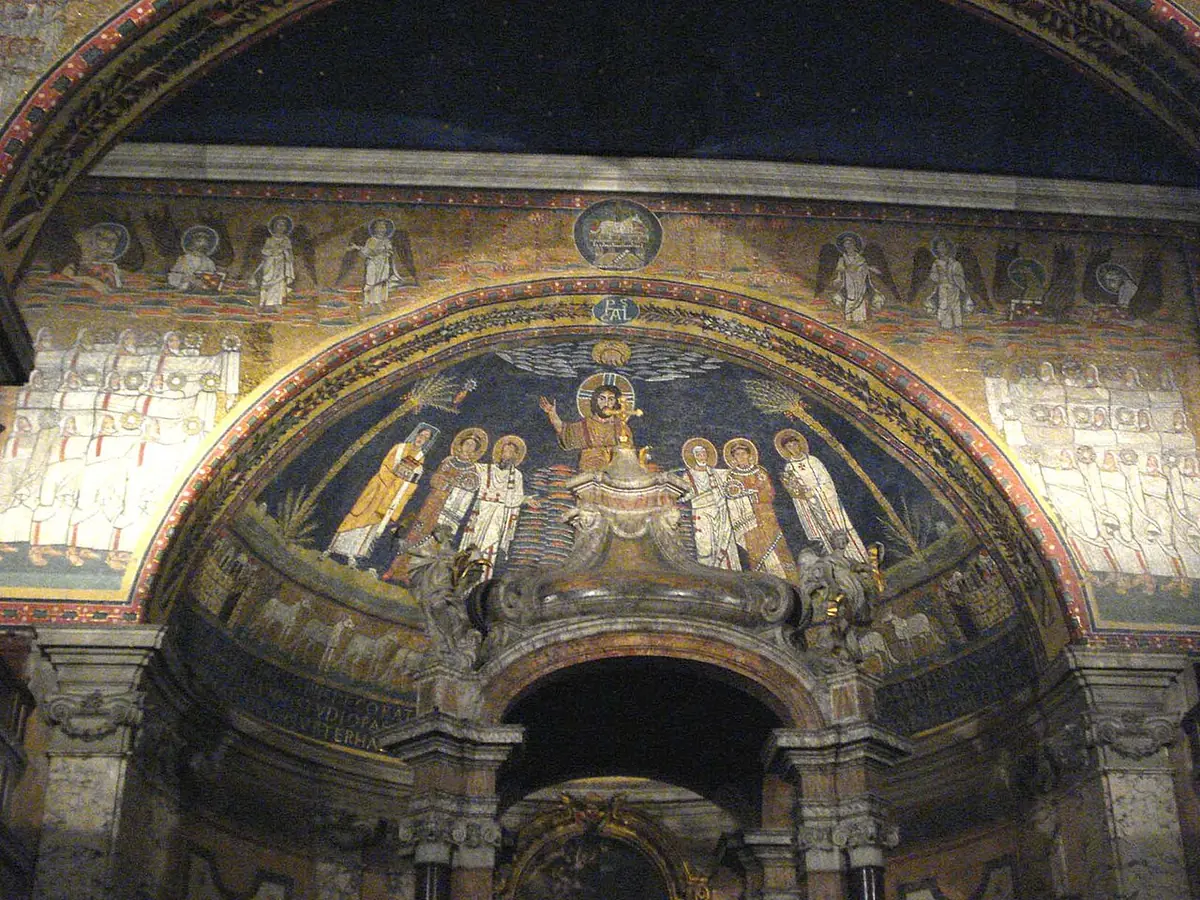
He rebuilt the ancient church of St. Praxedes near St. Mary Major, set a community of Greek monks beside it, and covered its apse and arch with mosaics. Christ comes on the clouds, Sts. Peter and Paul present Praxedes and her sister Pudentiana, and Paschal stands at the end holding his church. On the great arch, crowds of the blessed approach the heavenly city, a picture, the Enciclopedia dei Papi suggests, of the multitude of martyrs he had laid to rest there.
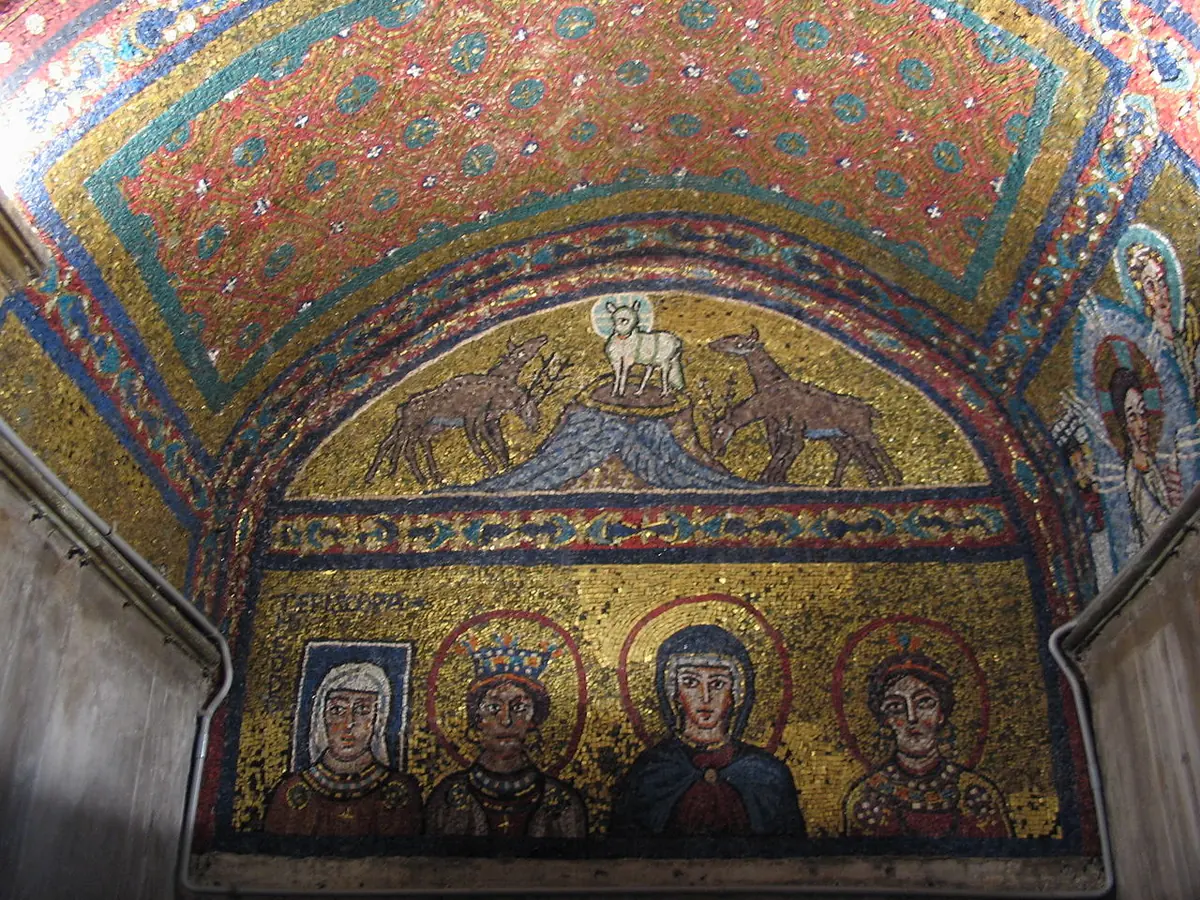
Off the right aisle he built a small chapel dedicated to St. Zeno, its vault entirely of gold mosaic, as a burial chapel for his mother. There Theodora appears among holy women with a square halo and the title episcopa, usually explained as "the bishop's mother."
Santa Cecilia
He also rebuilt the church of St. Cecilia in Trastevere. Paschal searched the catacombs for her body and could not find it, and he began to think the Lombards had carried it off. In his own account, Cecilia then appeared to him in a vision and told him he had been very close to her. He searched again and found her, and laid her under the high altar of her church with Valerian, Tiburtius and others.
The defense of icons
In Constantinople the emperor Leo V had revived the war on holy images. Paschal supported St. Theodore the Studite and the monks who resisted, and gave Greek monks who fled to Rome new monasteries to live in. He also backed the mission of Archbishop Ebbo of Reims to the Danes in 822, a few years before St. Ansgar went north.
Death and burial
Paschal died in Rome in 824, sometime between February and May. The Roman people, still angry over the deaths of Theodore and Leo, would not allow his funeral until his successor, Eugene II, was elected. The Catholic Encyclopedia says he was buried in Santa Prassede; the Enciclopedia dei Papi, following the Liber Pontificalis, says he was buried in one of the oratories he had built in St. Peter's. The current Roman Martyrology keeps his memory on February 11, the day of his burial, recalling the pope who took many bodies of holy martyrs from the catacombs so that they could be honored in the churches of Rome.
Miracles of St. Paschal I
- Traditional: the vision of St. Cecilia that led him to her body, known from Paschal's own ninth-century account.
- No miracles at his tomb are recorded in the sources we consulted.
Symbols of St. Paschal I in art
Paschal is one of the few early popes whose true likeness, or at least his own chosen portrait, survives. Look for:
- A square halo: the sign that he was alive when the mosaic was made.
- A model of a church in his hands: the donor's gift of the building to Christ.
- Papal vestments and pallium: his office.
- His monogram: in Santa Prassede and Santa Cecilia the mosaics carry his name worked into a monogram, his signature on the work.
Feast day and prayer
We keep the memory of St. Paschal I on February 11. See the feast day calendar for the other saints of February.
There is no traditional prayer to St. Paschal I. Let us ask his intercession for the Church in Rome, for all who build and care for churches, and for the faithful who still go down into the catacombs to pray with the martyrs. St. Paschal, pray for us.
Frequently asked questions
Who was Pope St. Paschal I?
The pope from 817 to 824, a Roman who before his election led the monastery of St. Stephen near St. Peter's and cared for pilgrims. He is remembered for rebuilding Roman churches, for his mosaics and for bringing the relics of martyrs, including St. Cecilia and St. Praxedes, into the city from the catacombs.
When is the feast of St. Paschal I?
February 11 in the current Roman Martyrology. Older books give May 14.
Why does Paschal I have a square halo in the mosaics?
A square halo marked a living person. Paschal had himself portrayed in the apse mosaics of the churches he rebuilt while he was still alive, holding a model of the church as its donor.
Is St. Paschal I the same as St. Paschal Baylon?
No. St. Paschal Baylon was a sixteenth-century Spanish Franciscan lay brother devoted to the Eucharist, honored on May 17. Paschal I was a ninth-century pope.
Keep exploring
Sources
- Catholic Encyclopedia (1911): Pope Paschal I. His election, the Pactum of 817, the coronation of Lothair on April 5, 823, the deaths of Theodore and Leo, and his churches
- Andrea Piazza, Pasquale I, santo, Enciclopedia dei Papi (Treccani, 2000). The inscription recording 2,300 martyrs moved to Santa Prassede, the Chapel of St. Zeno for his mother Theodora, the mission of Ebbo, and the Liber Pontificalis on his burial