Blessed Clare of Rimini, Penitent and Foundress
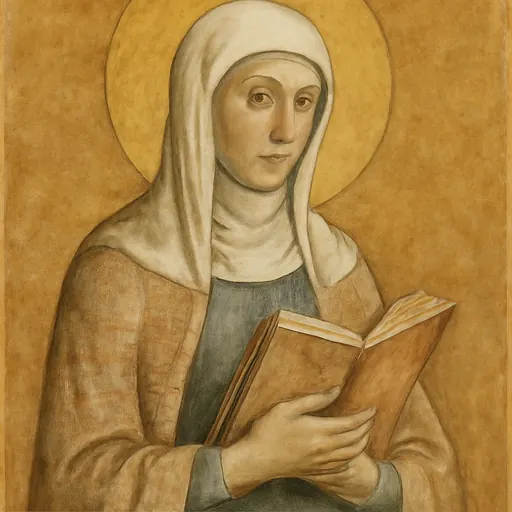
Blessed Clare of Rimini (about 1280–1326) was a rich noblewoman, twice married, whose life was turned around by a sudden call to prayer during Mass. She gave her fortune to the poor and gathered women into a small community following the Rule of St. Clare. Pope Pius VI approved her cult in 1782. Her feast is February 10.
Who was Blessed Clare of Rimini?
Blessed Clare of Rimini was a rich, headstrong noblewoman of the early 1300s whose scandalous life was turned upside down by one sincerely prayed Our Father. She spent her remaining years in fierce penance and in caring for the poor, and she gathered a community of women who followed the Rule of St. Clare of Assisi. Rimini venerated her from the day she died, and Pope Pius VI approved her cult in 1782. The Roman Martyrology remembers her on February 10.
The life of Blessed Clare of Rimini
A wild youth
Clare was born in Rimini into a very wealthy family, about 1280 by the Italian accounts, though the National Gallery in London dates her birth to the 1260s. The Italian accounts name her father Onosdeo and her mother Gaudiana, and she is often called Clare Agolanti, though recent Italian scholarship doubts she belonged to that family. Her mother died when she was about seven, and her father raised her with a soldier's hardness. She grew up riding and jousting, with little patience for the prayers her mother had tried to teach her.
Still almost a child, she was married to the son of her stepmother. He died three years later and left her a great fortune. For years, by the old accounts, she gave herself to feasts, tournaments and banquets, and her conduct was the talk of Rimini. Her father and her brother were killed on the same day in the wars against the Malatesta, the family that was taking control of the city, and the whole family estate came to her. She married again, a nobleman as worldly as herself, on condition that she could go on living as she pleased.
One Our Father
When she was about thirty-four, she went into a Franciscan church. Tradition holds that a voice she could not place told her to say an Our Father, just once, with real attention. Some versions add a Hail Mary, and another tradition, followed by the National Gallery, speaks instead of a vision of the Virgin Mary surrounded by angels. She obeyed, went home deeply shaken, wept through the night, and returned the next day to make a general confession.
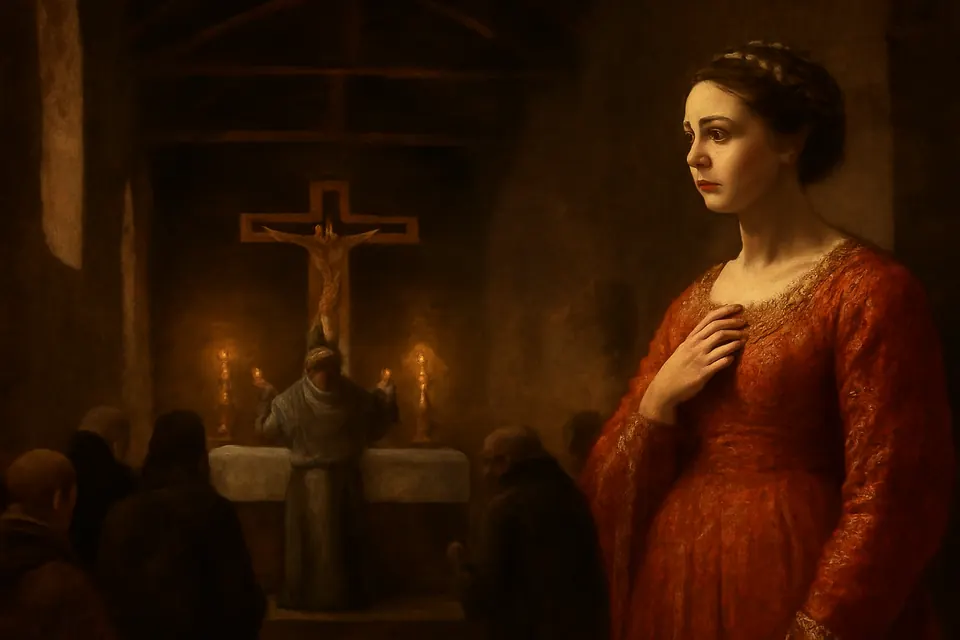
From then on her life ran the other way. Her husband was converted with her and died two years later at peace with God. Clare took up severe fasts and penances, which her biographers describe in detail, and gave her wealth away: food for the hungry, care for the sick, and dowries so that poor girls could marry.
The community of Santa Maria degli Angeli
Other women joined her. With the blessing of the bishop of Rimini, Guido Abbas, she founded a small convent called Santa Maria degli Angeli, later known as Santa Chiara, and the women made their vows according to the Rule of St. Clare.

She led the community for about ten years. In her last years, by the testimony of her biographers, she was given high mystical graces, with ecstasies so deep that nothing could rouse her from them except the Blessed Sacrament brought before her. She died on February 10, 1326, worn out by penance and prayer, and was buried beneath the high altar of the convent church of Santa Maria degli Angeli.
Miracles, history and legend
Rimini honored Clare as a saint from the time of her death, and tradition credits her with many miracles. These are traditional; none was examined in a modern process. Her cult rests on long veneration, which Pope Pius VI confirmed in 1782. In the 18th century the Rimini scholar Giuseppe Garampi, later a cardinal, studied her history and the paintings made for her convent.
Historians have long debated parts of the story, especially how far her community was formally a Poor Clare monastery from the start. The Roman Martyrology keeps to what is sure: a widow of Rimini who atoned for her former dissolute life by penance, mortification and fasting, and who gathered companions in a monastery and served the Lord in humility.

Symbols of Blessed Clare of Rimini in art
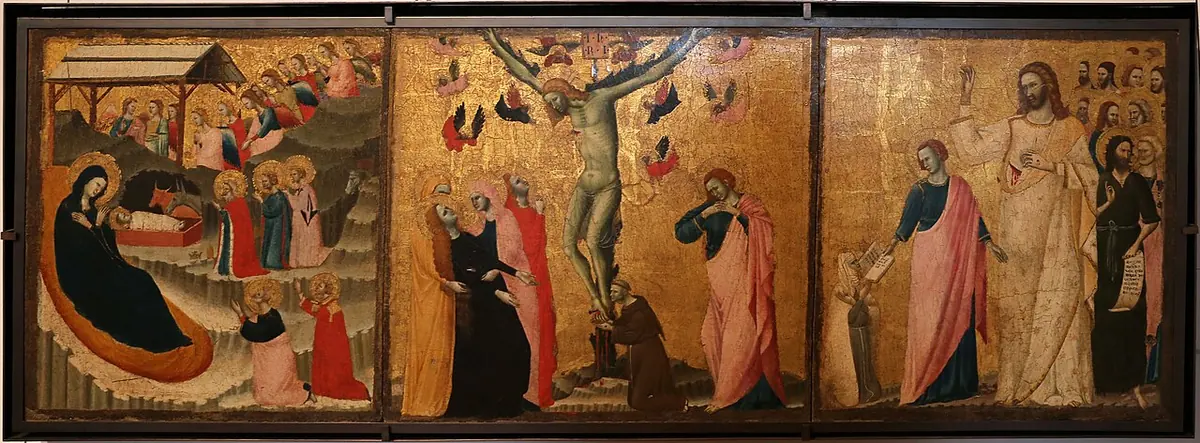
She is one of the few blesseds painted by an artist of her own city within a few years of her death. The Rimini painter called the Master of the Blessed Clare, often identified as Francesco da Rimini, is named after her.
- A rough pale mantle with a checked pattern: the kind of cloth worn by the poor, a sign of her poverty and humility.
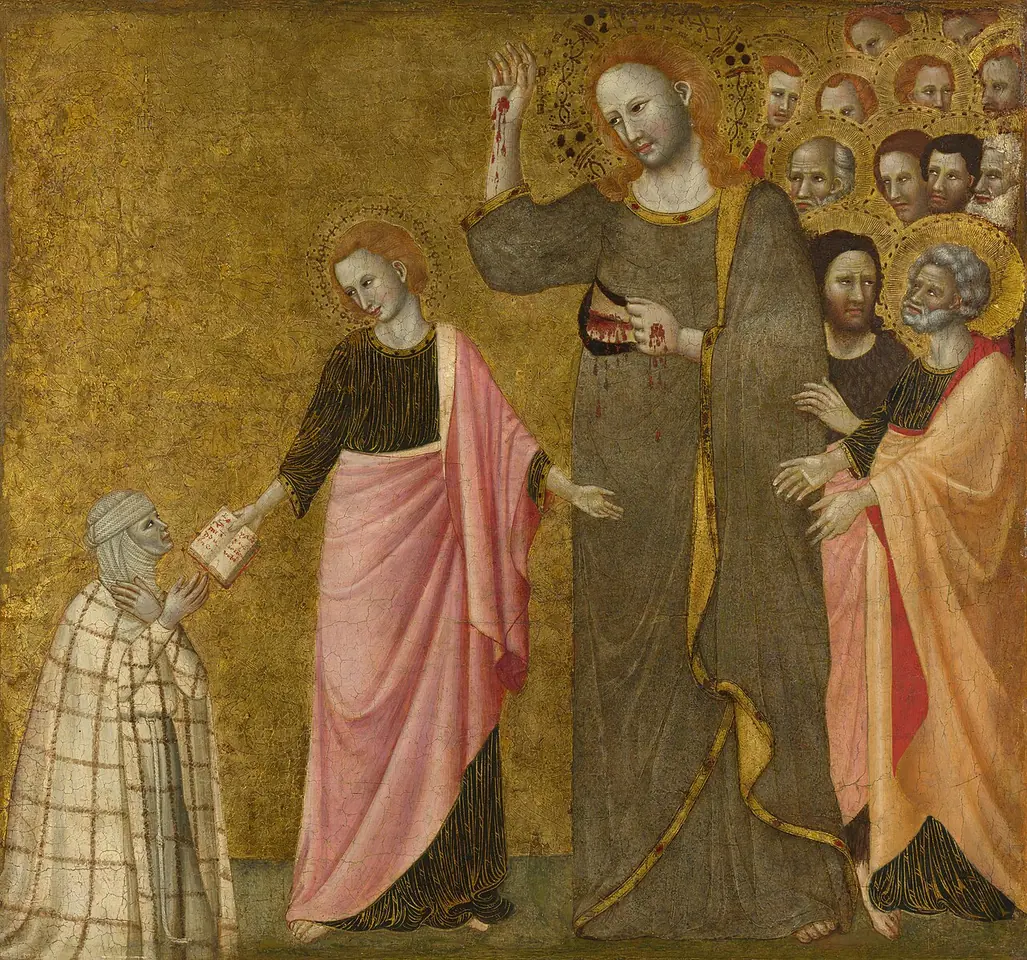
- An open book: in her vision, St. John the Evangelist gave her a book inscribed with Christ's words, "My peace I give you, my peace I leave you" (John 14:27).
- The vision of Christ among the apostles: in the gold-ground panel now in the National Gallery, London, Christ shows her the wound in his side, St. John the Baptist in his camel-skin tunic holds on to him, St. John the Evangelist in pink hands her the book, and Clare kneels small at the lower left.
- Poor Clare veil: in later images, for the community she founded.
Feast day and prayer
We keep her feast on February 10. See more saints and blessed of February on our feast days page.
We have not found a traditional English prayer to Blessed Clare of Rimini to reprint. Let us do what changed her life: say one Our Father slowly and with full attention, and ask her to pray for all who are far from God, for those caught in a life they cannot leave, and for widows who give themselves to the poor.
Frequently asked questions
Who was Blessed Clare of Rimini?
A wealthy widow of Rimini, born about 1280, who after a reckless youth was converted at about thirty-four, devoted her wealth to the poor, and gathered companions into a community of penance and prayer that took the Rule of St. Clare. She died on February 10, 1326.
How was Clare of Rimini converted?
Tradition says that while she was in a Franciscan church, an inner voice told her to say an Our Father, once, with real attention. She obeyed, went home shaken, and returned the next day to make a general confession.
When is the feast of Blessed Clare of Rimini?
February 10, the day of her death. The Roman Martyrology lists her on that day.
Is Clare of Rimini the same as St. Clare of Assisi?
No. St. Clare of Assisi (1194–1253) founded the Poor Clares. Blessed Clare of Rimini lived about a century later and followed her Rule.
Keep exploring
Sources
- Gianpiero Pettiti and Antonio Borrelli, Beata Chiara Agolanti da Rimini, Santi e Beati (with the Roman Martyrology entry for February 10). The Martyrology text, her parents Onosdeo and Gaudiana, the first marriage to her stepmother's son, the deaths of her father and brother fighting the Malatesta, the call to say an Our Father, the convent of Santa Maria degli Angeli, Bishop Guido Abbas, and her ecstasies
- Francesco da Rimini, The Vision of the Blessed Clare of Rimini (NG6503), National Gallery, London. The vision and the book inscribed with John 14:27, the meaning of her checked robe, the Ajaccio panel made for the convent parlor, Garampi's research, Pius VI's approval in 1782, and her burial beneath the high altar of Santa Maria degli Angeli