Pope St. Gregory II
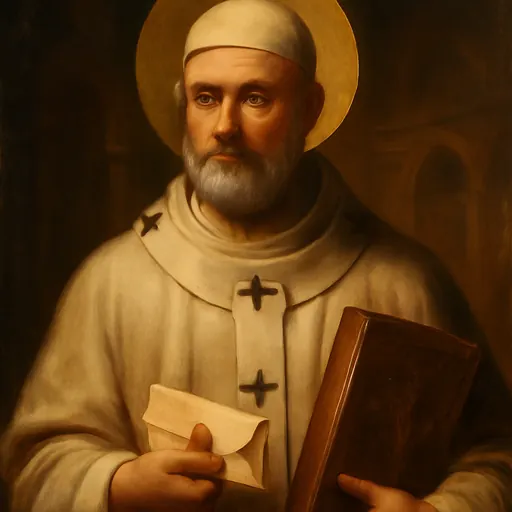
Pope St. Gregory II led the Church from 715 to 731. A Roman who grew up in the papal household, he sent St. Boniface to preach in Germany and St. Corbinian to Bavaria, repaired the walls of Rome, and stood firm when Emperor Leo III attacked the veneration of holy images. The current Roman Martyrology keeps his memory on February 11.
Who was Pope St. Gregory II?
Pope St. Gregory II was bishop of Rome from 715 to 731. The Catholic Encyclopedia calls him perhaps the greatest pope of the eighth century. He was the pope who sent St. Boniface to Germany, who held Rome together through floods and threats of war, and who would not let an emperor tell the Church to tear down her holy images. We keep his memory on February 11.
He was a Roman, the son of Marcellus and Honesta. Western writers called him Gregory the Younger, to tell him apart from St. Gregory the Great, who had died a century before. Some Greek writers mixed the two up and gave him the older Gregory's nickname, "Dialogus."
Raised in the papal household
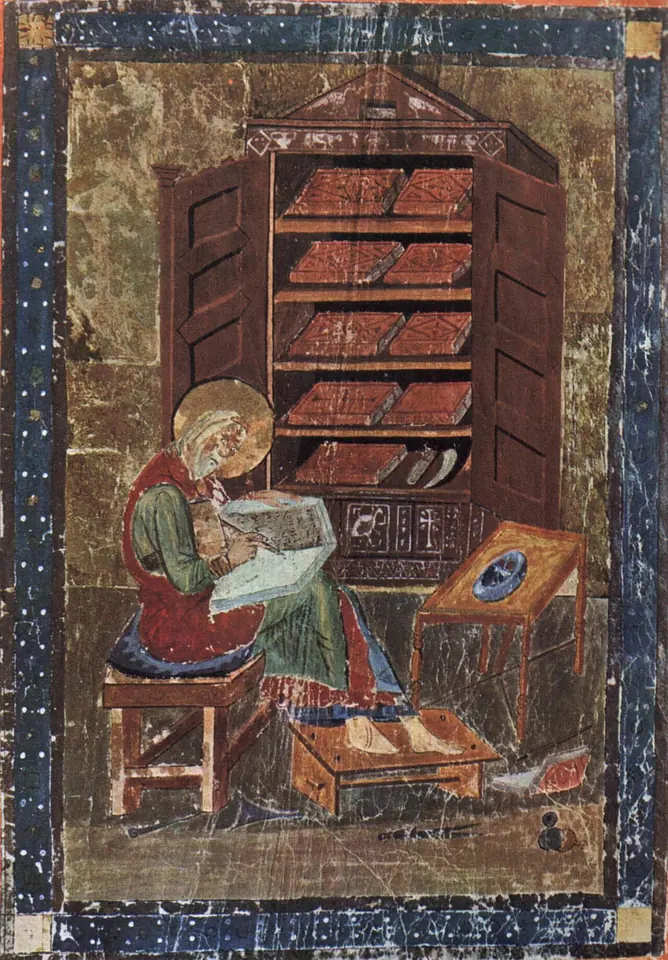
As a boy he was placed by the pope in the schola cantorum, the school of singers attached to the papal household. Pope Sergius I made him a subdeacon and sacellarius, the paymaster and almoner of the Roman Church. He also had charge of the papal library, and the Catholic Encyclopedia notes that he is the first papal librarian whose name has come down to us.
As a deacon he went with Pope Constantine to Constantinople, where Emperor Justinian II wanted to settle the canons of the Quinisext Council. The young deacon answered every objection the emperor raised. He was elected pope on May 19, 715.
Rome under siege by water and war
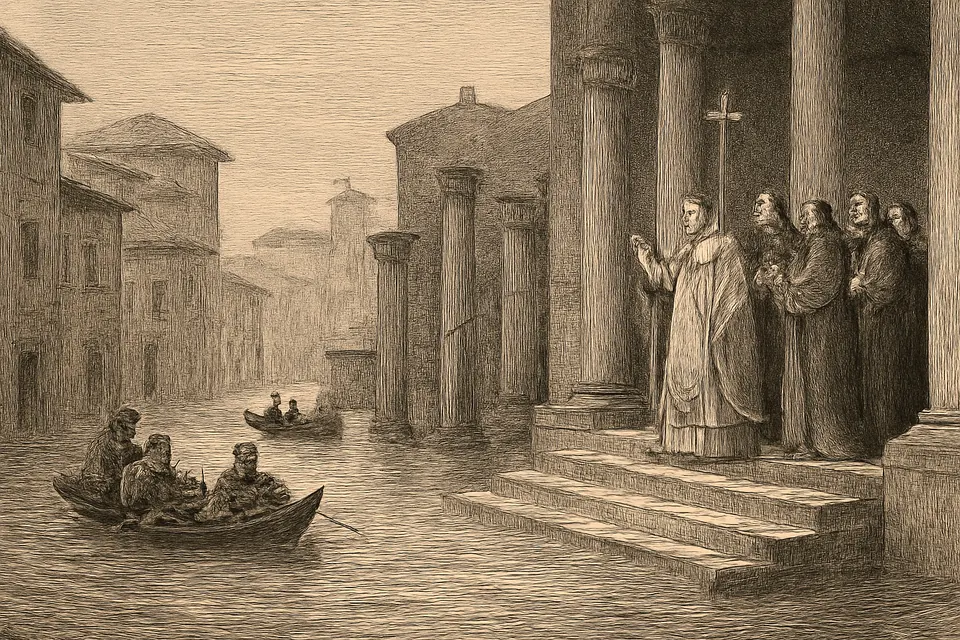
Gregory began rebuilding the walls of Rome against the Lombards and the Saracens, but a terrible flood of the Tiber and other troubles stopped the work before it was done. He kept a watchful eye on Saracen movements for the rest of his reign.
He loved the monastic life. After his mother died he turned the family home into a monastery, and he founded or restored several others, among them help for the restoration of Monte Cassino, the abbey of St. Benedict.
Pilgrims from the North
His years in Rome brought a stream of visitors from the young churches of the North. The Anglo-Saxon abbot Ceolfrid set out with the great Bible now called the Codex Amiatinus, a gift for St. Peter's, and King Ina of Wessex came and founded the Schola Anglorum. Duke Theodo of Bavaria came too. Ceolfrid was the successor of St. Benedict Biscop at Wearmouth and Jarrow.
Boniface and Corbinian
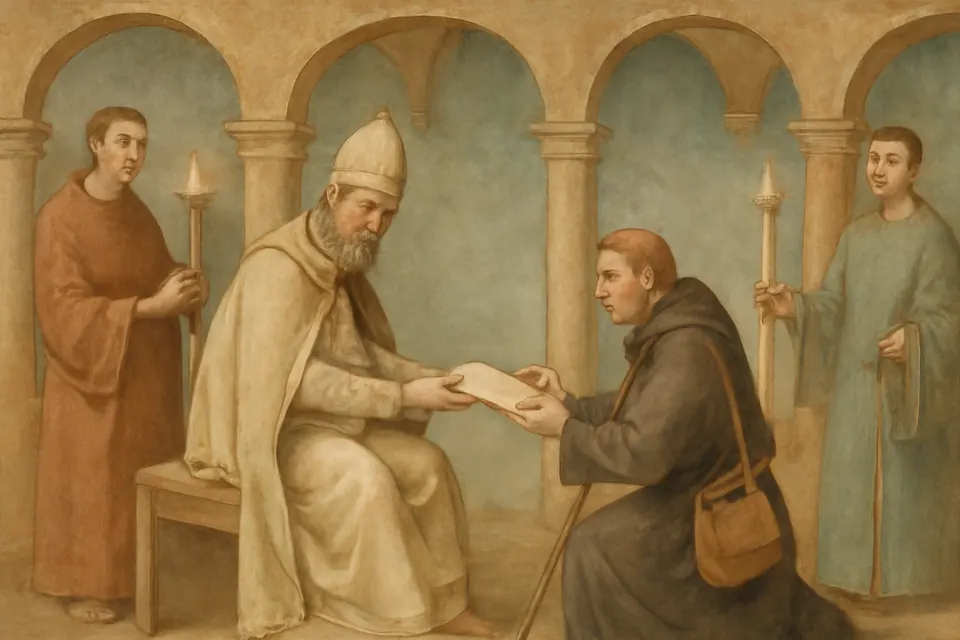
Gregory sent St. Corbinian to preach in Bavaria. Then, in the fall of 718, an English monk named Winfrid arrived with letters from his bishop. According to the Catholic Encyclopedia's article on Boniface, the pope questioned him in several meetings, satisfied himself of his faith and motives, and on May 15, 719, gave him full authority to preach the Gospel to the pagans of Germany. On November 30, 722, Gregory consecrated him a bishop. That monk is the saint we call Boniface, the apostle of Germany, and the pope stood behind his work to the end of his life.
Defender of holy images
In 727 Emperor Leo III issued decrees against the veneration of images and laid an extraordinary tax on Italy. Gregory opposed both. He would not accept the emperor's interference in the life of the Church, yet he stayed loyal to the empire in political matters. When the exarch Eutychius tried to force his hand, the Lombards became the pope's defenders.
That same year he held a council in Rome that set out the orthodox teaching on the veneration of images. He supported Patriarch Germanus of Constantinople against Leo's policy, and he threatened to depose Anastasius, the man who replaced Germanus, unless he gave up his error. In the East the same struggle produced the writings of St. John of Damascus and, a generation later, the martyrdom of St. Stephen the Younger.
The older Roman Martyrology sums up his reign in a single line: "At Rome, pope St. Gregory II., who strenuously opposed the impiety of Leo the Isaurian, and sent St. Boniface to preach the Gospel in Germany."
His death
Gregory died in February 731 and was buried in St. Peter's on February 11. The Romans chose Gregory III to succeed him by acclamation while he was still walking in his predecessor's funeral procession. The old sources record no miracles of Gregory II, approved, reported or even traditional. The Church remembered him as a holy pastor, and the Roman and other martyrologies list him among the saints.

Symbols of St. Gregory II in art
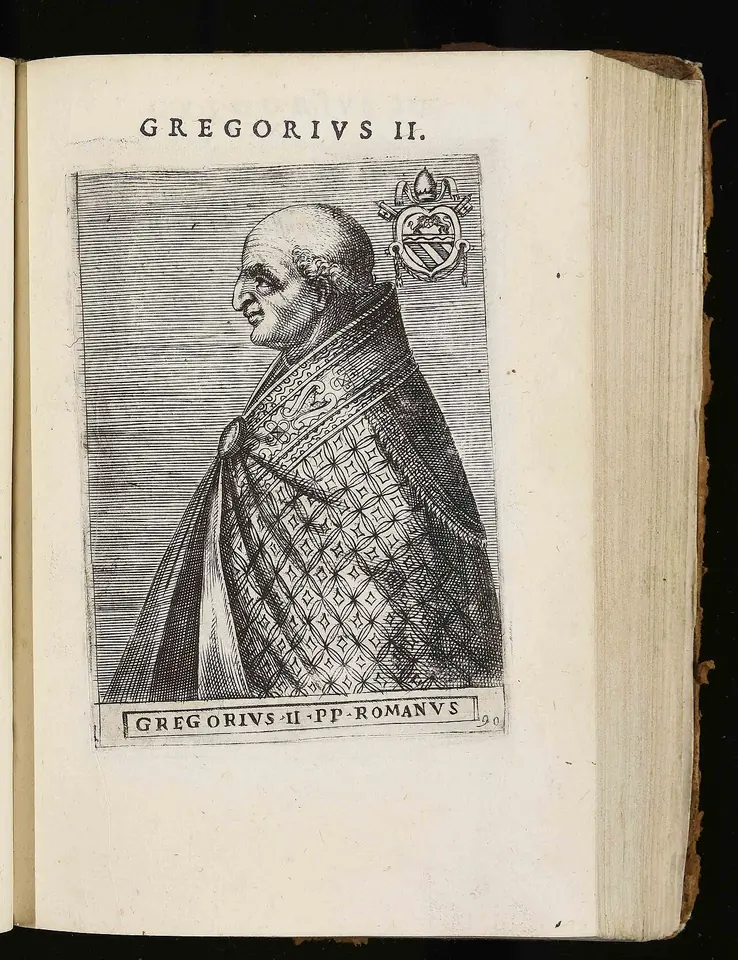
Gregory II is a rare subject, and nearly every image of him comes from printed series of papal portraits. Look for:
- Papal vestments, cap or tiara: his office. Later artists gave him the triple crown, which no pope of his day wore.
- The double-barred cross staff: a later printmakers' sign for a pope.
- A book: the Gospel he preached and the teaching he defended.
- A sealed letter, or a kneeling monk: in scenes from the life of St. Boniface, Gregory hands Winfrid his commission to preach in Germany.
The nineteenth-century lithograph from Luigi Tripepi's book of papal portraits gives him a halo, the sign of a saint.

Feast day and prayer
We keep the memory of Pope St. Gregory II on February 11. See the feast day calendar for the other saints of the day.
There is no traditional prayer to St. Gregory II that we know of. Let us ask him to pray for the Pope, for missionaries who carry the Gospel to new peoples, and for all who honor Christ and his saints in holy images: Pope St. Gregory II, pray for us.
Frequently asked questions
What is Pope St. Gregory II known for?
For sending St. Boniface to evangelize Germany, giving him his commission on May 15, 719, and consecrating him a bishop in 722; for defending the veneration of images at a Roman council in 727 against Emperor Leo III; and for repairing Rome's walls and restoring monasteries, including help for Monte Cassino.
When is the feast of St. Gregory II?
February 11 in the current Roman Martyrology, the day of his burial in 731. Older editions list him on February 13.
Is Gregory II the same as St. Gregory the Great?
No. St. Gregory the Great (Gregory I) died in 604. The West called Gregory II "Gregory the Younger," though some Eastern writers mixed the two up and gave him Gregory I's nickname "Dialogus."
Did Gregory II break with the emperor over icons?
He opposed Leo III's decrees and his new taxes, and he refused to let the emperor rule the Church, but the Catholic Encyclopedia notes that he stayed politically loyal to the empire and did not try to make Italy break away.
Keep exploring
Sources
- Catholic Encyclopedia (1909): Pope St. Gregory II. His family, early offices, the mission to Constantinople, the walls of Rome, the council of 727, his death and burial
- Catholic Encyclopedia (1907): St. Boniface. The commission of May 15, 719, and the date of his death
- The Roman Martyrology (1916 English edition), February 13. The older martyrology entry quoted in the article