Blessed Leopold of Alpandeire, the Capuchin Beggar of Granada

Blessed Leopold of Alpandeire (1864–1956), known in Spain as Fray Leopoldo, was a Capuchin lay brother who spent most of his religious life begging alms for his friary around Granada. For every gift he prayed three Hail Marys for the giver. He was beatified in Granada in 2010, and we keep his feast on February 9.
Who was Blessed Leopold of Alpandeire?
Blessed Leopold of Alpandeire, Fray Leopoldo to the people of Granada, was a Capuchin lay brother who spent half a century walking the streets and country roads of Andalusia with an alms bag over his shoulder. He never preached a sermon or held an office. He knocked on doors, thanked the people who gave, and prayed for them. When he died in 1956 at the age of 91, crowds came to his funeral from every class of the city, and they already called him a saint. We keep his feast on February 9.
The Dicastery for the Causes of Saints sums him up as a man who bore witness to "Christ poor and crucified" by example and by word, "in the humble and prayerful rhythm of daily life."
The life of Fray Leopoldo
A farmer's son from the Serranía de Ronda
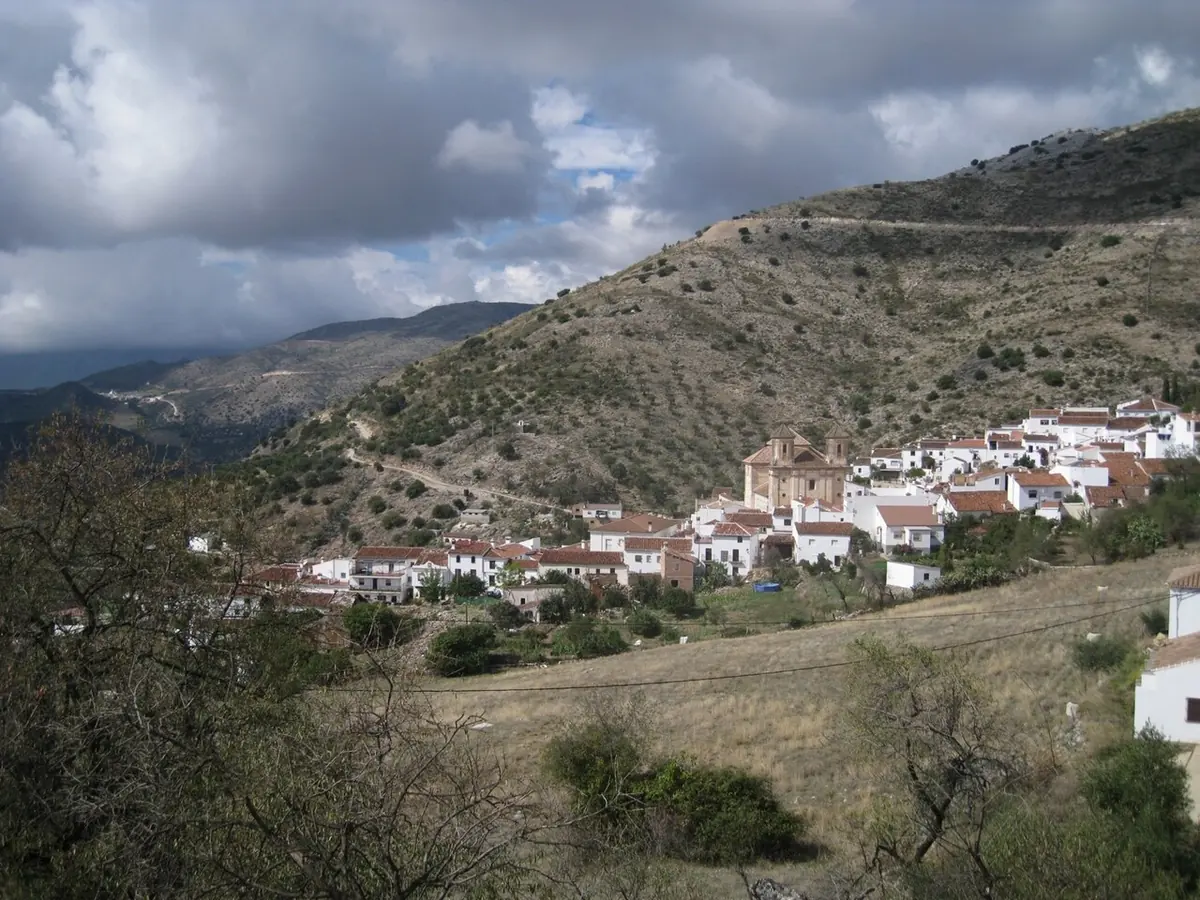
He was born on June 24, 1864, in Alpandeire, a small white village in the mountains of the province of Málaga, and baptized Francisco Tomás. His parents, Diego Márquez and Jerónima Sánchez, were poor and hardworking farmers. From his mother he learned to pray; from his father, to work honestly.
As a young man he began his days at Mass, shared his plain meals with people poorer than himself, and did his military service in an infantry regiment in 1887–1888. His brother Juan Miguel died in Spain's war in Cuba. In 1891 he was confirmed by the bishop of Málaga, Marcelo Spínola, who was himself beatified in 1987.
"Only as a lay brother"
The turning point came in 1895, when the Capuchins preached a solemn triduum at Ronda for the beatification of the Capuchin missionary Diego José de Cádiz. Francisco heard them and knew where God was calling him. He was over thirty and had little schooling, so the friars could accept him only as a lay brother. He waited four more years.
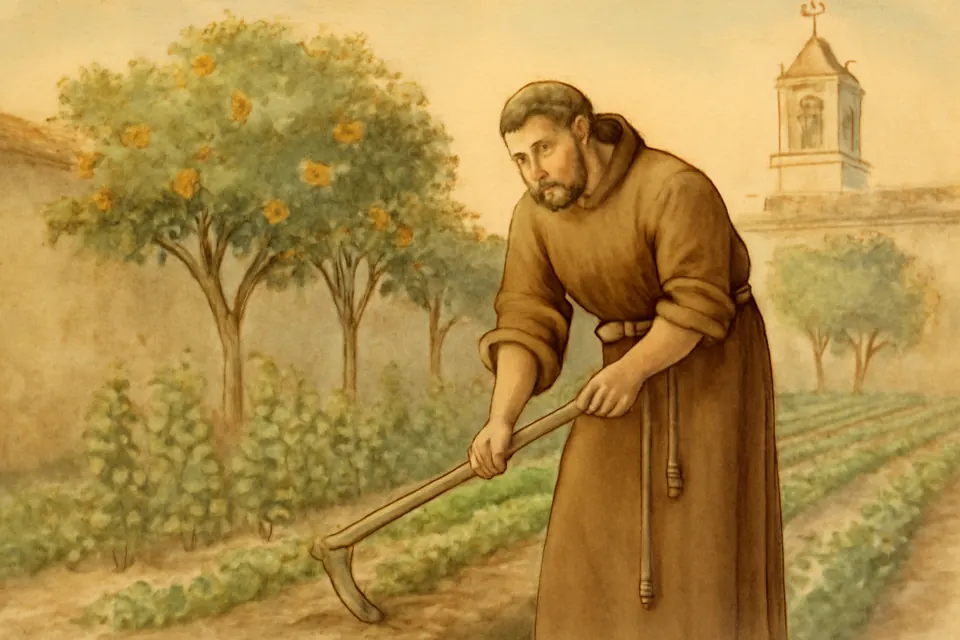
In 1899, at 35, he entered the Capuchin friary of Seville. Because he knew farm work, they gave him the garden. He received the habit that same year from the novice master, Father Diego de Valencina, with the name Leopoldo de Alpandeire, and made his first vows in 1900. His solemn profession followed in Granada.

The questing brother of Granada
After a year as porter in Seville in 1913, he was sent back to Granada in 1914 as sacristan and limosnero, the brother who goes out to beg alms for the community. He held that task until 1953. His rounds covered four provinces of eastern Andalusia: Granada, Málaga, Jaén and Almería.
People remembered him with a white beard, a calm smile and his eyes on the ground. Every time someone gave him an alms, he prayed three Hail Marys for them. It was the only payment he had to offer, and he never forgot it. When the Spanish Civil War broke out in 1936, the Granada friary was spared the killings that struck religious elsewhere in Spain, and Fray Leopoldo prayed for the enemies of the Church and for peace. He kept his golden jubilee of religious life in 1950.
His humility shows in one remark the Dicastery preserves, made when his reputation reached the press: "You see, brother, we become religious to get away from the world, and now we even end up in the newspapers."

His last years
On February 9, 1953, while on his rounds, he fell on the stairs of an apartment building and broke his leg. He never walked the streets again. He spent three years confined to bed, and then pneumonia set in. He died in the Granada friary on February 9, 1956, at 91, after receiving the sacraments, exactly three years to the day after his fall.

The miracle and beatification
- Approved: the healing of a young woman named Ileana. In July 1994 she fell ill with severe anemia that spiraled into complications: muscle pain that left her unable to move, convulsions, failing eyesight, very low hemoglobin and platelets, pericarditis and pneumonia in both lungs. Her family and friends prayed to Fray Leopoldo, and a friend gave her an image with a relic of him. On the night her case seemed hopeless, her mother and others stayed in the hospital chapel to pray. The next day the pain and exhaustion were gone, her heart rhythm was normal, and her tests showed none of the after-effects her doctors expected. The Church accepted this healing as the miracle for his beatification.
He was beatified in Granada on September 12, 2010, at a Mass presided over by Archbishop Angelo Amato for Pope Benedict XVI. About 300,000 faithful were expected.
Symbols of Blessed Leopold of Alpandeire in art
Fray Leopoldo lived in the age of photography, and his devotional images follow his photographs closely:
- The brown Capuchin habit, hood and white cord, the dress of a Franciscan of the Capuchin reform.
- A long white beard, the mark of the old Capuchin brothers and the feature everyone in Granada remembered.
- The alms bag, for his decades as the friary's beggar.
- A rosary, for the three Hail Marys he gave in return for every gift.
- Often a walking staff and eyes cast down, for the roads he walked and his humility.
He is easy to confuse with St. Leopold Mandić, the Capuchin confessor of Padua, who also wore the habit and a beard. Mandić is usually shown hearing confessions; Fray Leopoldo is shown on the road with his bag.
Feast day, tomb and prayer
We keep the feast of Blessed Leopold of Alpandeire on February 9, the day of his death. His tomb is in the crypt of the Capuchin church on Avenida de la Divina Pastora in Granada, now called the Santuario Fray Leopoldo, which also has a small museum of his life. See more on our feast day calendar.
We know of no traditional prayer to him that we can quote here. Let us do as he did, and answer every kindness with a prayer. Blessed Leopold, you thanked your benefactors with three Hail Marys; pray for those who give to the poor, for those who must ask for help, and for us, that we may be humble and grateful. Blessed Leopold of Alpandeire, pray for us.
Frequently asked questions
Who was Fray Leopoldo de Alpandeire?
Francisco Tomás Márquez Sánchez, a farmer's son born in Alpandeire (Málaga) in 1864, who entered the Capuchins in Seville at 35 as a lay brother and took the name Leopoldo. From 1914 until 1953 he was the questing brother of the Granada friary, collecting alms across four provinces of eastern Andalusia. He died in Granada on February 9, 1956, at 91.
When was Fray Leopoldo beatified?
On September 12, 2010, in Granada, at a Mass presided over by Archbishop Angelo Amato, prefect of the Congregation for the Causes of Saints, in the name of Pope Benedict XVI.
What miracle was approved for Fray Leopoldo's beatification?
The sudden healing of a young woman named Ileana in 1994. She had severe anemia with a cascade of complications, including pericarditis and pneumonia in both lungs, and her doctors gave a grave prognosis. Her family and friends prayed to Fray Leopoldo, and the day after a night of prayer in the hospital chapel her condition was suddenly normal, with no after-effects.
Where is Fray Leopoldo buried?
In the crypt of the Capuchin church on Avenida de la Divina Pastora in Granada, now known as the Santuario Fray Leopoldo, where pilgrims visit his tomb.
Keep exploring
Sources
- Dicastery for the Causes of Saints: Leopoldo da Alpandeire. Birth, baptism and confirmation, family, military service, the 1895 triduum at Ronda, entry at Seville, profession, his offices in Granada, the fall of 1953, his death, the healing of Ileana, the three Hail Marys and the beatification
- Andalucía Tourism: Fray Leopoldo de Alpandeire Crypt and Museum. The crypt and museum in Granada