Blessed Anne Catherine Emmerich
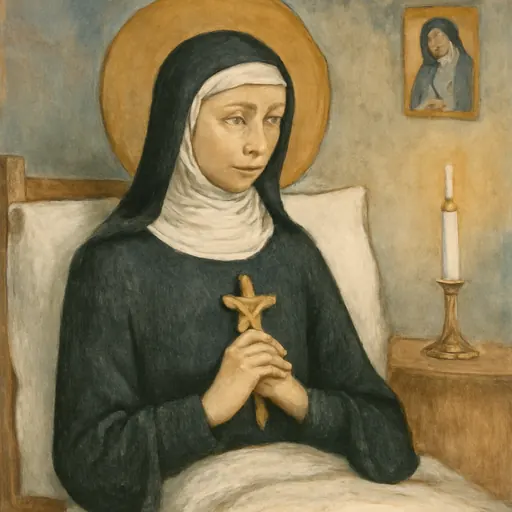
Blessed Anne Catherine Emmerich (Anna Katharina Emmerick, 1774–1824) was an Augustinian nun of Dülmen, Germany, a stigmatic who spent her last years bedridden, praying and counseling visitors. The poet Clemens Brentano wrote down and reworked her visions in The Dolorous Passion. St. John Paul II beatified her in 2004, judging her life, not those books. Her feast is February 9.
Who was Blessed Anne Catherine Emmerich?
Anne Catherine Emmerich (in German, Anna Katharina Emmerick, the spelling the Vatican uses) was a poor farmer's daughter from Westphalia who became an Augustinian nun, lost her convent to the secular government, and spent her last years in a sickroom in the little town of Dülmen. There she bore the wounds of Christ, ate almost nothing, prayed for everyone who came to her door, and spoke of visions of Christ's life and Passion.
St. John Paul II beatified her on October 3, 2004. In his homily he said she "told of 'the sorrowful passion of our Lord Jesus Christ' and lived it in her body," and called her "the well-known 'Mystic of the Land of Münster.'"
Her name is famous today mostly because of books: The Dolorous Passion of Our Lord Jesus Christ and The Life of the Blessed Virgin Mary, which inspired generations of readers and, in 2004, Mel Gibson's film The Passion of the Christ. Those books were written down and heavily reworked by the poet Clemens Brentano, and the Church was careful to beatify the woman, not the books. Both parts of her story are told below.
Her life
A farm girl who wanted the convent
She was born on September 8, 1774, the feast of Our Lady's Nativity, in the farming hamlet of Flamschen near Coesfeld, one of ten children. She had little schooling, worked on a large farm and learned sewing. The Holy See's biography notes that she loved the old churches of Coesfeld, prayed before the famous Coesfeld Cross, and "often walked the path of Coesfeld's long Way of the Cross alone, praying the stations by herself."
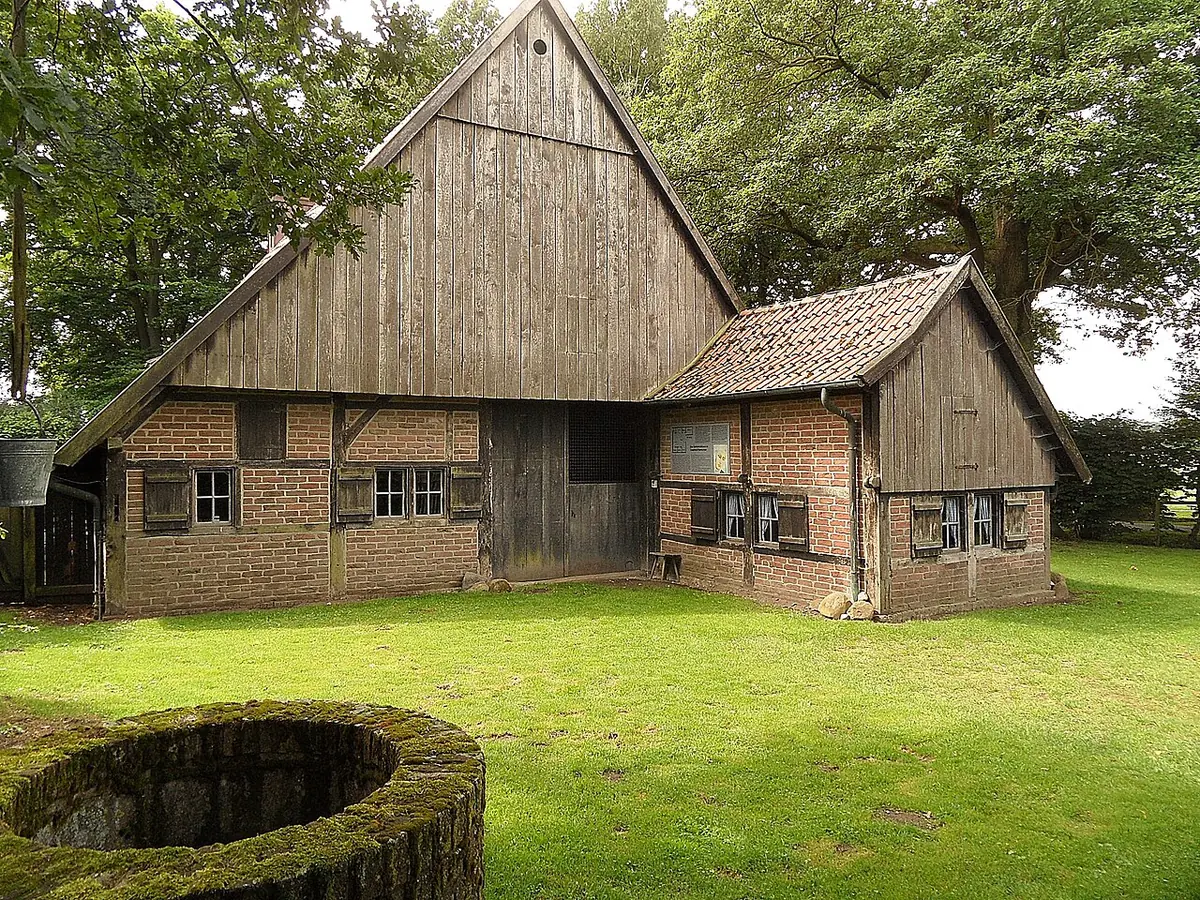
Convent after convent turned her away because she had no dowry. The Poor Clares of Münster offered to take her if she learned the organ, so she went to train with the organist Söntgen in Coesfeld. She never learned to play: his family was so poor that she spent her time and her savings keeping them fed. In the end she entered the Augustinian convent of Agnetenberg in Dülmen in 1802, together with the organist's daughter Klara, and made her vows the following year.

Agnetenberg and the sickroom
Convent life was hard for her. Some sisters looked down on the peasant girl, and others thought her strict keeping of the Rule was hypocrisy; she bore it in silence. She was often ill. In 1811 the government suppressed Agnetenberg along with many other religious houses, and the sisters were sent away.
Anne Catherine became housekeeper to Abbé Lambert, a French priest who had fled the Revolution, but she soon fell ill and from 1813 never left her bed again. Her younger sister Gertrud kept house for her. A young physician, Dr. Franz Wesener, came to examine her, became her friend, and kept a diary of her last eleven years. Even in bed she sewed clothes for poor children. Bishops, priests, poets and the merely curious came to see her, and the Vatican's biography says she "received all of them kindly."
Her death
She grew weaker through 1823 and died on February 9, 1824. Brentano wrote of her: "She stands like a cross by the wayside." Large crowds came to her funeral in the Dülmen cemetery.

The stigmata and other gifts
Anne Catherine's stigmata are reported: carefully examined in her lifetime, never formally judged by the Church as miraculous. Here is what the sources record.
- The stigmata (reported). First she bore crosses impressed on her breast; then, around the end of 1812, wounds in her hands, feet and side and marks around her head like those of the thorns. She tried to hide them. At the end of 1818, after she prayed to be relieved of them, the wounds in her hands and feet closed, but the others remained and reopened on Good Fridays.
- The investigations. An episcopal commission, including the vicar general and the famous educator Bernhard Overberg, examined her with three physicians and came away convinced of her holiness and the genuineness of the wounds. In 1819 the Prussian government moved her, gravely ill, to another house and kept her under watch day and night for three weeks. The commission found nothing to report.
- Living on the Eucharist (reported). From 1812, the postulator of her cause told Vatican Radio, her only food was Holy Communion.
- Her body (reported). Because of a rumor that her body had been stolen, the grave was opened twice in the weeks after the funeral; the coffin and the body were found intact.
- The beatification miracle (approved). In July 2003 the Congregation for the Causes of Saints published the decree recognizing a miracle attributed to her intercession, the last step before her beatification.
For more on these gifts in the lives of the saints, see our page on the stigmata.
Clemens Brentano and the books of visions
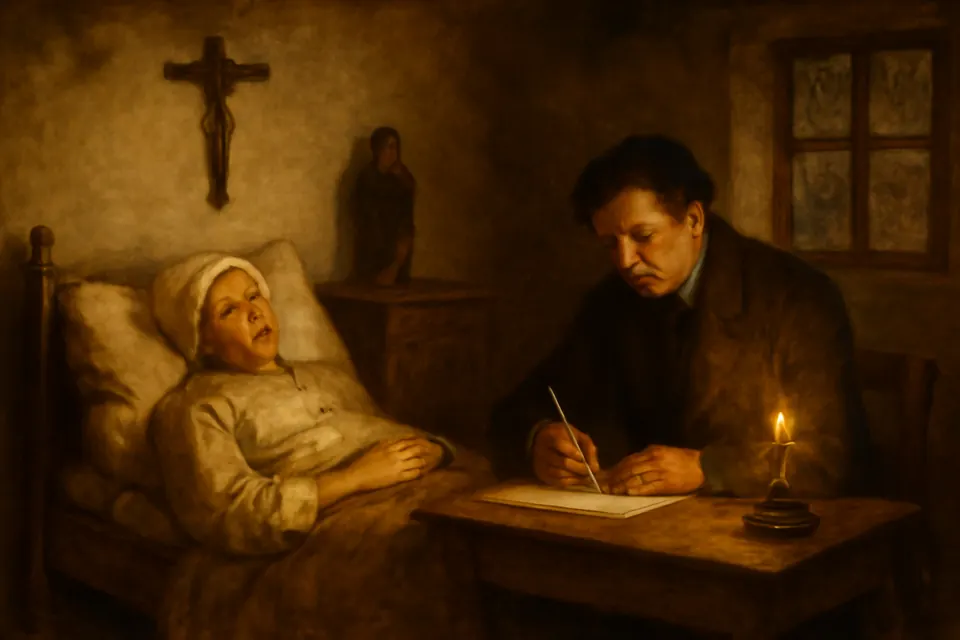
Clemens Brentano was one of the leading poets of German Romanticism. He came to Dülmen around 1818, met Anne Catherine, returned to the faith, and stayed about five years, visiting her daily to write down what she told him. She spoke the Westphalian dialect; he took brief notes, rewrote them in standard German, and read them back to her.
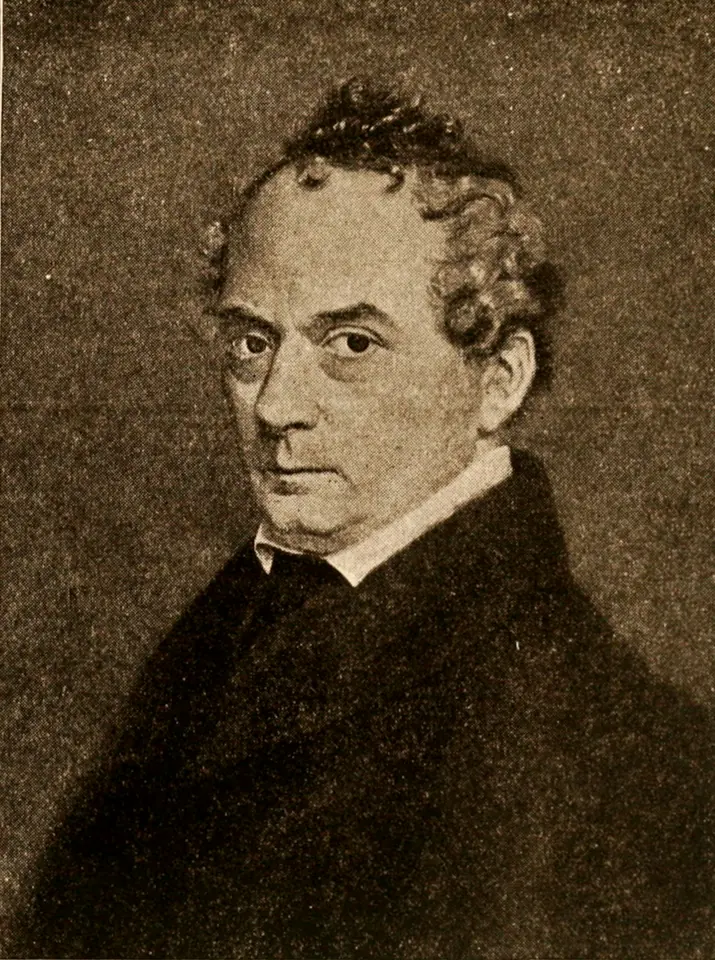
After her death, Brentano published The Dolorous Passion of Our Lord Jesus Christ (1833). The Life of the Blessed Virgin Mary appeared from his papers in 1852, after his own death, and the Redemptorist Karl Schmöger later compiled a multivolume Life of Our Lord from his notes. The books spread across Europe. The Catholic Encyclopedia of 1909 still praised them warmly.
Later scholarship was more cautious. German researchers who studied Brentano's papers and library, as summarized in America magazine in 2004, concluded that only a small part of the published text could safely be attributed to Anne Catherine herself; Brentano had travel books, maps and apocryphal texts at hand to fill out the scenes. These questions led the Holy Office to halt her cause in 1928.
The beatification: her life, not the books
The Bishop of Münster opened her cause in 1892. After the 1928 halt, St. Paul VI lifted the ban in 1973, and when the German bishops asked for the cause to resume, it was reopened on one condition: the writings would be left out of consideration. Fr. Peter Gumpel, S.J., who worked on the cause, said in early 2004, as reported by Catholic News Service, that she was being judged "not on the basis of what she has written but, as always, on the basis of her virtues." Her heroic virtue was declared in 2001, a miracle was approved in 2003, and on October 3, 2004, St. John Paul II beatified her in Rome together with four others, among them Blessed Charles of Austria.
So the Church honors Anne Catherine for her patience in suffering, her charity, her love of the Eucharist and of the Passion. The books remain private devotional reading. Like all private revelation, they bind no one, and a Catholic is free to find them helpful or not.
Mary's house near Ephesus
The Life of the Blessed Virgin Mary describes a small stone house on a hill near Ephesus where Mary lived with St. John. In the late 19th century, searchers went looking for it with the book's description in hand and found the ruins of a house on the hill called Panaghia Kapouli. The Catholic Encyclopedia says the house "was found, as it had been sought, according to the indications given by Catherine Emmerich," and quotes the Archbishop of Smyrna: "Every one is entire free to keep his personal opinion."

That is still the Church's position. Ancient tradition is divided between Jerusalem and Ephesus as the place where Mary's earthly life ended, and the Church has never ruled on the house. It has become a beloved shrine all the same: Paul VI and St. John Paul II came as pilgrims, and Benedict XVI celebrated Mass there on November 29, 2006.
Why we ask her prayers for the sick
No patronage was assigned at her beatification. Because she spent her last eleven years in bed and offered her suffering for others, devotional calendars commend the sick to her prayers, and pilgrims bring their own illnesses and those of their families to her tomb.
Symbols of Blessed Anne Catherine Emmerich in art
There is no portrait of Anne Catherine from life that the Church treats as authoritative, so artists have pictured her from the descriptions of her friends. Look for:
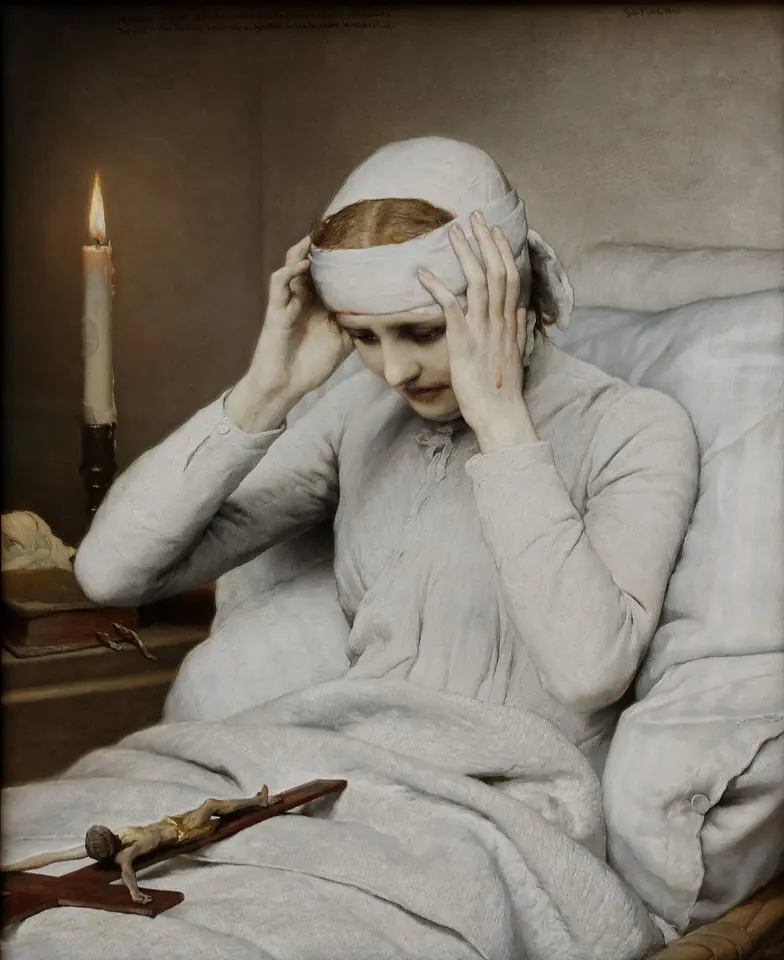
- A sickbed: nearly every image shows her in bed, propped on pillows, as she lived from 1813 to her death.
- A white band around the head: linen she wore over the marks of the crown of thorns, as in Gabriel von Max's painting.
- A crucifix: held in her hands or lying on the covers.
- The habit of a canoness of St. Augustine: black, with a white wimple or cap.
- Stigmata: shown discreetly, if at all, as marks on the hands.
Modern bronze sculptures in Dülmen take the bed itself as her symbol, a hollow bed form with a hand rising from it.
Feast day, tomb and devotion
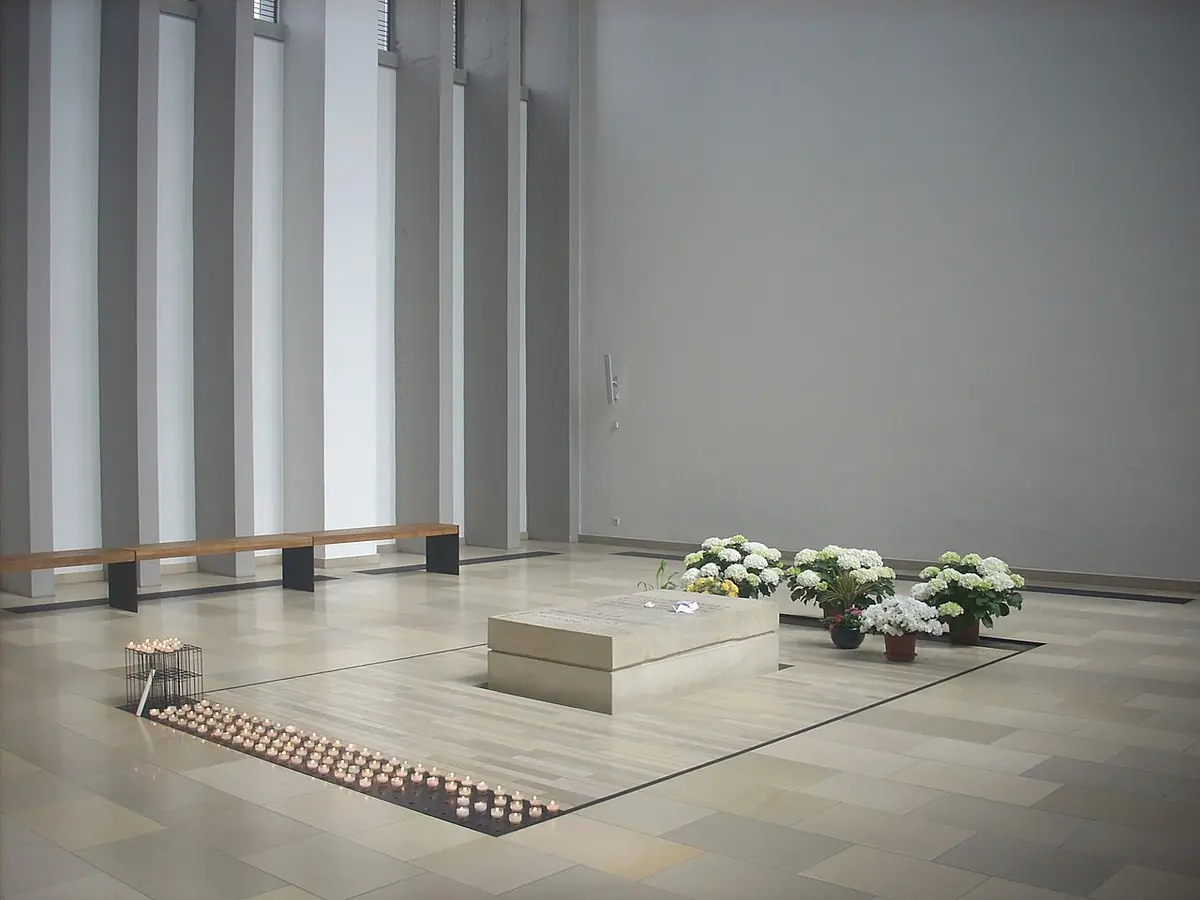
Her memorial is February 9, the anniversary of her death, kept above all in the Diocese of Münster. Her remains now rest in the crypt of the Church of the Holy Cross in Dülmen, built in 1936–1938 as her burial and pilgrimage church, where a memorial displays the furniture of her sickroom. Pilgrims also visit her birthplace at Flamschen and walk the Way of the Cross at Coesfeld that she loved. You can find other saints of early February on our feast days page.
Prayer and Blessed Anne Catherine
There is no traditional prayer by or to Blessed Anne Catherine with an approved text in general use. We may ask her intercession in our own words, especially for the sick and for those who suffer without understanding why. Her own devotion is the best guide: she walked the Way of the Cross as a young woman, and you can pray it with St. Alphonsus Liguori's text on our Stations of the Cross page. Blessed Anne Catherine, pray for us.
Frequently asked questions
Who was Anne Catherine Emmerich?
A Westphalian farm girl who became an Augustinian canoness at Agnetenberg in Dülmen in 1802. When the convent was suppressed in 1811 she became an invalid in a rented room, where she bore the marks of Christ's wounds and received a stream of visitors. She died on February 9, 1824, and was beatified by St. John Paul II on October 3, 2004.
Did the Church approve Anne Catherine Emmerich's visions?
No. Her books of visions were written down and heavily edited by the poet Clemens Brentano, and the Church set them aside in her cause. Fr. Peter Gumpel, S.J., who worked on the cause, said in 2004 that she was being judged "not on the basis of what she has written but, as always, on the basis of her virtues." Beatification declares her life holy; it is not a verdict on the books.
What is The Dolorous Passion of Our Lord Jesus Christ?
A book published by Clemens Brentano in 1833, nine years after her death, describing Christ's Passion in great detail as she was said to have seen it. It became a worldwide devotional classic, and Mel Gibson drew on it for his 2004 film The Passion of the Christ. Scholars who studied Brentano's papers concluded that much of it is his own elaboration.
What does Anne Catherine Emmerich have to do with Mary's house in Ephesus?
Brentano's posthumous Life of the Blessed Virgin Mary, drawn from her visions, describes the house near Ephesus where Mary lived with St. John. In the late 19th century searchers looked for it using that description and found the ruins now venerated as Meryem Ana Evi. The Church has never ruled on whether it was Mary's home, but popes Paul VI, John Paul II and Benedict XVI have all prayed there.
When is Blessed Anne Catherine Emmerich's feast day?
February 9, the anniversary of her death in 1824. It is kept mainly in the Diocese of Münster, where she lived, and at her tomb in the Church of the Holy Cross in Dülmen.
Sources
- Holy See: Anna Katharina Emmerick (1774–1824), biography
- Pope John Paul II, Homily for the beatification of five Servants of God, October 3, 2004
- Catholic Encyclopedia (1909): Ven. Anne Catherine Emmerich
- ZENIT, Anna Katharina Emmerick, Who Lived Her Own Passion (October 3, 2004), EWTN Library
- America magazine, A Movie, a Mystic, a Spiritual Tradition (March 15, 2004)
- Catholic Encyclopedia (1912): The Blessed Virgin Mary (on Panaghia Kapouli near Ephesus)
- Pope Benedict XVI, Homily at the Shrine of Meryem Ana Evi, Ephesus, November 29, 2006