St. Bartholomew of Braga (Bartholomew of the Martyrs)
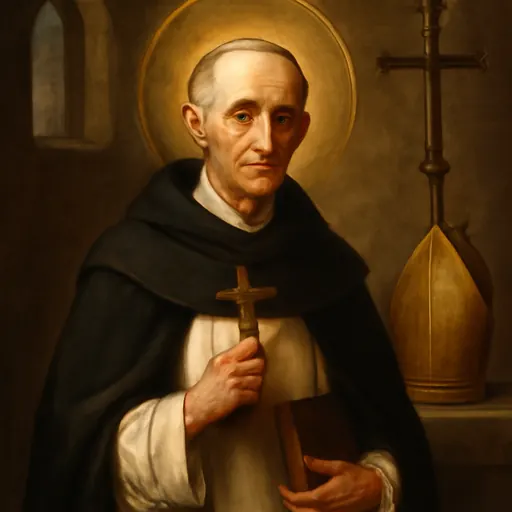
St. Bartholomew of Braga, also called Bartholomew of the Martyrs (1514–1590), was a Portuguese Dominican friar who became archbishop of Braga, helped shape the reforms of the Council of Trent, and spent himself on the poor and on teaching the faith. Pope Francis enrolled him among the saints in 2019, and Portugal's bishops named him patron of catechists. We keep his feast on July 16.
Who was St. Bartholomew of Braga?
St. Bartholomew of Braga was a Portuguese Dominican friar who became archbishop of Braga in 1559, one of the bishops who made the Council of Trent's reforms real in a diocese. He was born Bartolomeu Fernandes in Lisbon on May 3, 1514, and died on July 16, 1590, in the Dominican convent at Viana do Castelo. He is better known as Bartholomew of the Martyrs, Bartolomeu dos Mártires in Portuguese.
The name was not a title of death. The Catholic Encyclopedia explains that he was called "a Martyribus, out of veneration for the church in which he was baptized," the parish of Our Lady of the Martyrs in Lisbon.
Pope John Paul II beatified him in 2001. On July 5, 2019, Pope Francis extended his liturgical cult to the whole Church, "inscribing him in the book of Saints (equipollent canonization)," as the Holy See Press Office put it.
A friar and teacher
Bartholomew came, the Catholic Encyclopedia says, "of humble parentage." He entered the Order of Preachers on November 11, 1527, at thirteen, and made his profession two years later. He then taught philosophy in the Dominican house at Lisbon and theology for about twenty years in the order's houses, including the monastery of Batalha. In 1551 he received the Master's degree at the provincial chapter held at Salamanca.
For two years he was tutor to Dom António, son of the Infante Dom Luís, a boy being prepared for a Church career.
Archbishop against his will
In 1558 Queen Catherine chose him for the archdiocese of Braga. He did not want it. He accepted "only out of obedience to his provincial, Luis of Granada," the famous Dominican spiritual writer, and he was consecrated bishop in 1559.
At the Council of Trent
When the Council of Trent met again in 1561, Bartholomew went, and he took part in its last sessions. The Catholic Encyclopedia says the Council Fathers held him in high esteem "on account of his theological learning and the holiness of his life," and that he "exercised great influence in the discussions," above all on the decrees for reforming the life of the Church. There he worked alongside St. Charles Borromeo, who later had Bartholomew's book on the life of bishops, the Stimulus pastorum, printed in Rome in 1564.
John Paul II said of him at his beatification: "By his wisdom, his example and his apostolic zeal, he moved and made burn with zeal the souls of the Fathers of the Council of Trent so that they would proceed to the necessary reform of the Church."
A shepherd for Braga
He came home in February 1564 and set to work. In 1566 he held a provincial synod whose decrees, printed in 1567, aimed at the "restoration of ecclesiastical discipline and the elevation of the moral life of clergy and people." He wrote a catechism in Portuguese, the Catechismo ou Doutrina christiana, so that ordinary people could learn the faith. When the Portuguese bishops named him patron of catechists in 2021, Archbishop Jorge Ortiga of Braga called him a born catechist who made pastoral visits across his whole, very large diocese.
He had a soft spot for the poor, and little patience with display. John Paul II recalled that "he took from his own pocket to give to them," and quoted his answer to those who thought an archbishop should keep up appearances: "You will not see me ever so foolish as to spend with the leisure class what I can use to keep many poor alive." He believed that ignorance of the faith was the worst poverty of all, and that it began with badly formed priests.
When famine and plague struck Braga, the Catholic Encyclopedia says, they "revealed the depths of his charity."

His last years
He asked again and again to be allowed to resign. Permission came on February 20, 1582, and he withdrew to the Dominican convent of Santa Cruz at Viana do Castelo "to prepare in solitude for the end." That same year his Compendium spiritualis doctrinae was printed in Lisbon. He died there on July 16, 1590, at seventy-six.
Pope Gregory XVI declared him Venerable in 1845.
Miracles
No miracle story is connected to his life in the sources we checked. His canonization in 2019 was equipollent: the pope enrolled him among the saints on the strength of his long-standing veneration, without the process and ceremony of a formal canonization.
Symbols of St. Bartholomew of Braga in art
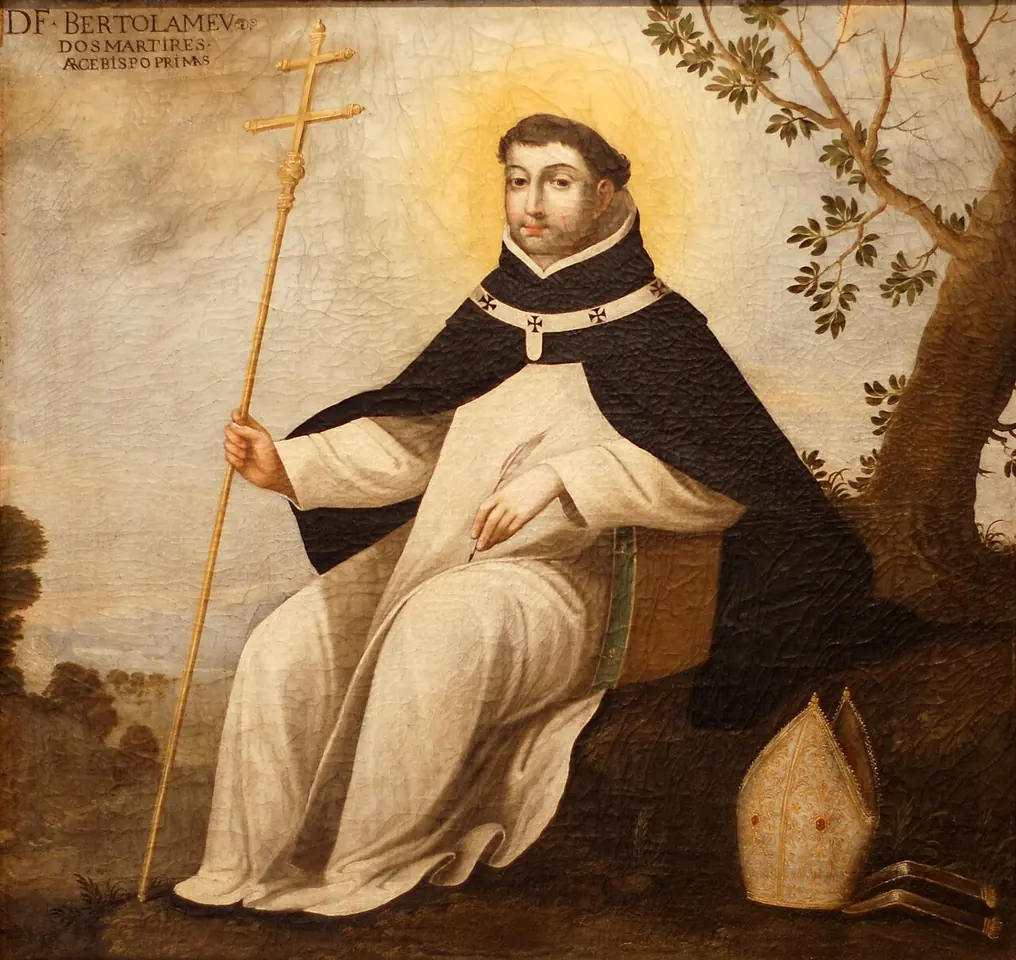
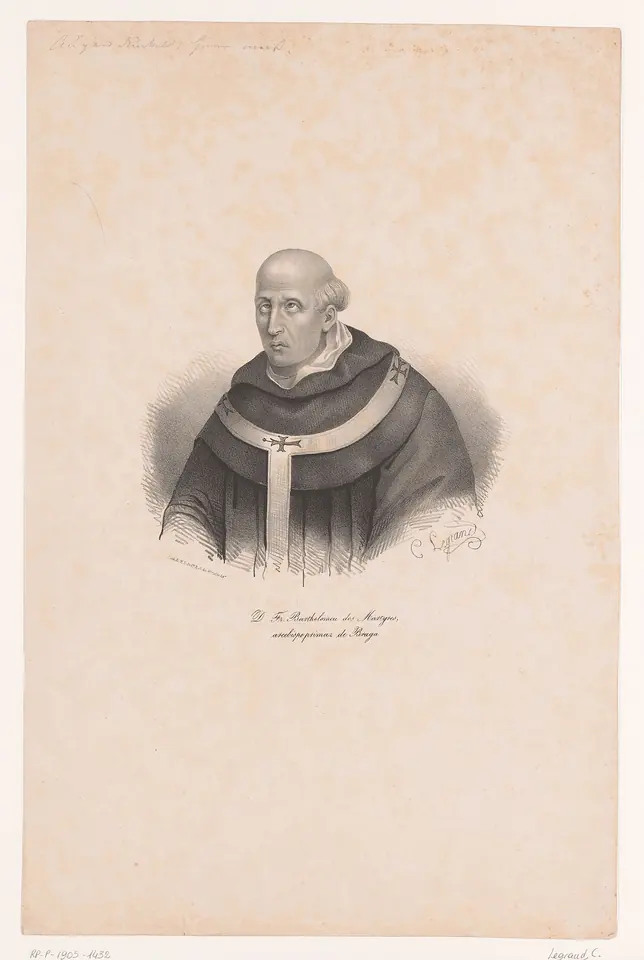
- Dominican habit: a white habit and black cloak. Painters show him in it even as archbishop.
- Miter set aside: in António André's painting the miter lies on the ground beside him, which fits a man who took the office only under obedience.
- Double-barred cross: the processional cross of an archbishop.
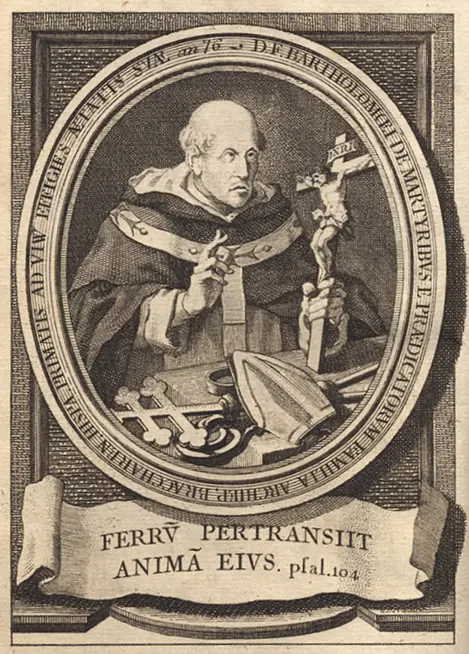
- Crucifix and book: the preacher and teacher, as in the 1763 engraving.
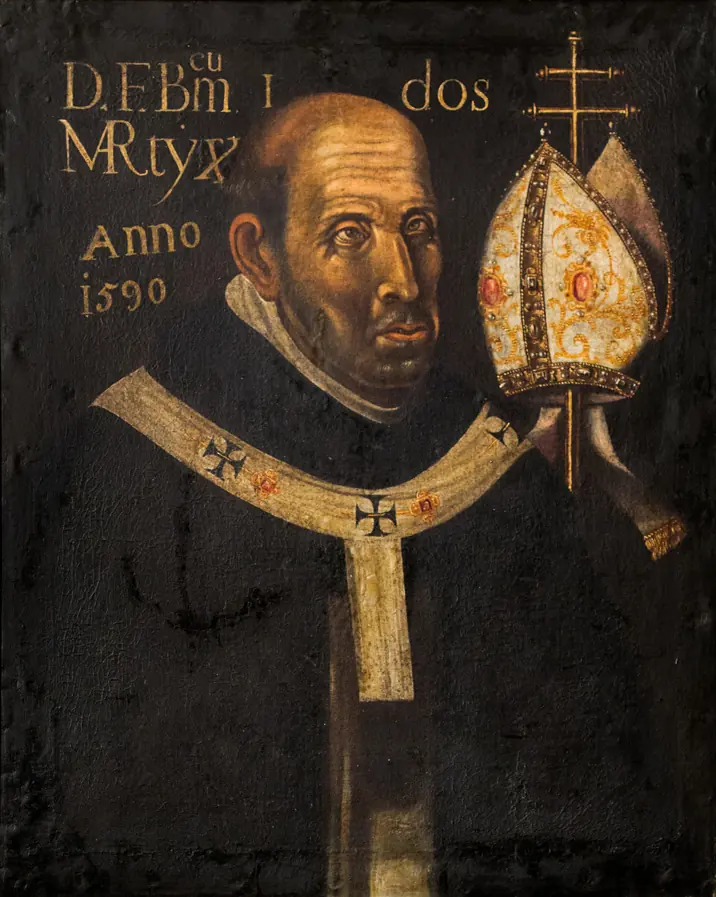
The archbishops of Braga kept a painted gallery of their predecessors. His portrait there, dated 1590, the year he died, shows an old, bald man with a worn face, the pallium on his shoulders.
Where he is honored
His relics are kept in the church of São Domingos at Viana do Castelo, the church of the convent where he died. In June 2019, weeks before his canonization, the reliquary holding a vertebra was stolen from the church; police recovered it within forty-eight hours. Braga honors him as its holy archbishop.
Feast day and prayer
We keep the feast of St. Bartholomew of Braga on July 16, the day of his death. See the feast day calendar.
We have not found a traditional English prayer to him. Let us ask St. Bartholomew of the Martyrs to pray for our bishops and priests, for every catechist who teaches children the faith, and for the poor, whom he never let a bishop's dignity keep from his door.
St. Bartholomew of Braga, pray for us.
Frequently asked questions
Who was St. Bartholomew of Braga?
Bartolomeu Fernandes, a Dominican theologian from Lisbon who served as archbishop of Braga from 1559 to 1582. He took part in the last sessions of the Council of Trent and then carried its reforms into his diocese. He is better known as Bartholomew of the Martyrs.
Why is he called Bartholomew of the Martyrs?
The Catholic Encyclopedia says he took the name "a Martyribus" out of love for the church in which he was baptized, Our Lady of the Martyrs in Lisbon. He was not a martyr himself.
When was Bartholomew of Braga canonized?
On July 5, 2019, Pope Francis extended his liturgical veneration to the whole Church, an equipollent (equivalent) canonization. John Paul II had beatified him on November 4, 2001.
What is St. Bartholomew of Braga the patron saint of?
Catechists. The Portuguese Episcopal Conference declared him patron of catechists in November 2021. He is also honored as patron of the Archdiocese of Braga.
Keep exploring
Sources
- Catholic Encyclopedia (1907): Ven. Bartholomew of Braga. His name, his Dominican career, his appointment, his role at Trent, his synod and his writings
- John Paul II, Homily for the Beatification of Eight Servants of God, November 4, 2001. His beatification and his words on the poor and on the clergy
- Holy See Press Office: Promulgation of Decrees of the Congregation for the Causes of Saints (bulletin of July 6, 2019). The equipollent canonization of July 5, 2019
- Agência Ecclesia: Conferência Episcopal Portuguesa declarou São Bartolomeu dos Mártires como padroeiro dos catequistas. His naming as patron of catechists, November 2021
- Diário de Notícias: Relicário do novo santo português esteve desaparecido 48 horas. His reliquary at the church of São Domingos in Viana do Castelo