St. Elisabeth Feodorovna, Grand Duchess and New Martyr
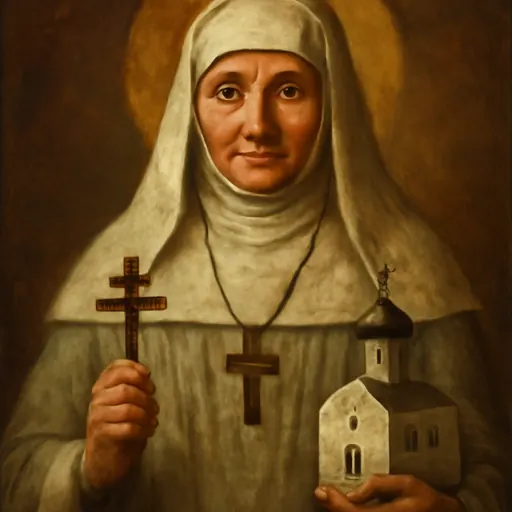
St. Elisabeth Feodorovna (1864–1918) was a German princess who married Grand Duke Sergei of Russia and became Orthodox. After her husband's assassination she forgave his killer and founded the Convent of Sts. Martha and Mary in Moscow to serve the poor. The Bolsheviks threw her alive into a mineshaft in 1918. The Orthodox Church keeps her feast on July 18.
Who was St. Elisabeth Feodorovna?
St. Elisabeth Feodorovna was a German princess who became a Russian grand duchess, then a nun of her own founding, and finally a martyr. Born into the royal houses of Europe, she gave away nearly everything she had to nurse the poor of Moscow, and in 1918 she died at the bottom of a mineshaft in the Urals, singing hymns. The Orthodox Church honors her as a holy new martyr, and her witness is loved far beyond Russia.
She was named after her ancestor St. Elizabeth of Hungary, the thirteenth-century princess who served the sick, and her life followed a similar road.
The life of St. Elisabeth
A princess of Hesse
Elisabeth, called Ella by her family, was born at Darmstadt on November 1, 1864, the daughter of Grand Duke Louis IV of Hesse and Princess Alice, a daughter of Queen Victoria. Her mother died when she was a child, and she spent much of her youth in England under her grandmother's care. Her younger sister Alix would become Alexandra, the last empress of Russia.
In 1884 Elisabeth married Grand Duke Sergei Alexandrovich, a son of Tsar Alexander II, and moved to Russia. She came to love the worship of the Orthodox Church, and in 1891 she was received into it of her own free will. Her husband became governor-general of Moscow.
Forgiveness in 1905
In February 1905 a revolutionary threw a bomb into Grand Duke Sergei's carriage in the Kremlin and killed him. What Elisabeth did next astonished Russia. The Orthodox Church in America's life records that "she visited her husband's killer in prison and urged him to repent."
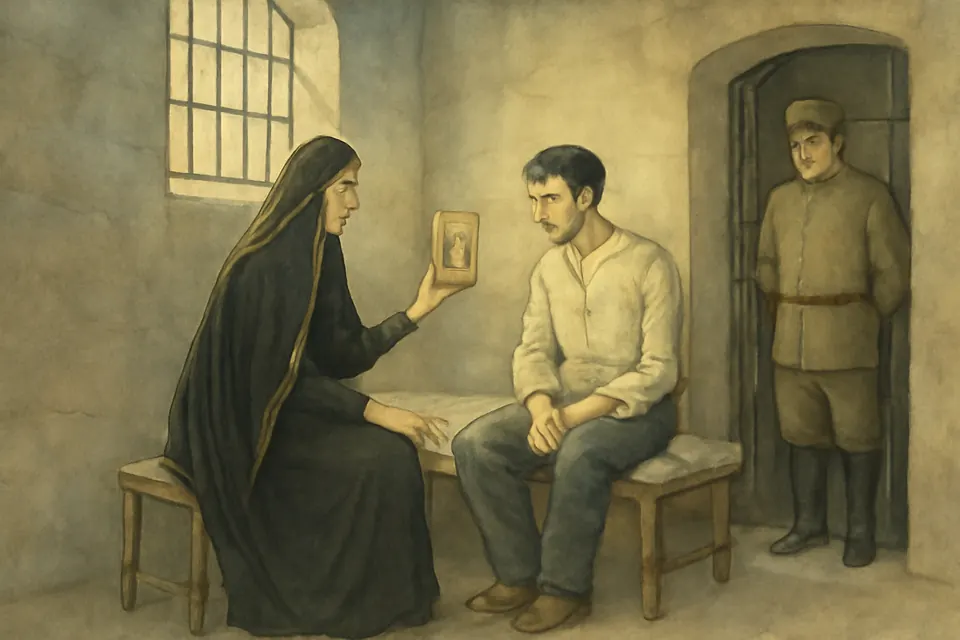
The Convent of Sts. Martha and Mary
From then on she withdrew from court life. Westminster Abbey's account says that "she gave away her jewellery and sold her most luxurious possessions" and with the proceeds opened a house in Moscow for women who wished to unite prayer with works of mercy, named for Martha, who served, and Mary, who sat at the Lord's feet. In April 1909 she and seventeen women were dedicated as Sisters of Love and Mercy. In the words of Westminster Abbey's account, "soon they opened a hospital and a variety of other philanthropic ventures arose." She herself nursed the sick and wounded, including soldiers during the First World War.
Westminster Abbey preserves her words on leaving her old life: "I am leaving a glittering world where I had a glittering position, but with all of you I am descending into a greater world - the world of the poor and the suffering."
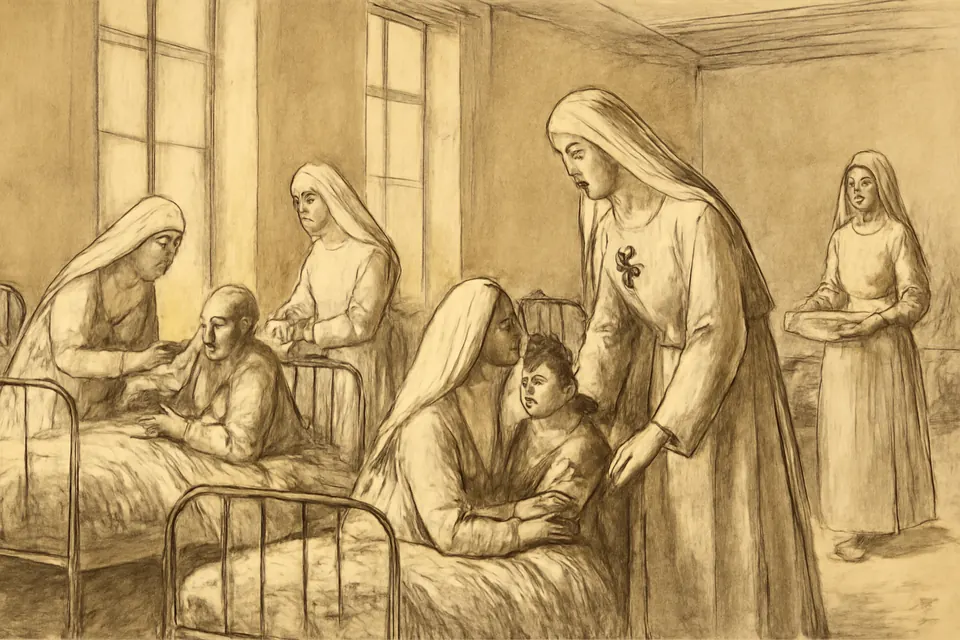

Arrest and martyrdom
After the Bolshevik revolution she stayed with her sisters in Moscow. In the spring of 1918 she was arrested and taken east with the nun Barbara (Varvara Yakovleva), who would not leave her. After stops at Perm and Ekaterinburg she was held with several Romanov princes in a schoolhouse at Alapaevsk.
On the night of July 17–18, 1918, the night after the murder of the tsar's family, they were driven to an abandoned mine and thrown down the shaft, and grenades were thrown after them. According to the Orthodox Church in America, "Saint Elizabeth lived for several hours, and could be heard singing hymns."
Miracles and witness
The Church honors her for her life and her death, not for wonders. The account that she was heard singing hymns for hours in the mine is reported: it comes from the Orthodox lives, not from a formal inquiry. The White Army recovered the bodies from the mine in the autumn of 1918. Her body and Barbara's were carried east through Siberia and China, and in 1920 they were laid to rest in Jerusalem.
Symbols of St. Elisabeth in art
- Pale habit and white veil: the distinctive dress of the sisterhood she founded, rather than black monastic robes. The 1914 photograph on this page shows it.
- Cross: the cross of a martyr.
- Model of a church: the Convent of Sts. Martha and Mary, often held in her hand in icons.
- With St. Barbara: icons usually pair her with the nun Barbara, who died with her.
She is also one of the ten modern martyrs carved by John Roberts above the west door of Westminster Abbey in 1998.
Feast day and where she rests
The Orthodox Church keeps her feast on July 18 (July 5 on the old calendar), with the nun Barbara. She was glorified by the Russian Orthodox Church Outside Russia in the 1980s and by the Moscow Patriarchate in 1992.
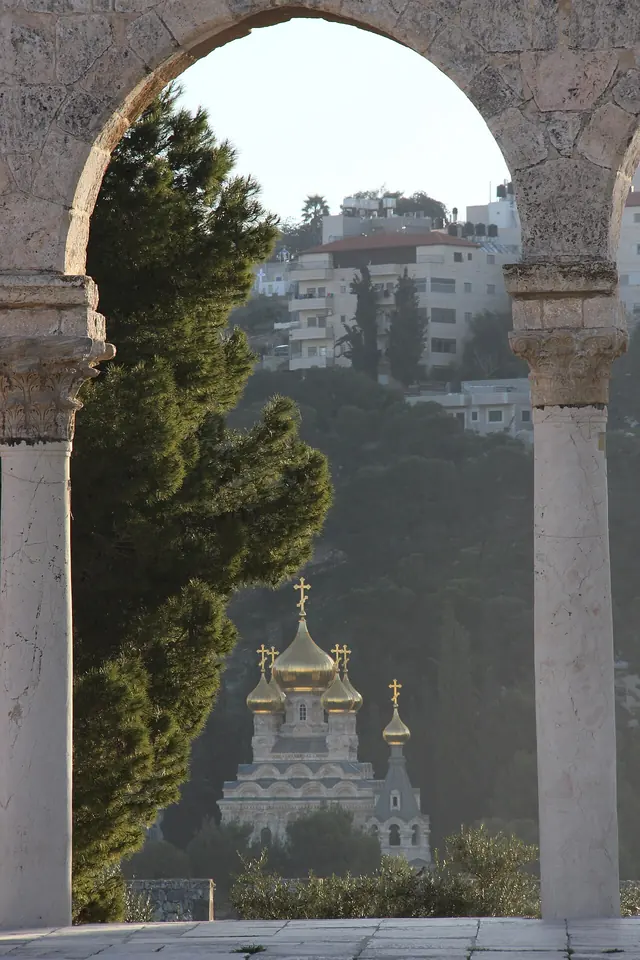
Her relics rest in the Church of St. Mary Magdalene on the Mount of Olives, near the Garden of Gethsemane. Many Catholics honor her as a sister in Christ whose love for the poor speaks to every believer. See our feast days page for other saints of July.
Prayer to St. Elisabeth
The Orthodox Church sings a troparion in her honor (Tone 4). It praises her for leaving her royal home to serve the poor and suffering, for taking up a martyr's cross with meekness, and it asks her, together with St. Barbara, to plead for us all. The OCA prints the full text on its website.
Let us ask St. Elisabeth to pray for nurses and all who care for the sick poor, for widows, for those who must forgive a terrible wrong, and for Christians persecuted for their faith.
Frequently asked questions
Who was St. Elisabeth Feodorovna?
Born Princess Elisabeth of Hesse and by Rhine in 1864, she was the elder sister of Empress Alexandra of Russia and a granddaughter of Queen Victoria. She married Grand Duke Sergei Alexandrovich, embraced Orthodoxy, and after his murder in 1905 became the abbess of a sisterhood of mercy in Moscow. She was killed by the Bolsheviks in 1918.
How did St. Elisabeth Feodorovna die?
On the night of July 17–18, 1918, she was taken with the nun Barbara and several members of the imperial family to a mine near Alapaevsk and thrown down the shaft. The Orthodox Church in America's life says she 'lived for several hours, and could be heard singing hymns.'
Where are the relics of St. Elisabeth?
Her body and that of the nun Barbara were taken to Jerusalem in 1920 and buried in the Russian Church of St. Mary Magdalene on the Mount of Olives, near Gethsemane.
Is St. Elisabeth Feodorovna a Catholic saint?
She is a saint of the Orthodox Church, glorified by the Russian Orthodox Church Outside Russia and by the Moscow Patriarchate, and she is not on the Catholic calendar. Christians of many churches honor her witness; her statue stands among the ten modern martyrs at Westminster Abbey.
Keep exploring
Sources
- Grand Duchess Elizabeth, Orthodox Church in America. Her prison visit to her husband's killer, her death at Alapaevsk and the transfer of her relics to Jerusalem
- Grand Duchess Elizabeth: Troparion and Kontakion, Orthodox Church in America. Full text of the troparion
- Grand Duchess Elizabeth, Westminster Abbey. The founding of her sisterhood in 1909, her arrest, the dates of her glorification, the statue of 1998, and the quotation on this page