St. Maria Skobtsova (Mother Maria of Paris)
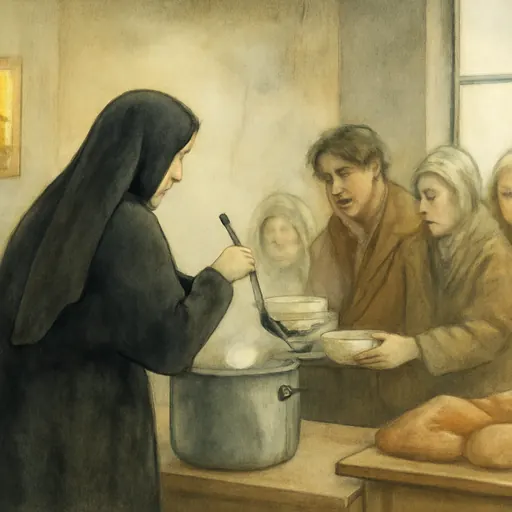
St. Maria Skobtsova, known as Mother Maria of Paris (1891–1945), was a Russian émigré poet who became an Orthodox nun, opened her house to the homeless, and with her son and Fr. Dimitri Klepinin helped Jews escape the Nazis. She died at Ravensbrück on March 31, 1945. The Ecumenical Patriarchate glorified her in 2004; her feast is July 20.
Who was St. Maria Skobtsova?
St. Maria Skobtsova, known to the Orthodox Church as Mother Maria of Paris, was a Russian poet, a revolutionary, twice a wife, three times a mother, and finally an Orthodox nun who opened her doors to the homeless of Paris and gave her life for the Jews the Nazis were hunting. She died in the gas chamber at Ravensbrück on March 31, 1945. In 2004 the Ecumenical Patriarchate of Constantinople glorified her as a saint, together with her son Yuri, the priest Fr. Dimitri Klepinin and their friend Ilya Fondaminsky.
Her life does not fit the usual picture of a nun, and she knew it. The way to God, she wrote, "lies through love of people." Let us follow that way with her for a while.
The life of St. Maria Skobtsova
From Riga to revolution
She was born Elizaveta Yurievna Pilenko in Riga in 1891, into a well-to-do and devout Orthodox family. When she was fourteen her father died, and the death seemed so unjust to her that she declared herself an atheist: "If there is no justice, there is no God!" As a young woman in St. Petersburg she moved among poets and revolutionaries, married, and published verse. Yet Christ drew her back. She began to read the Gospels and the lives of the saints, and, according to the Carpatho-Russian Orthodox Diocese's account of her life, she was admitted to study theology at the Alexander Nevsky seminary in St. Petersburg, something no woman had done before.
Her first marriage ended in divorce. Back on the family estate in southern Russia during the revolution, she joined the Socialist Revolutionary party and in 1918 became mayor of her town, Anapa. Arrested and tried during the civil war, she was saved by a judge, Daniel Skobtsov, whom she later married. Their son Yuri and daughter Anastasia were born, and the family fled Russia, reaching Paris in 1923.
A mother's grief
In 1926 her little Anastasia died of influenza after a month of illness, with her mother keeping vigil at her bedside. Elizaveta wrote that when someone you love dies, "the gates have suddenly opened onto eternity." Out of that grief she came to see a new calling: to be a mother to everyone who crossed her path, "for all who need maternal care, assistance, or protection." Her second marriage did not survive, and she gave herself to social work among the poor Russian refugees of France and to theological writing.
Monasticism in the world
In 1932, with the blessing of Metropolitan Evlogy, she was tonsured a nun and took the name Maria. She did not enter a cloister. She rented a house in Paris and filled it with the homeless, the hungry and the lost, searching the cafés and back streets for people who needed her. She called this "monasticism in the world." Not everyone understood. The future Metropolitan Anthony Bloom remembered being "simply staggered" the first time he saw her, a nun in full robes sitting at a café table on the Boulevard Montparnasse.
She grounded it all in the Gospel of the Last Judgment:
At the Last Judgment I shall not be asked whether I was successful in my ascetic exercises, nor how many bows and prostrations I made. Instead I shall be asked, Did I feed the hungry, clothe the naked, visit the sick and the prisoners. That is all I shall be asked.
Sheltering the Jews of Paris
When the Germans advanced on Paris in 1940, she refused to leave: "If the Germans take Paris, I shall stay here with my old women. Where else could I send them?" In 1942, when Jews began coming to her door, the priest of her house, Fr. Dimitri Klepinin, issued them baptismal certificates to save their lives, and she supported him. When the yellow star was imposed and some Christians said it was not their concern, she answered: "There is no such thing as a Christian problem... If we were true Christians we would all wear the Star. The age of confessors has arrived."
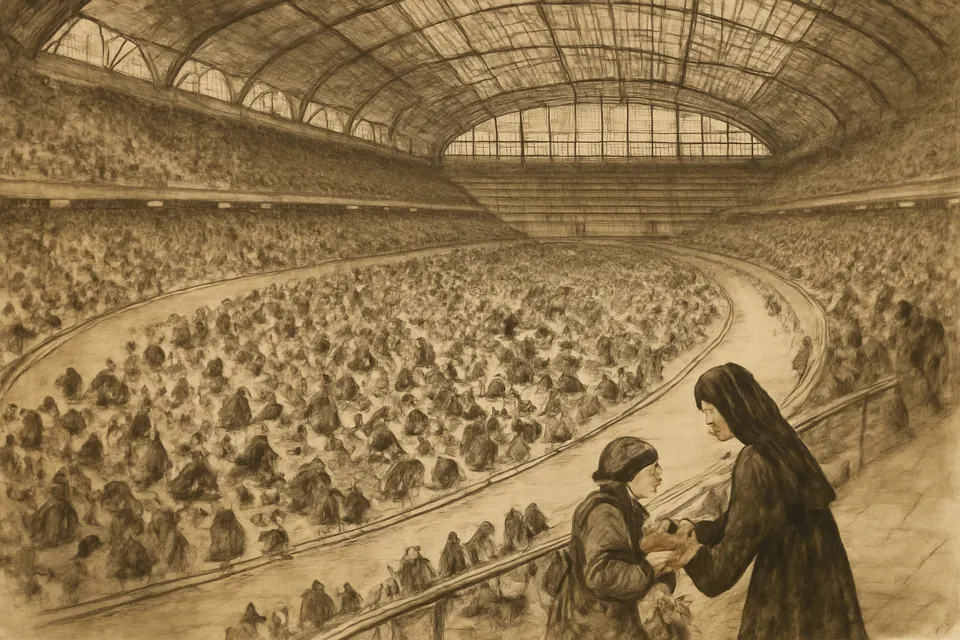
In July 1942 more than 12,000 Jews were rounded up in Paris and held many of them, including thousands of children, in a sports stadium near her house before sending them to Auschwitz. Using her monastic habit to get inside, she spent three days there bringing food, and with the help of garbage collectors she smuggled some children out in trash bins.
Arrest and death at Ravensbrück
In February 1943 the Gestapo arrested Mother Maria, her son Yuri, Fr. Dimitri and Ilya Fondaminsky. Asked whether he would stop helping Jews if he were released, Fr. Dimitri held up the cross on his cassock and asked the officer, "Do you know this Jew?" The men were sent to camps in Germany, where all of them died. From the camp, Yuri wrote: "I am absolutely calm, even somewhat proud to share Mama's fate."
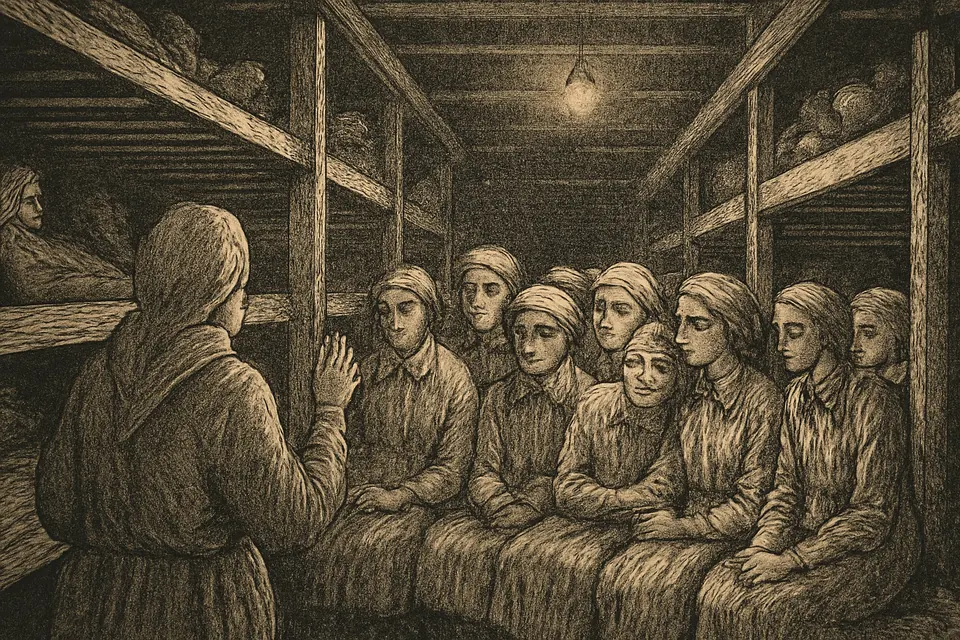
Mother Maria was sent to Ravensbrück, the women's camp north of Berlin. Survivors remembered her as a mother to the younger prisoners: "We were cut off from our families, and somehow she provided us with a family." She was killed in the gas chamber on March 31, 1945, Holy Saturday, weeks before the camp was liberated. Some later accounts say she took the place of another prisoner chosen to die; that story is reported, and it cannot be confirmed.
Glorification as a saint
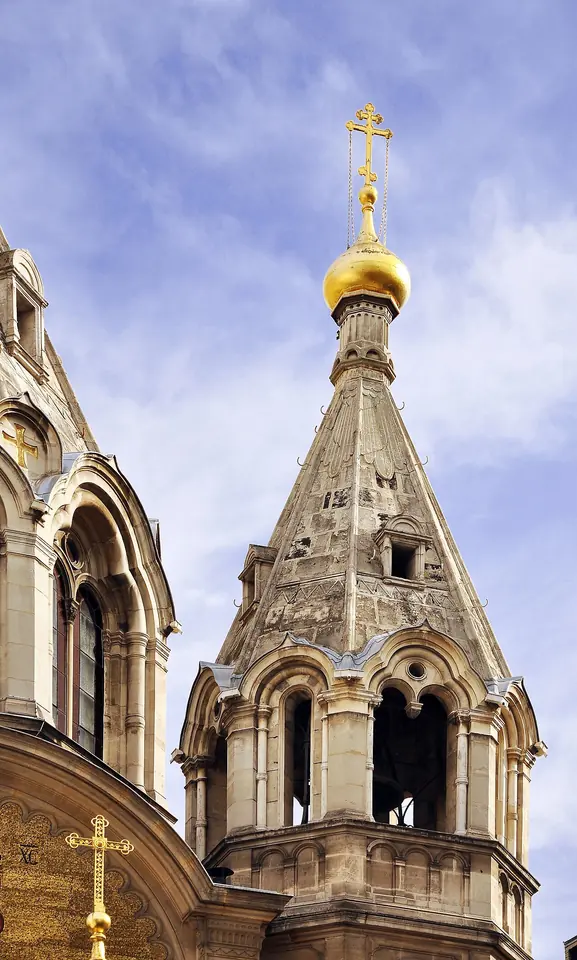
Yad Vashem in Jerusalem has recognized her and Fr. Dimitri as Righteous Among the Nations. On January 16, 2004, the Holy Synod of the Ecumenical Patriarchate glorified Mother Maria, Yuri, Fr. Dimitri, Ilya Fondaminsky and Fr. Alexis Medvedkov, and the canonization was celebrated on May 1–2, 2004, in the Cathedral of St. Alexander Nevsky in Paris.
Symbols of St. Maria Skobtsova in art
Because she lived in the age of photography, her icons follow her photographs: a sturdy woman in a black habit and veil. Look for:
- The black monastic habit: her tonsure as a nun of the Russian tradition.
- A cross: sometimes held, sometimes worn.
- A soup pot, ladle or bread: her house for the poor.
- Barbed wire: Ravensbrück, where she died.
Icons often show her with her companions, Fr. Dimitri in priest's vestments and Yuri as a young man.
Feast day and prayer
The Orthodox Church keeps her feast with her companions on July 20; her death on March 31 is also remembered. Find the saints of each day on our feast days page.
There is no long-established prayer to her in English beyond the liturgical hymns of the Orthodox service for the new saints. We can pray in her own spirit and ask: Holy Mother Maria, pray for us. Let us ask her to pray for the homeless, for refugees, for Christians and Jews who suffer for one another, and for all who must decide whether their neighbor's danger is their own concern.
Frequently asked questions
Who was Mother Maria Skobtsova?
A Russian woman, born Elizaveta Pilenko in Riga in 1891, who was a poet, a revolutionary and a mother before she became an Orthodox nun in Paris in 1932. She lived what she called "monasticism in the world," running a house for the poor and homeless. During the German occupation she and her companions sheltered Jews and gave them false baptismal papers. She died at Ravensbrück in 1945 and was glorified as a saint in 2004.
Is Maria Skobtsova a Catholic saint?
She is a saint of the Orthodox Church, glorified by the Holy Synod of the Ecumenical Patriarchate of Constantinople on January 16, 2004, and the canonization was solemnly proclaimed at the Cathedral of St. Alexander Nevsky in Paris on May 1–2, 2004. She is not on the Roman calendar, but Catholics honor her witness, as Yad Vashem does among the Righteous Among the Nations.
When is the feast of St. Maria Skobtsova?
July 20, the day the Ecumenical Patriarchate set for her and her companions. She died on March 31, 1945, and that date is also kept in her memory.
Who were Mother Maria's companions?
Her son Yuri (George) Skobtsov; Fr. Dimitri Klepinin, the priest of her house; and Ilya Fondaminsky, a writer who worked with them. All were arrested in 1943 and died in the camps. Fr. Alexis Medvedkov, a priest connected with her work, was glorified with them.
Keep exploring
Sources
- American Carpatho-Russian Orthodox Diocese: St. Maria Skobtsova of Paris, Martyr of Ravensbrück (Very Rev. Edward Pehanich). Her life, her words on the occupation and the yellow star, Fr. Dimitri's interrogation, Yuri's letter, the survivor's testimony, her teaching on the Last Judgment
- Orthodox Church in America: OCA Represented at Glorification of Mother Maria (Skobtsova), Companions in Paris (2004). The Synod decision of January 16, 2004, the companions, the services of May 1–2, 2004
- In Communion (Orthodox Peace Fellowship): The Official Act of Canonization. The commemoration fixed on July 20, the feast of the Prophet Elijah
- Yad Vashem, Shoah Resource Center: Skobtsova, Elizaveta (Mother Maria) (1891–1945). The free kitchen, the forged baptismal certificates, the children smuggled out of the stadium, the arrest in February 1943, Righteous Among the Nations