St. Nicodemus the Hagiorite

St. Nicodemus the Hagiorite (1749–1809) was a Greek monk of Mount Athos, born on Naxos, who edited the Philokalia, the great anthology of Orthodox writings on prayer, and wrote or edited dozens of books on prayer, confession, the saints and Church law. The Orthodox Church glorified him in 1955 and keeps his feast on July 14.
Who was St. Nicodemus the Hagiorite?
St. Nicodemus the Hagiorite was a Greek monk of Mount Athos who spent his life putting the wisdom of the Fathers into books that ordinary Christians could read. His great work was the Philokalia, "love of the beautiful," the collection of writings on watchfulness and the Jesus Prayer that has shaped Orthodox spirituality ever since. He also wrote and edited works on confession, the liturgy, the lives of the saints and the canons of the Church.
The Orthodox Church honors him as a saint and keeps his feast on July 14. "Hagiorite" means "of the Holy Mountain," the Orthodox name for Athos.

The life of St. Nicodemus
Naxos
He was born Nicholas on the Aegean island of Naxos in 1748 or 1749. The village priest taught him his letters and let him serve at the altar. Later he studied at the school on Naxos under Archimandrite Chrysanthos, brother of the missionary St. Cosmas of Aetolia. His teachers marveled at his memory: those who knew him said he could recite the Scriptures by heart and remember the chapter, verse and even the page.
Monk of Athos
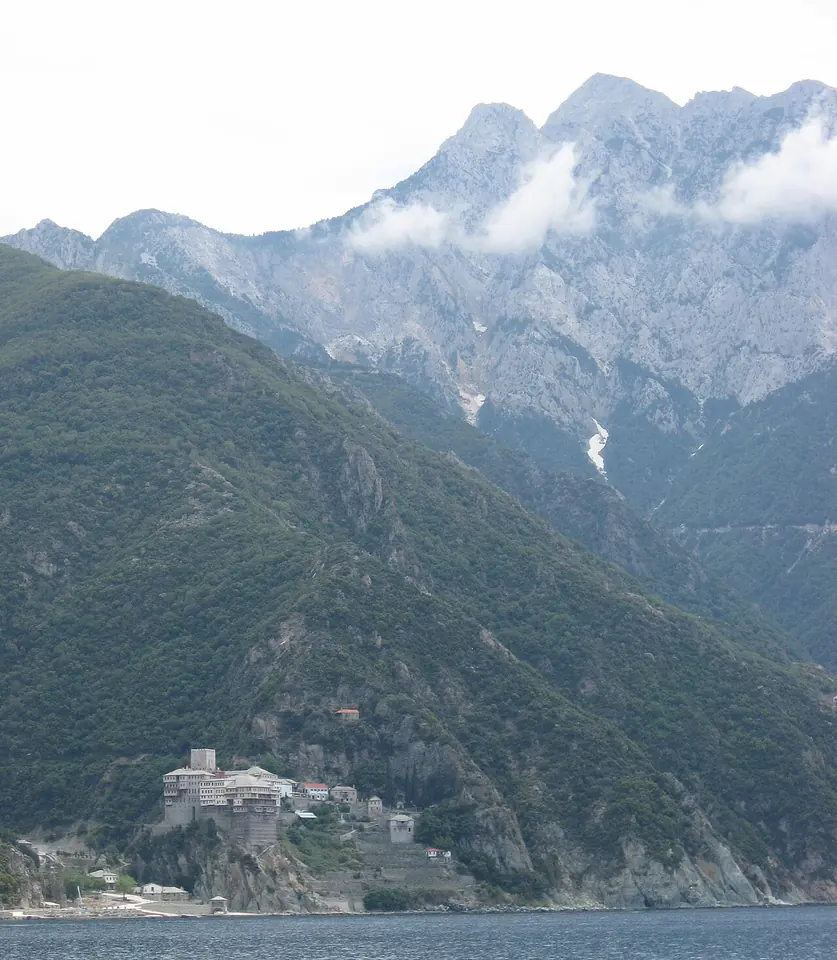
At about twenty-six he came to Mount Athos and was tonsured at the monastery of Dionysiou with the name Nicodemus. His first task was to serve as the monastery's secretary. Two years later, Metropolitan Makarios of Corinth, himself now honored as a saint, arrived with a manuscript he had found at Vatopedi: a gathering of the Fathers' writings on prayer. He gave it to the young monk to edit.
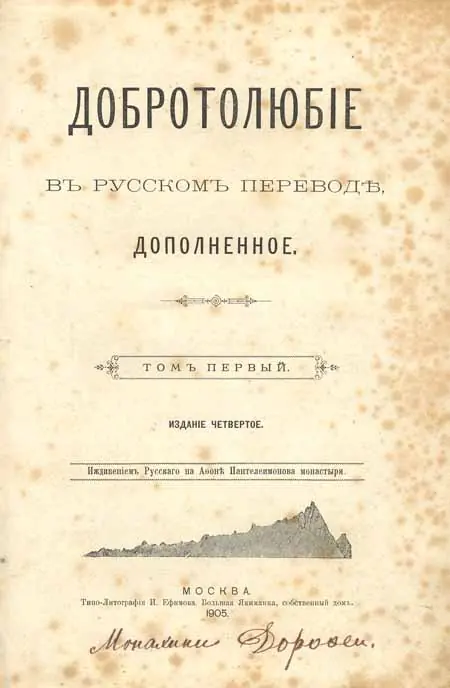
That book became the Philokalia, printed in Venice in 1782. Nicodemus wrote its preface and the short lives of each author. A Slavonic translation followed within a few years by St. Paisius Velichkovsky, and a Russian one in the nineteenth century, and through them the Philokalia reached the whole Orthodox world.
Silence and writing
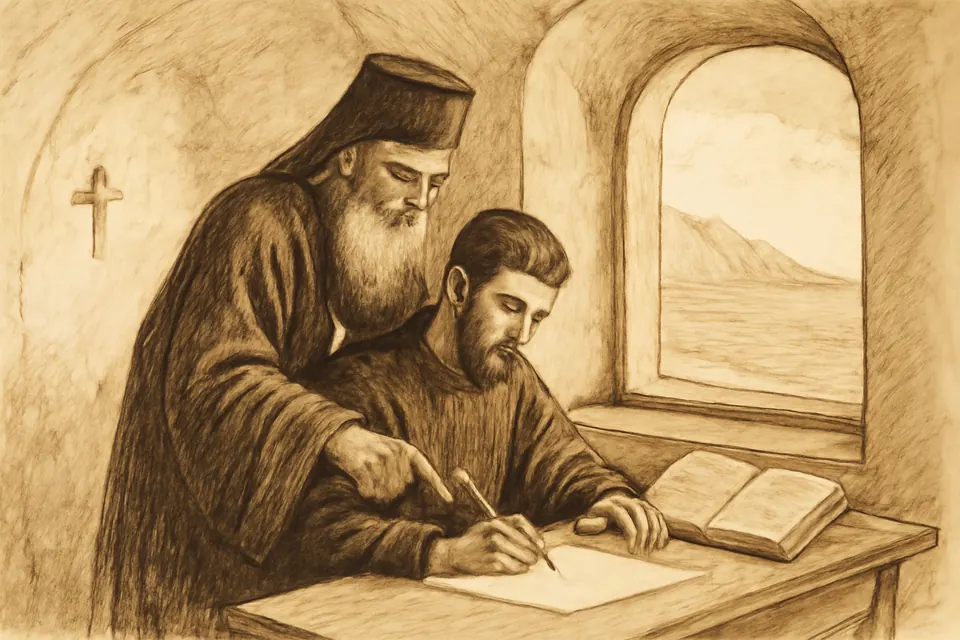
In 1783 he received the great schema, the highest monastic rank, and spent six years in complete silence. Then Makarios asked him to edit the works of St. Symeon the New Theologian, and he returned to his desk for the rest of his life. The OCA lists only some of what followed:
- Unseen Warfare (1796): his adaptation of The Spiritual Combat by the Italian priest Lorenzo Scupoli, still read across the Orthodox world.
- The Exomologitarion (1794): a manual for confessors and penitents, the first of its kind in the Orthodox Church.
- The New Theotokarion (1796): sixty-two canons to the Mother of God.
- The Pedalion or Rudder (1801): the canons of the apostles, councils and Fathers, with commentary, prepared with Hieromonk Agapios.
- The New Martyrologion (1799), Christian Morality (1803) and The New Synaxarion, his collection of saints' lives, printed after his death in 1819.
He also wrote services and hymns, including the canon to the icon of the Mother of God "Quick to Hear."
His repose
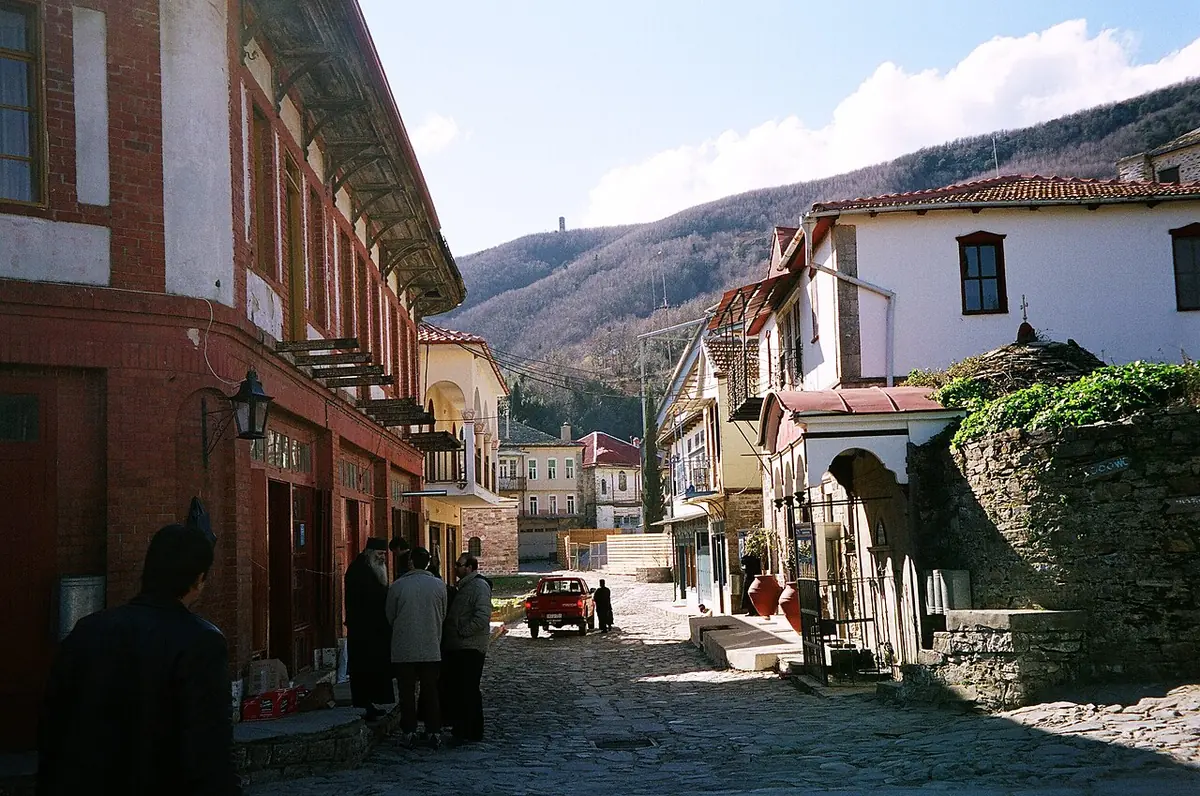
Worn out by work and fasting, Nicodemus went to live at the cell of two iconographer brothers, the Skourtaioi, near Karyes, the small capital of Athos. On July 13, 1809, he made his confession and received Holy Unction and Communion. He died the next morning, about sixty years old. His first biographer, Father Euthymios, wrote: "When the sun rose on the earth that day... the intelligible sun of the Church set."
Miracles of St. Nicodemus
No particular miracles are recorded in his OCA life. What his contemporaries remembered was his learning and his simplicity. One Christian of the time, quoted in the OCA life, said it would have been better for a thousand Christians to die that day than Nicodemus. His remarkable memory is a reported gift, from those who knew him.
Symbols of St. Nicodemus the Hagiorite in art
Most icons of St. Nicodemus are modern, since he was glorified only in 1955, and many follow the engraving made in Venice soon after his death. Look for:
- The monastic schema: the black cowl and mantle of an Athonite monk.
- A pen and open book: for his writing and editing.
- Shelves of books: behind him in the engraving and in many icons.
- A scroll: often with words from his writings.
He is sometimes painted with St. Makarios of Corinth and the other Kollyvades fathers, the circle of eighteenth-century monks who called the faithful back to frequent Communion.
Feast day and prayer
The Orthodox Church keeps his feast on July 14, with its own troparion and kontakion. Find other saints of July on our feast days page, and pray the prayer he loved with our guide to the Jesus Prayer.
Let us ask St. Nicodemus to pray for all who write and teach about the faith, for confessors and penitents, and for the monks of the Holy Mountain. Holy Father Nicodemus, pray to God for us.
Frequently asked questions
When is the feast day of St. Nicodemus the Hagiorite?
July 14, the day he died in 1809 (July 27 for churches on the Julian calendar).
What is St. Nicodemus the Hagiorite known for?
For editing the Philokalia with St. Makarios of Corinth (published in Venice in 1782), and for books such as Unseen Warfare, the Exomologitarion (a manual of confession) and the Pedalion, a standard Orthodox collection of canon law.
What does "Hagiorite" mean?
It means "of the Holy Mountain," the name the Orthodox give to Mount Athos in northern Greece, where he lived as a monk for more than thirty years.
When was St. Nicodemus canonized?
The Ecumenical Patriarchate of Constantinople glorified him as a saint in 1955.
Keep exploring
Sources
- Orthodox Church in America: Repose of Venerable Nikodemos the Hagiorite. His birth on Naxos, tonsure at Dionysiou, the Philokalia commission, six years of silence, his books, his death on July 14, 1809, and the 1955 glorification