Blessed John Cornelius, Jesuit Martyr of Dorchester
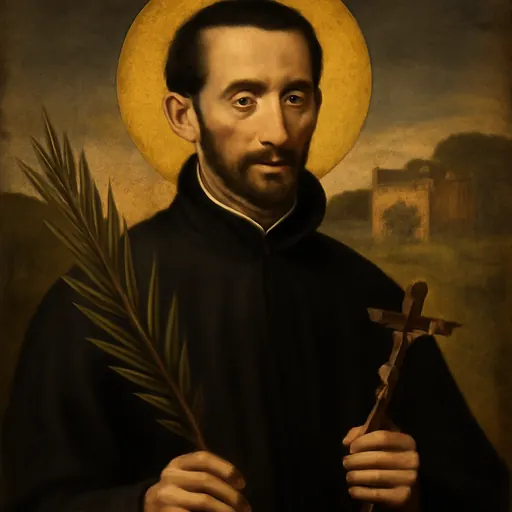
Blessed John Cornelius (1557–1594) was a priest born in Cornwall to Irish parents who trained at Rheims and Rome and served English Catholics for about ten years. Arrested at Chideock and racked, he was admitted to the Jesuits in prison and martyred at Dorchester on July 4, 1594, with three lay helpers. Pius XI beatified all four in 1929.
Who was Blessed John Cornelius?
Blessed John Cornelius was a priest of the Elizabethan underground Church, a man of deep prayer who served the Catholic families of the West Country for about ten years. He was born at Bodmin in Cornwall in 1557 to Irish parents, studied for the priesthood abroad, and was arrested in April 1594 at Chideock in Dorset. On July 4, 1594, he was hanged, drawn and quartered at Dorchester with three Catholic laymen who had stood by him. The Church declared all four Blessed in 1929. He was also called John Mohun.
The life of John Cornelius
From Bodmin to Rome
He grew up on the estate of Sir John Arundell of Lanherne, the head of a great Catholic family of Cornwall. Bishop Challoner writes that Sir John "was much taken with his rare genius and diligence in learning" and sent him to Oxford. The new religion taught there did not satisfy him. He left for the English College, then in exile at Rheims, where Dr. William Allen received him, and on April 1, 1580, entered the English College in Rome.
In Rome, Challoner says, he once had the honor of delivering a Latin oration in the Pope's chapel on St. Stephen's Day. He was ordained a priest there and sent home to England.
Ten years on the mission
For about ten years he worked from the Arundell households. Challoner describes him as "a man of a most mortified life, and greatly addicted to prayer and contemplation," a fine preacher, loved by all who knew him. A manuscript later kept at the English College of St. Omer adds that he said Mass every day at five in the morning "and never without tears," wore a hair shirt, fasted four days a week, gave away everything that came into his hands, and preached twice a week. It also says that at times his face was seen to shine with a heavenly light, a reported account from those who knew him.
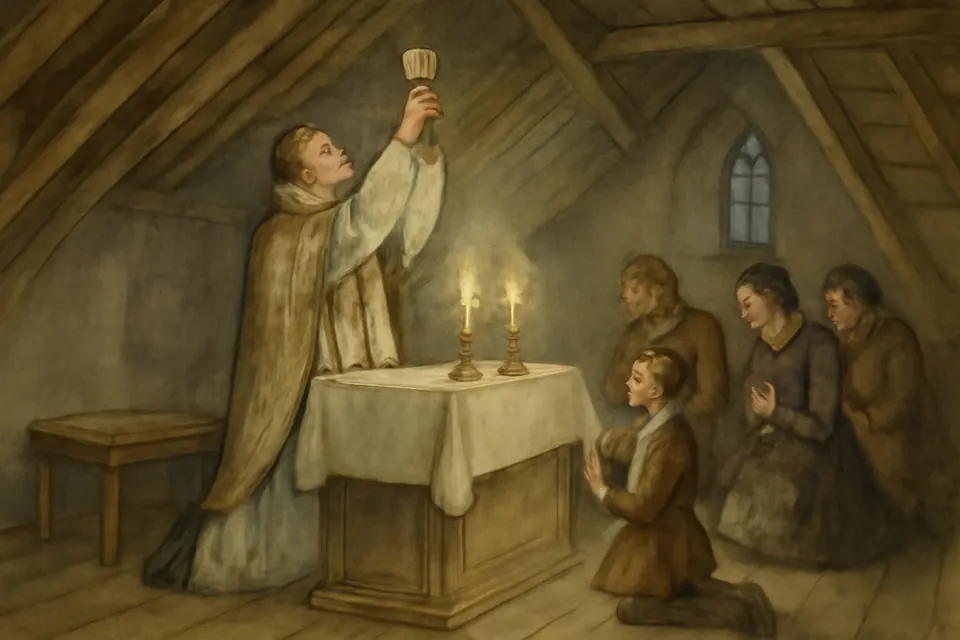
Challoner also passes on a reported story from a gentleman who knew him. While Cornelius was saying Mass for the soul of John, Lord Stourton, who had died with great sorrow but without the sacraments, he saw the dead man's soul in purgatory asking for prayers and Masses. Patrick Salmon, who was serving the Mass, is said to have seen it too. The same witness credited him with great power in casting out evil spirits.
Arrest at Chideock
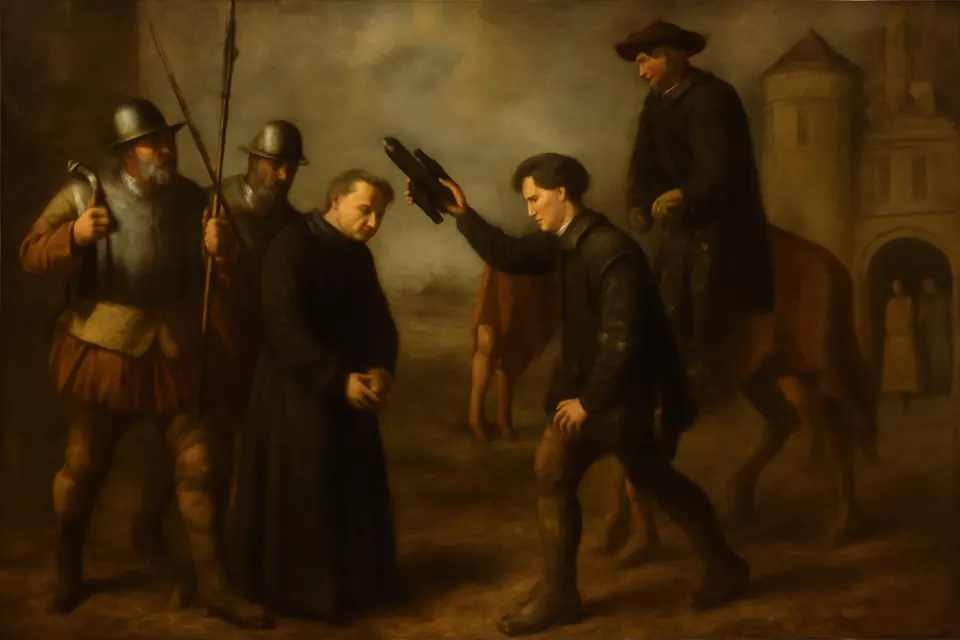
On the second Sunday after Easter in April 1594, he was arrested at Chideock Castle, the home of Sir John Arundell's widow, on the word of a servant. As the sheriff's men hurried him away bareheaded, Thomas Bosgrave, a Cornish kinsman of the Arundells, put his own hat on the priest's head, saying: "The honour I owe to your function may not suffer me to see you go bare-headed." The sheriff told him he should keep the priest company. Two servants of the house from Dublin, John (or Terence) Carey and Patrick Salmon, were taken too.
At the sheriff's house some Protestant ministers attacked him on religion, and he answered so well that the sheriff stopped the debate. He was sent to London and questioned by the Lord Treasurer, the Archbishop of Canterbury and others, first with words and then on the rack, to make him name the Catholics who had sheltered him. He named no one. Before the assizes he spent three days in prayer, hardly eating or sleeping.
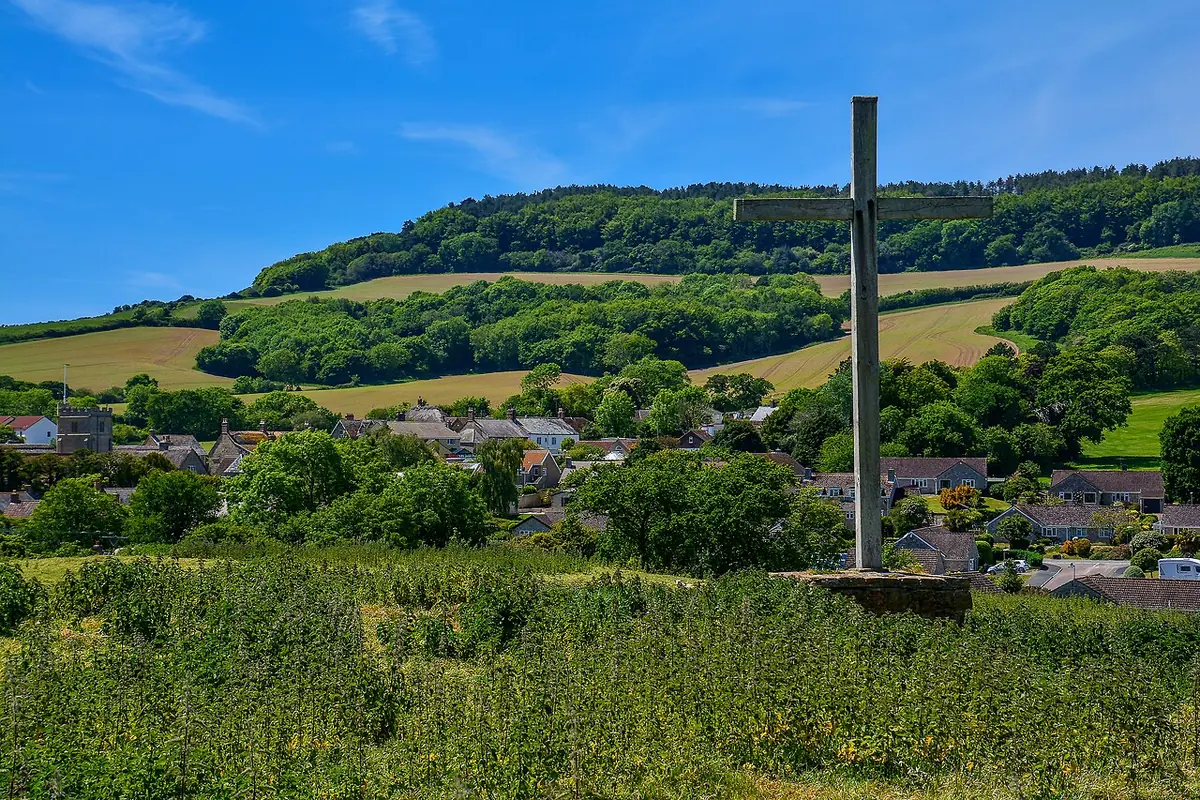
The martyrdom of the Dorchester four
At Dorchester all four were found guilty, Cornelius of high treason for being a priest in England, the other three of felony for helping him. The three laymen knelt at the priest's feet for his blessing. Challoner notes that Judge Walmesley pronounced the sentence "with tears in his eyes." All four were promised their lives if they would go to the Protestant church, and all four refused.
On July 4, 1594, Cornelius was drawn on a hurdle and the others walked. John Carey went first, kissed the rope and cried, "O precious collar!" Patrick Salmon urged the crowd to embrace the faith for which they were dying. Thomas Bosgrave spoke about the truth of the Catholic faith. Then Cornelius knelt at the ladder, kissed the ground and the feet of his companions, and greeted the gallows with St. Andrew's words: "O bona crux diu desiderata," O good cross, long desired. On the ladder he told the crowd that he had been received into the Society of Jesus in London, and he prayed for his persecutors and for the conversion of the Queen. The Catholics later took down his remains and buried them with his companions.
Half an hour before he was called out, he wrote to Dorothy Arundell, the daughter of his patroness, who had vowed to become a Bridgettine nun:
I have a great confidence that we shall see one another in heaven, if you keep inviolable the word you have given, first to God and then to St. Bridget. ... The devil is always upon the watch: be you also watchful. ... God be your keeper.— John, who is going to die for a moment, that he may live for ever.
Symbols of Blessed John Cornelius in art
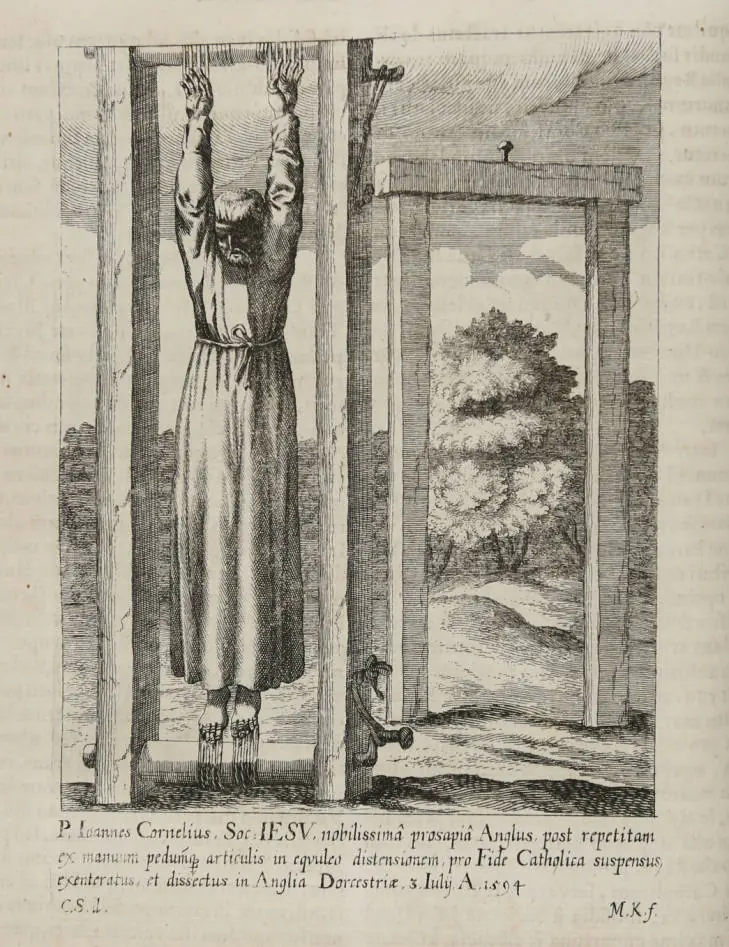
The oldest image is the 1675 engraving in Mathias Tanner's book on Jesuit martyrs, which shows him at the gallows. Later images give him:
- The martyr's palm, for his death.
- A black Jesuit cassock, for the Society he joined in prison.
- A rope and cross, recalling his greeting to the gallows as St. Andrew greeted his cross.
Feast day and prayer
Pope Pius XI beatified John Cornelius, Thomas Bosgrave, John Carey and Patrick Salmon on December 15, 1929. We keep their memory on July 4, and with all the martyrs of England and Wales on May 4. See our feast days page for more.
There is no traditional prayer to him. Let us take up his own farewell and pray, "Blessed John Cornelius and companions, pray for us," that we may be faithful to our promises to God and stand by those who suffer for the faith.
Frequently asked questions
Who was John Cornelius?
An English Catholic priest and Jesuit, born at Bodmin in Cornwall in 1557 of Irish parents and sent to Oxford by Sir John Arundell of Lanherne. He studied at the English Colleges of Rheims and Rome, worked as a priest in England for about ten years, and was executed at Dorchester on July 4, 1594.
Who were the Chideock martyrs who died with him?
Thomas Bosgrave, a Cornish gentleman and kinsman of the Arundells who put his own hat on the arrested priest's head, and John (or Terence) Carey and Patrick Salmon, two servants from Dublin. All three were hanged the same day for helping a priest, and all were beatified with him in 1929.
When is Blessed John Cornelius' feast day?
July 4, the day he and his companions died at Dorchester. In England and Wales they are also honored with all the martyrs on May 4.
What were his last words?
At the foot of the gallows he greeted it with St. Andrew's words to his cross, 'O bona crux diu desiderata' (O good cross, long desired). On the ladder he declared that he had been admitted to the Society of Jesus, and prayed for his persecutors and for the conversion of the Queen.
Keep exploring
Sources
- Richard Challoner, Memoirs of Missionary Priests, ed. J. H. Pollen (London: Burns, Oates and Washbourne, 1924), John Cornelius, alias Mohun, Internet Archive. His oration before the Pope, the reported vision during Mass, the arrest and Bosgrave's words, the rack, the trial and executions, the St. Omer manuscript and his last letter, all quoted on this page
- Francis Mershman, "Ven. John Cornelius and Companions," Catholic Encyclopedia (1910). Arrest at Chideock Castle on April 24, 1594, entry to the English College, Rome, on April 1, 1580, and the condemnation of July 2
- Pius XI, apostolic letter beatifying 136 English martyrs (December 15, 1929), Acta Apostolicae Sedis 22 (1930). Nos. LXIII to LXVI: John Cornelius, S.J., Thomas Bosgrave, John Carey and Patrick Salmon, martyred at Dorchester