Blessed Antonio Rosmini, Priest, Philosopher and Founder of the Institute of Charity
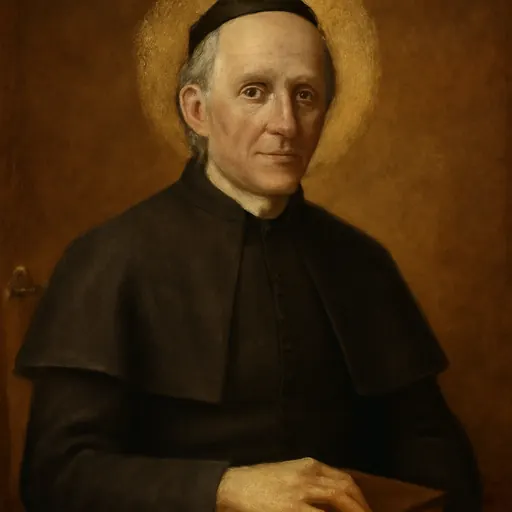
Blessed Antonio Rosmini (1797–1855) was an Italian priest and philosopher who founded the Institute of Charity (the Rosminians) and the Sisters of Providence. He suffered long misunderstandings over his writings, but the Church later cleared his name, and he was beatified in Novara on November 18, 2007. His feast is July 1.
Who was Blessed Antonio Rosmini?
Blessed Antonio Rosmini was an Italian priest of the nineteenth century, one of the great Catholic philosophers of his age, and the founder of two religious families, the Institute of Charity and the Sisters of Providence, known as the Rosminians. He spent his life trying to lead people back to God by way of reason, a work he called "intellectual charity." It cost him years of controversy and suspicion, which he bore with remarkable peace.
On the day of his beatification Pope Benedict XVI called him "a great priestly figure and illustrious man of culture, inspired by a fervent love for God and the Church."

The life of Blessed Antonio
A boy who read St. Thomas
Antonio Rosmini Serbati was born on March 24, 1797, in Rovereto, then in the Austrian Tyrol, into a noble and devout family. Family memories collected by his biographers show a generous child: at six, having heard the saying "Let him who has give to him who has not," he threw his new socks out the window to a poor woman whose child was walking barefoot in the cold. He was such an eager reader that he had to repeat a year of school, because he was reading the Summa of St. Thomas Aquinas instead of his lessons.
He studied law and theology at the University of Padua, was ordained a priest at Chioggia on April 21, 1821, and took his doctorate in theology and canon law the next year. The popes of his day, Pius VII and later Pius VIII, encouraged him to give his gifts to philosophy and to bring people to religion through reason.
A rule of life and a new Institute
As a young priest Rosmini wrote himself a rule of conduct with two principles. First, to work seriously at his own conversion, without seeking out works of his own choosing. Second, never to refuse a work of charity that Providence clearly placed before him, and to take it up with equal fervor whatever it was.
Providence did place one before him. At the urging of St. Magdalene of Canossa and a zealous priest from Lorraine, he founded the Institute of Charity in 1828 at the sanctuary of Monte Calvario above Domodossola. Its members, priests and brothers, gave themselves to charity of every kind: spiritual, intellectual and temporal. In 1832 he began the Sisters of Providence. Pope Gregory XVI approved the Institute's constitutions in 1838, and in 1839 the first members took vows in Italy and in England, where the Rosminians soon spread.
The wounds of the Church
In 1848 Rosmini published The Five Wounds of the Church, a book he had begun years before on November 18, the date that would one day be his beatification day. One wound that grieved him was the separation between clergy and people in the liturgy, since the faithful could not follow prayers they did not understand. That year he went to Rome on a diplomatic mission for the King of Piedmont, and Pope Pius IX held him in high regard. When revolution drove the pope to Gaeta, Rosmini followed him there. But in 1849 The Five Wounds and another of his books were put on the Index of Forbidden Books.
He submitted at once. In that same hard year he wrote to a fellow priest (our translation):
Meditating on Providence, I admire it; admiring it, I love it; loving it, I celebrate it; celebrating it, I thank it; thanking it, I am filled with joy. And how could I do otherwise, if I know by reason and by faith, and feel in my inmost spirit, that everything that is done, whether willed or permitted by God, is done by an eternal, infinite, essential love?
Stresa
Rosmini spent his last years at Stresa on Lake Maggiore, writing and guiding his Institute. He died there on July 1, 1855, and was buried in the sanctuary of the Most Holy Crucifix at Stresa.

Cleared and beatified
The controversy did not end with his death. In 1887 the decree Post obitum condemned forty propositions taken mostly from his posthumous works. A century later the Church looked again. In his encyclical Fides et ratio (1998), St. John Paul II named Rosmini with John Henry Newman, Jacques Maritain, Étienne Gilson and Edith Stein among modern thinkers in whom philosophy and the Word of God meet fruitfully. In 2001 the Congregation for the Doctrine of the Faith, under Cardinal Joseph Ratzinger, declared that the reasons for the 1887 decree "can now be considered superseded," because the condemned propositions do not reflect Rosmini's authentic position.
He was beatified at Novara on November 18, 2007, under Pope Benedict XVI, after the Church recognized his heroic virtues and an approved miracle through his intercession, as a beatification requires. St. John XXIII had made Rosmini's Maxims of Christian Perfection the theme of one of his last retreats.
Symbols of Blessed Antonio in art
He lived in the age of portrait painting and early photography, so his images follow his likeness rather than old attributes.
- Black cassock and skullcap: the dress of a secular priest, as in Hayez's portrait.
- Pen and book: for more than a hundred works.
- Kneeling in prayer: Vincenzo Vela's marble statue on his tomb shows him kneeling with an open book.
- Lake Maggiore: for Stresa, his last home.

Feast day and where he is honored
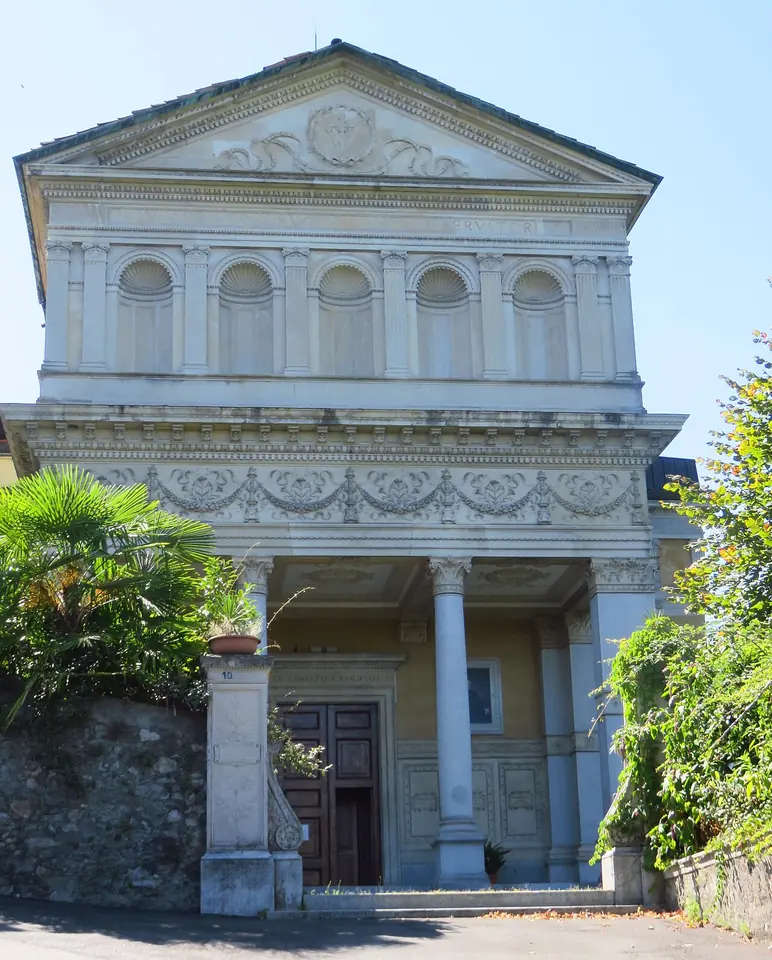
His feast is July 1. His tomb is in the sanctuary of the Most Holy Crucifix at Stresa, beside the Rosminians' house; his birthplace in Rovereto also keeps his memory. The Rosminians and the Sisters of Providence work today on five continents. See others honored in July on our feast days page.
Praying with Blessed Antonio
We have not found an official English prayer to Blessed Antonio Rosmini, so we do not print one. His letter on Providence, quoted above, is a prayer many people make their own.
Let us ask Blessed Antonio Rosmini to pray for scholars, teachers and students, for all who suffer misunderstanding within the Church, and for the friendship of faith and reason in our time.
Frequently asked questions
Who was Blessed Antonio Rosmini?
A priest from Rovereto, ordained in 1821, who wrote more than a hundred works of philosophy, theology, law and spirituality and founded the Institute of Charity in 1828 and the Sisters of Providence in 1832. He died at Stresa on Lake Maggiore on July 1, 1855.
When is the feast of Blessed Antonio Rosmini?
July 1, the day he died in 1855.
Were Rosmini's writings condemned?
In 1849 two of his books, including The Five Wounds of the Church, were put on the Index, and in 1887 the decree Post obitum condemned forty propositions drawn mostly from his posthumous works. In 2001 the Congregation for the Doctrine of the Faith declared that the reasons for that decree can now be considered superseded, since the propositions do not reflect Rosmini's authentic position.
What is "intellectual charity"?
Rosmini's name for the work of freeing minds from ignorance and leading them to truth, alongside spiritual and temporal charity. Benedict XVI said this commitment, "the reconciliation of reason with faith," is what made him most famous.
Keep exploring
Sources
- Benedict XVI, Angelus, November 18, 2007, Vatican. His beatification that day in Novara and "intellectual charity"
- Congregation for the Doctrine of the Faith, Note on the Force of the Doctrinal Decrees Concerning the Thought and Work of Fr Antonio Rosmini Serbati, July 1, 2001. The 1887 decree Post obitum and why its motives are now superseded
- Antonio Rosmini, Dicastery for the Causes of Saints. His childhood, The Five Wounds of the Church and the Index, John XXIII's retreat, the beatification homily, his rule of conduct and his 1849 letter on Providence
- "Rosmini and Rosminianism," Catholic Encyclopedia, vol. 13 (1912). Ordination at Chioggia on April 21, 1821, the founding at Monte Calvario, approval of the Institute in 1838–1839, and the first vows in Italy and England