St. Raymond of Toulouse (Raymond Gayrard), Canon of Saint-Sernin

St. Raymond of Toulouse, also called Raymond Gayrard (died 1118), was a layman of Toulouse who sang in the choir of Saint-Sernin, married, and after his wife's death gave his life and property to the poor. He served the pilgrim hospital beside the basilica, became a canon of Saint-Sernin, and is remembered as a builder of its great Romanesque church. We keep his feast on July 3.
Who was St. Raymond of Toulouse?
St. Raymond of Toulouse, known in his own city as Raymond Gayrard (Raimond Gairard in the old spelling), was a man of Toulouse who died in 1118 after a life spent on two great works: the care of the poor and the building of the Basilica of Saint-Sernin. He was a layman for most of his life, a husband and then a widower, before he joined the canons who served the basilica. We keep his feast on July 3, the day of his death.
He should not be confused with the Counts of Toulouse named Raymond, among them Raymond IV of Saint-Gilles, a leader of the First Crusade who lived at the same time. Our Raymond was a man of the choir and the almshouse, not of the court.
The Roman Martyrology sums up his life in a few lines: a schoolmaster who, after he was widowed, put all his zeal into works of charity, founded a hospice, and was then received among the canons of Saint-Sernin.
His life
A singer of Saint-Sernin
Raymond was born in Toulouse in the eleventh century. The Toulouse tradition says he was educated at Saint-Sernin, the great church built over the tomb of St. Saturninus, the city's first bishop and martyr. He held the office of chanter, leading the singing of the choir. He married, and he lived in the world as a respected citizen.
Widower and servant of the poor
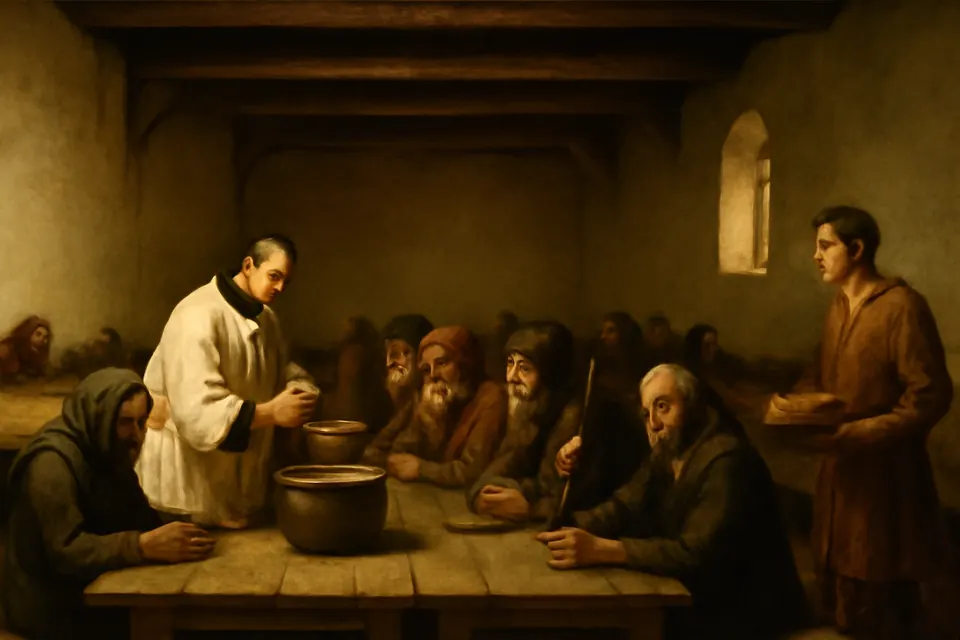
When his wife died, Raymond did not remarry. He chose a life of chastity and gave himself and the income of his property to the needy. Toulouse in his time was crowded with the poor and with pilgrims passing through on the road to the shrine of St. James at Compostela, and Saint-Sernin was one of the great stops on that road.
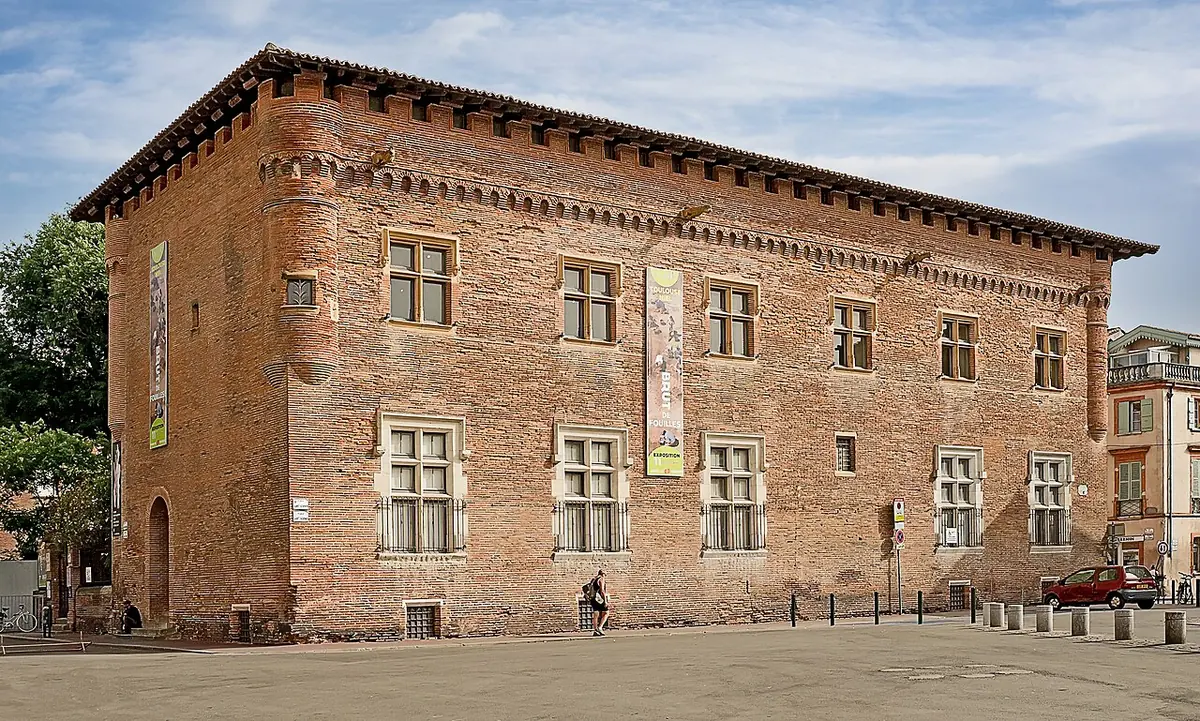
Tradition says that about 1080 he founded a hospital beside the basilica for poor people and pilgrims, and won support for it from the bishop and the count. The house took his name soon after his death, and the Musée Saint-Raymond, which now stands on the site, preserves underground the foundations of what it calls the oldest hospital in Toulouse, built in the early twelfth century to shelter poor people, among them students.
Historians have looked hard at this story. Gérard Pradalié, writing in the Annales du Midi in 2007, argues that the charters describing the hospital's foundation around 1080 were forged later, and follows the historian Patrice Cabau in seeing Raymond as the hospital's first administrator rather than its founder. Either way, the poor of Toulouse knew the hospital as Raymond's house.
Canon and builder
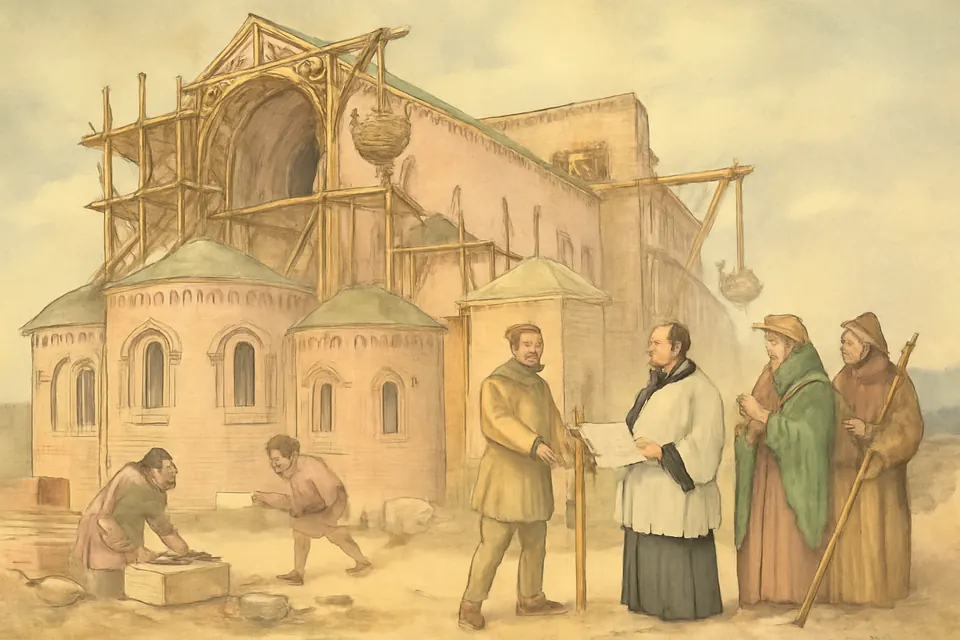
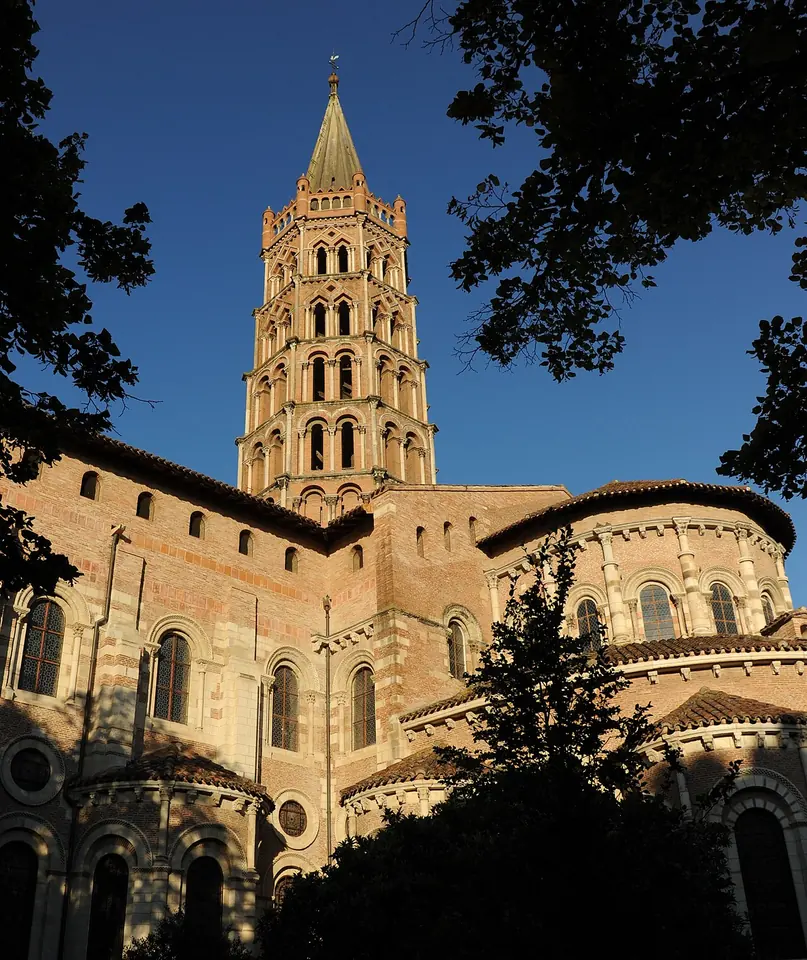
Raymond was eventually received among the canons of Saint-Sernin. The traditional account, which Pradalié summarizes, makes him the provost of the community, a reformer of its common life, and the man in charge of building the new basilica. The work had begun around 1080 to make room for the pilgrims who came to pray at Saturninus's tomb. Pope Urban II consecrated the altar of the unfinished church in 1096, and the building went on through Raymond's lifetime and long after.
His death and the miracles of St. Raymond
Raymond died on July 3, 1118. Toulouse tradition says he was buried at the hospital, where a chapel of St. Raymond was built in the late twelfth or early thirteenth century.
- Reported: miracles were soon attributed to his intercession at his tomb, and his cult grew quickly in Toulouse. No detailed collection of these miracles is easily available today, so we leave them unnamed.
The hospital later became the Collège Saint-Raymond, a university college for poor students. The present brick building, raised in 1523, survived the Revolution, served as the presbytery of Saint-Sernin after a restoration by Viollet-le-Duc, and has been a museum since 1892.

Symbols of St. Raymond of Toulouse in art
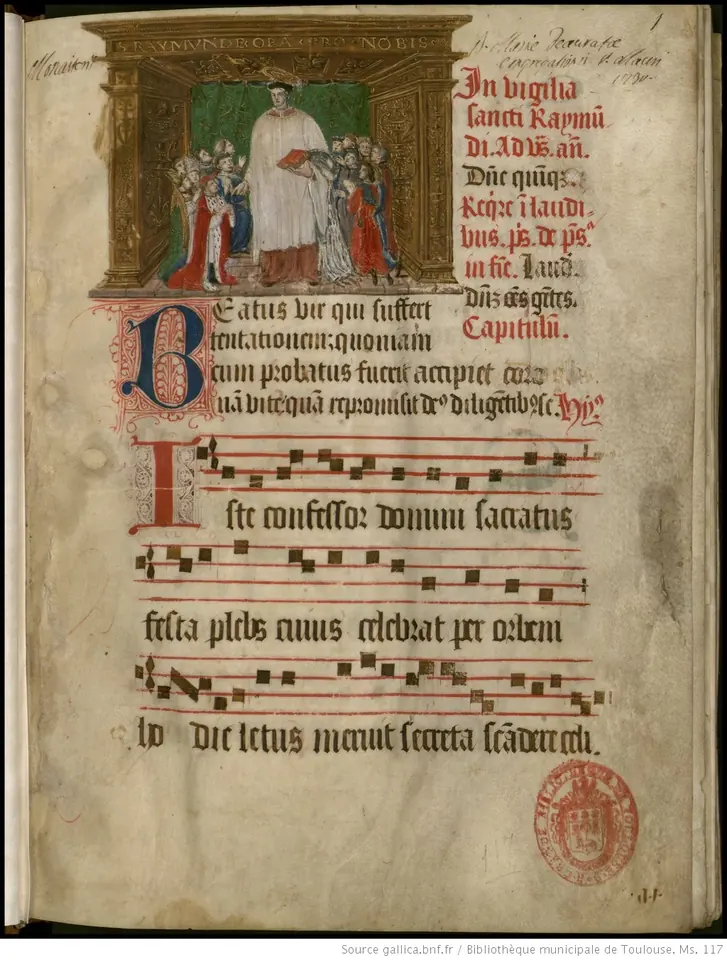
Images of St. Raymond are rare and mostly local to Toulouse. The finest is the illuminated office in the city library, which shows him:
- In a white surplice over a red dalmatic, the dress of a canon serving at the altar of Saint-Sernin.
- With a book, for his work as chanter and schoolmaster.
- With a halo, surrounded by kneeling clergy and lay people, a sign of how Toulouse honored him.
Because so few images of him exist, the surest sign is the setting: a haloed canon with a book in a Toulouse church or manuscript, especially one connected with Saint-Sernin.
Feast day and where he is honored
We keep his feast on July 3. In Toulouse his name lives on in the Musée Saint-Raymond on the Place Saint-Sernin, and Saint-Sernin itself, now a basilica and a World Heritage site on the pilgrim roads to Compostela, stands as his monument. See also our feast day calendar and the stories of other saints of charity like St. John of God and St. Vincent de Paul.
Prayer to St. Raymond of Toulouse
No traditional prayer to St. Raymond has come down to us in English. The old Toulouse office of his feast addresses him with the simple invocation written above his picture: Sancte Raymunde, ora pro nobis, "St. Raymond, pray for us." Let us make it our own, and ask him to pray for widows and widowers, for all who care for the poor and for travelers, and for those who build and keep our churches.
Frequently asked questions
Who was St. Raymond of Toulouse?
Raymond Gayrard, a native of Toulouse who died in 1118. He was a chanter at Saint-Sernin, married, and after he was widowed devoted himself to the poor. He became a canon of Saint-Sernin and was long honored as founder of the hospital beside it and as a builder of the basilica. He is not one of the Counts of Toulouse who bore the same name.
When is the feast of St. Raymond of Toulouse?
July 3, the day he died in 1118. The Roman Martyrology lists him on that date.
What is the Musée Saint-Raymond?
Toulouse's museum of archaeology, housed in the sixteenth-century Collège Saint-Raymond beside Saint-Sernin. Beneath it lie the foundations of the oldest hospital in Toulouse, from the early twelfth century, which bore Raymond's name.
Did St. Raymond found the hospital of Saint-Raymond?
Tradition says he founded it around 1080. Some historians who have studied the Saint-Sernin cartulary, notably Gérard Pradalié (2007), argue that the founding documents were forged later and that Raymond was more likely the hospital's first administrator than its founder.
Keep exploring
Sources
- Nominis (Conférence des évêques de France): Saint Raymond Gayrard, with the Roman Martyrology entry. The Roman Martyrology notice for July 3 (schoolmaster, widower, works of charity, founded a hospice, received among the canons of Saint-Sernin)
- Gérard Pradalié, La fondation de l'hôpital Saint-Raimond de Toulouse : une remise en question, Annales du Midi 119 (2007), on Persée. The traditional account of Raymond as provost, reformer of the canons and builder, and the case that the hospital's founding charters are forgeries
- Musée Saint-Raymond: Musée, monument historique et site archéologique. The early-twelfth-century hospital foundations under the museum, the Saint-Raymond chapel, and the history of the college building
- Rosalis, Bibliothèque de Toulouse: Office de la fête de saint Raymond, chanoine de Saint-Sernin (Ms. 117). The illuminated office of his feast, with the invocation "S. Raymunde, ora pro nobis"