St. Anthony Maria Zaccaria, Doctor, Priest and Founder of the Barnabites

St. Anthony Maria Zaccaria (1502–1539) was a doctor from Cremona who became a priest and founded the Barnabites, the Angelic Sisters of St. Paul and a fellowship of married lay people. He preached the Cross in Milan's streets and spread the Forty Hours of prayer before the Blessed Sacrament. We keep his feast on July 5.
Who was St. Anthony Maria Zaccaria?
St. Anthony Maria Zaccaria was a young doctor from Cremona who laid down his medical practice to become a priest, and in barely ten years of priesthood founded three families in the Church: the Barnabites, the Angelic Sisters of St. Paul and a fellowship of married lay people. He lived in the hard years before the Council of Trent, when northern Italy was wasted by war, plague and hunger, and he set out to wake up a Church that had grown lukewarm. He died at about 37, worn out by penance and work.
His great love was St. Paul. He wanted his sons and daughters to burn with the apostle's zeal, and he put the Cross and the Eucharist at the center of everything they did.
The life of St. Anthony Maria Zaccaria
A doctor for the poor
He was born in Cremona in 1502. His father died while he was still a baby, and his young mother raised him alone. The Catholic Encyclopedia tells how she taught him compassion for the poor by making him her almoner, the one who carried her alms to those in need. After school in Cremona he went to the University of Padua, first for philosophy and then, from 1520, for medicine. He took his degree as a Doctor of Medicine at 22 and went home to practice.

From medicine to the priesthood
Caring for bodies led him to care for souls. He began teaching the catechism and, three years after his return, started to study theology. He was ordained a priest in 1528 (some Italian accounts say 1529). He visited the sick in the hospitals and prisoners in the jails, and his preaching and confessions drew so many people that he looked for a wider field.
The Barnabites in Milan
In Milan he joined the Confraternity of Eternal Wisdom and found two like-minded priests, Bartolomeo Ferrari and Giacomo Morigia. His spiritual guide was the Dominican friar Battista Carioni of Crema. With Ferrari and Morigia he founded a congregation of priests living in community to renew Christian life by preaching and by faithful celebration of the sacraments. Pope Clement VII approved the Clerics Regular of St. Paul on February 18, 1533, and Paul III confirmed them on July 21, 1535.
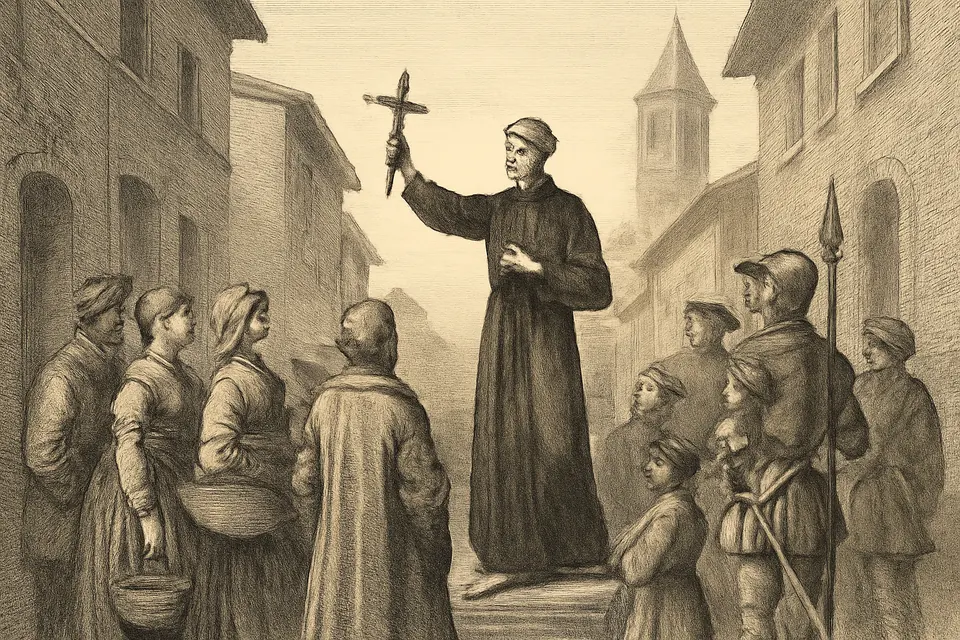
He went out into the streets of Milan with a crucifix in his hand, preaching the Passion of Christ and the need for penance. Later the community received the church of St. Barnabas, and from it the people of Milan called them Barnabites, the name they still carry.
The Angelics and the married laity
He also founded the Angelic Sisters of St. Paul, women religious who worked beside the priests in the missions, and a group of married men and women called the Married of St. Paul, today the Laity of St. Paul. He called these three branches "colleges." In 1536 he gave up the office of superior and went to Vicenza, where, with the help of the Angelics, he brought two convents of nuns back to a faithful observance of their rule.
The Forty Hours
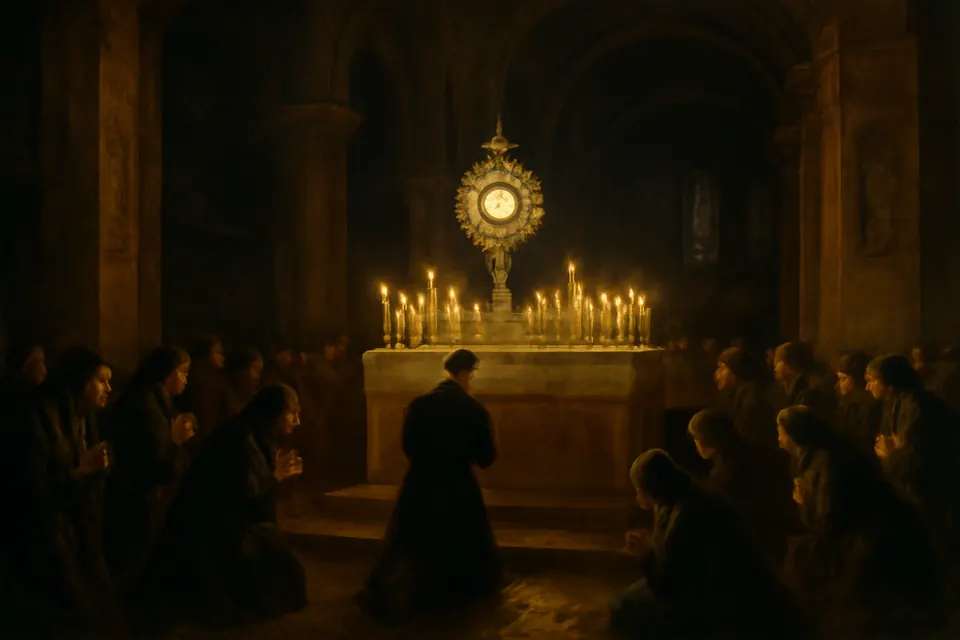
Anthony loved the Eucharist with his whole heart. At Vicenza and in Milan he promoted the Forty Hours, a continuous prayer of forty hours before the Blessed Sacrament exposed on the altar. The Catholic Encyclopedia credits him with bringing it to Vicenza. The devotion spread across Italy and later the whole Church.
His death
He fell ill with fever during a mission and knew it was his last illness. He asked to be taken home to Cremona, and there, in his mother's house, he received the last sacraments and died on July 5, 1539. According to the Catholic Encyclopedia, his body was found incorrupt 27 years later. Pope Pius IX beatified him in 1849, and Pope Leo XIII canonized him on May 27, 1897.
Miracles of St. Anthony Maria Zaccaria
The finding of his body incorrupt, 27 years after his burial, is reported by the Catholic Encyclopedia. The Church examined miracles worked through his intercession for his beatification in 1849 and canonization in 1897, and those cures are approved; their details are recorded in the acts of his cause, which we have not been able to consult, so we do not describe them here.
Run like madmen: his words
Pope Francis, receiving the Barnabite family in 2023, chose one of the saint's sayings as the key to his life. Vatican News gives it in his own Italian:
Corriamo come matti non solo a Dio, ma ancora verso il prossimo, il quale è il mezzo che riceve quello che non possiamo dare a Dio.
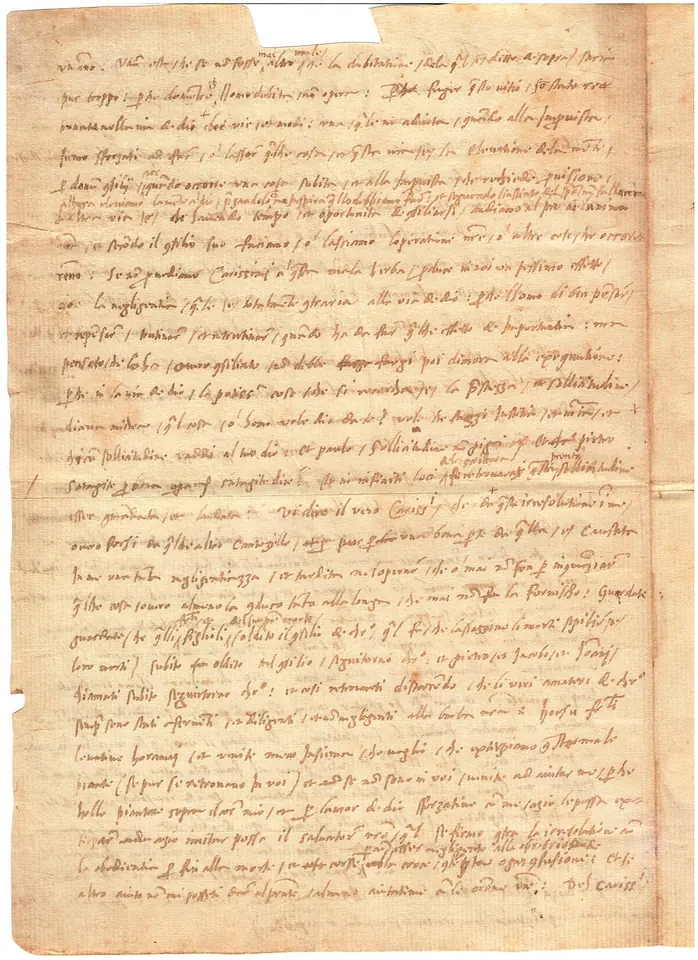
In English: "Let us run like madmen not only toward God, but also toward our neighbor, who is the one who receives what we cannot give to God." His surviving writings are a small set of letters, sermons and the first constitutions of his priests.
Symbols of St. Anthony Maria Zaccaria in art
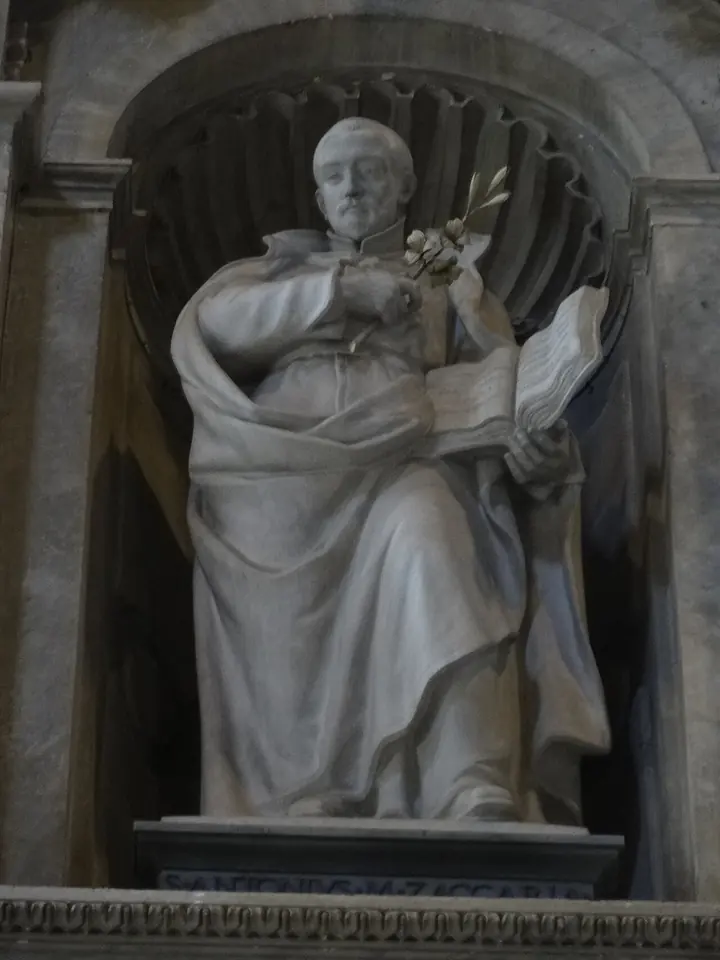
He is shown as a young, thin priest in the black cassock of the Barnabites. His most common attributes are the crucifix, recalling his street preaching on the Passion, and the Eucharist, often in a monstrance or chalice, for the Forty Hours and his love of the Mass. A lily stands for his purity, and a book for his preaching and his letters. The marble statue in St. Peter's Basilica, carved by Cesare Aureli in 1909, shows him with the lily and an open book, standing in a niche among the founders of religious orders.
Feast day and where he is honored
We keep his feast on July 5, an optional memorial in the General Roman Calendar and a solemnity for the Barnabites. His body rests in a glass urn beneath the high altar of San Barnaba in Milan, the mother church of his order. Cremona, his birthplace, also honors him. You can find more saints of early July on our feast days page, and the Barnabite bishop St. Alexander Sauli, who carried his work into the next generation.

Praying with St. Anthony Maria Zaccaria
The Roman Missal has a proper collect for his memorial, which asks that we may learn the surpassing knowledge of Jesus Christ in the spirit of St. Paul, as he preached it. We know no older traditional prayer to him that we can cite, so let us ask his help simply: St. Anthony Maria Zaccaria, you ran toward God and toward your neighbor; pray for doctors and for all who care for the sick, pray for priests, and pray that we may love Christ crucified and present in the Eucharist with your fervor.
Frequently asked questions
Who was St. Anthony Maria Zaccaria?
An Italian priest of the early sixteenth century, trained as a physician at Padua, who founded the Barnabites, the Angelic Sisters of St. Paul and the Laity of St. Paul to renew Christian life in war-torn northern Italy before the Council of Trent.
When is the feast of St. Anthony Maria Zaccaria?
July 5, the day he died in 1539. It is an optional memorial in the General Roman Calendar.
Why are his priests called Barnabites?
Their official name is the Clerics Regular of St. Paul. They took their popular name from the church of St. Barnabas in Milan, their first mother house, where his body rests today.
Where is St. Anthony Maria Zaccaria buried?
In the church of San Barnaba in Milan, in a glass urn beneath the high altar. The Catholic Encyclopedia says his body was found incorrupt 27 years after his death.
Keep exploring
Sources
- Catholic Encyclopedia (1907): St. Antonio Maria Zaccaria. His medical degree at 22, ordination in 1528, the approval of 1533, the Forty Hours at Vicenza, his incorrupt body and his writings
- Pope Francis, Address to the Barnabites and the spiritual family of St. Antonio Maria Zaccaria (May 29, 2023). The "run like crazy" saying and the three colleges of his family
- Vatican News: Sant'Antonio Maria Zaccaria e l'opera dei Barnabiti (July 5, 2018). The full Italian saying, Fra Battista Carioni, and the papal approvals of February 18, 1533 and July 21, 1535 (in Italian)
- Il Giorno: Sant'Antonio Maria Zaccaria, fondatore dei Barnabiti. His canonization on May 27, 1897, and his body in San Barnaba, Milan (in Italian)