St. Paul Suzuki, Catechist and Martyr of Nagasaki

St. Paul Suzuki was a Japanese catechist from Owari, baptized about 1584, who worked with the Franciscan friars in Kyoto and ran their St. Joseph's Hospital there. A man of fiery temper turned to fiery zeal, he was crucified at Nagasaki on February 5, 1597, at about forty-nine, and preached from the last cross in the row until he died. We honor him with St. Paul Miki and the 26 Martyrs of Japan on February 6.
Who was St. Paul Suzuki?
St. Paul Suzuki was a Japanese catechist, a layman who taught the faith alongside the Franciscan friars of Kyoto and cared for the sick in their hospital. He was crucified with twenty-five other Christians on Nishizaka Hill, above Nagasaki, on February 5, 1597. The Church honors them all as St. Paul Miki and Companions, the 26 Martyrs of Japan.
He was about forty-nine when he died. His cross stood at the far end of the row, and the Twenty-Six Martyrs Museum in Nagasaki says his voice, "all fire and zeal, could be heard unimpeded" as he preached to the crowd. We keep his feast on February 6.

A hard man made new
Paul came from Owari Province, in central Japan. The museum's short life of him is honest about the man he had been. He was "a man of impetuous character," it says, "and many a scar on his body to testify to that." We are not told how he got those scars. He was baptized about 1584, thirteen years before his death, as a grown man in his mid-thirties.
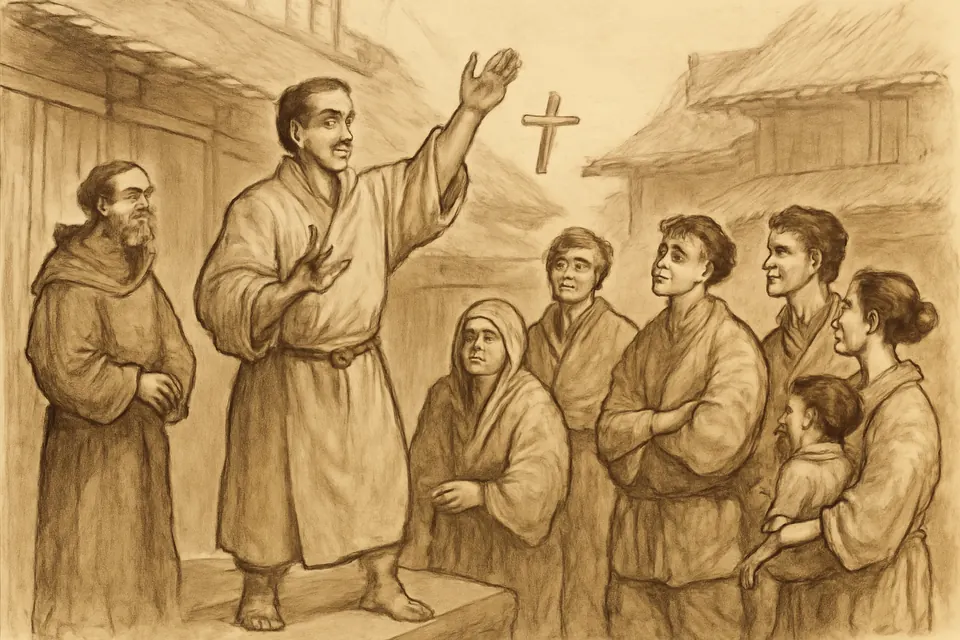
Grace did not take away his fire. It turned it toward God. The museum calls him one of the best catechists helping the Franciscans, a man who "excelled for his apostolic zeal." Catechists were the backbone of the Church in Japan: there were never enough priests, and laymen like Paul taught the prayers, prepared people for baptism and explained the faith in the language of the street.
Neighbors from Owari
Paul was not the only man from Owari among the twenty-six. The museum's list names three others from the same province: St. Paul Ibaraki, a samurai's son who brewed sake beside the friary; his younger brother, St. Leo Karasumaru, a former Buddhist monk who became the friars' chief lay helper; and St. Cosmas Takeya, a sword maker who taught as a catechist for the Franciscans in Osaka. Their nephew, twelve-year-old Louis Ibaraki, was born there too. Whether these men knew one another before they came to the friars, we don't know. By the end they were brothers in a deeper sense, working for the same mission and dying on the same hill.
St. Joseph's Hospital in Kyoto
Spanish Franciscans led by St. Peter Baptist came to Japan from the Philippines in 1593 and opened houses in Kyoto and Osaka. They cared for the poor and the sick, lepers among them. Paul Suzuki was put in charge of St. Joseph's Hospital in Kyoto. The work was rough, patient and unglamorous, and the man with the scarred body spent his last years at it, tending the bodies of others.

Arrest and martyrdom
In late 1596 the Spanish galleon San Felipe was wrecked on the Japanese coast. Its pilot's boasting, the Catholic Encyclopedia says, persuaded the ruler Toyotomi Hideyoshi that missionaries came ahead of conquest. Lists were made of the Christians in Kyoto and Osaka, and the Franciscans and their helpers were arrested, Paul Suzuki among them.
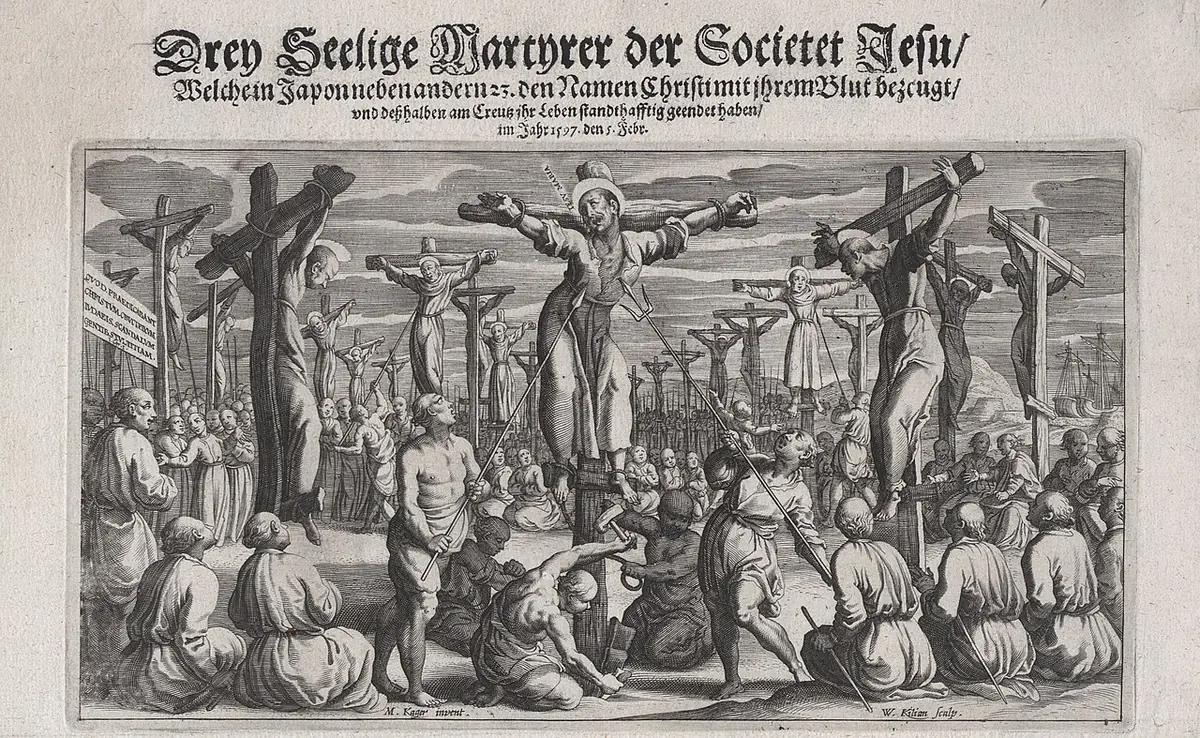
The prisoners had part of an ear cut off in Kyoto and were marched in winter about six hundred miles to Nagasaki. On the morning of February 5, 1597, they were tied to crosses on Nishizaka Hill. A contemporary account, read in the Liturgy of the Hours on the feast, describes the martyrs encouraging one another, and Paul Miki preaching from his cross and forgiving his executioners. At the other end of the row stood Paul Suzuki. His voice, the museum records, carried unimpeded from the last cross, still preaching Christ to the crowd.
Canonization
He was beatified with the other non-Jesuit martyrs in 1627, under Pope Urban VIII. Pope Pius IX canonized all twenty-six in 1862, and the Twenty-Six Martyrs Museum gives June 10, 1862, as the date of the final group canonization. As martyrs, they were raised to the altars for their death for the faith; no miracle, approved or reported, is recorded for Paul Suzuki alone.
Symbols of St. Paul Suzuki in art
There is no portrait of Paul Suzuki from life. In group images of the Martyrs of Japan he is shown with:
- The cross: the death he shared with his Lord.
- The lance: the martyrs were killed on their crosses by two lance thrusts.
- The martyr's palm: victory through fidelity unto death.
- Plain Japanese dress: he was a layman, not a friar.
Old European prints such as Callot's and Kilian's show the twenty-six almost alike, and only the friars and Jesuits stand out by their habits. In the bronze relief on Nishizaka Hill the martyrs stand in the order of their crosses, and Paul Suzuki is the last figure in the row.
Feast day and prayer
We honor St. Paul Suzuki with all the Martyrs of Japan on February 6 (February 5 in Japan). Pilgrims pray at the monument and museum on Nishizaka Hill in Nagasaki. Pope Francis prayed there on November 24, 2019. See the feast day calendar.
There is no traditional prayer to St. Paul Suzuki alone. On the feast the Church prays the collect of St. Paul Miki and Companions from the Roman Missal. Let us ask his help in our own words: St. Paul Suzuki, you let Christ turn your temper into zeal and your strength into care for the sick. Pray for catechists, for nurses and all who work in hospitals, and for everyone who is trying to master an angry heart.
Frequently asked questions
Who was St. Paul Suzuki?
A Japanese layman from Owari Province, baptized about thirteen years before his death. He became one of the best catechists helping the Franciscans in Kyoto and ran their St. Joseph's Hospital. He was one of the twenty-six Christians crucified at Nagasaki on February 5, 1597.
What is St. Paul Suzuki known for?
His zeal as a preacher. The Twenty-Six Martyrs Museum records that his cross stood at the end of the row and that his voice, "all fire and zeal," could be heard clearly as he died. Before his conversion he was a man of impetuous character, with many scars to show for it.
When is the feast of St. Paul Suzuki?
February 6, the memorial of St. Paul Miki and Companions. In Japan the martyrs are honored on February 5, the day they died.
Is St. Paul Suzuki the same person as St. Paul Miki?
No. Paul Miki was a Japanese Jesuit and the group is named for him. Paul Suzuki was a lay catechist who worked with the Franciscans. A third Paul, Paul Ibaraki, also died with them.
Keep exploring
Sources
- Twenty-Six Martyrs Museum, Nagasaki: List of the 26 Martyrs of Japan (archived). Paul Suzuki's age (49), home in Owari, baptism thirteen years before, his temper and scars, his work as a catechist, St. Joseph's Hospital in Kyoto, and his place at the end of the row of crosses; beatification in 1627 and canonization in 1862
- Catholic Encyclopedia (1910): Japanese Martyrs. The 1587 edict, the San Felipe affair and the crucifixion of twenty-six Christians at Nagasaki on February 5, 1597
- Pope Francis, Tribute to the Martyr Saints at the Martyrs' Monument, Nishizaka Hill, Nagasaki, 24 November 2019
- Liturgy of the Hours, Office of Readings for February 6: account of the martyrdom of St. Paul Miki and his companions by a contemporary writer