Blessed Jacoba of Settesoli, "Brother Jacoba," Friend of St. Francis
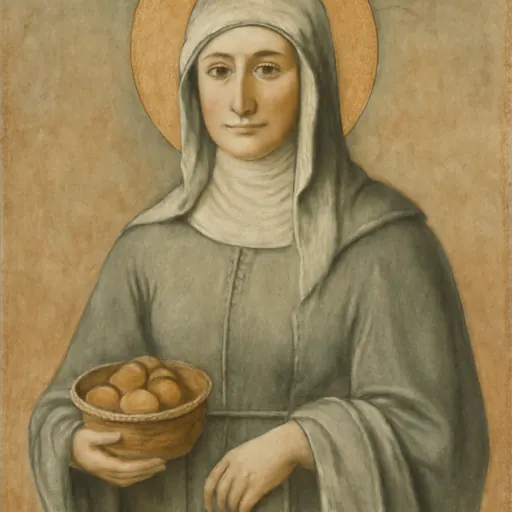
Blessed Jacoba of Settesoli (about 1190–about 1239) was a Roman noblewoman who became a friend and benefactor of St. Francis of Assisi, who called her "Brother Jacoba." When Francis lay dying she arrived with cloth for his burial habit and the almond cakes he loved. She is buried in his basilica. Franciscans keep her memory on February 8.
Who was Blessed Jacoba of Settesoli?
Blessed Jacoba of Settesoli was a Roman noblewoman and widow who became one of St. Francis of Assisi's closest friends. Francis gave her a name no other woman had from him: he called her "Brother Jacoba," frate Jacopa. She looked after him and his friars whenever they came to Rome, and when he was dying in 1226 she was at his side. She is buried a few steps from him, in the crypt of his basilica in Assisi. Franciscans remember her on February 8.
She was born in Rome about 1190 and married into the Frangipani, one of the great noble families of the city. The name Settesoli is usually explained as coming from the Septizodium, the ruined Roman monument near the Frangipani fortress on the Palatine. She was left a widow young, with two sons.
Friend of St. Francis
When St. Francis came to Rome, Jacoba heard him preach and asked his guidance. He did not tell her to enter a convent. She stayed in the world, looked after her sons and her estates, and gave her life to prayer and works of mercy. The Mirror of Perfection, an early collection of stories about Francis, says that through his preaching she received such grace "that evermore was she so full of tears and devotion for the love and sweetness of Christ that she did seem as it were a second Magdalene."
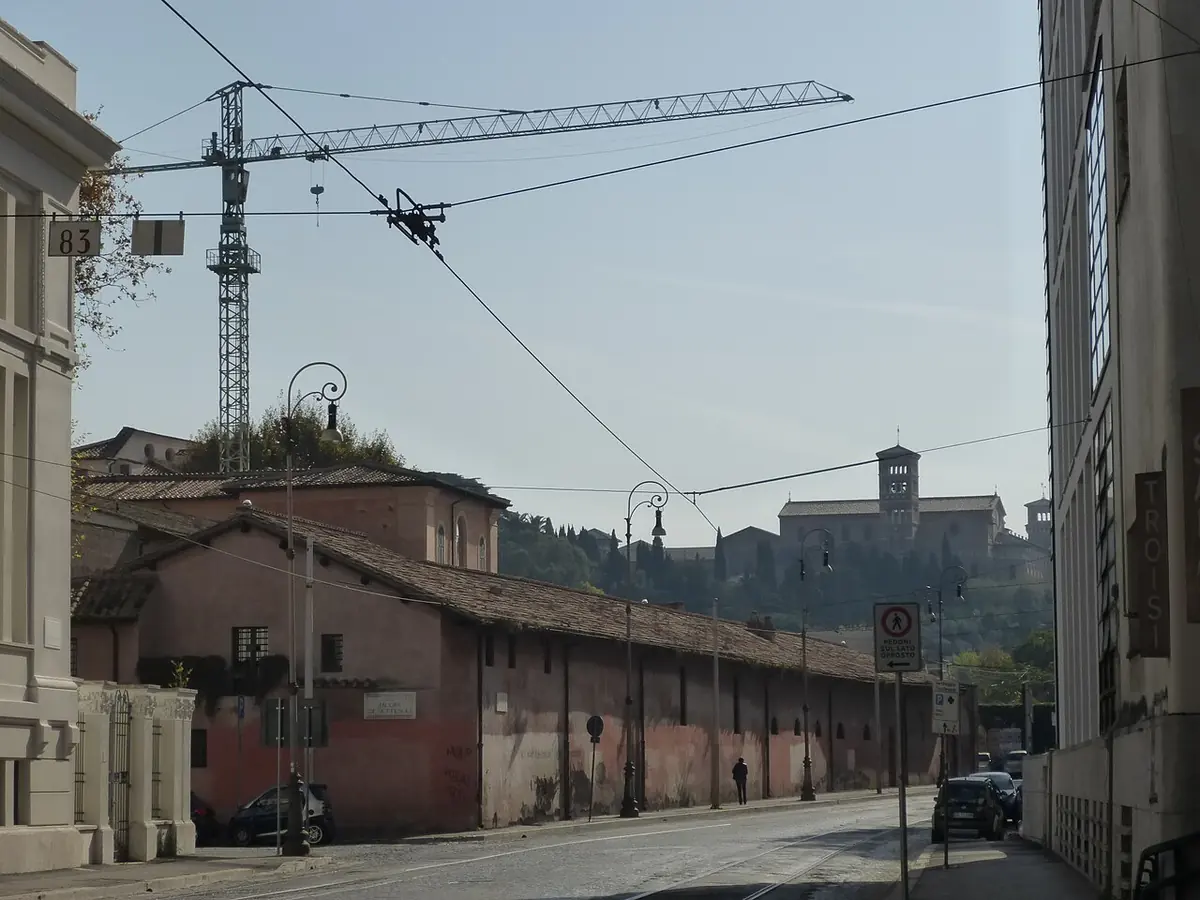
According to Franciscan tradition she gave the friars property in Trastevere as a place to stay and to care for lepers, and Francis lodged with her when he was in Rome. A street there still bears her name.
At the deathbed of St. Francis
The story Christians have loved for eight centuries comes from the last days of Francis, at the Portiuncula below Assisi. The Mirror of Perfection (chapter 112) tells it. Francis, near death, asked his companions to write to "the Lady Jacqueline of Settesoli," as the 1899 translation calls her, and ask her to send cloth "like unto ashes in colour" for his burial habit, and "the marchpane that many a time she hath made for me in the city," an almond cake that "the Romans do call mostacciuolo."
The letter was written. Before it could be sent, there was a knock at the door: Jacoba had arrived from Rome with her son and a large company. She had brought the gray cloth, the cakes, candles and incense, everything the letter asked for. She told the friars that while she was praying she had been told in spirit to go to Francis quickly, "for and thou tarriest long thou wilt not find him alive." This is a traditional account, told in the early Franciscan sources.
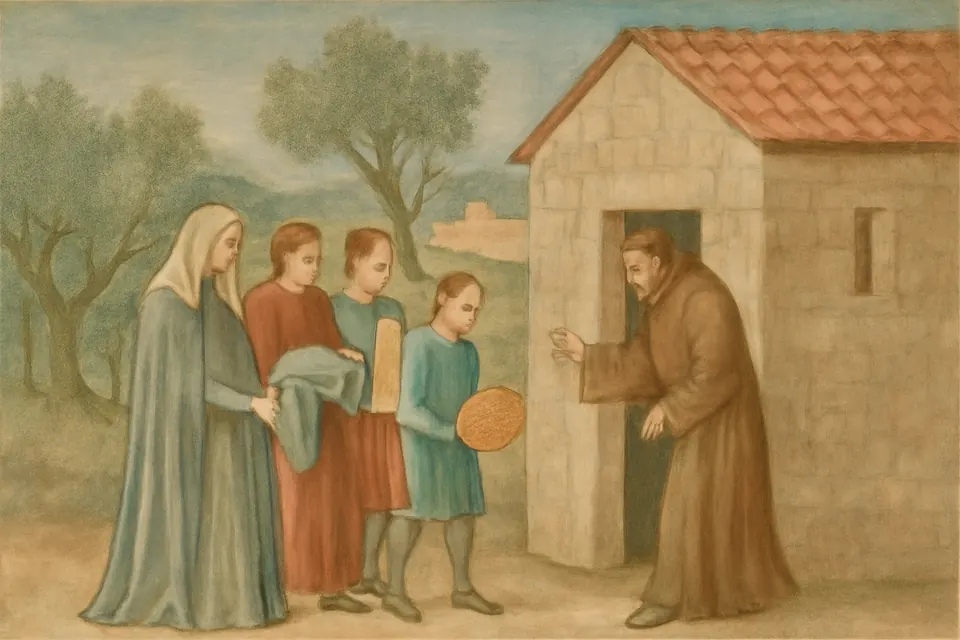
Women were not allowed inside the friary. The brothers asked Francis what to do, and he answered that the rule "is not to be observed in respect of that Lady, whom so great faith and devotion hath brought hither from parts so far away." She stayed with him until he died on the evening of October 3, 1226.

Her last years and her tomb
Tradition holds that Jacoba later came to live in Assisi, near the friars and near his grave, and died there, on February 8 according to tradition; the year is uncertain, and 1239 is the date most often given. She was buried in the Basilica of St. Francis. Since 1932 her remains have rested in the crypt, between the two stairways that lead down to the tomb of St. Francis, near the tombs of his companions Leo, Masseo, Rufino and Angelo.
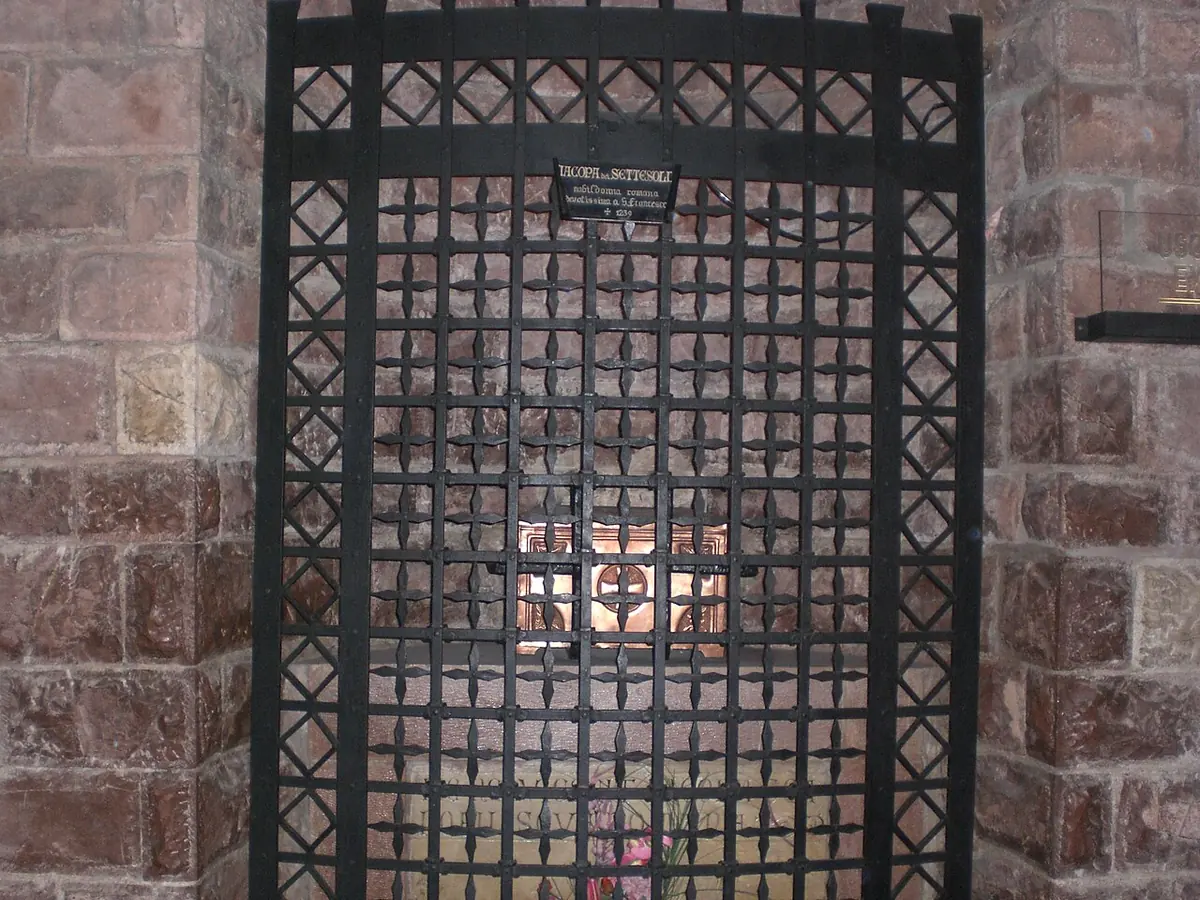
Franciscans have called her Blessed for centuries. As far as we know, her title comes from that long veneration rather than from a formal beatification.
Symbols of Blessed Jacoba of Settesoli in art
She is not often painted alone; she usually appears in scenes of the death of Francis. Look for:
- A noblewoman in gray among the friars: the only woman kneeling at Francis's deathbed.
- Gray cloth: the ash-colored cloth she brought for his habit and shroud.
- Almond cakes: the mostaccioli he asked for.
- Candles and incense: brought for his funeral.
An embroidered pillow kept at the church of San Francesco in Cortona is traditionally said to be the one on which the dying Francis rested his head, and tradition links it with Jacoba.

Feast day and customs
Franciscans keep her memory on February 8. On the evening of October 3, when Franciscan communities keep the Transitus, the remembrance of the death of Francis, many share almond cookies in her honor, often called Brother Jacoba's cookies. See also the feast day calendar and St. Clare of Assisi, the other great woman in the life of Francis.
We know of no traditional prayer to Blessed Jacoba. Let us ask her to pray for widows, for friends who stay to the end, for all who support the work of the Church with their means, and for the dying. Blessed Jacoba of Settesoli, pray for us.
Frequently asked questions
Who was Blessed Jacoba of Settesoli?
A Roman noblewoman, a widow of the Frangipani family, who met St. Francis in Rome, gave her life to prayer and works of mercy under his guidance, and supported him and his friars. She was with him when he died in 1226.
Why did St. Francis call her Brother Jacoba?
He gave her the name of a brother, "frate Jacopa," as the Basilica of St. Francis puts it. Franciscans have long taken it as praise of her strength and faithfulness, and as a way of making her one of the family.
What are Brother Jacoba's cookies?
The almond cakes Francis asked for on his deathbed, which the Romans called mostaccioli. Many Franciscan communities share almond cookies at the Transitus on October 3 in her memory.
Where is Jacoba of Settesoli buried?
In the crypt of the Basilica of St. Francis in Assisi, between the two stairways that lead down to the tomb of St. Francis.
Keep exploring
Sources
- The Mirror of Perfection, chapter 112, trans. Sebastian Evans (1899). Francis's request for the ash-colored cloth and the almond confection "the Romans do call mostacciuolo," and the Lady Jacqueline's arrival at the Portiuncula
- Basilica Papale di San Francesco: The Tomb. Her remains in the crypt between the two stairways, and the name "frate Jacopa"