St. Paul Ibaraki, Martyr of Nagasaki
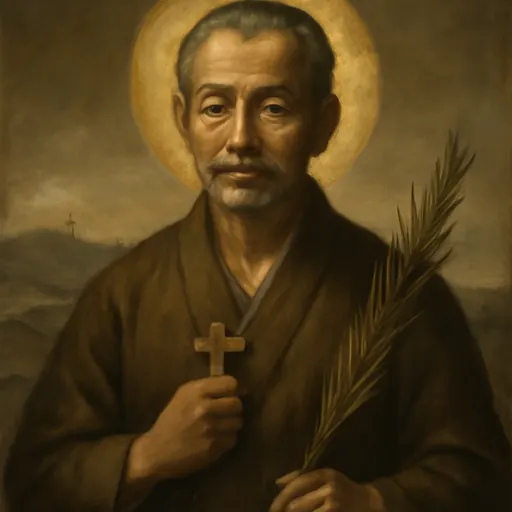
St. Paul Ibaraki was a Japanese layman from a samurai family who ran a small sake brewery in Kyoto and helped the Franciscan friars as a preacher. He was crucified at Nagasaki on February 5, 1597, with his brother and his twelve-year-old nephew, among the 26 Martyrs of Japan. We keep his feast on February 6.
Who was St. Paul Ibaraki?
St. Paul Ibaraki was a Japanese layman, born into a samurai family in Owari Province, who gave his life for Christ on a cross above Nagasaki on February 5, 1597. He was one of the 26 Martyrs of Japan, the group the Church honors as St. Paul Miki and Companions. With him on the hill were his younger brother, St. Leo Karasumaru, and his nephew, St. Louis Ibaraki, a boy of twelve.
His life was not a straight road. The Twenty-Six Martyrs Museum in Nagasaki says plainly that his faith "went through a time of testing," and that only in his last years did he find peace of soul. That makes him a saint for anyone whose faith has wavered and come home.
We keep his feast with all twenty-six on February 6.

A samurai's son in a Christian Japan
St. Francis Xavier brought the Gospel to Japan in 1549. By the 1580s the Church there had grown to about 200,000 Christians, according to the Catholic Encyclopedia, and many of the converts came from the warrior class. Paul Ibaraki was one of them. Jesuit missionaries baptized him; we don't know the year.
Then came years of trouble. In 1587 the ruler Toyotomi Hideyoshi ordered the missionaries out of the country. They went into hiding instead, and Christians lived under a cloud. The museum's short life of Paul says that his faith was tested in this period. It doesn't tell us what happened, and we shouldn't guess.
Peace among the friars of Kyoto
What we do know is how the story turned. Spanish Franciscans arrived from the Philippines in 1593 and opened a friary in Kyoto, the convent of Our Lady of the Angels. Through them, Paul found his way back to peace with God.
He chose a poor man's life near their convent. He ran a small sake brewery to support his family, and even so, the museum records, he "could still afford to help others poorer than himself." He also preached. His brother Leo, a former Buddhist monk, had become the friars' main lay helper, and several of the friars' lay helpers, the museum's list shows, kept their homes and shops right beside the convent.

Arrest and martyrdom
In late 1596 a Spanish ship, the San Felipe, was wrecked on the coast of Japan. Its pilot boasted that missionaries prepared the way for Spanish conquest, and Hideyoshi struck at the Franciscans and the Christians around them. Lists were drawn up of the Christians in Kyoto and Osaka. Paul, Leo and young Louis were all taken.
The prisoners had part of an ear cut off in Kyoto and were then marched, in midwinter, about six hundred miles to Nagasaki. Louis kept singing all the way. On February 5, 1597, the twenty-six were raised on crosses on Nishizaka Hill and killed with lances.
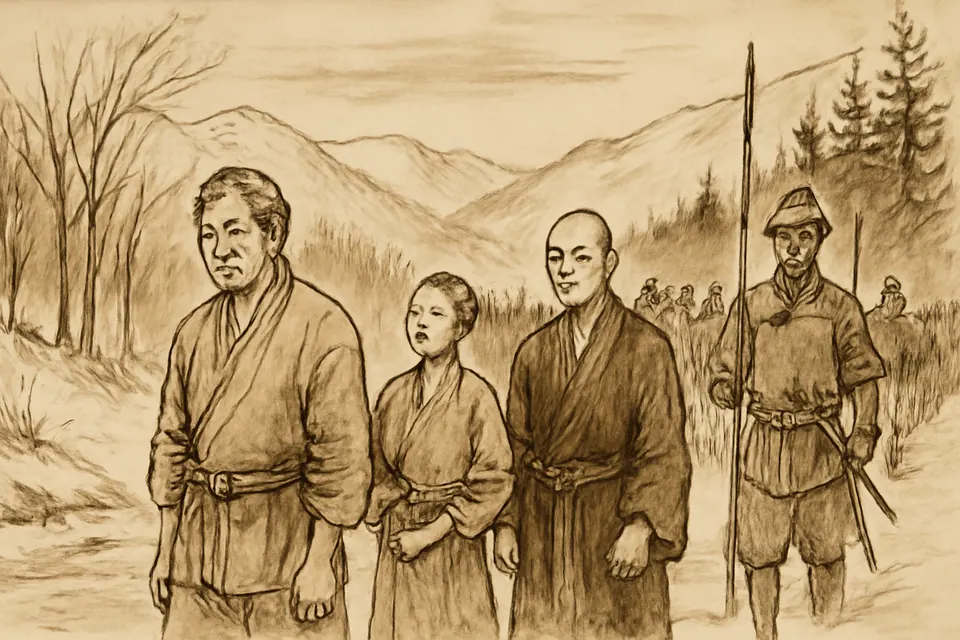
A contemporary account of that morning, read in the Liturgy of the Hours on the feast, tells how the martyrs encouraged one another and how the Jesuit Paul Miki preached from his cross, forgiving his executioners. Paul Ibaraki died in the same row as his brother and his nephew. In the order of the crosses that Luis Frois recorded, little Louis was only two places from him. We don't have his last words. We know that his nephew refused point-blank every attempt to talk him into giving up the faith, and that Paul himself, who had once lost his way, held firm to the end.
Canonization
The twenty-three martyrs who were not Jesuits, Paul among them, were beatified in 1627, and the three Jesuits were added in 1629. Pope Pius IX canonized all twenty-six in 1862; the Twenty-Six Martyrs Museum gives June 10, 1862, as the date of the final group canonization. Pope Francis prayed at their monument on Nishizaka Hill on November 24, 2019.
No miracles, approved or reported, are attached to Paul Ibaraki's name alone. As a martyr, he was raised to the altars for the witness of his death, which needs no miracle for beatification.
Symbols of St. Paul Ibaraki in art
No portrait of Paul Ibaraki from life exists. He appears in group images of the twenty-six, which show:
- The cross: the manner of his death, the same as his Lord's.
- The lance: each martyr was killed on the cross by two lance thrusts.
- The martyr's palm: victory through faithfulness to death.
- Plain Japanese dress: he was a layman and a working man, not a friar or a priest.
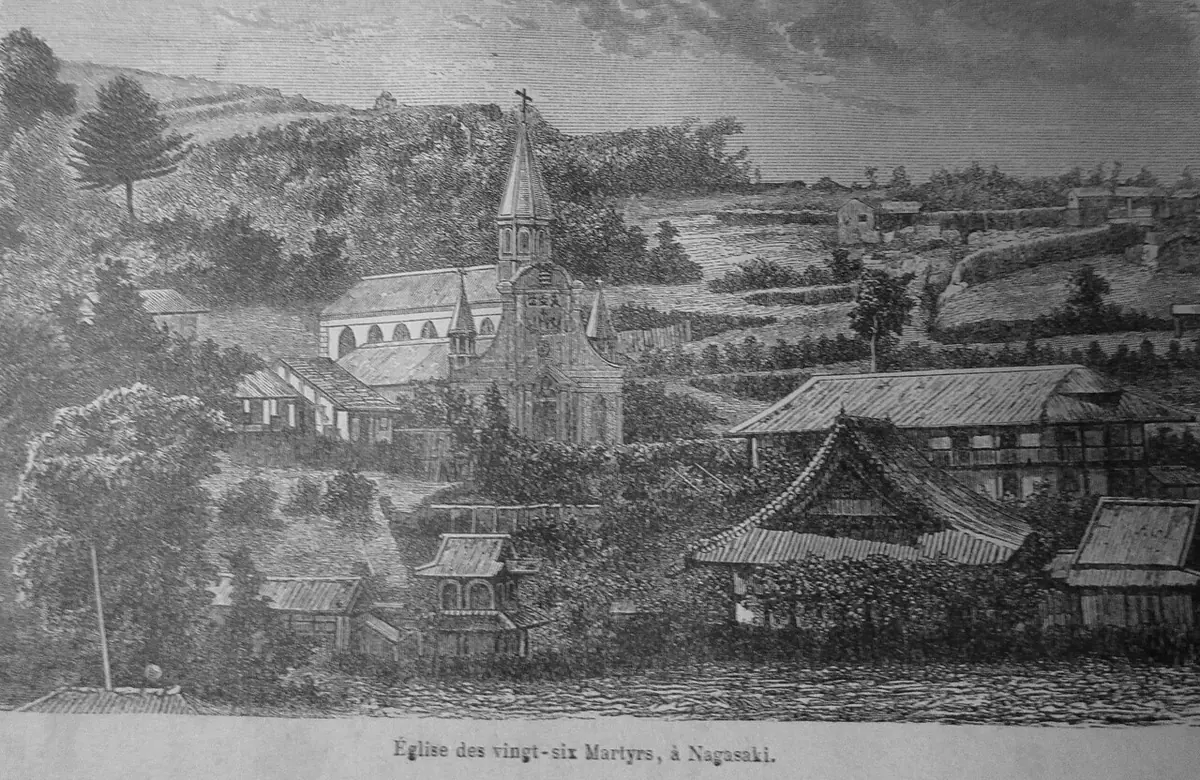
In the old engravings, such as Callot's, the martyrs look nearly alike. Paul is usually not singled out. You may find him named in the bronze relief of the twenty-six on Nishizaka Hill, where the martyrs stand in the order of their crosses.
Feast day and prayer
We honor St. Paul Ibaraki with all the Martyrs of Japan on February 6 (February 5 in Japan). Pilgrims pray at Nishizaka Hill in Nagasaki, where the martyrs died. See the feast day calendar.
There is no traditional prayer to St. Paul Ibaraki alone. On the feast the Church prays the collect of St. Paul Miki and Companions from the Roman Missal. We can also ask his help in our own words: St. Paul Ibaraki, you strayed and came back, and then gave everything for Christ. Pray for all whose faith has grown weak, for families who share the faith across generations, and for the Church in Japan.
Frequently asked questions
Who was St. Paul Ibaraki?
A Japanese Catholic layman born in Owari Province to a samurai family. Baptized by the Jesuits, he went through a time when his faith wavered, then found peace through the Franciscans in Kyoto. He lived poorly near their friary, brewing sake to support his family, gave to people poorer than himself and preached the faith. He was crucified at Nagasaki in 1597.
Was St. Paul Ibaraki related to St. Louis Ibaraki?
Yes. Twelve-year-old St. Louis Ibaraki, the youngest of the twenty-six martyrs, was his nephew. Paul's younger brother, St. Leo Karasumaru, a former Buddhist monk who became the friars' chief lay helper, died with them too.
When is the feast of St. Paul Ibaraki?
February 6, the memorial of St. Paul Miki and Companions. In Japan the martyrs are honored on February 5, the day they died.
When was St. Paul Ibaraki canonized?
Pope Pius IX canonized the twenty-six martyrs of Nagasaki together in 1862. The Twenty-Six Martyrs Museum gives June 10, 1862, as the date of the final group canonization. He had been beatified with the lay martyrs in 1627.
Keep exploring
Sources
- Twenty-Six Martyrs Museum, Nagasaki: List of the 26 Martyrs of Japan (archived). Paul Ibaraki's samurai family, his wavering faith, the sake brewery near the Franciscan friary of Our Lady of the Angels, his brother Leo and nephew Louis; beatification in 1627 and canonization in 1862
- Catholic Encyclopedia (1910): Japanese Martyrs. The 1587 edict, the San Felipe affair and the crucifixion of twenty-six Christians at Nagasaki on February 5, 1597
- Matthew E. Bunson, "Twenty-Six Crosses on a Hill," Catholic Answers Magazine (2007). Paul Ibaraki as a member of a distinguished samurai family; his brother Leo Karasumaru a former Buddhist monk
- Pope Francis, Tribute to the Martyr Saints at the Martyrs' Monument, Nishizaka Hill, Nagasaki, 24 November 2019