St. Richard the Pilgrim, Father of Sts. Willibald, Wynnebald and Walburga

St. Richard the Pilgrim was an Anglo-Saxon father from Wessex who set out for Rome with his sons, Sts. Willibald and Wynnebald, about 720 and died on the way at Lucca, where he is buried in the church of San Frediano. He was also the father of St. Walburga. Later tradition called him a king of the English. The Roman Martyrology keeps his memory on February 7.
Who was St. Richard the Pilgrim?
St. Richard the Pilgrim was an Anglo-Saxon father from Wessex in southern England who left home in his later years to make a pilgrimage to Rome with his two sons, and died on the road at Lucca in Tuscany about the year 720. His sons were St. Willibald, later the first bishop of Eichstätt, and St. Wynnebald, abbot of Heidenheim. His daughter was St. Walburga. Few fathers have given the Church three saints.
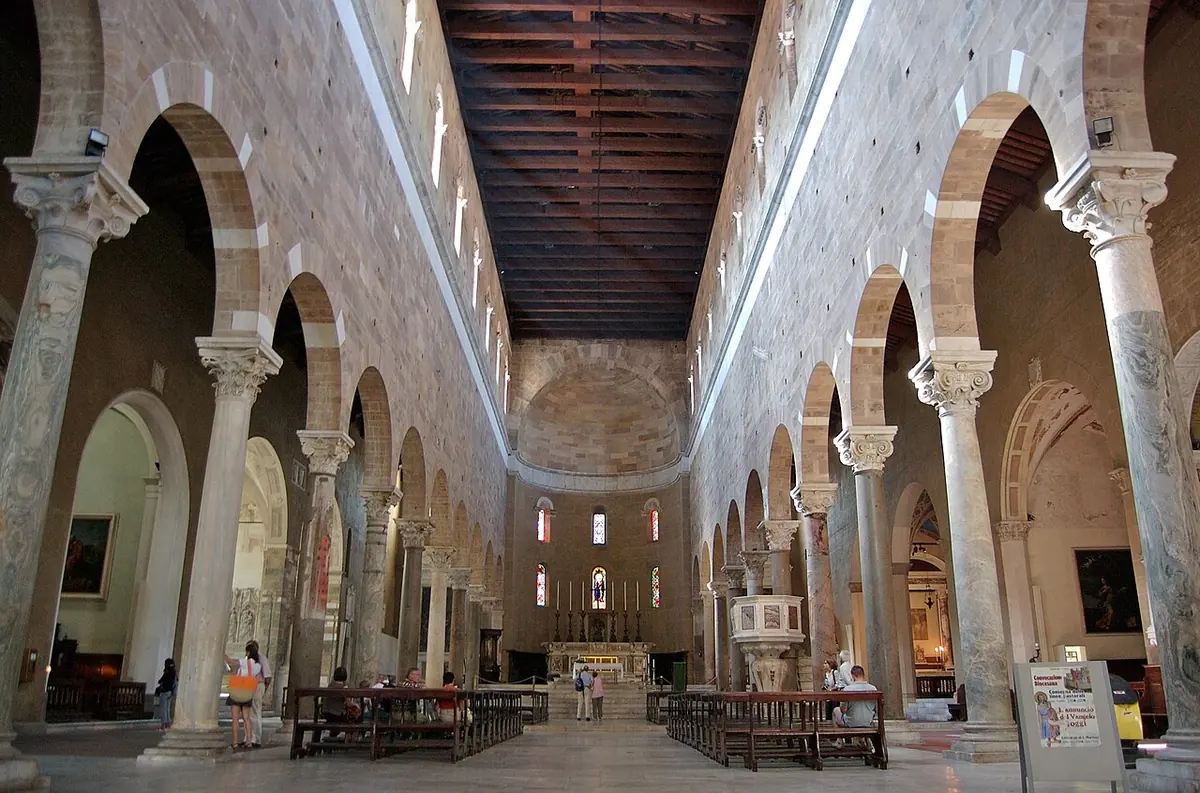
He is buried in the Basilica of San Frediano in Lucca, where the Italians call him San Riccardo. The Roman Martyrology names him on February 7.
What we know and what tradition adds
The oldest and best source for Richard is the Hodoeporicon, the account of Willibald's travels written by Huneberc, an English nun of Heidenheim, during Willibald's lifetime. She says she heard the story "from his own lips in the presence of two deacons." It is a precious text, and it is sober. It never gives the father's name and never calls him a king. It simply calls him Willibald's father.
The name Richard, the royal title and many of the stories about him come from later centuries, above all from Eichstätt, where his children were honored. The translator of the Hodoeporicon points readers to the Bollandists' study of "the legend and miracles of the King St. Richard." The Roman Martyrology follows the tradition and calls him "king of England." We give the old account first and mark the later tradition as such.
The life of St. Richard the Pilgrim
A father in Wessex
Richard was a man of good family in Wessex, married, with young children. The Hodoeporicon tells that when his son Willibald was three, the boy fell so ill that his parents feared he would die. They laid him at the foot of a cross, for, Huneberc explains, Saxon nobles kept a cross on some prominent spot of their estates for those who wished to pray before it daily. They promised that if he lived they would give him to God as a monk. He recovered, and at five he was given to the monastery of Waltham in Hampshire.
The Catholic Encyclopedia adds the tradition that Richard's wife, Wuna or Winna, was a relative of St. Boniface; some later writers made her his sister.
"To enter into the divine service"
When Willibald was a young monk he wanted to go on pilgrimage, and he wanted his father to come. Huneberc tells the scene in detail. Willibald begged his father "to enter, with the help of God, into the divine service," to leave his country and come with his sons to the shrine of St. Peter. At first Richard refused: he could not abandon his wife and small children, and it would be "cruel, and unchristian" to leave them without his protection. Willibald kept at it, speaking to him of paradise and the love of Christ, and "at last, by the help of Almighty God, his insistence prevailed."
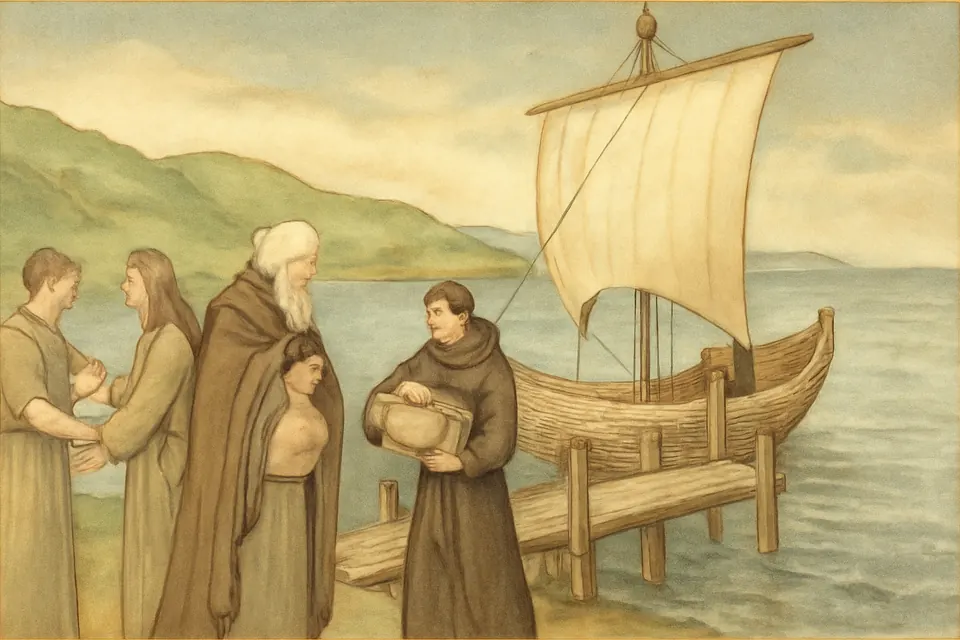
Toward the end of summer, Richard, Willibald and Wynnebald set out with a band of friends. They took ship at Hamblemouth near the port of Hamwih, today Southampton, crossed the sea and camped on the banks of the Seine near Rouen.
Death at Lucca
They traveled from shrine to shrine across France and over the Alps into Italy. At Lucca, Richard fell gravely ill. Huneberc writes:
But at Lucca he was struck down almost at once by a severe bodily sickness and after a few days it seemed that his end was near. As the sickness increased, his weary limbs grew cold and stiff, and in this way he breathed his last.
His sons wrapped his body in a fine shroud and "with filial piety buried it in the Church of Saint Frigidian at Lucca, where it still rests." Then they went on to Rome. The Catholic Encyclopedia dates the pilgrimage to 722; other reckonings put it a year or two earlier.

His children
Richard's sons went on to great things. Willibald traveled to the Holy Land, lived ten years at Monte Cassino, and was sent by the pope to help St. Boniface in Germany, where he became the first bishop of Eichstätt. Wynnebald founded the double monastery of Heidenheim with his brother. When Willibald returned from Rome to Germany years later, Huneberc notes, he went first to Lucca, "where his father was buried." Their sister Walburga, left in the care of the nuns of Wimborne when her father and brothers set out, joined them in Germany and governed Heidenheim after Wynnebald's death.
Miracles and veneration
No miracles of Richard's life are recorded in the Hodoeporicon. Later tradition at Lucca and Eichstätt tells of wonders at his tomb; these are traditional, and we do not know their details from an early source.
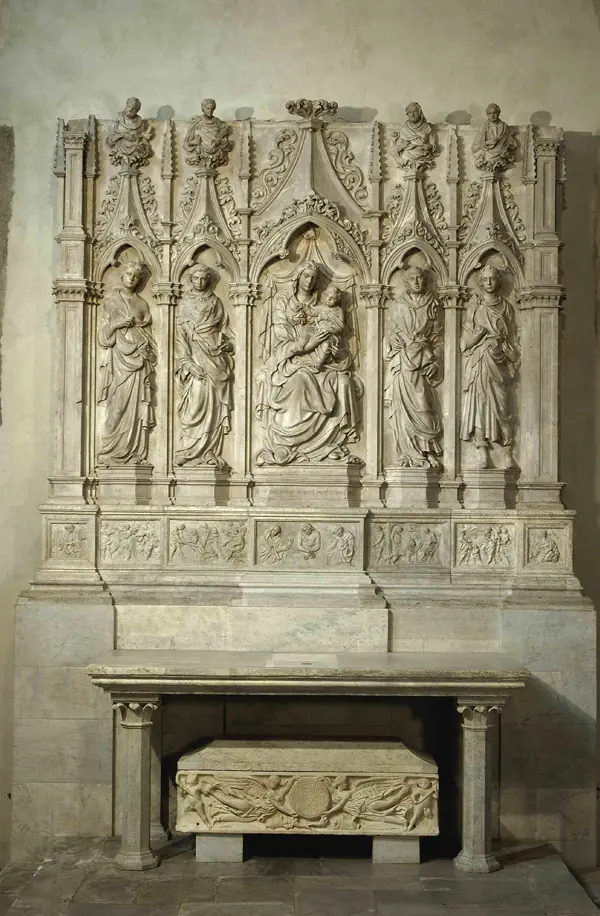
Lucca has honored him for centuries. San Frediano holds his tomb beneath a marble altarpiece carved by Jacopo della Quercia in 1422 for the Trenta chapel, with the Virgin and Child among Sts. Ursula, Lawrence, Jerome and Richard. A 13th-century painting in the same church shows the Madonna between St. Zita, Lucca's beloved servant saint, and St. Richard.
Symbols of St. Richard the Pilgrim in art
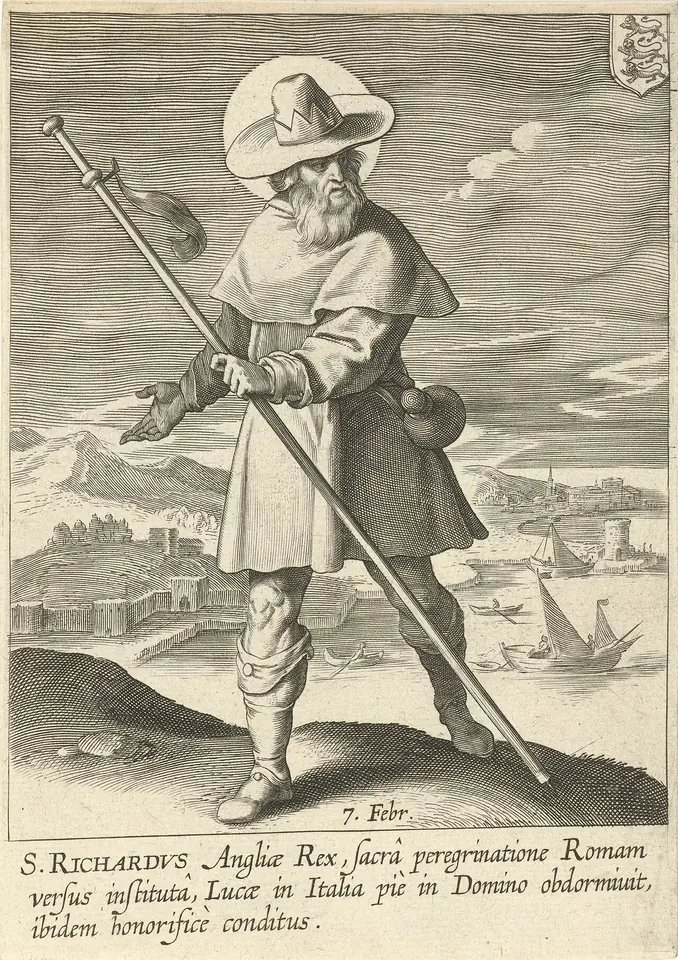
Richard appears in two ways. As a pilgrim he wears a broad hat and long cloak and carries a staff and a bag, like the engraving of 1606 at the top of this page. As a king, following the later tradition, he wears a crown and holds a scepter, sometimes with his three children around him. In Lucca he often stands beside the Virgin with other local saints.

Feast day and prayer
The Roman Martyrology keeps him on February 7: "At Lucca, in Tuscany, the demise of St. Richard, king of England." See other saints of February on our feast days calendar.
There is no traditional prayer to St. Richard the Pilgrim in common use. He is a fitting saint for fathers, for those who are slow to say yes to God, and for anyone who dies far from home. Let us ask him to pray for fathers and their children, and for all pilgrims on the road. St. Richard, pray for us.
Frequently asked questions
Who was St. Richard the Pilgrim?
The father of three Anglo-Saxon saints, Willibald, Wynnebald and Walburga. Persuaded by Willibald, he left his home in Wessex to go on pilgrimage to Rome, fell ill at Lucca in Tuscany and died there. His sons buried him in the church of San Frediano.
Was St. Richard really a king?
The oldest account, written by a nun of Heidenheim who knew Willibald, calls him only their father and does not give his name. The name Richard and the title of king come from later tradition, especially at Eichstätt. The Roman Martyrology calls him "king of England."
When is the feast of St. Richard the Pilgrim?
February 7, the day the Roman Martyrology gives for his death at Lucca.
Where is St. Richard buried?
In the Basilica of San Frediano in Lucca, Italy. Jacopo della Quercia's marble altarpiece of 1422 stands above his tomb.
Keep exploring
Sources
- The Hodoeporicon of St. Willibald by Huneberc of Heidenheim, Internet Medieval Sourcebook (Fordham University). The oldest account: the journey from Hamblemouth, the death at Lucca and burial in San Frediano, quoted on this page
- Sts. Willibald and Winnebald, Catholic Encyclopedia (1912), New Advent. The family, the pilgrimage of 722, and the burial at Lucca
- St. Walburga, Catholic Encyclopedia (1912), New Advent. Richard as Walburga's father and the tradition about her mother
- The Roman Martyrology (Baltimore: John Murphy, 1897), Internet Archive. February 7