Blessed Elisabetta Canori Mora, Faithful Wife and Mother of Rome
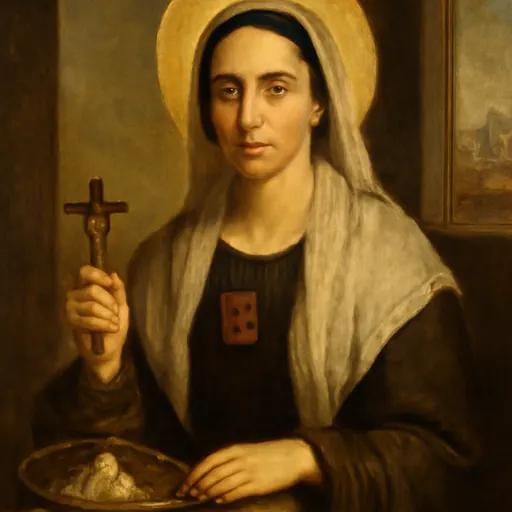
Blessed Elisabetta Canori Mora (1774–1825) was a Roman wife and mother whose husband, Cristoforo Mora, betrayed her with another woman for decades and left the family in poverty. She stayed faithful, supported her daughters by sewing, served the poor and offered her life for his conversion as a Trinitarian tertiary. After her death he repented and became a Franciscan priest. John Paul II beatified her on April 24, 1994. Her feast is February 5.
Who was Blessed Elisabetta Canori Mora?
Blessed Elisabetta Canori Mora was a wife and mother of Rome who kept her marriage vows through nearly thirty years of betrayal. Her husband was unfaithful, violent at times, and squandered the family's money. She did not leave him, and she did not grow bitter. She worked with her hands to feed her daughters, gave what little she had to the poor, and offered her whole life to God for her husband's salvation. On the morning she died, he came home from a night out to find her gone, and he wept. Eleven years later he was a Franciscan priest.
When Pope John Paul II beatified her in 1994, the International Year of the Family, he set her beside St. Gianna Beretta Molla and called them both "women of heroic love" (our translation).
The life of Blessed Elisabetta
A daughter of Rome
Elisabetta Canori was born in Rome on November 21, 1774, to Tommaso Canori and Teresa Primoli, a well-off and devout family of landowners. Bad harvests later brought the family low, and an uncle in Spoleto took charge of Elisabetta and her younger sister Benedetta. He placed them with the Augustinian nuns of the monastery of St. Rita at Cascia, where Elisabetta stood out for her mind and her prayer.
Back in Rome she enjoyed society for a few years. She would later call that time a "betrayal" of God. Benedetta became a nun in 1795, but Elisabetta would not leave her struggling family.
A marriage that broke
On January 10, 1796, she married Cristoforo Mora, a young lawyer and the son of a well-known Roman physician. He seemed devout and devoted. Within months he became obsessively jealous, then cold, and then he fell for another woman. He neglected his work, gambled and ran up debts. Of the four daughters Elisabetta bore him, two survived: Marianna, born in 1799, and Maria Lucina, born in 1801.
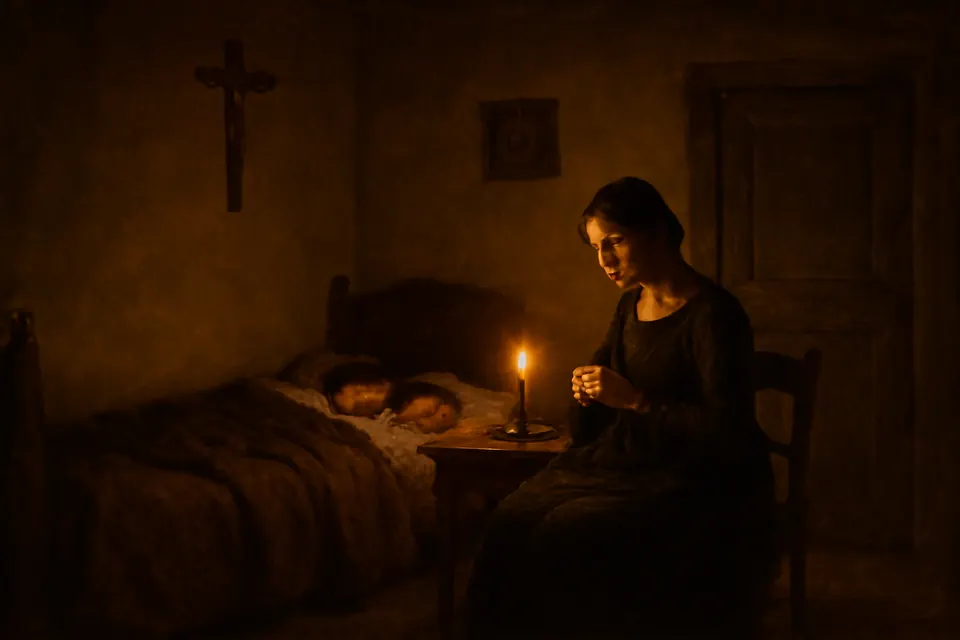
Santi e Beati records that she sold her jewels and even her wedding dress to pay his creditors. His own family blamed her. Friends and even some confessors urged her to leave a man who might one day kill her. She refused. She believed, in the words of her biographer Gianpiero Pettiti, that the bond of the sacrament was greater than any betrayal. She waited up for him each night and received him kindly, and she taught her daughters to respect even the other woman, for whom she prayed.
A Trinitarian in the world
She supported the household, her husband included, by sewing. Under wise spiritual directors she joined the secular Third Order of the Most Holy Trinity, the order founded by St. John of Matha and St. Felix of Valois to ransom captives. She offered herself for her husband, for the pope, for the Church and for the city of Rome. At her confessor's command she kept a diary, later published as Nel cuore della Trinità (In the Heart of the Trinity). In it she wrote: "I resolve to desire nothing for my own profit, but to do at every moment of my life the holy will of God" (our translation).
Poor as she was, she cared for the sick and the beggars of her neighborhood, and her small house became a place where troubled families came for help and counsel.

Death and a husband's conversion
She died in Rome on February 5, 1825, at fifty, after a forty-day illness. Cristoforo, who had gone out that night as usual, came home at dawn to find her dead, and broke down in tears. From that hour he began to change. He said of her, as her biographers record, "Such a mother is not to be found in the world, and I am unworthy to have been her husband" (our translation). He joined the Trinitarian Third Order, then the Conventual Franciscans, and was ordained a priest in 1834. He died eleven years later with a reputation for holiness.
Gifts and miracles
- The prophecy (reported). When Cristoforo mocked her faith, she would answer, "Laugh, laugh; you will say Mass and hear confessions." Santi e Beati records the words, and Cristoforo's ordination in 1834 fulfilled them.
- Mystical gifts (reported). Her biographers speak of mystical experiences, reading of hearts and healings during her life, and her fame in Rome for them. Her diary records her visions.
- Beatification (approved). She was not a martyr, so her beatification by John Paul II on April 24, 1994, required a miracle approved by the Church through her intercession. We have not found a published account of it that we can cite, so we leave its details out.
Symbols of Blessed Elisabetta in art
- The plain dress of a Roman wife: she was a laywoman, and is never shown in a nun's habit.
- The Trinitarian scapular, marked with a cross of red and blue: the sign of the Trinitarian family she joined.
- Sewing: the work by which she fed her family.
- Her daughters: for her care as a mother.
- The crucifix: her strength in suffering.
Feast day and where she is honored
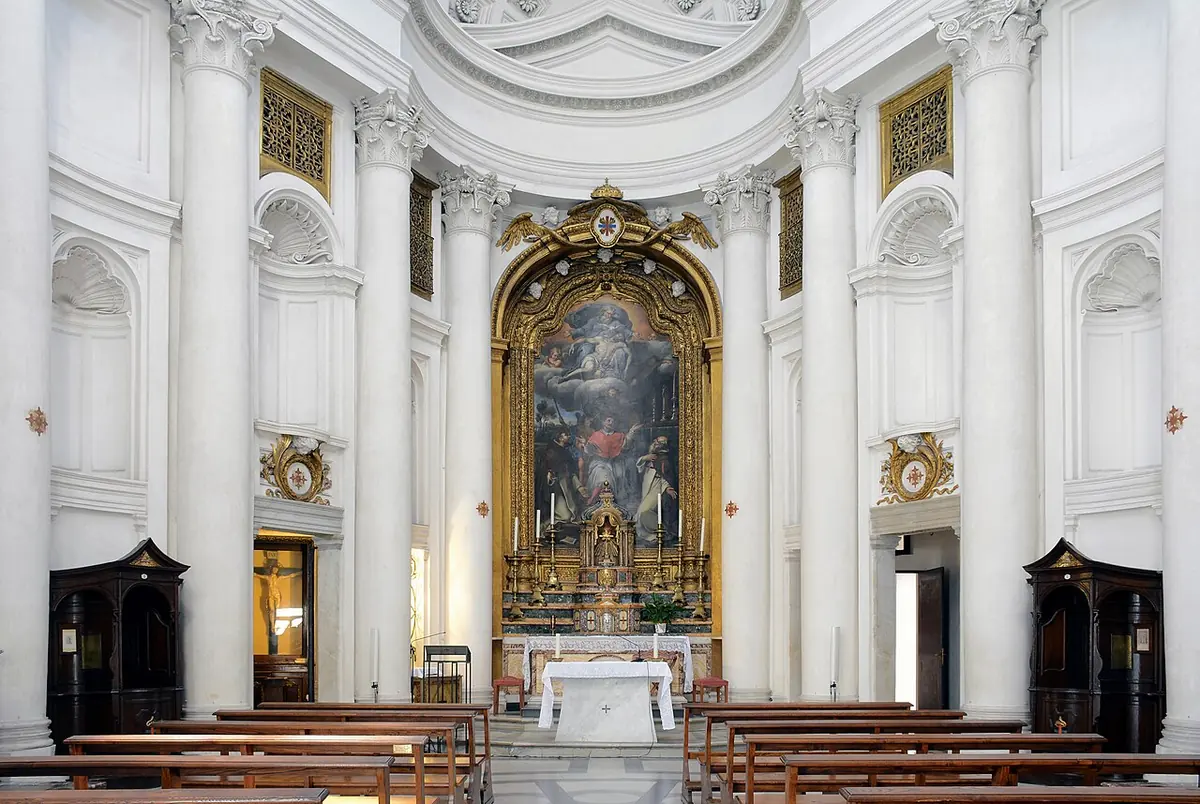
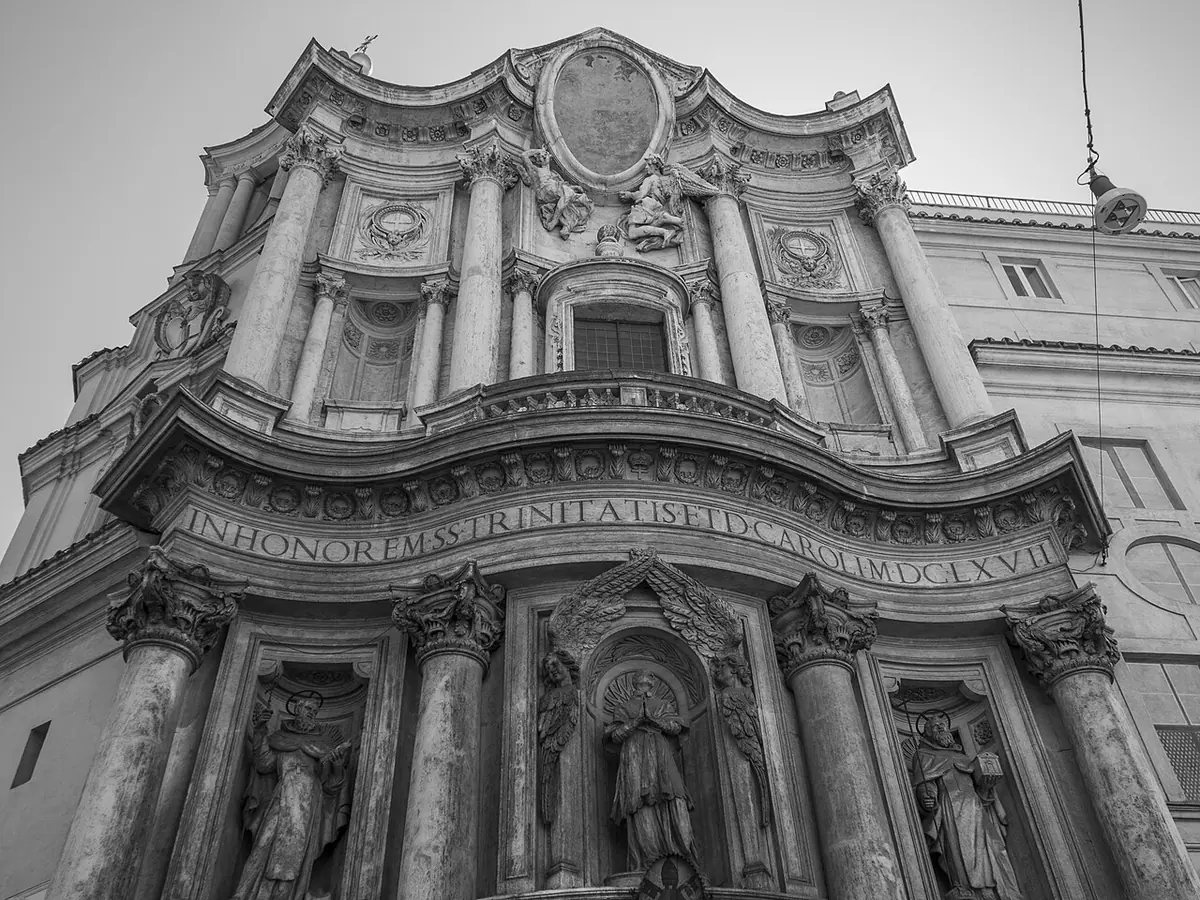
Her feast is February 5. Her body rests in Rome in San Carlo alle Quattro Fontane, Borromini's small Baroque church on the Quirinal, served by the Spanish Trinitarians. Her contemporary Blessed Anna Maria Taigi, another wife and Trinitarian tertiary of Rome, was received into the Third Order in the same church. See others honored in February on our feast days page.
Praying with Blessed Elisabetta
We have not found a traditional prayer to her that we can cite, and we will not invent one in her name. The Roman Martyrology gives the Church's own portrait of her: after long suffering from her husband's unfaithfulness, from poverty and from the cruel harassment of relatives, "she bore everything with unsurpassed charity and patience and offered her life to the Lord for the conversion, salvation, peace and sanctification of sinners" (our translation).
Let us ask Blessed Elisabetta Canori Mora to pray for wives and husbands in broken and painful marriages, for spouses who have strayed, for mothers raising children alone and for all who pray for the conversion of someone they love.
Frequently asked questions
Who was Blessed Elisabetta Canori Mora?
A Roman wife and mother, born in 1774, who married the lawyer Cristoforo Mora in 1796. He soon took up with another woman and ruined the family's finances. Elisabetta refused to leave him, raised their two daughters, worked to keep the household, cared for the poor and the sick, and joined the Third Order of the Most Holy Trinity. She died on February 5, 1825.
Is Blessed Elisabetta Canori Mora a patron of difficult marriages?
She has no official patronage, but in Rome she was already seen as the patient saint of betrayed wives, and today people in hard marriages ask her prayers. John Paul II praised her "total fidelity" to the commitment of the sacrament of marriage.
What happened to her husband, Cristoforo Mora?
He wept over her body on the morning she died and began to change his life. He joined the Trinitarian Third Order, then the Conventual Franciscans, and was ordained a priest in 1834, as she had foretold. He died with a reputation for holiness.
Where is Blessed Elisabetta Canori Mora buried?
In the church of San Carlo alle Quattro Fontane, known as San Carlino, the church of the Spanish Trinitarians in Rome.
Keep exploring
- Patron saint pages
- Marriage
- Feast-day calendar
- Saints remembered in FebruarySaint of the day
- More
- Saints A to ZPatron saints A to ZExplore every section
Sources
- John Paul II, Homily for the beatification of Isidore Bakanja, Gianna Beretta Molla and Elisabetta Canori Mora, 24 April 1994, Vatican (Italian). "Women of heroic love"; her total fidelity to the sacrament of marriage and her husband's conversion (our translations from the Italian)
- Beata Elisabetta Canori Mora, Santi e Beati. Birth, schooling at Cascia, marriage in 1796, her daughters, her diary, her sayings, the prophecy of her husband's priesthood, his conversion and ordination in 1834, burial at San Carlino, the Roman Martyrology entry (our translations from the Italian)
- Trinitarians, Order of, Catholic Encyclopedia (1912). The Order of the Most Holy Trinity and its Third Order