Blessed Anselmo Polanco, Augustinian Bishop of Teruel and Martyr
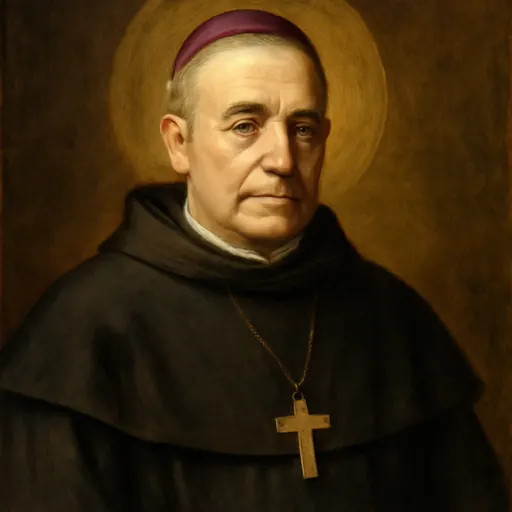
Blessed Anselmo Polanco (1881–1939) was a Spanish Augustinian friar who became bishop of Teruel in 1935. During the Spanish Civil War he refused to leave his besieged city, was taken prisoner in January 1938, and was shot with his vicar general and other prisoners on February 7, 1939. He was beatified as a martyr on October 1, 1995. His feast is February 7.
Who was Blessed Anselmo Polanco?
Blessed Anselmo Polanco was a Spanish Augustinian friar who spent most of his life teaching young religious and governing his order, and then, at fifty-four, was made bishop of Teruel. Fifteen months later the Spanish Civil War broke out. Teruel was besieged. Polanco would not leave his people, was taken prisoner when the city fell, and after a year of captivity was shot on February 7, 1939, with his vicar general, Felipe Ripoll, and dozens of other prisoners.
The Church honors him as a martyr, killed for the faith. Beatifying him in 1995, St. John Paul II said the martyrs "renounce defending themselves not because they think little of life, but because of their total love for Jesus Christ" (our translation).
The life of Blessed Anselmo
An Augustinian from the fields of Palencia
Anselmo Polanco Fontecha was born on April 16, 1881, in Buenavista de Valdavia, in the province of Palencia, to Basilio and Ángela, a farming family. He learned his Latin at a nearby village school and at fifteen entered the novitiate of the Augustinians of the Philippine province at Valladolid, taking the habit in August 1896. Illness sent him home for a long stretch. He recovered, made solemn profession in 1900, studied theology at the monastery of Santa María de La Vid, and was ordained a priest on December 17, 1904.
After a period of study in Germany he spent most of the next twenty-five years forming young friars: master of the professed, professor of theology at La Vid, and superior of the house at Valladolid. His mother gave him advice he kept: "You were a good son to your parents; now be a good father to your sons" (our translation). In 1929 he became a councilor of the Philippine province and then its provincial, visiting the order's houses in the Philippines, China, Japan, the United States and South America.
Bishop of Teruel
On June 21, 1935, Pope Pius XI named him bishop of Teruel and apostolic administrator of Albarracín. He was consecrated at Valladolid on August 24 and entered his diocese on October 7, 1935. He took as his motto St. Paul's words: "I will most gladly spend and be spent for your souls" (2 Corinthians 12:15). On the day he arrived, John Paul II recalled, he said as if by a presentiment: "I have come to give my life for my sheep" (our translation).
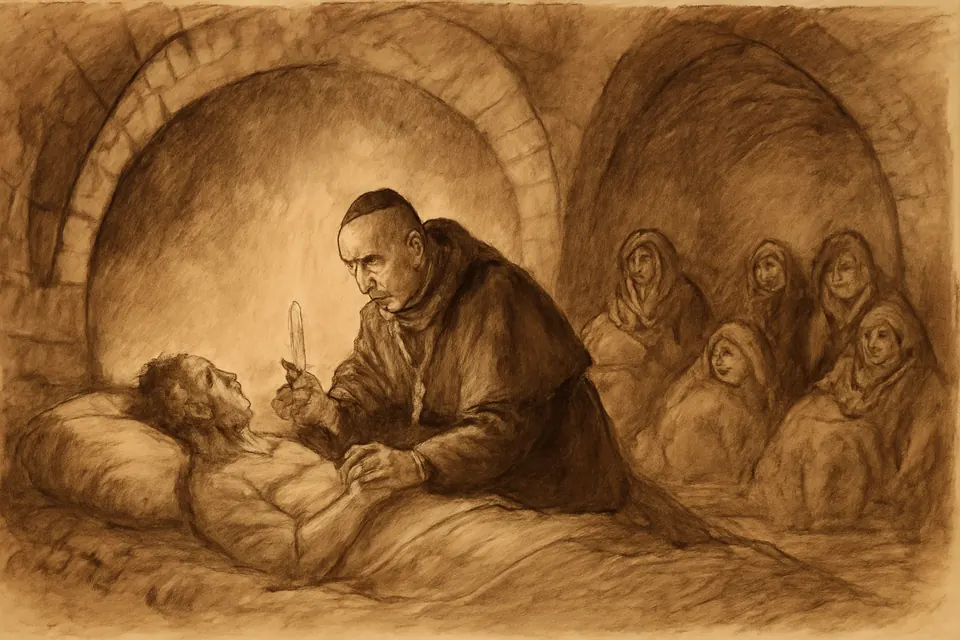
When war came in July 1936, Teruel ended up on the front line. Through the long siege the bishop visited the wounded everywhere. His mother died during those months, and he went home to bury her. On his return, the papal nunciature and his own Augustinian brothers urged him to stay away until the danger passed. He answered: "The shepherd must be where his sheep are" (our translation).
Prisoner
When Republican troops took Teruel on January 7, 1938, the bishop was living in the convent of Santa Clara, since bombs had destroyed the seminary. He was arrested with his vicar general, Felipe Ripoll, and taken to Valencia and then Barcelona. In prison, visitors pressed him to withdraw his signature from the Spanish bishops' collective letter of July 1, 1937, which had sided with the Nationalists against the persecution of the Church in the Republican zone. He refused.
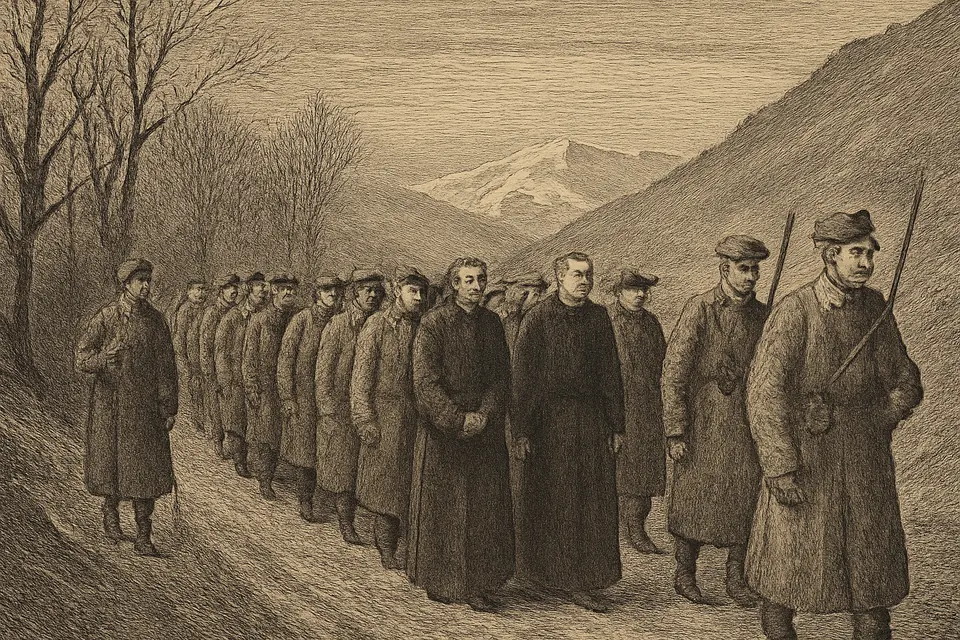
As the Republican army fell back toward France at the start of 1939, the bishop and his companions were taken north as hostages. They went by train to Ripoll and on foot through the night to Sant Joan de les Abadesses, then by truck toward Figueres. On February 3 they were shut in a farmhouse at Pont de Molins, near the French border.
Martyrdom
On February 7, 1939, armed militiamen took the prisoners from the prison guards, bound them in pairs and drove them to the ravine of Can Tretze at Pont de Molins. There they shot all forty-two and burned the bodies. Bishop Polanco was fifty-seven. A shepherd found the remains ten days later, and they were buried in a common grave. In March the bodies of the bishop and his vicar general were exhumed and carried back to Teruel.
Beatification
St. John Paul II beatified Anselmo Polanco and Felipe Ripoll as martyrs in St. Peter's Square on October 1, 1995, in a ceremony that also honored martyrs of the French Revolution and other victims of the Spanish Civil War. He said that the two, faced with the choice of giving up the demands of the faith or dying for it, "strengthened by the grace of God, put their own destiny in his hands" (our translation). As with all martyrs, no approved miracle was required for his beatification.
Symbols of Blessed Anselmo in art
- Augustinian habit: the black habit and leather belt of the Order of St. Augustine, which he wore as a bishop.
- Miter and crosier: his office as shepherd of Teruel.
- Martyr's palm: the sign of his death for Christ.
- Pectoral cross: the simple cross of a bishop, worn over his habit.
He lived in the age of photography, so his images follow his photographs rather than an artistic tradition.
Feast day and where he is honored
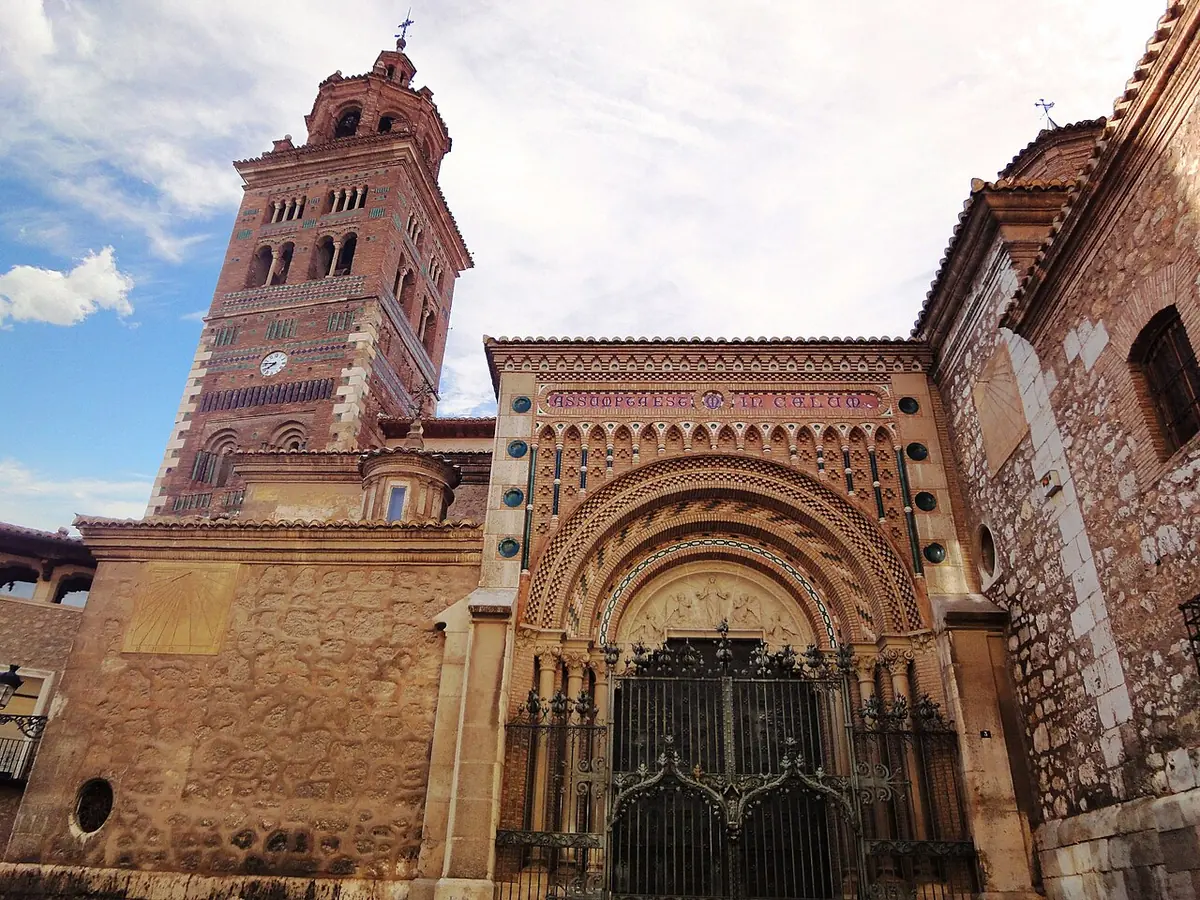
His feast is February 7. He and Felipe Ripoll were first buried in the chapel of St. Emerentiana in the cathedral of Teruel, and in 1999 they were moved to the crypt under the high altar. His birthplace in Palencia and the Augustinians of Valladolid also keep his memory. See others honored in February on our feast days page.
Praying with Blessed Anselmo
We have not found an official English prayer to Blessed Anselmo Polanco, so we do not print one. His motto is a prayer any bishop, priest or parent can make: to spend and be spent for the souls in our care.
Let us ask Blessed Anselmo Polanco and Blessed Felipe Ripoll to pray for pastors who stay with their people in danger, for prisoners and hostages, and for peace and reconciliation in every land torn by civil war.
Frequently asked questions
Who was Blessed Anselmo Polanco?
An Augustinian friar from Palencia, teacher and provincial of his order's Philippine province, who was named bishop of Teruel in 1935. Captured when Republican forces took Teruel in January 1938, he was held for a year and killed near the French border on February 7, 1939.
When is the feast of Blessed Anselmo Polanco?
February 7, the anniversary of his martyrdom, shared with his vicar general, Blessed Felipe Ripoll.
What was his episcopal motto?
"I will most gladly spend and be spent for your souls," from St. Paul's Second Letter to the Corinthians (12:15).
Where is Bishop Polanco buried?
In the crypt beneath the high altar of the cathedral of Teruel, with Felipe Ripoll. Their remains were brought there in 1939 and moved to the crypt in 1999.
Keep exploring
Sources
- John Paul II, Omelia per la beatificazione di 64 vittime della rivoluzione francese, 45 vittime della guerra civile in Spagna e un religioso scolopio italiano, October 1, 1995, Vatican. His motto, his words on entering the diocese, and his staying with his flock
- Anselmo Polanco Fontecha, Obispo, Congregation for the Clergy (clerus.org), from M. E. González Rodríguez, Los primeros 479 santos y beatos mártires del siglo XX en España. His family and studies, offices in the order, the siege and capture of Teruel, imprisonment, the march to Pont de Molins, the 42 prisoners shot on February 7, 1939, and his burial