St. Gonsalo Garcia, Martyr of Nagasaki
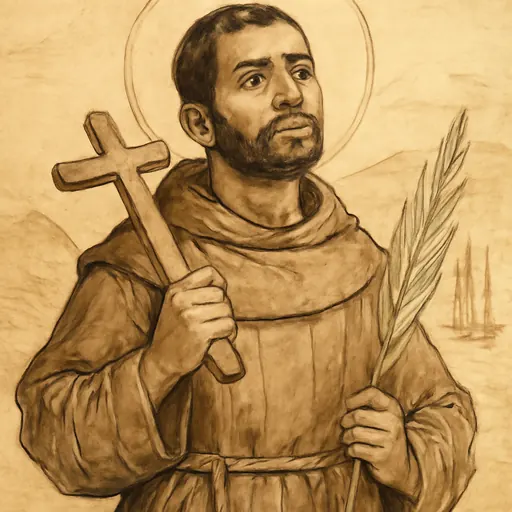
St. Gonsalo Garcia (1556–1597) was a Franciscan lay brother born at Bassein, today's Vasai. After years as a catechist, merchant and interpreter in Japan, he was crucified at Nagasaki with twenty-five companions on February 5, 1597. Canonized in 1862, he is the patron of the Diocese of Vasai and is often called the first saint born in India.
Who was St. Gonsalo Garcia?
St. Gonsalo Garcia was a Franciscan brother from India who died on a cross at Nagasaki, Japan, on February 5, 1597. He was born in 1556 at Bassein, the Portuguese fortress town now called Vasai, some thirty miles north of Mumbai. His father is usually described as Portuguese and his mother as Indian. He grew up in the shadow of the Jesuit church in the fort, learned his faith from the Jesuits, and spent most of his short life far from home, in Japan, Macao and the Philippines.
He was crucified with twenty-five companions, the group we honor as St. Paul Miki and Companions. Pope Pius IX canonized them in 1862. The Catholic Encyclopedia of 1907 called Gonsalo "the only Indian saint," and to this day the Church in Mumbai and Vasai honors him as the first saint born on Indian soil.
A boy from Bassein
In the sixteenth century Bassein was the chief Portuguese settlement in northern India, a walled town of churches and convents that rivaled Goa. The Archdiocese of Bombay records that Gonsalo was educated by the Jesuits at the Bassein fort. Their great church still stands there, roofless now, inside the ruined walls.
While still a teenager, he sailed to Japan with a Jesuit priest. He picked up Japanese on the voyage, and once there he became a catechist, teaching the faith in a country where the Jesuits had been at work since St. Francis Xavier arrived in 1549. The young Indian teacher was well liked by the Japanese boys and young men he taught.

Merchant, friar, interpreter
Gonsalo hoped to become a missionary, but he was turned away, first as too young and later when he asked to join the Society of Jesus. The Archdiocese of Bombay tells the next part of his life plainly: he went into trade and worked as a merchant at Macao. From there he moved to Manila in the Philippines, where he met the Franciscans. He served them as a lay helper, then entered the Order of Friars Minor as a brother. He never became a priest.
His Japanese made him valuable. When the Franciscans in Manila sent friars to Japan in the 1590s as part of a diplomatic mission from the Spanish governor to the ruler Toyotomi Hideyoshi, Brother Gonsalo went with them as interpreter. In Japan he again taught catechism, and he helped the friars build churches and care for the sick.

Crucified at Nagasaki
In 1596 a Spanish ship, the San Felipe, was wrecked on the coast of Japan and its cargo seized. The Catholic Encyclopedia explains that the pilot's boasting made Hideyoshi suspect that missionaries were preparing the way for a Spanish conquest. In December 1596 he ordered the arrest of the Franciscans and the Christians around them in Kyoto and Osaka.
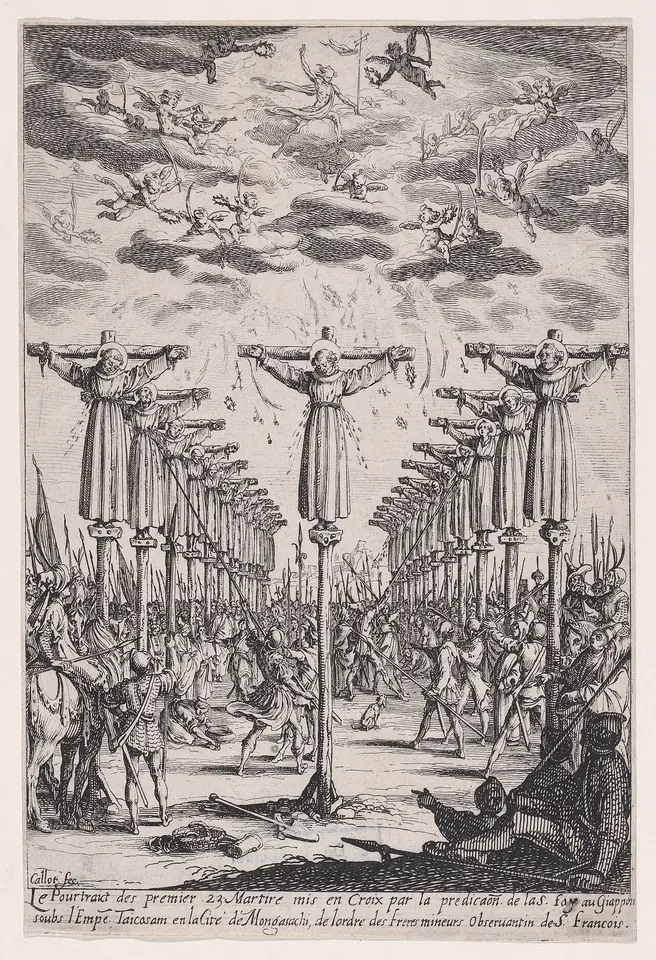
Twenty-six were condemned: six Franciscans, among them Gonsalo and the young Mexican St. Philip of Jesus; three Japanese Jesuits, among them Paul Miki; and seventeen Japanese lay people, including three boys. They were marched through the winter from Kyoto to Nagasaki, and on February 5, 1597, they were tied to crosses on a hill above the harbor and killed with lances. Some accounts say Gonsalo was the first to die.
A Jesuit missionary wrote afterward, as the Catholic Encyclopedia quotes him, that "the very pagans who assisted at the martyrdom were struck at seeing the joy of the blessed ones as they suffered on their crosses."
Miracles and canonization
The twenty-six were beatified by Pope Urban VIII in 1627 and canonized by Pope Pius IX in 1862. Their canonization rested on martyrdom, so no miracle was required. The wonders some accounts tell of the martyrs' bodies on the crosses are traditional; none was formally examined for Gonsalo himself.
Why St. Gonsalo Garcia is a patron
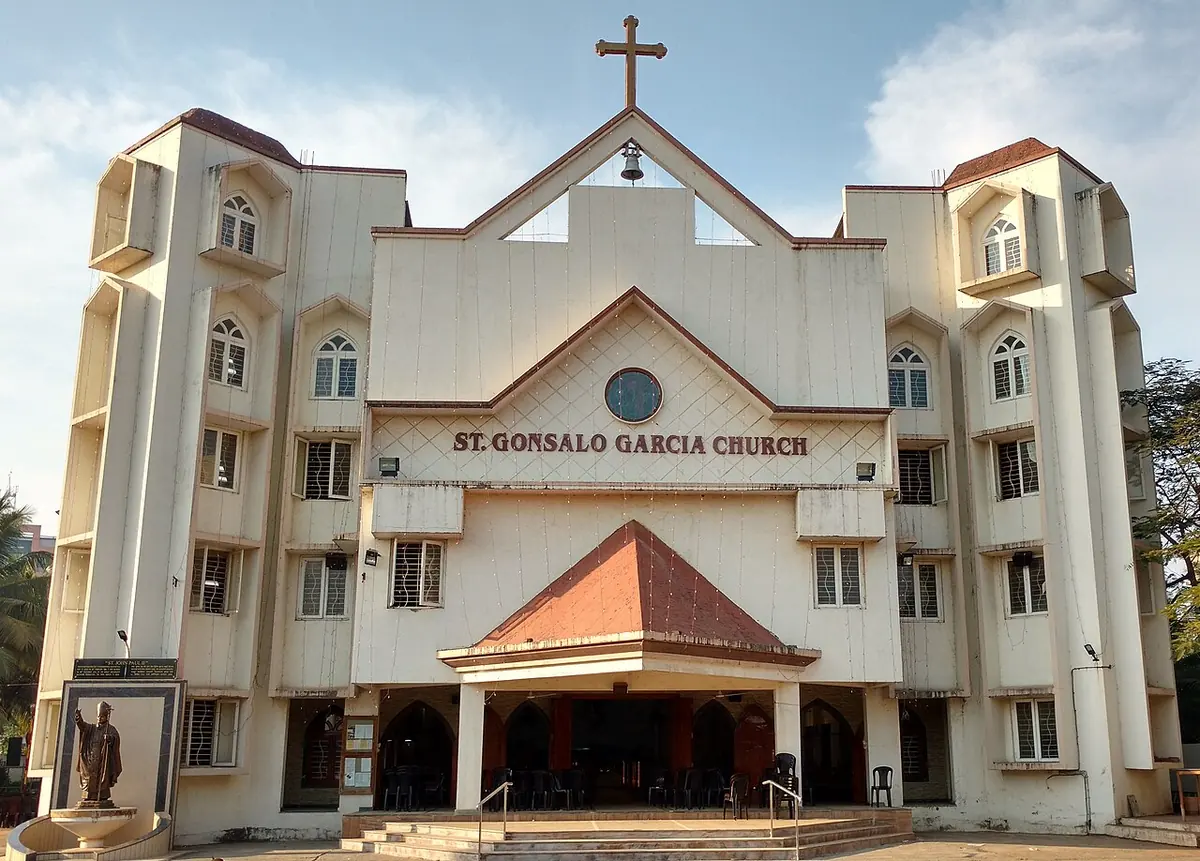
He is the principal patron of the Diocese of Vasai, his birthplace, and the second patron of the Archdiocese of Bombay. He spent his youth teaching the faith in a language not his own, so we can fittingly ask his prayers for catechists and for Indian missionaries abroad.
Symbols of St. Gonsalo Garcia in art
- Franciscan habit and cord: the brown habit of a Friar Minor, the order he joined in Manila.
- Cross: the cross on which he died at Nagasaki, often held upright beside him.
- Lance: the two lances that killed the martyrs on their crosses.
- Palm: the martyr's victory.
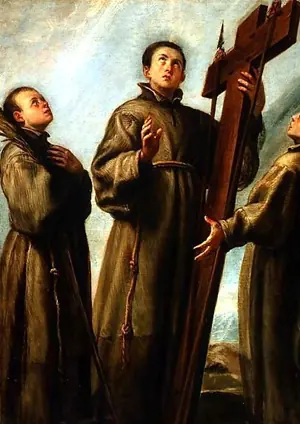
He is often shown young, sometimes with Indian features, and sometimes beside St. Philip of Jesus and St. Peter Baptist, the Franciscan leader of the mission. In Brazil, where several churches bear his name, he appears in baroque statues in the Franciscan habit.
Feast day and devotion in Vasai
The Roman Martyrology keeps the twenty-six martyrs on February 5, the day of their death, and the General Roman Calendar on February 6 with St. Paul Miki and Companions. In Vasai, his birthplace, the diocese keeps the feast of its own saint with special joy. See the feast day calendar.
There is no traditional prayer to St. Gonsalo Garcia that we can trace to an old source. In our own words, let us ask St. Gonsalo, who was turned away and kept going, to pray for the young people of India, for catechists who teach in a language not their own, and for Christians in Asia who still suffer for the name of Jesus.
Frequently asked questions
Who was St. Gonsalo Garcia?
A Franciscan brother born at Bassein (Vasai), north of Mumbai, in 1556. He went to Japan as a young man, worked as a catechist and later as a merchant at Macao, joined the Franciscans in Manila, and returned to Japan as an interpreter. He was one of the twenty-six martyrs crucified at Nagasaki on February 5, 1597.
When is St. Gonsalo Garcia's feast day?
February 5, the day of his martyrdom, in the Roman Martyrology. The General Roman Calendar keeps all twenty-six martyrs on February 6 under the name of St. Paul Miki and Companions. In the Diocese of Vasai his feast is a great celebration.
Is St. Gonsalo Garcia the first Indian saint?
He is often called the first saint born in India. The Catholic Encyclopedia of 1907 called him "the only Indian saint," and the Archdiocese of Bombay calls him "the first Indian to be declared a saint." St. Alphonsa, canonized in 2008, was the first woman of Indian origin.
What is St. Gonsalo Garcia the patron saint of?
He is the principal patron of the Diocese of Vasai, where he was born, and the second patron of the Archdiocese of Bombay.
Keep exploring
Sources
- Archdiocese of Bombay: St. Gonsalo Garcia. His Jesuit schooling at Bassein, his years as a catechist in Japan, his refusal by the Jesuits, the Franciscans in Manila, and his patronage of Vasai and Bombay
- Catholic Encyclopedia (1907): Bassein. Bassein as "the birthplace of St. Gonsalo Garcia, the only Indian saint," crucified at Nagasaki on February 5, 1597
- Catholic Encyclopedia (1910): Japanese Martyrs. The causes of the 1597 persecution and the crucifixion of the twenty-six at Nagasaki
- CatholicCulture.org: Memorial of St. Paul Miki and Companions (February 6). Beatified in 1627, canonized in 1862