Blessed William Carter, Printer and Martyr
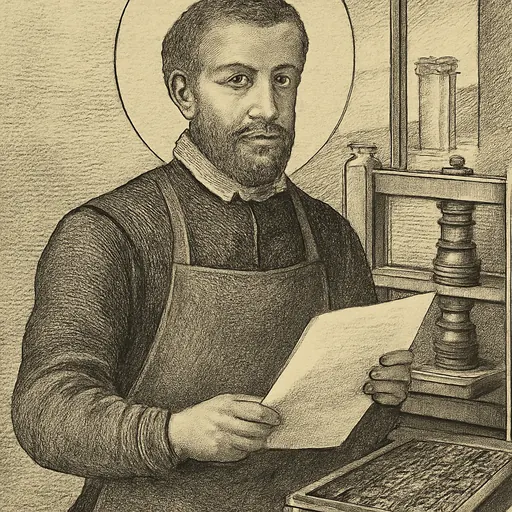
Blessed William Carter (1548–1584) was a London printer who produced Catholic books in secret under Queen Elizabeth I. Arrested for printing Gregory Martin's Treatise of Schism, he was racked in the Tower, condemned for treason and executed at Tyburn on January 11, 1584. Pope John Paul II beatified him in 1987 among 85 martyrs of England, Scotland and Wales.
Who was Blessed William Carter?
Blessed William Carter was a London printer who gave his life for the books he printed. In an England where Catholic worship was outlawed, he used his trade to put the faith into the hands of his people, and for that he was racked in the Tower of London and hanged at Tyburn on January 11, 1584. He was a layman, a husband and a craftsman. Pope John Paul II beatified him in 1987, and we keep his feast on January 11.
When the Pope beatified him with 84 others, he described the group: "Among these eighty-five martyrs we find priests and laymen, scholars and craftsmen... There were among them a printer, a bartender, a stable-hand, a tailor." The printer was William Carter.
The life of Blessed William Carter
Apprentice to the queen's printer
William was born in London in 1548, the son of John Carter, a draper, and his wife Agnes. On Candlemas Day, February 2, 1563, he was bound apprentice for ten years to John Cawood, the queen's printer. He learned the craft in the best shop in the kingdom.
He then became secretary to Nicholas Harpsfield, the last Catholic archdeacon of Canterbury, who was by then a prisoner for his faith. Serving a priest in prison drew the young printer into the hidden life of English Catholics. After Harpsfield's death Carter married and set up his own press on Tower Hill, in the shadow of the Tower of London.

Printing for the hidden Church
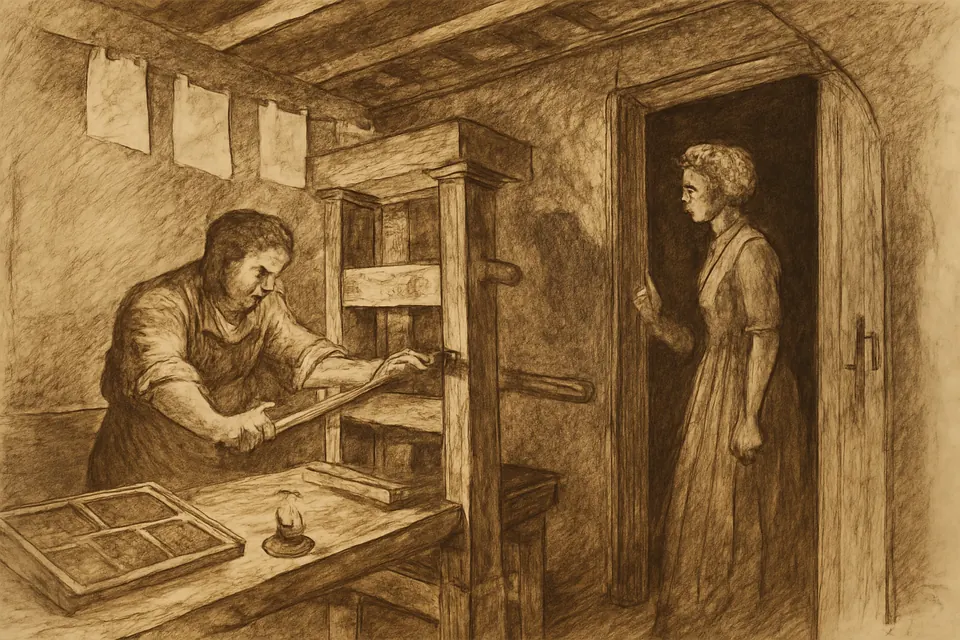
Printing Catholic books in Elizabeth's England was dangerous work, done in secret. The Catholic Encyclopedia records that Carter spent from September 23 to October 28, 1578, in the Poultry Counter, one of the small city prisons. It did not stop him.
In 1580 he printed a new edition, 1,000 copies, of A Treatise of Schism by Gregory Martin, the English priest-scholar who was then translating the Bible at the English College for what became the Douay-Rheims version. The book told Catholics that they must not attend the services of the established church. Carter was arrested at once and imprisoned in the Gatehouse at Westminster.
The Tower and the rack
In 1582 he was moved to the Tower of London, the fortress on whose doorstep he had kept his press. The Catholic Encyclopedia notes a small, sad detail: he paid for his own food there until midsummer 1583. He was tortured on the rack.

The trial and martyrdom of William Carter
On January 10, 1584, Carter was indicted at the Old Bailey for printing Martin's book. The prosecution seized on one passage in which Martin expressed confidence that the Catholic faith would triumph and that pious Judith would slay Holofernes. They read it as a call to murder the queen. The Catholic Encyclopedia, writing in 1912, says plainly that "it obviously had no such meaning." He was condemned for treason.
The next day, January 11, 1584, he was taken to Tyburn and executed with the cruel death the law gave traitors.
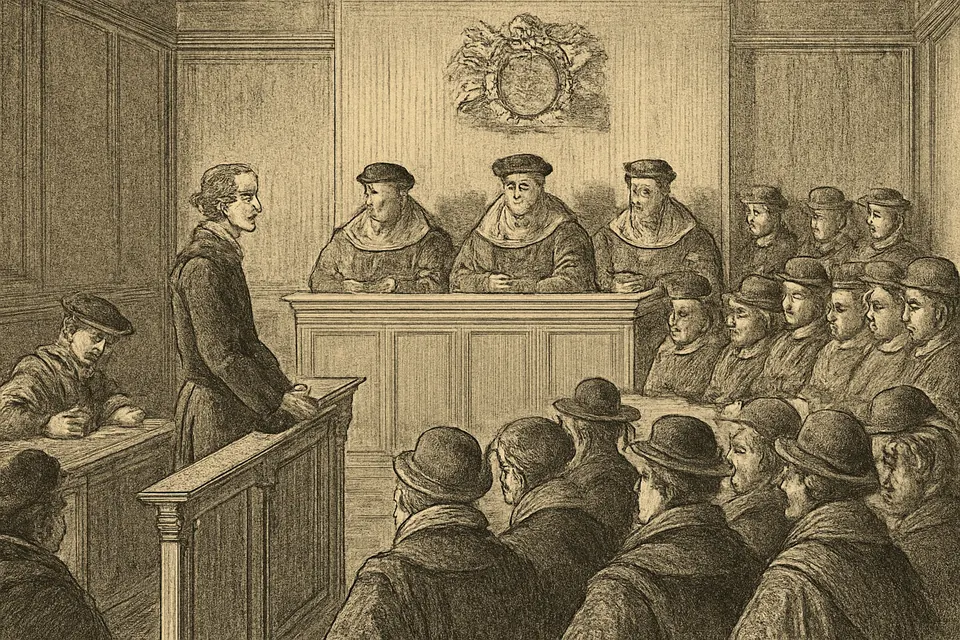
He died in a time of war fears with Spain, when English Catholics were treated as enemies of the crown. But he was not killed for plotting. He was killed for printing a book about the faith, and he would not deny it.
Beatification
The Church first declared him Venerable. On November 22, 1987, the solemnity of Christ the King, Pope John Paul II beatified him in Rome with George Haydock and 83 other martyrs of England, Scotland and Wales, one of them from Ireland. The Pope recalled St. Thomas More's words on the scaffold, "I die the King's good servant but God's servant first," and said each of the 85 "chose to be 'God's servant First.'"
- Approved: as a martyr he was beatified without a miracle. No miracle has yet been approved for his canonization.

Symbols of Blessed William Carter in art
No portrait of William Carter from his own time is known. When he is pictured, the natural symbols are those of his trade and his death: a wooden printing press or a printed book, the martyr's palm, and the rope of Tyburn.
Feast day and prayer
We keep his feast on January 11, the day of his martyrdom. In England and Wales the beatified martyrs are also honored with the canonized martyrs on May 4. See the feast day calendar.
We know of no traditional prayer to him that we can quote. Let us ask him to pray for printers, publishers and all who make good books, for Catholics who suffer for their faith, and for writers who must choose between truth and safety. Blessed William Carter, pray for us.
Frequently asked questions
Who was Blessed William Carter?
A Catholic printer of London, born in 1548, trained under the queen's printer John Cawood, who set up his own press on Tower Hill and printed Catholic books when that was forbidden. He was executed at Tyburn on January 11, 1584, and beatified in 1987.
Why was William Carter executed?
He was condemned for printing Gregory Martin's Treatise of Schism, which urged Catholics not to attend Protestant services. A passage expressing hope that the Catholic faith would triumph, as pious Judith slew Holofernes, was read as a call to kill the queen. The Catholic Encyclopedia says "it obviously had no such meaning."
When was William Carter beatified?
On November 22, 1987, the feast of Christ the King, Pope John Paul II beatified George Haydock and 84 companions, martyrs of England, Scotland and Wales. Among them, the Pope noted, was "a printer."
When is the feast of Blessed William Carter?
January 11, the day he died. In England and Wales he is also honored with all the English martyrs on May 4.
Keep exploring
Sources
- Catholic Encyclopedia (1912): Ven. William Carter. His parents, his apprenticeship to John Cawood on Candlemas Day 1563, Nicholas Harpsfield, the press on Tower Hill, the 1,000 copies of Martin's book, his prisons, the rack, the indictment and the Judith passage
- Pope John Paul II, homily for the beatification of 85 martyrs of England, Scotland and Wales (November 22, 1987)