Blessed Odoric of Pordenone, Franciscan Missionary to China
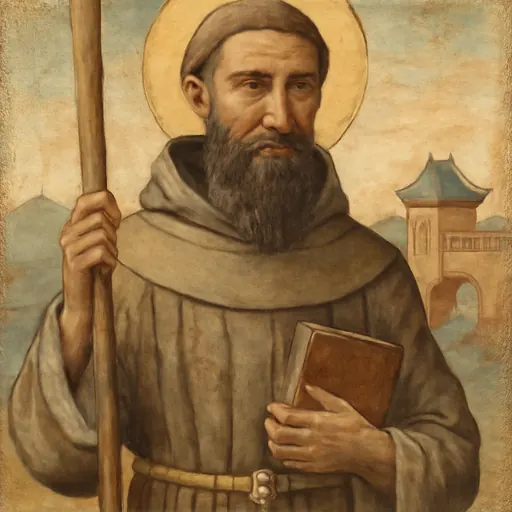
Blessed Odoric of Pordenone (about 1280–1331) was a Franciscan friar from Friuli who, around 1318–1330, traveled through Persia, India, Sumatra and Java to China and spent three years in the imperial capital, Khanbaliq (Beijing). His dictated account, the Relatio, was copied all over Europe. Venerated at once after his death in Udine, he was beatified in 1755. His feast is January 14.
Who was Blessed Odoric of Pordenone?
Blessed Odoric of Pordenone was a Franciscan friar who crossed Asia in the 1320s, reached the court of the Great Khan in what is now Beijing, and came home to tell the story. He set out from Venice sometime after 1318, sailed and walked through Persia, India, Sumatra and Java, and spent three years in the imperial capital of China. Back in Italy, he dictated his account to a fellow friar in May 1330. A few months later, on January 14, 1331, he died in Udine.
Udine honored him as a saint from the day of his funeral. Pope Benedict XIV confirmed his cult in 1755, and we keep his feast on January 14.

The life of Blessed Odoric
A friar of Friuli
Odoric was born in Pordenone, in Friuli, in northeastern Italy. The chronicler John of Viktring wrote that his family was one of those left to garrison the town by King Ottokar II of Bohemia in the early 1270s, which may explain the old nickname "Odoric the Bohemian." Andrea Tilatti, writing in the Dizionario Biografico degli Italiani, says firmly that he did not belong to the Mattiussi family, as later tradition claimed.
When his remains were examined in 2002, the doctors judged that he was about fifty at his death, so he was probably born around 1280. His biographers say he entered the Franciscans very young. A boy friar named "Odolricus" witnessed a document at Gemona in 1296, and Odoric appears in legal acts in Friuli in 1316, 1317 and 1318, in company that suggests he was trusted and well connected.
Across Persia and India
Sometime after 1318 he sailed from Venice to Trebizond on the Black Sea, then crossed overland to Hormuz on the Persian Gulf and took ship for India. He did not travel alone. Another Franciscan, Brother James of Ireland, was his companion.
He landed at Tana, north of present-day Mumbai, where four Franciscans had been put to death in April 1321. Odoric gathered the bones of three of them, Thomas of Tolentino, James of Padua and Demetrius of Tiflis, and carried them all the way to Quanzhou in China, then a Catholic diocese. A letter of 1326 from its bishop, Andrew of Perugia, confirms that the relics arrived. On the way, Odoric visited the Malabar coast and prayed at the tomb of St. Thomas the Apostle at Mylapore, near Chennai.
Three years in Khanbaliq
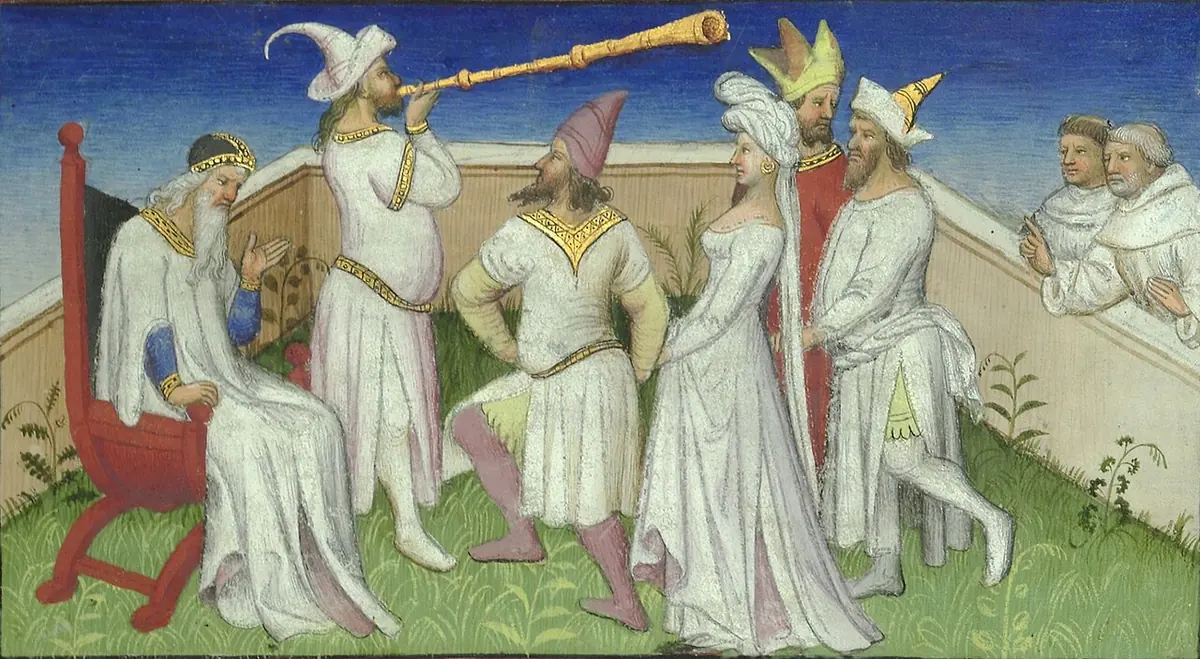
From Ceylon, Tilatti writes, Odoric passed through the Andaman and Nicobar Islands, Sumatra, Java and Borneo before landing at Canton. He went on through Quanzhou, Fuzhou, Hangzhou, Nanjing and Yangzhou, cities so huge and rich that they dwarfed the towns of Italy. At last he reached Khanbaliq, the capital of the Mongol Yuan emperors, and stayed there three years.
The Franciscan archbishop of Khanbaliq was then the aged John of Montecorvino, who had arrived in the 1290s. Odoric does not mention him, but it is likely they met. Odoric came home by the overland route through Central Asia and Persia, perhaps sent to ask for more missionaries, since John of Montecorvino died in 1328.

The Relatio
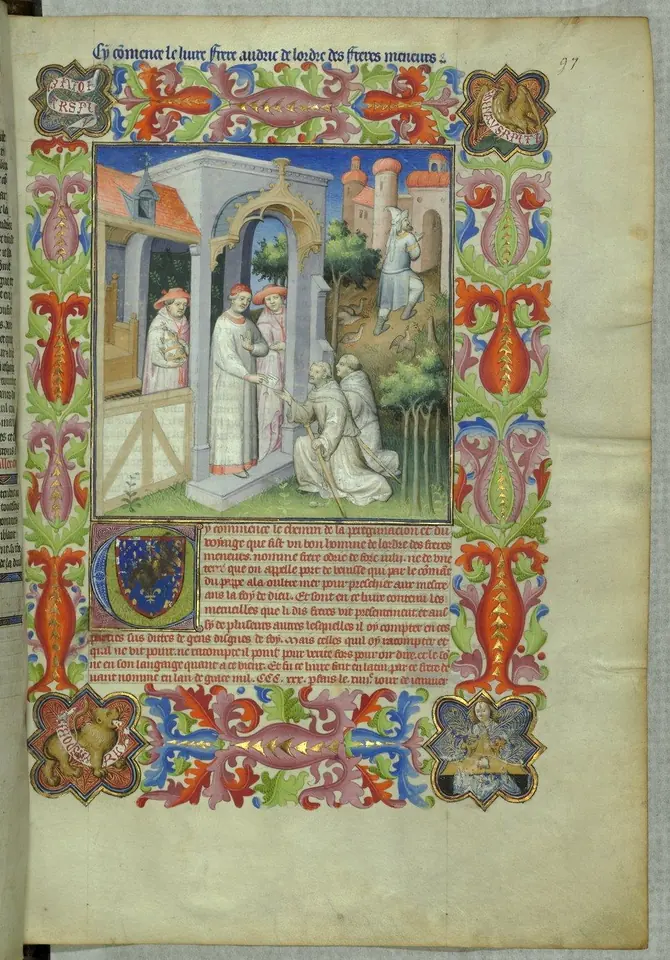
In May 1330, at Padua, the minister provincial ordered Odoric to dictate his travels to Brother William of Solagna. The result, the Relatio or Itinerarium, is short and plain. It notes distances between cities, customs, foods, trade goods and religious practices, and it tells some tall tales picked up on the road. About eighty Latin manuscripts survive, along with early translations into Italian, French, German, Catalan-Castilian and Welsh. The compiler of The Travels of Sir John Mandeville borrowed freely from it, so many readers met Odoric's journey without knowing his name.
Death and veneration
Odoric died in the Franciscan friary of San Francesco in Udine on January 14, 1331. The autopsy of his remains points to heart failure brought on by respiratory illness.
His death set off a wave of devotion. Two collections of reported miracles were gathered: one by the friars, and one by a commission that Patriarch Pagano della Torre of Aquileia appointed in May 1331 to take sworn testimony. People came from Friuli, Carinthia, Istria and the Veneto. In 1332 the patriarch had Odoric's body raised into a stone tomb carved by the Venetian sculptor Filippo de Sanctis and paid for by the city of Udine, a form of local canonization. These cures are reported wonders from the fourteenth century; none was examined in a modern process.
In 1755, after an inquiry begun in 1749, Pope Benedict XIV confirmed his cult from time immemorial. In the twentieth century he came to be called "the apostle of China." A cause for his canonization was opened in Udine on January 14, 2002, and its diocesan phase closed in 2006.

Symbols of Blessed Odoric in art
Odoric is shown in the Franciscan habit with its knotted cord, usually with a long beard. He holds a pilgrim's staff for his journey, and sometimes a book for the Relatio. In medieval manuscripts he appears as a small friar among kings, crowds and strange beasts of the East, as in the Paris Livre des merveilles. His marble tomb in Udine is carved with figures and scenes.
Feast day and prayer
We keep his feast on January 14. His relics rest in Udine, which honors him almost as a civic patron, and Pordenone remembers him as its own. See the feast day calendar.
We know of no traditional prayer to him that we can quote. Let us ask him to pray for missionaries in Asia, for the Church in China, and for all who travel far to bring the Gospel. Blessed Odoric of Pordenone, pray for us.
Frequently asked questions
Who was Blessed Odoric of Pordenone?
Odoric was a Franciscan friar born in Pordenone, in Friuli, around 1280. Sometime after 1318 he set out from Venice and traveled through Persia, India and Southeast Asia to China, where he spent three years in the Mongol capital. He came home around 1330, dictated an account of his journey, and died in Udine in 1331.
What is Odoric of Pordenone known for?
For his Relatio or Itinerarium, the account of his travels dictated at Padua in May 1330. It survives in about eighty Latin manuscripts and many early translations, and it was one of the main sources the compiler of The Travels of Sir John Mandeville borrowed from.
When was Odoric beatified?
Pope Benedict XIV confirmed his long-standing cult on July 2, 1755, a so-called equivalent beatification. A cause for his canonization was reopened in Udine in 2002, and its diocesan phase closed in 2006.
When is the feast of Blessed Odoric?
January 14, the day he died in Udine in 1331.
Where is Blessed Odoric buried?
His partly mummified body rests in its fourteenth-century marble tomb in the Church of the Beata Vergine del Carmine in Udine.
Keep exploring
Sources
- Dizionario Biografico degli Italiani (Treccani): Odorico da Pordenone (Andrea Tilatti, 2013). His birth and age from the 2002 examination of his body, the 1296 and 1316–18 documents, the route, the relics of the Tana martyrs, the dictation at Padua, the miracle collections, the tomb of 1332, the 1755 decree and the canonization cause
- Henry Yule, Cathay and the Way Thither, vol. 2 (Hakluyt Society, 1913), with the text of Odoric
- The Travels of Sir John Mandeville (Macmillan, 1900), introduction, at Project Gutenberg. Mandeville's use of Odoric's narrative